
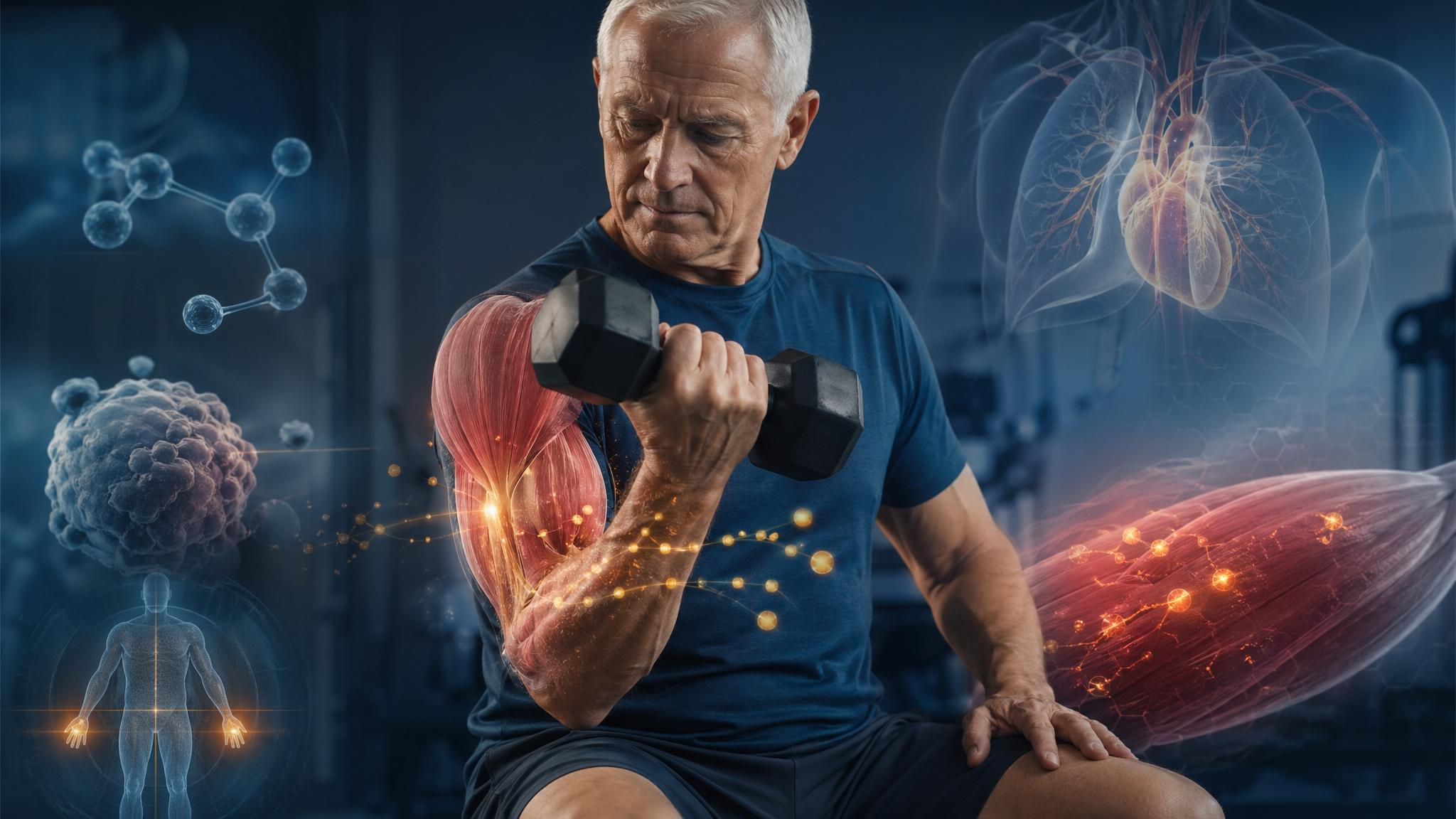
Why Muscle Is the Organ of Longevity: New Research Reveals the Exercise Prescription That Actually Extends Your Life
A wave of new research published in early 2026 is converging on a conclusion that longevity scientists have been building toward for more than a decade: skeletal muscle is not just tissue that helps you lift groceries or climb stairs. It is a metabolically active organ that secretes hormones, regulates inflammation, governs blood sugar, protects bone density, and predicts how long you will live with more accuracy than almost any other single biomarker.
Presented By Our Partners


The data is no longer subtle. A UK Biobank study of more than 308,000 people found that something as simple as grip strength asymmetry between your two hands predicts a 13 percent increase in mortality risk. A Cochrane review of 58 randomized controlled trials confirmed that high intensity interval training increases cardiorespiratory fitness by nearly 6 mL/min/kg in sedentary adults. A landmark narrative review in Sports Medicine challenged the popular "Zone 2" training gospel, arguing that for the general public, higher intensities may matter more than we have been told. And a randomized controlled trial from Kangwon National University demonstrated that combining resistance training with essential amino acid supplementation was superior to either approach alone for building muscle, shifting myokine balance, and reducing inflammatory markers in older women.
Together, these findings form a practical blueprint. Here is what the science actually says, and what you can do about it starting today.
Grip Strength: The Five-Second Longevity Test
If you wanted a single physical test that predicts your risk of dying from any cause over the next decade, you could do far worse than squeezing a dynamometer.
A 2025 study published in the Journal of the American Medical Directors Association analyzed 308,810 participants from the UK Biobank, ages 37 to 73, over a median follow-up of 13.6 years. The researchers, led by Yuling Li and Xiaoying Zheng at the Chinese Academy of Medical Sciences and Peking Union Medical College, examined not just overall grip strength but the asymmetry between dominant and nondominant hands.
Their findings were striking. Participants with dominant hand grip strength asymmetry, defined as a difference exceeding 10 percent between hands, had a 13 percent higher adjusted hazard ratio for all-cause mortality compared to those with symmetrical grip strength. They also carried a 42 percent higher adjusted odds ratio for frailty and a 15 percent higher odds ratio for comorbidities.
The practical takeaway here extends beyond simply "get stronger." The asymmetry finding suggests that balanced, bilateral strength development matters. If you only train your dominant side, if your left arm is meaningfully weaker than your right, or if you have let an old injury create a persistent imbalance, that gap may be telling you something about your systemic health that goes deeper than muscle.
Dr. Peter Attia, who has popularized the concept of the "Centenarian Decathlon," often frames grip strength as a leading indicator of what he calls the "Marginal Decade," the final ten years of life. The UK Biobank data validates this framing at population scale. Symmetrical grip strength was associated with the longest life expectancy in the cohort. Asymmetrical dominant grip strength was associated with the shortest.
The Zone 2 Debate: What the Science Actually Supports
Few exercise prescriptions have captured public attention in recent years like Zone 2 training, the low-intensity, conversational-pace cardio that podcasters, longevity coaches, and biohackers have elevated to near-sacred status. The premise is simple: by training below your lactate threshold, you preferentially burn fat, build mitochondrial density, and develop the aerobic base that protects metabolic health into old age.
But a narrative review published in Sports Medicine in 2025, led by Kristi Storoschuk and Brendon Gurd at Queen’s University, with contributions from Martin Gibala at McMaster University, one of the world’s foremost experts on high-intensity interval training, challenges the broad endorsement of Zone 2 as the optimal intensity for the general public.
The authors argue that the Zone 2 recommendation was largely extrapolated from observational data of elite endurance athletes, who train 15 to 25 hours per week and accumulate enormous volumes of low-intensity work. For someone training three to five hours per week, the calculus changes dramatically.
Their central finding: current evidence does not support Zone 2 training as the optimal intensity for improving mitochondrial or fatty acid oxidative capacity in the general population. When training volume is limited, the researchers argue, higher intensities appear to deliver greater mitochondrial adaptations per unit of time.
This does not mean Zone 2 is useless. Far from it. Walking, easy cycling, and other low-intensity movement remain foundational for metabolic health, joint health, recovery, and mental wellbeing. But the review pushes back against the idea that Zone 2 should be the centerpiece of a longevity-focused exercise program for someone who has four hours a week to train.
A 2026 Cochrane systematic review of 58 randomized controlled trials, published by Juliette Strauss and colleagues at Liverpool John Moores University, reinforces this point from a different angle. The review found that high-intensity interval training (HIIT) likely increases cardiorespiratory fitness by about 6 mL/min/kg compared to no exercise, and may offer a slight edge of about 1.4 mL/min/kg over moderate-intensity continuous training. HIIT also reduced waist circumference by 3.56 centimeters compared to controls.
The practical implication: if your goal is to maximize VO2 max, which multiple large cohort studies have identified as one of the single strongest predictors of all-cause mortality, a program that includes at least two sessions per week of genuine high-intensity work may be more efficient than a program built entirely around low-intensity steady-state cardio.
The Metabolic Connection: Why Insulin Resistance Destroys Fitness
A 2026 study published in European Heart Journal Open added another dimension to the exercise and longevity equation. Researchers at the Instituto Nacional de Ciencias Medicas in Mexico City, led by Liliana Munoz-Hernandez, examined 503 adults without established cardiovascular disease who underwent gold-standard cardiopulmonary exercise testing on a treadmill.
After adjusting for age, sex, BMI, and fat mass, insulin resistance (assessed by the QUICKI index) explained up to 43 percent of the variability in VO2 max. That is an extraordinary figure. It means that nearly half of the difference in aerobic fitness between individuals of the same age, sex, and body composition could be attributed to how well their cells respond to insulin.
Featured Partner
Invest in the Infrastructure Behind Modern Medicine
As healthcare expands beyond hospital walls, the buildings and campuses supporting that shift are generating compelling returns for investors who move early. The Healthcare Real Estate Fund offers qualified investors direct access to a curated portfolio of medical office, outpatient, and specialty care facilities.
Learn More →
The mechanism the researchers identified centers on muscle glucose uptake. When muscles are insulin resistant, they cannot efficiently absorb glucose during high-intensity exercise, where anaerobic glycolysis plays a central role. The result is lower peak oxygen consumption regardless of how much you train.
This finding creates a powerful bridge between the movement and nutrition pillars of health. You cannot fully outrun a metabolic problem. If your diet is driving chronic insulin resistance through excess refined carbohydrates, seed oils, or simply too many calories, your cardiorespiratory fitness ceiling will be lower than it should be, regardless of your training program.
Conversely, the study suggests that improving insulin sensitivity through dietary changes, including reducing processed food intake, increasing fiber and whole food consumption, and managing meal timing, could directly improve your aerobic capacity even before you change your exercise routine.
Resistance Training Plus Protein: The Sarcopenia Solution
Sarcopenia, the progressive loss of muscle mass and strength that accelerates after age 40, is increasingly recognized not just as a condition of aging but as one of its primary drivers. Muscle loss reduces metabolic rate, impairs glucose disposal, weakens bones, increases fall risk, and triggers a cascade of inflammatory signaling that accelerates biological aging.
A 2026 randomized controlled trial published in the Journal of the International Society of Sports Nutrition offers the most actionable data on what to do about it. Deokhwa Jeong and colleagues at Kangwon National University randomized 96 healthy women aged 65 and older into four groups: control, resistance exercise alone (RE), essential amino acid supplementation alone (EAA, 5.5 grams twice daily), or the combination (RE + EAA).
The resistance training protocol was a circuit-based program conducted three times per week, with each session lasting 60 minutes at moderate intensity. After 12 weeks, the results were clear.
The RE + EAA group demonstrated significant increases in muscle mass and the greatest improvements across the Senior Fitness Test battery. More importantly, the combination group showed the most favorable shift in the follistatin-to-myostatin ratio, a key hormonal balance that determines whether your body is building or breaking down muscle. Follistatin promotes muscle growth. Myostatin inhibits it. The RE + EAA group’s shift in this ratio was statistically superior to every other group.
On the inflammation side, the combination group reduced IL-6, IL-1 beta, and TNF-alpha, three of the most important inflammatory cytokines that drive the chronic low-grade inflammation researchers now call "inflammaging." The resistance-only group reduced IL-6 and IL-1 beta but not TNF-alpha. The amino acid-only group showed no significant improvements.
A comprehensive narrative review published in Experimental Gerontology in 2026 by Lan Lu and colleagues at Guangxi Medical University reinforces the mechanistic picture. The review maps the molecular pathways through which resistance training combats sarcopenia: stimulating muscle protein synthesis through the mTOR pathway, improving mitochondrial function, reducing chronic inflammation, and activating satellite cells, the stem cells of skeletal muscle that enable repair and regeneration. The review specifically highlights the YAP/TAZ signaling pathway in the Hippo cascade, which may link mechanical loading from resistance training to satellite cell activation, offering a promising target for future interventions.
A separate review published in the Journal of Physiology and Biochemistry in 2026 by Patricia Aragon-Espinosa and colleagues adds another layer, noting that polyphenols found in berries, green tea, turmeric, and dark chocolate show promise in modulating pathways relevant to muscle preservation through their antioxidant and anti-inflammatory properties.
The Combined Exercise Prescription: What the Evidence Supports
When you synthesize these findings, a coherent exercise prescription for longevity emerges that is more nuanced than either "just lift weights" or "just do Zone 2."
The evidence supports a three-component model.
First, strength training should form the foundation. At minimum, this means two to three sessions per week of progressive resistance training that targets all major muscle groups, with attention to bilateral balance and progressive overload. The Jeong trial used circuit-based training at moderate intensity for 60 minutes, three times per week. This is a reasonable starting template.
Second, high-intensity cardiovascular work matters more than the Zone 2 advocates suggest, especially for people with limited training time. Two sessions per week of genuine HIIT, whether through cycling, rowing, running, or bodyweight circuits, appears sufficient to drive meaningful improvements in VO2 max. The Cochrane review data supports this approach.
Third, low-intensity movement remains important but should be viewed as a complement, not a replacement, for the first two components. Walking, easy cycling, swimming, and other Zone 2 activities support recovery, joint health, mental wellbeing, and metabolic flexibility. Aim for 150 to 200 minutes per week of this type of movement, which can include daily walks, active commuting, or leisure activities.
The Nutrition Bridge: Feeding the Muscle Machine
The Jeong trial makes a compelling case that exercise alone is not enough to optimize muscle health in aging adults. Essential amino acid supplementation, at just 5.5 grams twice daily, significantly amplified the benefits of resistance training.
This finding aligns with a growing body of evidence suggesting that older adults need more protein than current recommended daily allowances suggest. While the RDA for protein is 0.8 grams per kilogram of body weight, longevity researchers increasingly advocate for 1.2 to 1.6 grams per kilogram, with an emphasis on leucine-rich protein sources that maximally stimulate muscle protein synthesis.
Practical protein targets for most adults focused on longevity:
Aim for 30 to 40 grams of high-quality protein at each meal. Prioritize leucine-rich sources: eggs, dairy (especially Greek yogurt and whey), fish, poultry, and for plant-based eaters, combinations of legumes with grains or soy-based proteins. Consider essential amino acid supplementation around training, particularly if you are over 50 or find it difficult to hit protein targets through whole food alone. Time at least one protein-rich meal within two hours of resistance training.
The insulin resistance data from the Munoz-Hernandez study adds another nutritional dimension. If metabolic health determines up to 43 percent of your VO2 max variability, then managing blood sugar through nutrition is not just about body composition. It is directly about cardiovascular fitness and, by extension, longevity.
This means prioritizing whole, unprocessed foods. It means being strategic about carbohydrate quality and timing. It means considering whether a continuous glucose monitor might give you actionable feedback about how your body responds to specific meals. And it means understanding that the plate and the barbell are not separate interventions. They are two halves of the same longevity equation.
What This Means For Your Practice
The convergence of these 2025 and 2026 studies points to several concrete action items for anyone serious about extending healthspan and lifespan.
Test your grip strength, and test both hands. If you have access to a hand dynamometer (available for under $30 online), measure both hands. If the difference between dominant and nondominant hands exceeds 10 percent, make unilateral strength work a priority: single-arm rows, single-leg deadlifts, and other exercises that address imbalances.
Do not build your exercise program entirely around Zone 2. If you have limited training time (under five hours per week), prioritize at least two sessions of strength training and two sessions of genuine high-intensity cardiovascular work. Use walking and low-intensity movement as your daily baseline, not your primary training modality.
Get your fasting insulin tested. If insulin resistance explains up to 43 percent of VO2 max variability, knowing your metabolic status is essential. Ask your doctor for a fasting insulin test alongside your standard bloodwork. A fasting insulin above 10 microunits per milliliter, while often considered "normal," may be limiting your fitness ceiling.
Combine resistance training with adequate protein. The Jeong trial demonstrated that the combination of resistance exercise and essential amino acid supplementation was superior to either alone across every measured outcome: muscle mass, strength, myokine balance, and inflammation. Aim for 1.2 to 1.6 grams of protein per kilogram of body weight daily, and consider EAA supplementation around training sessions.
Train for symmetry, not just strength. The UK Biobank data on grip strength asymmetry suggests that balanced, bilateral development is a longevity signal. Incorporate unilateral exercises into your routine and pay attention to side-to-side differences.
Remember that muscle is medicine. Every study in this review points to the same conclusion: skeletal muscle is not a vanity metric. It is a metabolic organ that regulates inflammation, governs blood sugar, protects bone density, and predicts mortality. Treating strength training as optional or secondary to cardio is, based on the current evidence, a strategic error for anyone optimizing for a long, functional life.
The fundamentals have not changed. Move with intention. Eat real food. Build and maintain muscle. The science is simply becoming more precise about why these things matter and how to do them most effectively. That precision, translated into consistent daily action, is where longevity lives.
Sources: Research cited in this article was retrieved from PubMed. Key references include Jeong et al. (2026), Journal of the International Society of Sports Nutrition, DOI: 10.1080/15502783.2026.2646626; Li et al. (2025), Journal of the American Medical Directors Association, DOI: 10.1016/j.jamda.2025.105995; Storoschuk et al. (2025), Sports Medicine, DOI: 10.1007/s40279-025-02261-y; Strauss et al. (2026), Cochrane Database of Systematic Reviews, DOI: 10.1002/14651858.CD013617.pub2; Munoz-Hernandez et al. (2026), European Heart Journal Open, DOI: 10.1093/ehjopen/oeag029; Lu et al. (2026), Experimental Gerontology, DOI: 10.1016/j.exger.2026.113085; Aragon-Espinosa et al. (2026), Journal of Physiology and Biochemistry, DOI: 10.1007/s13105-026-01154-6.


Similar Posts
Hyperice Hypervolt 2 Pro: Smart Percussive Therapy with HyperSmart Sensor Technology
The best massage gun is the one that adapts to what your body needs, not the one that simply delivers the most force. Presented By Our Partners Percussive therapy has…

Clonal Hematopoiesis (CHIP): The Cardiovascular Risk Hidden in Your Blood
By age seventy, somewhere between ten and twenty percent of people carry a population of mutated blood stem cells that quietly double their risk of heart disease. The condition has…

The Glymphatic System: How Sleep Cleanses the Aging Brain and What 12 Years of Neuroscience Reveal About Dementia Prevention
In 2013, Maiken Nedergaard’s lab at the University of Rochester discovered that the brain runs a sleep-gated waste clearance network called the glymphatic system. Twelve years of follow up research,…

The Mosaic Body and Longevity: What Mutation Tracking Means for Healthspan
A capstone essay closing our series on the Mosaic Body. The new science of somatic mutation, clonal expansion, and mosaic aging is more than an interesting development in molecular biology….
myDNAge Epigenetic Clock: The Original Horvath Clock Made Consumer-Accessible
Built by the epigenetics company behind the gold-standard research reagents, myDNAge brings Steve Horvath’s original epigenetic clock directly to consumers, with the unique option of testing from a urine sample….
NeoRhythm PEMF Headband: Pulsed Electromagnetic Field Stimulation for Focus, Sleep, and Recovery
A wearable headband that delivers pulsed electromagnetic fields to the brain, targeting specific brainwave frequencies to support focus, relaxation, sleep, and pain management without electrical current, chemicals, or conscious effort….
