

Your DNA Can Now Predict Heart Disease Before Symptoms Appear: How Polygenic Risk Scores Are Rewriting Cardiovascular Prevention
For decades, cardiovascular disease prevention relied on the same familiar checklist: blood pressure, cholesterol, smoking status, family history, and age. These factors saved millions of lives, but they also missed millions of others. People with clean lab work and no obvious risk factors still suffered heart attacks. Families with a vague history of "heart problems" had no way to quantify what that meant for the next generation.
Presented By Our Partners



That era is ending. On March 16, 2026, the American College of Cardiology and the American Heart Association released updated dyslipidemia guidelines that formally recognize polygenic risk scores as a risk-enhancing factor in cardiovascular disease prevention. This is not a footnote buried in a supplement. It is an explicit endorsement from the two most influential bodies in cardiology, signaling that the genomic era of heart disease prevention has officially arrived.
What Is a Polygenic Risk Score and Why Does It Matter Now?
A polygenic risk score aggregates the effects of hundreds or thousands of small genetic variants scattered across the human genome. No single variant causes heart disease on its own. Instead, each one nudges risk up or down by a tiny fraction. A polygenic risk score tallies all of those nudges into a single number that represents your inherited predisposition to a given disease.
The concept is not new. Researchers have been building and testing polygenic risk scores for over a decade. What changed in 2026 is clinical validation at scale and formal integration into practice guidelines.
The Allelica research team, whose multi-ancestry coronary artery disease polygenic risk score study was cited in the new ACC/AHA guidelines, validated their model using 29,389 individuals from diverse genetic ancestry groups. Their score achieved an average odds ratio per standard deviation of 1.57 and identified between 12 and 24 percent of individuals as carrying high genetic risk for coronary artery disease. That means roughly one in five to one in eight people carry an inherited cardiovascular burden that traditional screening cannot detect.
The clinical implications are enormous. A person classified as "low risk" by the standard PREVENT calculator might actually carry a polygenic risk score in the top quintile. Without that information, their physician would never recommend a statin, never order a coronary artery calcium scan, never initiate the cascade of preventive interventions that could add years to their life.
The 2026 ACC/AHA Guidelines: A Turning Point for Genomic Medicine
The 2026 ACC/AHA Multisociety Dyslipidemia Guideline released on March 16 marks the first time polygenic risk scores have been formally recognized as risk-enhancing factors in major cardiovascular prevention guidelines. This is not a theoretical recommendation for future research. It is a clinical directive that changes how physicians assess and manage cardiovascular risk today.
The guidelines position polygenic risk scores alongside established risk enhancers such as family history, coronary artery calcium scores, high-sensitivity C-reactive protein, and ankle-brachial index. For patients in the borderline or intermediate risk categories, a high polygenic risk score can now justify initiating statin therapy or intensifying existing treatment.
Three specific clinical scenarios stand out where polygenic risk scores add the most value. First, individuals classified as low risk by traditional models but who have a family history of premature cardiovascular disease. A high polygenic risk score in this group validates the family history signal and provides the quantitative evidence a clinician needs to act. Second, borderline-risk individuals sitting on the therapeutic fence, where an elevated polygenic score can tip the decision toward intervention. Third, higher-risk individuals who remain uncertain about starting medication, where genetic evidence can motivate adherence by making abstract risk feel personal and concrete.
A study presented at the American Heart Association in late 2025 by researchers at Genomics plc demonstrated that adding polygenic risk scores to the PREVENT cardiovascular risk calculator improved prediction accuracy across all ancestry groups studied. Their modeling estimated that if the additional high-risk individuals identified by polygenic scoring were treated with statins, approximately 100,000 heart attacks, strokes, and cases of fatal heart disease would be prevented over the following decade in the United States alone.
One hundred thousand preventable cardiac events. That is not an incremental improvement. That is a paradigm shift.
From Disease Treatment to Disease Interception
The recognition of polygenic risk scores in the 2026 guidelines reflects a much broader transformation in medicine. The field is moving from precision medicine, which matches treatments to individual patients after disease appears, to precision health, which intervenes before symptoms ever manifest.
A landmark paper published in the Journal of Precision Health in early 2025 by researchers at multiple institutions articulated this paradigm shift explicitly. The authors argued that precision health seeks to maintain wellness and prevent disease onset by integrating genomic data, environmental exposures, lifestyle factors, and continuous biometric monitoring into a unified prevention framework.
Polygenic risk scores are the genomic pillar of this framework. When you combine a polygenic risk score for cardiovascular disease with a polygenic risk score for type 2 diabetes, Alzheimer’s disease, and certain cancers, you begin to construct a comprehensive genetic risk profile that can guide prevention strategies across a person’s entire lifespan.
Featured Partner
Invest in the Infrastructure Behind Modern Medicine
As healthcare expands beyond hospital walls, the buildings and campuses supporting that shift are generating compelling returns for investors who move early. The Healthcare Real Estate Fund offers qualified investors direct access to a curated portfolio of medical office, outpatient, and specialty care facilities.
Learn More →
This is already happening in practice. Companies like Allelica provide clinical-grade polygenic risk score analysis that physicians can order alongside standard blood work. The test uses a simple saliva sample or existing genotyping data. Results are returned with clinical decision support that integrates the genetic risk into the patient’s overall cardiovascular risk profile.
The cost barrier that once made genomic testing impractical is collapsing. Illumina’s NovaSeq X Plus sequencer, which received a significant capability upgrade in February 2026, continues to drive down the cost of whole-genome sequencing. Industry projections suggest that a clinical-grade whole genome sequence will soon carry a single CPT code, making it as routine as a complete blood count.
Polygenic Risk Scores and the Genetics of Long Life
The cardiovascular application is the most clinically advanced, but polygenic risk scores are also illuminating the genetics of exceptional longevity in ways that have direct implications for healthspan.
A landmark study published in the Journals of Gerontology by researchers at Columbia University and the Albert Einstein College of Medicine constructed a polygenic longevity score using 330 genetic variants derived from centenarian cohorts. This score significantly discriminated between centenarians and typical older adults and, critically, was also associated with longer survival in an independent sample of younger individuals. The difference was substantial: up to four years of additional life based on common genetic factors alone.
A follow-up study published in GeroScience found that individuals with high polygenic risk scores for exceptional longevity exhibited healthier metabolic profiles, including better lipid levels, lower inflammatory markers, and more favorable body composition. The genetics of long life, in other words, are not just about avoiding disease. They actively promote metabolic health.
Perhaps most intriguingly, a large-scale analysis of 54 polygenic risk scores across long-lived individuals and their offspring, published by researchers at Leiden University Medical Center and the Max Planck Institute, found that exceptionally long-lived individuals had significantly lower polygenic risk scores for Alzheimer’s disease and coronary artery disease compared to controls. This suggests that centenarians do not simply survive their diseases. They carry genetic architectures that protect them from developing those diseases in the first place.
These findings connect directly to the cardiovascular prevention story. If the genetics of long life include reduced inherited risk for heart disease and dementia, then polygenic risk scores are not just disease predictors. They are longevity indicators. A high polygenic longevity score may signal a genetic tailwind, while a high cardiovascular polygenic risk score may identify people who need to create that tailwind through lifestyle intervention and targeted prevention.
The Billion Cell Atlas: Mapping Disease Biology at Scale
While polygenic risk scores identify who is at risk, the next frontier is understanding why. On January 13, 2026, Illumina introduced the Billion Cell Atlas, the largest genome-wide genetic perturbation dataset ever constructed, designed to map how specific genetic changes play out inside human cells.
The project is generating single-cell transcriptomic data at a rate of 20 petabytes per year across 200 cell lines, including lines used to study heart disease, neurological disorders, immune conditions, and cancer. The founding participants include AstraZeneca, Eli Lilly, and Merck. Illumina has already generated data from approximately 150 million cells and expects to reach one billion by the end of 2026, with a three-year goal of five billion cells.
Slavé Petrovski, vice president of AstraZeneca’s Centre for Genomics Research, described the significance in concrete terms: by showing how specific genetic perturbations play out inside human cells, researchers can turn genetic signals into mechanistic biology that can be directly studied, bringing greater clarity to drug development decisions.
For the longevity field, this matters profoundly. Many of the genetic variants identified by polygenic risk scores have unknown mechanisms. We know they are associated with disease risk, but we do not know precisely how they alter cellular biology. The Billion Cell Atlas aims to close that gap by systematically cataloging the downstream effects of turning genes on and off across diverse cell types. When that catalog reaches critical mass, it will become possible to design interventions that target the specific cellular pathways underlying an individual’s genetic risk profile.
Multi-Ancestry Validation and the Equity Imperative
One of the most important aspects of the 2026 guidelines is their emphasis on multi-ancestry validation. Early polygenic risk scores were developed primarily from European-ancestry cohorts, which limited their accuracy and applicability in diverse populations. The Allelica study cited in the guidelines specifically addressed this gap by validating their coronary artery disease score across multiple genetic ancestry groups.
This matters because cardiovascular disease burden is not distributed equally across populations. Black Americans have the highest rates of hypertension and cardiovascular mortality in the United States. Hispanic, South Asian, and East Asian populations carry distinct genetic risk architectures that European-derived scores cannot adequately capture.
A 2023 study published in Nature Communications by researchers at the Icahn School of Medicine at Mount Sinai demonstrated that ancestry-specific polygenic risk scores function as effective risk enhancers across diverse clinical populations. The 2026 guidelines build on this evidence by endorsing polygenic risk scoring as a tool that can be applied across ancestry groups, provided the scores have been validated in those populations.
The equity dimension extends beyond genetics. Population genomics biobanks like the UK Biobank and the NIH All of Us Research Program are building the diverse data infrastructure needed to train the next generation of polygenic risk models. The All of Us program, which has enrolled over one million participants with deliberate overrepresentation of historically underserved communities, is generating the datasets that will make precision prevention truly universal.
What the Next Five Years Look Like
The 2026 ACC/AHA guidelines are a beginning, not a destination. Over the next five years, polygenic risk scores are expected to expand beyond cardiovascular disease into routine screening for type 2 diabetes, breast and prostate cancer, Alzheimer’s disease, and atrial fibrillation. Each of these conditions has well-validated polygenic scores that are approaching the clinical evidence threshold for guideline inclusion.
The integration of polygenic risk scores with other emerging biomarkers will further sharpen risk prediction. Combining genetic risk with epigenetic clocks, which measure biological aging through DNA methylation patterns, could create a comprehensive aging risk profile that captures both inherited predisposition and accumulated environmental damage. Add continuous glucose monitoring, wearable cardiovascular data, and AI-driven pattern recognition, and the picture of individual risk becomes extraordinarily detailed.
The pharmaceutical implications are equally significant. As the Billion Cell Atlas and similar projects decode the biology behind polygenic risk variants, drug developers will gain new therapeutic targets. Precision senolytics, which selectively remove harmful senescent cells while preserving beneficial ones, represent one emerging application. Gene therapies that modulate specific risk-conferring pathways represent another. The era of one-size-fits-all prevention is giving way to interventions matched to individual genetic architectures.
What This Means for You
If you are reading this and wondering whether a polygenic risk score is something you should pursue, here is a practical framework for thinking about it.
The strongest case for polygenic risk testing today is cardiovascular disease prevention, especially if you fall into one of three categories: you have a family history of heart disease but your traditional risk factors look normal; your risk assessment places you in the borderline or intermediate range where the treatment decision is genuinely uncertain; or you are under 50 and want to understand your inherited cardiovascular risk while there is still maximum time to intervene.
A polygenic risk score is not a diagnosis. A high score does not mean you will develop heart disease. It means you carry more inherited susceptibility than average, and that information can inform concrete actions: earlier and more aggressive lifestyle modification, earlier statin initiation if appropriate, more frequent monitoring, and targeted screening with tools like coronary artery calcium scoring.
The test itself is straightforward. Several clinical genomics companies offer polygenic risk scoring through physician referral. If you have existing genotyping data from a consumer service, some platforms can calculate polygenic risk scores from that data as well, though clinical-grade testing is preferred for medical decision-making.
Ask your physician whether polygenic risk assessment is appropriate for you. With the 2026 ACC/AHA guidelines now formally endorsing the approach, this is no longer a conversation about experimental science. It is a conversation about standard-of-care cardiovascular prevention in the genomic era.
The ability to read your genetic risk before disease appears is one of the most consequential advances in the history of preventive medicine. For the first time, the question is not whether genomics belongs in routine cardiovascular care. The question is how quickly we can scale it to reach the millions of people who would benefit from knowing their risk today rather than discovering it in an emergency room tomorrow.


Similar Posts

Every Baby a Genome: How Newborn Sequencing Is Reinventing Precision Medicine
GUARDIAN, BEACONS, BabySeq2, BeginNGS, and the NHS Generation Study are running in parallel in 2026. Inside the 12-fold detection signal from Columbia, the $14.4 million NIH multi-state pilot, and what…

Anthropic Just Bought a Drug Discovery Startup for $400M. Here Is What It Means for Healthcare AI.
A foundation model company just paid $400 million in stock for a team of fewer than 10 people. The implications for drug discovery, precision medicine, and the entire healthcare AI…
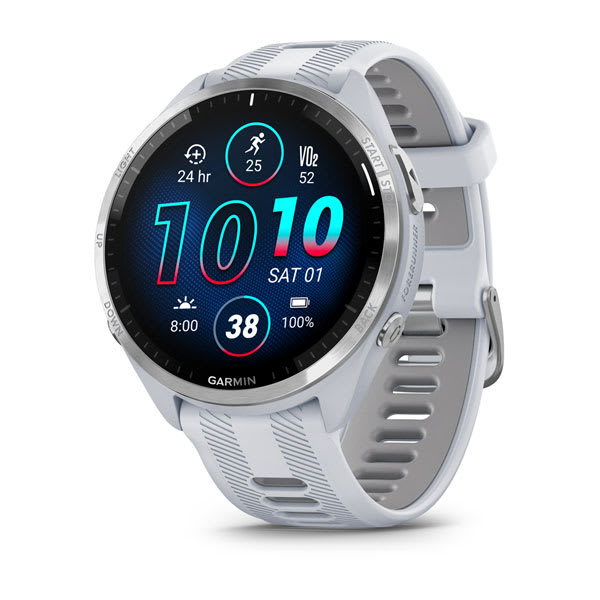
Garmin Forerunner 965 Review: The Most Accurate Wrist Based VO2 Max Estimate for Serious Endurance Athletes
Garmin’s flagship running watch pairs Firstbeat analytics with an AMOLED display to deliver the most comprehensive wrist based cardiorespiratory fitness tracking available. Presented By Our Partners VO2 max is the…

Tempo Studio: 3D Motion Capture and Real Weights for AI-Coached Strength Training
The only smart home gym that combines real weight plates with 3D body scanning and AI form correction. Does adding a depth sensor to a barbell change the equation for…

How Adrian Woolfson Is Helping Medicine Move From Reading DNA to Writing It
Adrian Woolfson trained under a Nobel laureate at Cambridge, ran global oncology programs at the world’s largest pharmaceutical companies, and led research and development at Sangamo Therapeutics during the first…
HigherDOSE PEMF Mat Review: Pulsed Electromagnetic Field Therapy Combined with Infrared and Crystal Healing
The HigherDOSE PEMF Mat layers pulsed electromagnetic fields over far infrared heat and a bed of amethyst and tourmaline crystals, targeting recovery, pain relief, and relaxation in a single mat….
