
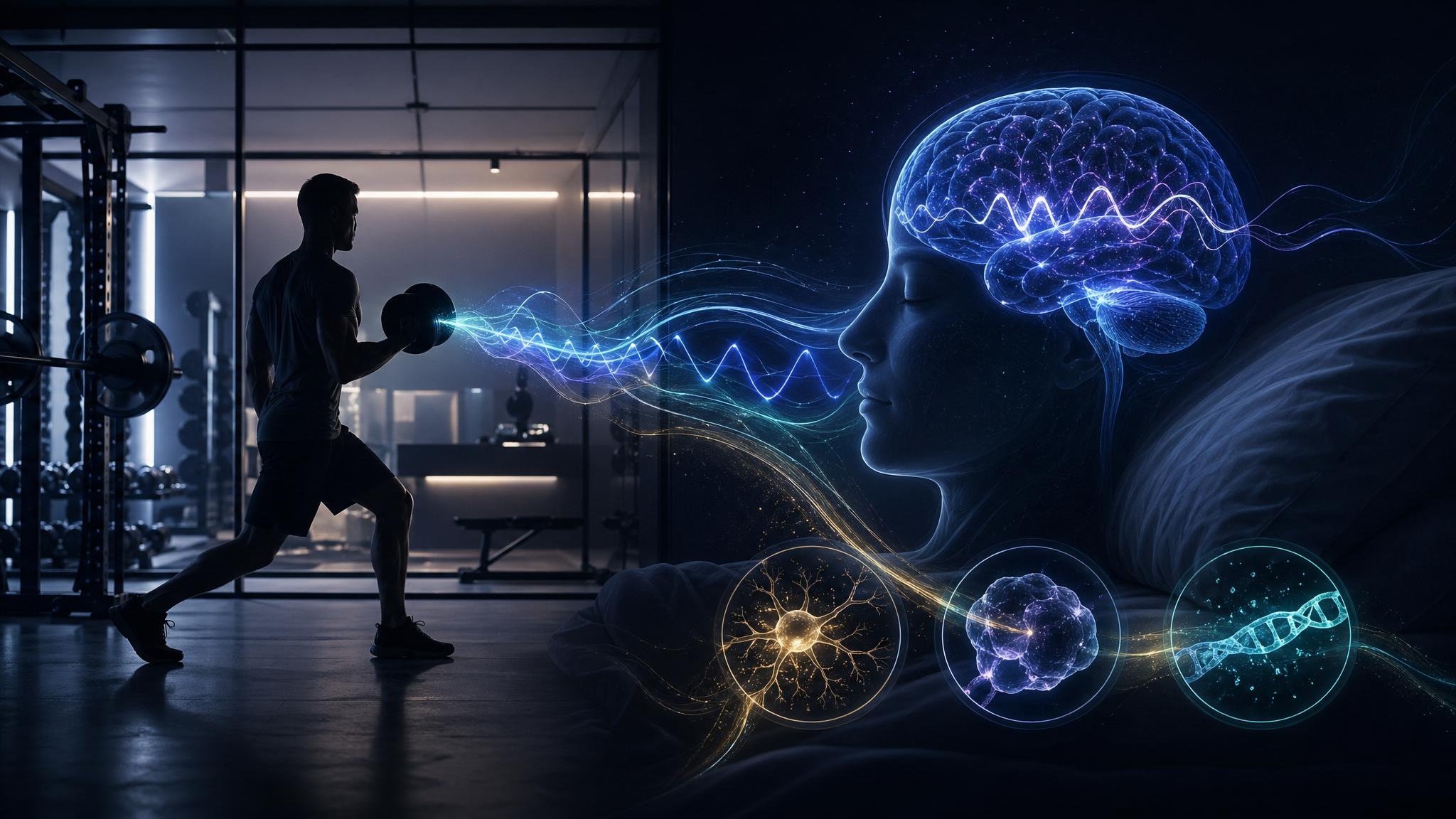
Strength Training Is the Most Underrated Sleep Aid in Medicine: What 86 Clinical Trials and 7,276 Participants Reveal About Lifting Weights and Deep Sleep
You have probably tried melatonin. Maybe magnesium glycinate. Perhaps you have invested in a cooling mattress pad, blackout curtains, or a white noise machine. You may have experimented with limiting screen time, taking warm showers before bed, or cycling through every sleep supplement on the market.
Presented By Our Partners



And yet, if you are like the roughly one in three American adults who report insufficient sleep, you are still waking up tired.
Here is the intervention that most people overlook, one that a growing body of rigorous clinical evidence now supports as one of the most effective tools for improving sleep quality, increasing time spent in deep restorative sleep stages, lowering anxiety and depression scores, and reducing the inflammatory biomarkers that accelerate biological aging: picking up heavy things and putting them down again.
Resistance training. Strength training. Lifting weights.
Not as an indirect benefit. Not as a nice side effect. As a primary, evidence-based sleep intervention that rivals or exceeds many pharmaceutical options, with a side effect profile that includes stronger bones, better metabolic health, and improved cognitive function.
The science has reached a tipping point. In the last 18 months, three major lines of research have converged to make the case that the gym and the bedroom are far more connected than most people realize, and that this connection runs in both directions.
The Largest Analysis Ever Conducted: 86 Trials, 7,276 Participants, One Clear Finding
In April 2025, a team of researchers led by Xiao-Qian Wang published the most comprehensive network meta-analysis ever conducted on exercise and sleep quality in BMC Public Health. The study pooled data from 86 randomized controlled trials enrolling 7,276 participants across six types of exercise interventions: aerobic exercise, resistance training, combined aerobic and resistance training, yoga, Pilates, and traditional Chinese sports such as tai chi and qigong.
The results were striking. Every form of exercise significantly improved sleep quality compared to control groups. But the hierarchy of effectiveness told a story that challenged the conventional wisdom that cardio is king for sleep.
Pilates ranked first in overall effectiveness, with a cumulative ranking probability of 91.7 percent. Aerobic exercise came in second at 69.7 percent. But resistance training, at 58.6 percent, performed in the same statistical neighborhood as combined aerobic and resistance training at 59.4 percent, and substantially outperformed yoga at 30.1 percent.
The dose-response analysis was equally revealing. The researchers found a nonlinear, U-shaped relationship between exercise volume and sleep improvement. The overall optimal dose for improving sleep quality was approximately 920 MET-minutes per week. To put that in practical terms, that is roughly equivalent to four sessions per week of moderate-intensity resistance training lasting 45 to 60 minutes each.
More is not always better. The U-shaped curve means that excessively high training volumes can actually diminish sleep benefits, likely through excessive sympathetic nervous system activation and elevated cortisol. The sweet spot for most people falls somewhere between three and five training sessions per week at moderate to moderately high intensity.
What makes this finding particularly important is the population breadth. These 86 trials included participants ranging from 18 to 75 years old, spanning healthy adults, clinical populations with diagnosed sleep disorders, and older adults with comorbidities. The sleep-enhancing effect of resistance training was consistent across nearly all subgroups.
The 12-Week Proof: How Resistance Training Rewrites Sleep Quality in Older Women
While meta-analyses provide the 30,000-foot view, individual trials reveal the mechanisms. A 2025 randomized controlled trial published in Psychology of Sport and Exercise by researchers at the Federal University of Rio Grande do Norte in Brazil examined what happens when you prescribe a structured 12-week resistance training program to 160 older women, aged 69.2 years on average, and track sleep quality, mental health, and functional capacity with validated clinical instruments.
The researchers did something clever. They stratified their participants by baseline sleep quality, creating four groups: women with poor sleep who trained, women with good sleep who trained, women with poor sleep who did not train, and women with good sleep who did not train. This design allowed them to answer a question that most exercise-sleep studies gloss over: does resistance training help people who already sleep poorly, or does it only benefit those who are already sleeping reasonably well?
The answer was unequivocal. Resistance training improved sleep quality regardless of baseline status.
Among the poor sleepers who trained, Pittsburgh Sleep Quality Index scores dropped from 7.26 to 4.61 over 12 weeks. A score above 5 on the PSQI is the clinical threshold for poor sleep quality. These women crossed from clinically poor sleep into the normal range through resistance training alone, with no sleep medications, no cognitive behavioral therapy, and no other interventions.
The mental health findings were equally significant. Anxiety scores declined in both resistance training groups. Depressive symptoms decreased and remained lower than controls. Cognitive function, measured by standardized testing, improved. Functional capacity, including grip strength and lower body power, increased.
Featured Partner
Invest in the Infrastructure Behind Modern Medicine
As healthcare expands beyond hospital walls, the buildings and campuses supporting that shift are generating compelling returns for investors who move early. The Healthcare Real Estate Fund offers qualified investors direct access to a curated portfolio of medical office, outpatient, and specialty care facilities.
Learn More →
The training protocol was not extreme. Participants performed eight exercises, three times per week, using 8 to 12 repetitions per set with progressive loading. This is a standard, accessible resistance training program that any gym in America could implement.
Inside the Sleeping Brain: How Exercise Changes Your Sleep Architecture
Subjective sleep quality improvements are meaningful, but the deeper question is what is happening inside the brain during sleep after resistance training. This is where the polysomnography studies become critical.
A study published in Scientific Reports by researchers at ETH Zurich and the University of Zurich used electroencephalography to measure sleep architecture in detail following vigorous exercise. They found that exercise significantly increased delta power during slow-wave sleep, the electrical signature of the deepest, most restorative phase of the sleep cycle known as N3 or Stage 3 NREM sleep.
Critically, exercise did not just increase the amount of slow-wave sleep. It increased the stability of slow-wave oscillations, meaning the brain maintained deeper sleep states for longer periods without interruption. This is the equivalent of not just spending more time in deep sleep, but spending higher-quality time there.
A separate randomized controlled trial published in the International Journal of Environmental Research and Public Health focused specifically on resistance training in older adults with sarcopenia, the age-related loss of muscle mass and strength. After 12 weeks of resistance exercise, the training group showed increased N3 sleep percentage while the control group showed decreased N3 percentage. The resistance training group also showed reduced sleep latency, meaning they fell asleep faster, and improved anti-inflammatory parameters including reductions in interleukin-6, a key inflammatory cytokine.
This last point deserves emphasis. Chronic low-grade inflammation is one of the primary drivers of poor sleep quality in aging populations, and poor sleep in turn drives more inflammation. Resistance training appears to break this cycle by simultaneously improving sleep architecture and reducing the inflammatory burden that disrupts it.
The Virtuous Cycle: Why Better Sleep Makes You Stronger, and Stronger Makes You Sleep Better
The relationship between resistance training and sleep is not a one-way street. It is a bidirectional feedback loop that, once activated, compounds over time.
A comprehensive review published in the Journal of Clinical Medicine in 2025 mapped the molecular pathways connecting sleep to athletic performance and recovery. During deep slow-wave sleep, the body releases a surge of growth hormone, testosterone, and insulin-like growth factor 1 (IGF-1), the three primary anabolic hormones responsible for tissue repair, protein synthesis, and muscle growth.
When sleep is disrupted or curtailed, this hormonal cascade is compromised. Research from the University of Texas Medical Branch found that acute sleep deprivation reduced muscle protein synthesis by 18 percent while simultaneously increasing plasma cortisol by 21 percent and decreasing plasma testosterone by 24 percent. This is a metabolic double hit: less building, more breaking down.
Chronic sleep deficiency exacerbates these catabolic processes, limiting the body’s ability to recover from training and adapt to progressive overload. In practical terms, this means that someone who trains hard but sleeps poorly is undermining their own results at the molecular level.
The virtuous cycle works like this: resistance training improves sleep quality and increases deep slow-wave sleep. Better deep sleep increases growth hormone and testosterone release. Higher anabolic hormone levels improve muscle recovery and protein synthesis. Better recovery allows for more effective training. More effective training further improves sleep quality.
This is not theoretical. It is measurable, and it is one of the most powerful positive feedback loops available in lifestyle medicine.
Why Resistance Training Outperforms Many Sleep Interventions
The standard first-line treatment for chronic insomnia is cognitive behavioral therapy for insomnia, known as CBT-I. It is effective, well-studied, and recommended by every major sleep medicine organization. But it is also difficult to access. There are not enough trained CBT-I therapists to meet demand, and the structured multi-week programs require significant time and financial commitment.
Pharmacological interventions, including benzodiazepines, Z-drugs like zolpidem, and newer orexin receptor antagonists, carry risks of dependence, next-day cognitive impairment, and in some cases, increased mortality. Melatonin supplements have modest evidence for sleep onset latency but minimal evidence for improving deep sleep architecture.
Resistance training, by contrast, is widely accessible, has an overwhelmingly positive side-effect profile, addresses multiple pathways simultaneously (inflammatory, hormonal, neurological, psychological), and produces durable benefits that persist as long as training is maintained.
The 2025 network meta-analysis found that resistance training’s effect on sleep quality (standardized mean difference of negative 1.12) was statistically significant and clinically meaningful, falling in the same range as aerobic exercise (negative 1.21) and combined training (negative 1.11). These effect sizes are comparable to or larger than those reported for many sleep medications in head-to-head trials.
The Timing Question: When Should You Train for Better Sleep?
One of the persistent myths in exercise science is that evening exercise disrupts sleep. The evidence tells a more nuanced story.
A systematic review and network meta-analysis published in Nature and Science of Sleep examined different intensities of evening exercise and their effects on sleep. The findings suggest that moderate-intensity exercise completed at least 90 minutes before bedtime does not impair sleep quality and may even enhance it. Only high-intensity exercise performed within 60 minutes of bedtime showed potential for sleep disruption, and even those effects were modest and variable across individuals.
For resistance training specifically, the evidence supports training at whatever time of day allows for consistency. Morning training may offer slight advantages for circadian rhythm entrainment in some individuals. Afternoon training (between 2 PM and 6 PM) tends to align with peak muscle strength and power output. Evening training (completed by 7 or 8 PM) appears to be neutral or mildly beneficial for most people.
The most important variable is not timing. It is consistency. The sleep benefits of resistance training accrue over weeks of regular training, not from a single session. The 2025 meta-analysis found that clinically meaningful improvements in sleep quality emerged as early as five weeks into a structured program.
What This Means For Your Practice
The research is now clear enough to make specific, actionable recommendations. If you are struggling with sleep quality, or if you simply want to optimize recovery and maximize the benefits of your training, here is what the evidence supports.
Start a structured resistance training program of three to four sessions per week. Target 8 to 12 repetitions per set across 6 to 10 compound and isolation exercises. Focus on progressive overload, gradually increasing weight or volume over time. This is the protocol most closely aligned with the trials showing sleep improvement.
Aim for approximately 920 MET-minutes per week of total exercise. For resistance training, this translates to roughly four sessions of 45 to 60 minutes at moderate intensity. If you combine resistance training with aerobic work, reduce each component proportionally. Remember the U-shaped curve: more is not always better.
Do not fear evening training, but give yourself a buffer. Complete your workout at least 90 minutes before your target bedtime. If you train at 6 PM and go to bed at 10 PM, you are well within the safe window. If you train at 9 PM and try to sleep at 10 PM, you may experience elevated heart rate and core temperature that delays sleep onset.
Track your sleep quality alongside your training. Use a wearable device that measures heart rate variability, sleep stages, and total sleep time. Look for trends over four to eight weeks rather than obsessing over single-night data. The Oura Ring, Whoop, Apple Watch, and similar devices provide sufficient resolution to detect meaningful changes in deep sleep percentage and HRV.
Prioritize compound movements that recruit large muscle groups. Squats, deadlifts, bench press, rows, and overhead presses generate the greatest metabolic and hormonal response. This is likely relevant to the sleep-enhancing mechanism, since the inflammatory and hormonal signals that improve sleep architecture scale with the amount of muscle tissue recruited.
Do not neglect the sleep side of the equation. The virtuous cycle requires input from both directions. Maintain consistent sleep and wake times, keep your bedroom cool and dark, limit caffeine after noon, and consider magnesium glycinate or theanine as evidence-based supplements that support both sleep quality and exercise recovery.
Be patient. The clinical evidence shows meaningful sleep improvements beginning at five weeks, with the full effect typically realized by 12 weeks. This is not an overnight fix. It is a long-term investment in a biological system that rewards consistency.
The conversation around sleep optimization has been dominated for too long by supplements, gadgets, and hacks. The most powerful tool for improving sleep quality was never in a bottle or an app. It was in the weight room. The evidence is here. The dose is clear. The side effects are almost entirely positive. And the virtuous cycle, once set in motion, compounds in ways that no single intervention can match.
Pick up the weights. Sleep will follow.


Similar Posts

The Daily Rounds: Longevity & Health Care Brief | April 1, 2026
🧬 Epigenetic reprogramming enters its first human trial as Life Biosciences begins treating retinal degeneration with ER-100, a cellular rejuvenation therapy that resets the biological clock without erasing cell identity. 💊 A gut bacteria compound doubles lung cancer immunotherapy response rates in preclinical models, pointing to the microbiome as a powerful and underutilized lever in oncology treatment protocols. 🤖 Over 173 AI-designed drug programs are now in human clinical trials, with 2026 marking the transition from AI-assisted research to AI-native drug discovery as a standard operating model. 🏋️ GLP-1 medications and exercise share a convergent molecular pathway through interleukin-6 signaling, meaning structured resistance and aerobic training is not just complementary to these medications but mechanistically synergistic. 😴 Consumer wearable sleep trackers have cleared the threshold for clinical validation, with the World Sleep Society formalizing recommendations that integrate these devices into clinical practice and disease management protocols.

Normatec Go: Portable Pneumatic Compression for On-the-Go Recovery
Recovery does not wait for you to get home. The metabolic window after training is when compression therapy delivers its greatest circulatory benefit, and for traveling athletes, that window has…

What the Latest Heart Research Means for Cardiology Patients in 2026
Cardiology is moving unusually fast right now. Several large trials published in the last year are reshaping how doctors think about protecting the heart, especially for people who also live…
Awair Element Air Quality Monitor: Indoor PM2.5, CO2, and VOC Tracking for Health
You spend roughly 90% of your life indoors, breathing air you cannot see and rarely measure. The pollutants in that air may be quietly accelerating the very diseases you are…

The Gut-Liver Axis: How a Younger Microbiome Reversed Hepatic Aging in 2026
A landmark study presented at Digestive Disease Week 2026 used autologous fecal microbiota transplant to restore a younger microbial fingerprint in aging mice, reversing core hallmarks of liver aging and…
Therabody SmartGoggles: Eye Massage, Heat Therapy, and Vagal Nerve Relaxation
The vagus nerve is the longest cranial nerve in the body, and stimulating it does not require an implanted device. It starts with the face. Presented By Our Partners Stress…
