
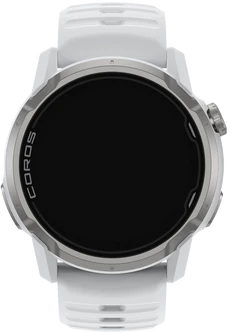
COROS APEX 4: Alpine Grade GPS Watch With Zero Lag Mapping and Mountain Sport Analytics
COROS’s mountain sport watch delivers ultra precise dual frequency GPS, instant offline map rendering, and training analytics purpose built for trail runners, climbers, and ski mountaineers at $429 to $479 with no subscription.
Presented By Our Partners



The mountain does not care about your watch’s feature list. It cares about whether your navigation works when cloud cover eliminates visual landmarks. It cares about whether your battery survives a 14 hour summit push. It cares about whether your GPS can track your position accurately through a narrow granite canyon where satellite signals bounce off vertical walls. The mountain tests equipment in ways that marketing specifications cannot predict.
Every year, mountain rescue teams respond to incidents involving athletes who relied on consumer technology that failed in the conditions they entered. GPS watches that lost satellite lock in steep terrain. Batteries that died before the descent. Touchscreens that became unresponsive in rain or with wet gloves. The consequences range from inconvenience to genuine danger.
The COROS APEX 4 is designed for the specific demands of mountain sport. It combines ultra precise dual frequency GPS that maintains accuracy in the narrow valleys and steep canyons where single frequency GPS fails, zero lag offline map rendering that enables real time navigation without waiting for tiles to load, and training analytics calibrated for the asymmetric demands of mountain activities where elevation gain, altitude exposure, and technical terrain create physiological stress that flat ground training does not.
What Is the COROS APEX 4?
The COROS APEX 4 is COROS Wearables’ mountain sport GPS watch, positioned between the ultralight PACE line (road and track focused) and the expedition grade VERTIX line (maximum durability and battery). Available in 43mm and 47mm case sizes, it targets trail runners, ski mountaineers, alpine climbers, and backcountry athletes who need robust navigation and training analytics without the bulk and weight of a full expedition watch.
The sensor suite includes COROS’s optical heart rate sensor for continuous HR and HRV monitoring, a pulse oximeter for SpO2 measurement, and a barometric altimeter. Health and training features include HRV analysis, sleep staging, daily stress monitoring, training load management, recovery scoring, and base fitness tracking. The watch also includes a built in microphone and speaker for voice memo recording during activities, a useful feature for logging conditions, route observations, or coaching notes hands free.
Navigation features include dual frequency (L1 + L5) GPS with GLONASS, Galileo, BeiDou, and QZSS support, providing approximately 1 meter position accuracy. Full offline topographic maps with zero lag rendering ensure that map panning, zooming, and route display respond instantly without the tile loading delays that plague some competitors. Checkpoint navigation, turn by turn route guidance, and breadcrumb trail recording are all included. Battery life reaches up to 70 hours in standard GPS mode for the 47mm model. The watch retails at $429 to $479 depending on size, with no subscription required.
The Science Behind It: Mountain Training, Elevation Stress, and Cardiovascular Adaptation
Mountain sports create a unique physiological challenge that combines high intensity cardiovascular exercise with environmental stressors that amplify the training stimulus. Climbing 1,000 meters of elevation gain requires substantially more energy than covering the equivalent horizontal distance, with the metabolic cost increasing non linearly with gradient steepness. A 2019 study published in the Journal of Applied Physiology by Vernillo et al. quantified the energy cost of uphill and downhill running, finding that uphill running at steep gradients increases metabolic cost by 40% to 60% compared to flat running at the same perceived effort.
Altitude compounds this challenge. Above 1,500 meters, reduced atmospheric oxygen pressure decreases arterial oxygen saturation, triggering compensatory increases in heart rate, ventilation, and cardiac output. The broader exercise physiology literature indicates VO2 max decreases approximately 7% to 8% per 1,000 meters of elevation above 1,500 meters. For mountain athletes training and competing at altitude, standard sea level training zones and performance expectations must be recalibrated.
Heart rate variability monitoring provides insight into how the body is managing combined exercise and altitude stress. According to the European Society of Cardiology’s 1996 guidelines, HRV reflects autonomic nervous system balance. In mountain settings, progressive HRV depression during a multi day trek or climbing expedition indicates cumulative stress that may not be apparent from heart rate or perceived effort alone. This information can guide pacing, rest days, and descent decisions.
SpO2 monitoring, while less precise from a wrist sensor than from a fingertip pulse oximeter, provides trending information about altitude acclimatization. An athlete whose overnight SpO2 readings are progressively declining despite spending days at altitude may be failing to acclimatize and should consider descending or spending additional time at current elevation before ascending further.
That is the science. Here is how the COROS APEX 4 applies it.
What the COROS APEX 4 Does Well
Zero lag map rendering is the APEX 4’s most immediately noticeable advantage. When panning, zooming, or rotating the map during navigation, the display responds instantly. Competitors’ map implementations often show loading placeholders or lag when moving across map tiles, which creates friction during real time navigation on complex mountain terrain. The APEX 4’s instant rendering makes map interaction feel like a dedicated GPS device rather than a watch running a map add on.
Dual frequency GPS maintains accuracy in the environments where mountain athletes actually train: steep sided valleys, dense forest, and narrow canyons where GPS signals reflect off rock walls and create positioning errors. In open terrain, single and dual frequency GPS perform similarly. In challenging mountain terrain, dual frequency provides meaningfully better track accuracy, which improves distance measurement, elevation gain calculation, and post activity analysis.
The two size options (43mm and 47mm) address a common frustration with mountain sport watches. Many outdoor watches are only available in 50mm or larger cases that overwhelm smaller wrists and impede sleep tracking comfort. The APEX 4’s 43mm option provides the same sensor suite, GPS accuracy, and map capability in a smaller package that fits a wider range of wrist sizes.
Featured Partner
Invest in the Infrastructure Behind Modern Medicine
As healthcare expands beyond hospital walls, the buildings and campuses supporting that shift are generating compelling returns for investors who move early. The Healthcare Real Estate Fund offers qualified investors direct access to a curated portfolio of medical office, outpatient, and specialty care facilities.
Learn More →
Voice memo recording via the built in microphone enables athletes to log conditions, observations, and coaching notes during activities without stopping to type on a small screen. For trail runners scouting race courses, ski mountaineers noting route conditions, or coaches recording feedback during training, this hands free feature addresses a real workflow need.
Pricing, Access, and Practical Realities
The COROS APEX 4 retails at $429 for the 43mm and $479 for the 47mm, with no subscription required. COROS Training Hub and all analytics features are free. This positions the APEX 4 significantly below the Garmin Fenix 7X Pro ($999.99), Garmin Epix Pro ($999.99), and COROS VERTIX 2S ($699), while offering dual frequency GPS and offline maps that more expensive watches also provide.
The watch works with both iOS and Android via the COROS app. ANT+ and Bluetooth support external heart rate monitors and power meters.
Regarding regulatory status: general wellness classification. No FDA clearances, no ECG, no clinical cardiac screening. All health metrics are wellness indicators.
At $429 to $479, the APEX 4 competes directly with the Garmin Forerunner 265 ($449.99) and the Polar Vantage V2 ($499.95). The APEX 4 offers offline maps and dual frequency GPS that neither competitor provides at this price, making it the strongest value for mountain sport athletes in this tier.
Who the COROS APEX 4 Is Best For
The APEX 4 is ideal for trail runners, ski mountaineers, alpine climbers, and mountain athletes who need dual frequency GPS accuracy and offline maps without paying $700 or more. It serves athletes who want VERTIX class navigation in a lighter, more affordable, and more wrist friendly package, and runners who split their time between trail and road who want a single watch that handles both.
Budget conscious mountain athletes who want premium navigation features at mid tier pricing will find the APEX 4’s value proposition compelling. It offers the mapping and GPS capabilities that define $700 to $1,000 watches at $429 to $479.
Who may want to skip it: road runners and track athletes who never use maps should consider the COROS PACE 4 ($249) instead. Anyone needing ECG or cardiac screening should look at Garmin Fenix 7X Pro or Apple Watch. Ultra endurance athletes needing 100+ hours of GPS should choose the VERTIX 2S. Users who want a rich smartwatch experience with apps and notifications should consider Apple Watch or Samsung Galaxy Watch.
How It Compares
Against the Garmin Forerunner 265 ($449.99), the APEX 4 adds offline topographic maps and dual frequency GPS that the Forerunner lacks entirely. Garmin counters with an AMOLED display, a more polished user interface, and deeper training analytics through Garmin Connect. For mountain navigation, COROS wins decisively. For road running analytics and display quality, Garmin wins.
Compared to the COROS VERTIX 2S ($699), the APEX 4 saves $220 to $270 while offering the same dual frequency GPS accuracy and offline map capability. The VERTIX 2S adds longer battery life (140 vs 70 hours GPS), titanium construction, and sapphire crystal. For multi day expeditions, the VERTIX 2S justifies its premium. For day to day mountain training, the APEX 4 delivers comparable navigation at a significant savings.
Against the Polar Vantage V2 ($499.95), the APEX 4 costs $20 to $70 less and adds offline maps and dual frequency GPS. Polar counters with deeper Training Load Pro analytics and the Nightly Recharge recovery system. For mountain navigation, COROS wins. For training science depth, Polar wins.
Limitations and Open Questions
COROS’s training analytics, while continually improving, remain less sophisticated than Garmin’s and Polar’s established platforms. Features like three dimensional training load analysis, HRV guided workout suggestions, and grade adjusted pace calculations are either absent or less developed. Athletes who deeply engage with training analytics may find the APEX 4’s software less satisfying than competitors.
No ECG at $429 to $479 is a growing gap as cardiac screening becomes available on progressively less expensive devices. The Fitbit Charge 6 offers FDA cleared ECG at $159.95. While the APEX 4 is clearly positioned as a mountain sport tool rather than a health monitor, the expectation for cardiac screening at this price point is increasing.
Battery life of 70 hours GPS (47mm model), while excellent for daily training, falls short of the VERTIX 2S’s 140 hours for multi day events. Ultra runners competing in events lasting longer than 48 hours should evaluate whether the APEX 4’s battery margin is sufficient for their needs.
COROS’s community and third party ecosystem remain smaller than Garmin’s. Fewer users, fewer app integrations, and fewer community features may matter to athletes who value social training elements and data sharing.
What This Means for Your Health
Mountain sport combines multiple pillars of Healthcare Discovery‘s longevity framework simultaneously. Movement is present in the cardiovascular and muscular demands of climbing, running, and skiing. Breathwork is engaged by the altitude induced changes in ventilation and the conscious breathing required during high intensity mountain efforts. Mindset is tested by the decision making demands, risk management, and sustained focus that mountain environments require. Sleep discipline becomes critical during multi day mountain activities.
Cardiovascular disease, the first of the Four Villains, responds powerfully to the type of training that mountain sport provides. The combination of sustained aerobic exercise, altitude exposure, and the varied intensity profiles of climbing and descending creates cardiovascular adaptations that flat ground exercise alone does not fully develop. Research consistently shows that outdoor physical activity in natural environments produces additional health benefits beyond intensity matched indoor exercise.
The COROS APEX 4 enables mountain athletes to train with precision in the environments that build the most resilient cardiovascular systems. Dual frequency GPS ensures accurate distance and elevation tracking. Offline maps keep athletes safe in unfamiliar terrain. Training load analytics prevent the overreaching that turns productive mountain training into injury or illness. At $429 to $479 with no subscription, it removes the cost barrier between serious mountain athletes and the navigation and analytics tools they need.

Explore the full wearable guide
See how the COROS APEX 4 compares with smart rings, watches, ECG devices, and other connected health hardware across the full Healthcare Discovery wearables guide.
Frequently Asked Questions
Does the COROS APEX 4 have offline maps?
Yes. The APEX 4 includes full offline topographic maps with zero lag rendering and turn by turn navigation. Maps are free and require no subscription. The touchscreen enables intuitive map interaction during activities. Map quality and rendering speed are comparable to watches costing $200 to $300 more.
How long does the COROS APEX 4 battery last?
The 47mm model lasts up to 70 hours in standard GPS mode and up to 38 hours in dual frequency GPS mode. The 43mm model offers slightly shorter battery life due to the smaller case. In daily use, both models last approximately 20 to 25 days between charges. All features are included with the $429 to $479 purchase price.
Does the COROS APEX 4 have ECG?
No. The APEX 4 is classified as a general wellness device with no FDA clearances. It does not include ECG or atrial fibrillation detection. Mountain athletes who need cardiac screening should pair the APEX 4 with an ECG capable device.
What is the difference between COROS APEX 4 and VERTIX 2S?
The VERTIX 2S ($699) adds longer battery life (140 vs 70 hours GPS), titanium bezel, sapphire crystal, and 10 ATM water resistance. The APEX 4 ($429 to $479) is lighter, less expensive, available in two sizes (43mm, 47mm), and shares the same dual frequency GPS and offline map capability. Choose the VERTIX 2S for multi day expeditions; choose the APEX 4 for day to day mountain training.
Can the COROS APEX 4 record voice memos?
Yes. The built in microphone and speaker allow voice memo recording during activities. This enables hands free logging of trail conditions, coaching notes, route observations, or personal reflections during runs and hikes. Voice memos are stored on the watch and synced to the COROS app.
Is the COROS APEX 4 good for trail running?
Yes. The dual frequency GPS provides 1 meter accuracy in challenging mountain terrain. Offline topographic maps enable route navigation on unfamiliar trails. The barometric altimeter tracks elevation gain accurately. Training load analytics account for the additional stress of elevation change. The APEX 4 is one of the most capable trail running watches available under $500.
COROS APEX 4 at a glance
- Hardware price
- $429 to $479
- Subscription
- None required
- First year total
- $429
- Form factor
- Mountain sports GPS watch
- FDA status
- Wellness device, no clearance
- HSA/FSA
- Eligible
Measures Daily stress, GPS, HR, HRV, Navigation, Offline maps, Sleep, SpO2, Training load
Maintained in the Healthcare Discovery device database and updated automatically.


Similar Posts

The New Longevity Gold Rush: Can Science Really Reverse Aging, or Are We Getting Ahead of the Evidence?
A closer look at Yamanaka factors, partial reprogramming, David Sinclair, Altos Labs, and the widening gap between real age-reversal science and the hype surrounding it.

AI Is Making Body Scans Cheaper. Medicine Still Has to Decide What They’re For.
AI may make full-body MRI faster and cheaper, but lower scan prices do not automatically create better healthcare. The real test is evidence, follow-up, affordability, and whether discovery becomes useful…

🧬 Daily Discoveries — Longevity & Health Intelligence | March 27, 2026
Your daily briefing on the latest breakthroughs in longevity science, health technology, and lifestyle optimization — curated from the world's top research institutions.

Therabody SmartGoggles: Eye Massage, Heat Therapy, and Vagal Nerve Relaxation
The vagus nerve is the longest cranial nerve in the body, and stimulating it does not require an implanted device. It starts with the face. Presented By Our Partners Stress…
The Daily Rounds: Longevity & Health Care Brief | June 3, 2026
🦠 Akkermansia Muciniphila Cuts Post-Diet Weight Regain in Half: A Nature Medicine RCT shows pasteurized Akkermansia supplementation slows weight regain and preserves insulin sensitivity during a 24-week maintenance period after dieting. 🧠 Thymus Organ Predicts Longevity and Cancer Survival: Mass General Brigham's study of over 25,000 adults links a healthy thymus to 50% lower mortality and 63% lower cardiovascular death risk throughout adulthood. 🔬 Naked Mole Rat Longevity Gene Successfully Transferred to Mice: University of Rochester demonstrates cross-species transfer of the HMW-HA-producing HAS2 gene extends median lifespan and reduces cancer risk in mice, establishing a proof of principle for interspecies longevity translation. ❤️ Ultra-Processed Foods Linked to 67% Higher Heart Attack Risk: A European Heart Journal consensus statement calls for immediate patient counseling to reduce ultra-processed food intake as a primary cardiovascular prevention measure. 😴 Weak Circadian Rhythms Drive Nearly 2.5x Dementia Risk: Neurology study confirms that circadian amplitude and timing, not just sleep hours, are major independent drivers of brain aging and dementia risk.
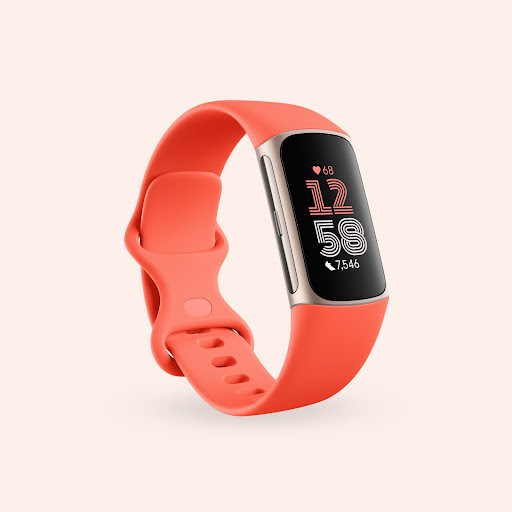
Fitbit Charge 6: The Most Affordable FDA Cleared ECG Tracker With Google Integration
At $159.95, the Fitbit Charge 6 delivers FDA cleared ECG and irregular heart rhythm detection in a slim fitness band, making clinical grade cardiac screening accessible to the widest possible…
