
Aktiia Bracelet: 24/7 Cuffless Blood Pressure Monitoring From Your Wrist
A wrist worn bracelet that measures blood pressure continuously throughout the day and night using optical sensors, CE marked in Europe and awaiting FDA clearance in the United States.
Presented By Our Partners



The paradox of blood pressure monitoring is that the measurement itself changes the thing being measured. The act of wrapping a cuff around your arm, inflating it until arterial blood flow stops, and slowly deflating while listening for Korotkoff sounds (or measuring oscillometric vibrations) introduces stress, discomfort, and situational awareness that can elevate blood pressure by 10 to 30 mmHg in susceptible individuals. This phenomenon, known as white coat hypertension when it occurs in clinical settings, affects an estimated 15% to 30% of patients and leads to both overdiagnosis and overtreatment.
A 2022 review in Nature Reviews Cardiology by Schutte, Kollias, and Stergiou examined emerging blood pressure monitoring technologies and emphasized that blood pressure is not a single number; it is a continuously varying physiological parameter with clinically significant patterns: nocturnal dipping (the normal 10% to 20% decrease during sleep), morning surge (the rapid increase upon waking), and variability patterns that carry independent prognostic information for cardiovascular outcomes. Capturing these patterns requires monitoring that is continuous, unobtrusive, and comfortable enough to wear 24 hours a day.
The Aktiia Bracelet was designed to capture exactly this: a continuous blood pressure profile measured passively from the wrist, without cuff inflation, without interrupting daily activities, and without waking the wearer during sleep.
What Is the Aktiia Bracelet?
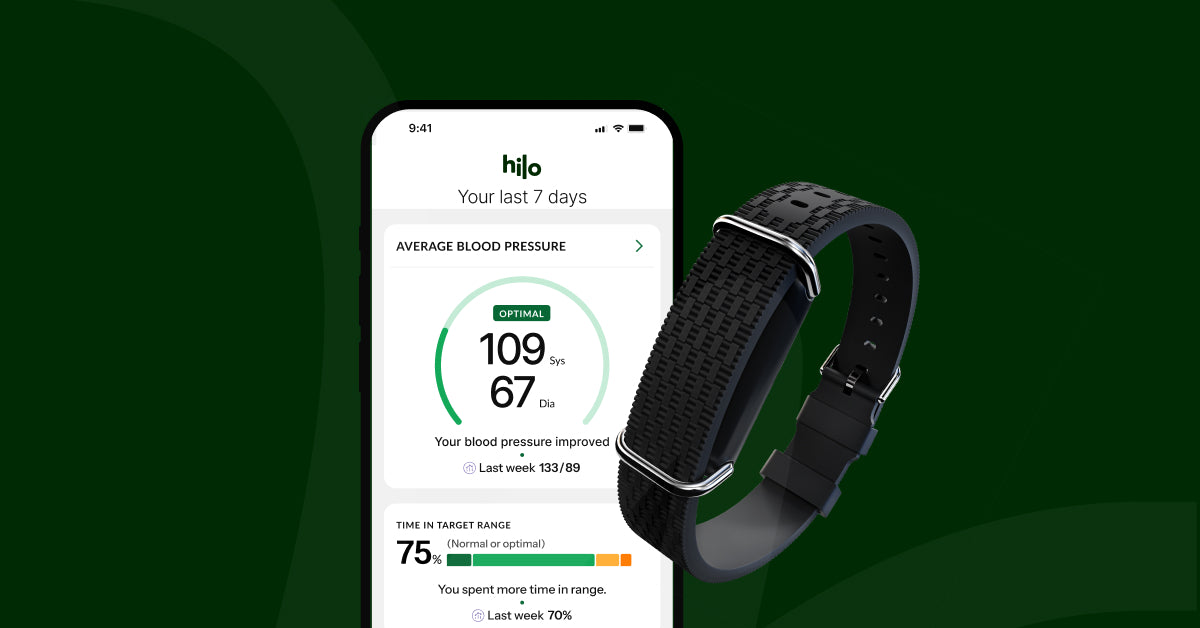
The Aktiia Bracelet is a wrist worn device that uses optical photoplethysmography (PPG) sensors to estimate blood pressure continuously throughout the day and night. Unlike traditional blood pressure monitors that require an inflatable cuff and active measurement sessions, the Aktiia measures blood pressure passively during normal daily activities and sleep, taking readings automatically without user intervention.
The device requires an initial calibration against a validated arm cuff blood pressure monitor. During this calibration session, the user takes several reference blood pressure readings with a traditional cuff while wearing the Aktiia Bracelet, establishing the relationship between the wrist PPG signal and the user’s actual blood pressure values. After calibration, the bracelet operates autonomously, capturing blood pressure estimates throughout the day and syncing data to the Aktiia app.
The bracelet also tracks heart rate and basic sleep patterns. The Aktiia app presents blood pressure data as day and night averages, trends over time, and individual readings with timestamps. The app can generate physician shareable reports and integrates with Apple Health for broader health data aggregation.
The Aktiia Bracelet carries CE marking for the European market, where it is available for purchase and actively marketed as a medical grade blood pressure monitoring device. In the United States, the device is available but with FDA clearance still pending. Pricing is approximately $199 for the device plus $9.99 per month (approximately $119.88 per year) for the required subscription that includes the monitoring service and algorithm access.
The Science Behind Optical Cuffless Blood Pressure Estimation
PPG based blood pressure estimation works by analyzing the characteristics of the arterial pulse waveform captured through optical sensors on the wrist. When the heart contracts, it sends a pressure wave through the arterial system. The shape, amplitude, timing, and morphological features of this wave at a peripheral site (the wrist) correlate with underlying blood pressure through complex physiological relationships involving arterial stiffness, vascular resistance, and cardiac output.
Aktiia’s algorithm processes these pulse waveform features through machine learning models trained on large datasets of simultaneous PPG recordings and reference blood pressure measurements. The initial cuff calibration personalizes the model to the individual user’s vascular physiology, improving the accuracy of subsequent cuffless estimates.
The 2022 meta analysis by Islam et al. in European Heart Journal: Digital Health evaluated 15 cuffless blood pressure devices across 16 studies. The pooled analysis found mean differences of 3.42 mmHg (systolic) and 1.16 mmHg (diastolic) between cuffless wearables and reference devices, which was not statistically significant. However, the authors cautioned that heterogeneity across studies was high (I² of 95.4% for systolic), and the variation in validation protocols limited the ability to identify the most accurate device or technology.
Aktiia has published validation studies demonstrating accuracy within the International Organization for Standardization (ISO) 81060-2 standard for blood pressure devices. However, like all cuffless technologies, accuracy degrades when the user’s vascular characteristics change over time (due to medication changes, weight changes, aging, or disease progression), which is why periodic recalibration against a cuff reference is recommended.
The clinical value proposition of continuous cuffless monitoring is capturing the full 24 hour blood pressure profile, including nocturnal values that are impossible to measure with traditional cuffs without waking the patient. Nighttime blood pressure is now recognized as a stronger predictor of cardiovascular outcomes than daytime readings in many populations, making passive overnight monitoring particularly clinically valuable.
What the Aktiia Bracelet Does Well
The Aktiia’s primary strength is continuous, passive monitoring that captures the 24 hour blood pressure profile without any user intervention after initial calibration. The user simply wears the bracelet, and blood pressure data accumulates automatically. This eliminates the compliance problem that undermines traditional home monitoring: there is no measurement to remember, no technique to perfect, and no daily routine to maintain.
Overnight blood pressure measurement is a particularly valuable capability. Nighttime blood pressure dipping patterns have emerged as clinically important predictors of cardiovascular risk, but capturing nocturnal blood pressure with traditional monitors requires either a 24 hour ambulatory monitor (which inflates the cuff during sleep, disrupting the very sleep state being measured) or the impractical expectation that patients will wake themselves to take manual readings. The Aktiia measures passively during sleep without any cuff inflation or disturbance.
Featured Partner
Invest in the Infrastructure Behind Modern Medicine
As healthcare expands beyond hospital walls, the buildings and campuses supporting that shift are generating compelling returns for investors who move early. The Healthcare Real Estate Fund offers qualified investors direct access to a curated portfolio of medical office, outpatient, and specialty care facilities.
Learn More →
The day versus night blood pressure comparison that the Aktiia app provides is clinically meaningful. Non dipping patterns (failure to achieve the normal 10% to 20% nocturnal blood pressure decrease) are associated with increased cardiovascular risk, organ damage, and adverse outcomes. Identifying non dipping requires the kind of continuous monitoring that the Aktiia provides and that intermittent cuff measurements cannot.
The app’s trend visualization and physician reporting features create a practical clinical feedback loop. Longitudinal blood pressure patterns can inform medication timing decisions (chronotherapy), lifestyle modification assessments, and treatment efficacy monitoring in ways that isolated cuff readings cannot support.
Pricing, Access, and Practical Realities
The Aktiia Bracelet costs approximately $199 for the device plus a required subscription of approximately $9.99 per month ($119.88 per year). This makes the first year total cost approximately $319, and ongoing annual cost approximately $120 for the subscription. This pricing model is significantly more expensive over time than a traditional connected blood pressure monitor (one time cost of $100 with no subscription) but provides continuous rather than intermittent monitoring.
The required subscription is a meaningful ongoing commitment. Unlike devices where subscriptions are optional add ons, the Aktiia’s blood pressure monitoring functionality requires an active subscription to access the monitoring algorithms and data analysis. If the subscription lapses, the device’s primary value proposition ceases to function.
The Aktiia Bracelet carries CE marking for the European market, where it has been cleared for medical grade blood pressure monitoring. In the United States, FDA clearance is pending. US consumers can purchase and use the device, but its regulatory status means it is not positioned as an FDA cleared medical device in the US market. This regulatory distinction matters for clinical adoption, insurance coverage, and physician confidence in the data.
HSA and FSA eligibility is not confirmed for the Aktiia Bracelet in the US market, likely due to the pending FDA clearance status.
Who the Aktiia Bracelet Is Best For
The Aktiia is best suited for patients with diagnosed hypertension who want comprehensive 24 hour blood pressure profiling, including nocturnal monitoring, without the inconvenience and sleep disruption of traditional ambulatory blood pressure monitors. Patients undergoing medication titration who need to understand how blood pressure responds across the full diurnal cycle will find the continuous data particularly informative.
Users with suspected white coat hypertension or masked hypertension (normal office readings but elevated readings outside clinical settings) can use the Aktiia to document their true ambulatory blood pressure profile. The continuous, unobtrusive monitoring eliminates the measurement associated stress that confounds traditional monitoring in these populations.
Early adopters and health technology enthusiasts interested in continuous blood pressure data as part of a comprehensive health monitoring stack will find the Aktiia compelling, with the understanding that the technology is still evolving and accuracy does not match clinical cuff measurement.
Users who need maximum blood pressure accuracy for critical clinical decisions should use an FDA cleared arm cuff monitor. Users who want a simple, accurate, one time purchase blood pressure solution should choose the Withings BPM Connect ($99.95, no subscription). Users in the US who require FDA cleared regulatory status should note the pending clearance and consider whether that affects their confidence in the data.
How the Aktiia Bracelet Compares
Against the Withings BPM Connect ($99.95, no subscription), the Aktiia offers continuous passive monitoring versus intermittent active measurement. The BPM Connect provides more accurate individual readings using validated oscillometric technology, while the Aktiia captures a more complete blood pressure profile over time. For most hypertensive patients, the BPM Connect is more practical and affordable. For patients who need 24 hour profiling, the Aktiia provides unique capabilities.
Against the Omron HeartGuide ($499.99), which also offers wrist based blood pressure monitoring, the Aktiia provides passive continuous monitoring while the HeartGuide requires active measurement sessions. The HeartGuide uses oscillometric technology (inflatable cuff in the watchband), which is more validated than PPG estimation. The HeartGuide has FDA clearance; the Aktiia does not yet in the US. Price comparison favors the Aktiia in first year cost ($319 vs $500) but tips toward the HeartGuide over multiple years due to the Aktiia’s ongoing subscription.
Against the Biobeat BB-613, which holds FDA clearance for clinical cuffless BP monitoring, the Aktiia offers a consumer accessible, reusable form factor versus a clinical disposable patch. The BB-613 provides institutional level monitoring infrastructure; the Aktiia provides individual consumer monitoring. These serve fundamentally different markets with different accuracy requirements and clinical support structures.
Limitations and Open Questions
Accuracy is the fundamental limitation of all PPG based blood pressure estimation. While the Aktiia has published validation data meeting ISO standards, real world accuracy across diverse populations, body positions, activity levels, and clinical conditions is less well characterized than for oscillometric devices with decades of validation data. Users should understand that Aktiia readings are estimates, not direct measurements.
The required cuff calibration introduces a dependency that partially undermines the “cuffless” value proposition. Calibration must be performed initially and periodically recalibrated (Aktiia recommends monthly recalibration) to maintain accuracy. This means users still need a traditional blood pressure cuff alongside the Aktiia, and they must maintain a calibration routine.
The mandatory subscription model creates ongoing cost and creates a dependency on Aktiia’s continued operation. If the company discontinues the service, the device loses its primary functionality. This is a risk that consumers should weigh against the one time purchase model of traditional monitors.
FDA clearance pending status in the US limits clinical adoption and physician confidence. Many US physicians will be hesitant to base clinical decisions on data from a device that lacks domestic regulatory clearance, regardless of its CE marking in Europe. This may change upon FDA clearance, but the timing of that clearance remains uncertain.
What This Means for Your Health
Hypertension management is one of the most impactful interventions for defending against cardiovascular disease, one of the Four Villains. The Aktiia Bracelet points toward a future where blood pressure is monitored continuously and passively, providing the complete hemodynamic picture that intermittent measurements can only approximate. Within Healthcare Discovery‘s Five Pillars framework, continuous BP monitoring reveals how every pillar, Nutrition, Movement, Sleep, Breathwork, and Mindset, influences your blood pressure in real time, throughout the day, every day.
The technology is promising but not yet mature. If you are considering the Aktiia, understand that you are adopting an evolving technology with genuine capabilities and genuine limitations. The continuous data it provides is clinically valuable, but it does not replace the accuracy of a validated arm cuff monitor for critical measurements. Use the Aktiia for pattern recognition and trend analysis, and use a traditional cuff for the precise measurements that inform clinical decisions.
The strongest practical advice: do not let the pursuit of the perfect monitoring solution prevent you from monitoring at all. If the Aktiia’s continuous data motivates you to engage more actively with your blood pressure health, that engagement alone may be worth more than the incremental accuracy of a device you use less often. Consistency trumps precision in most monitoring contexts, and the Aktiia optimizes for consistency above all else.

Explore the full wearable guide
See how the Aktiia Bracelet compares with smart rings, watches, ECG devices, and other connected health hardware across the full Healthcare Discovery wearables guide.
Frequently Asked Questions
Is the Aktiia Bracelet FDA cleared?
The Aktiia Bracelet carries CE marking for the European market, where it is cleared for medical grade blood pressure monitoring. In the United States, FDA clearance is pending. US consumers can purchase and use the device, but it is not currently positioned as an FDA cleared medical device in the US market. This is an important regulatory distinction that affects clinical adoption and physician confidence.
Does the Aktiia Bracelet require a subscription?
Yes. The Aktiia requires a subscription of approximately $9.99 per month ($119.88 per year) in addition to the approximately $199 device cost. The subscription is required for blood pressure monitoring functionality, including algorithm access and data analysis. Without an active subscription, the device’s primary monitoring capabilities are not available.
How accurate is the Aktiia for blood pressure?
Aktiia has published validation studies demonstrating accuracy within ISO 81060-2 standards for blood pressure devices. A 2022 meta analysis of cuffless BP devices found pooled mean differences of 3.42 mmHg (systolic) and 1.16 mmHg (diastolic) compared to reference devices. Accuracy depends on proper calibration, and periodic recalibration against a cuff based reference is recommended. PPG based estimation is inherently less accurate than direct oscillometric measurement for individual readings.
Does the Aktiia Bracelet require calibration?
Yes. The Aktiia requires initial calibration against a validated arm cuff blood pressure monitor. During calibration, users take several reference cuff readings while wearing the bracelet, establishing the relationship between the wrist PPG signal and actual blood pressure. Aktiia recommends monthly recalibration to maintain accuracy, which means users need to own a traditional blood pressure cuff alongside the Aktiia.
Can the Aktiia measure blood pressure during sleep?
Yes. This is one of the Aktiia’s primary advantages. The bracelet measures blood pressure passively during sleep without cuff inflation, enabling capture of nocturnal blood pressure patterns. Nighttime blood pressure dipping patterns are increasingly recognized as important cardiovascular risk predictors. Traditional cuff based monitors either cannot measure during sleep or disturb sleep by inflating periodically.
Aktiia Bracelet at a glance
- Hardware price
- $199
- Subscription
- $119.88 per year
- First year total
- $318.88
- Form factor
- Wrist bracelet
- FDA status
- Wellness device, no clearance
- HSA/FSA
- Not confirmed
Measures 24/7 cuffless BP, HR, Sleep
Maintained in the Healthcare Discovery device database and updated automatically.


Similar Posts

The Cure Hiding in Plain Sight: How Every Cure Is Rewriting the Rules of Drug Discovery
Every Cure is a nonprofit using AI and drug repurposing to uncover treatments hidden inside existing medicines. Founded by physician-scientist David Fajgenbaum after a repurposed drug saved his own life,…

The Daily Rounds: Longevity & Health Care Brief | April 7, 2026
🔬 Aging Redefined as Systems Failure: Researchers in Berlin are shifting the aging conversation toward preserving biological coordination across systems, not fixing a single defect. 🤖 AI Drug Discovery Reaches Scale: Over 173 AI-discovered drug programs are now in clinical trials, and a new free platform targeting global diseases launched this week. 😴 Sleep as a Disease Predictor: Stanford's SleepFM AI model predicts 130+ conditions from one night of sleep data, positioning sleep as a critical longevity biomarker. 🦠 Gut Microbiome Controls Immunity Directly: Common gut microbes inject proteins into immune cells, and a single bacterial metabolite doubled lung cancer immunotherapy response in mice. ❤️ Long-Term Heart-Aging Study Begins: UTMB's decade-long Galveston Heart Study will track thousands of participants to uncover how cardiovascular and brain health intersect with aging.

LetsGetChecked Hormone Tests: At-Home Panels With Nurse-Supported Results
Knowing your hormone levels is only half the equation. Understanding what those numbers mean for your specific situation requires a conversation that most at-home testing platforms leave to the user….
PlatinumLED BioMax 900 Review: Seven Wavelength Red Light Therapy for Deep Tissue Recovery and Performance
With seven wavelengths spanning 480 to 1064 nanometers, the BioMax 900 delivers the broadest spectrum in consumer photobiomodulation. Presented By Our Partners The question that drives photobiomodulation research is not…
Owlet Dream Sock: FDA Cleared Infant SpO2 and Heart Rate Monitor for Home Use
The first FDA cleared consumer pulse oximetry monitor designed specifically for infants, offering continuous SpO2 and heart rate tracking from a soft fabric sock worn during sleep. Presented By Our…
Eli Health Hormonal Tracker: Daily Saliva-Based Hormone Monitoring for Perimenopause
Perimenopause can last a decade. For most of that time, standard lab work says everything is “normal” while the body tells a very different story. Presented By Our Partners The…
