
The Daily Rounds: Longevity & Health Care Brief | March 30, 2026
Today’s briefing covers a landmark week in cardiovascular prevention, a blockbuster AI drug discovery deal, gut bacteria that supercharge cancer immunotherapy, a massive circadian health study validating the four fundamentals, and next-generation wearables that are rewriting what continuous monitoring means. Here is everything you need to know.
Presented By Our Partners



Cardiovascular Prevention Gets Its Biggest Overhaul in a Decade
The American College of Cardiology and the American Heart Association jointly released updated lipid management guidelines at the ACC 75th Annual Scientific Session in New Orleans on March 28. The new framework shifts cardiovascular prevention earlier in life, recommending that screening begin as young as age nine and that statin therapy be considered starting at age 30 for patients with elevated risk profiles. A new risk calculator called PREVENT, built from data on 6.6 million people, now factors in blood sugar, kidney function, and the genetic marker lipoprotein(a) alongside traditional LDL cholesterol.
The guidelines also delivered clearer LDL targets: below 100 mg/dL for those without cardiovascular disease, below 70 mg/dL for intermediate risk, and below 55 mg/dL for high risk patients. In a parallel study presented at the same session, the cholesterol drug evolocumab cut first-time heart attacks and strokes by 31 percent in high-risk diabetes patients who had no known artery disease. This is the first major trial showing a PCSK9 inhibitor can prevent cardiovascular events in a primary prevention population with diabetes.
Eli Lilly Bets $2.75 Billion on AI-Discovered Drugs
Eli Lilly announced a $2.75 billion deal with Insilico Medicine on March 29, bringing AI-discovered drug candidates to its global pipeline. Insilico receives $115 million upfront with the remainder tied to regulatory and commercial milestones. The partnership centers on Insilico’s platform, which compressed the traditional six to eight year discovery timeline to under 30 months for its lead candidate targeting idiopathic pulmonary fibrosis, now in Phase II clinical trials after publishing proof-of-concept validation in Nature Medicine.
The deal arrives as the AI drug discovery field crosses a critical threshold: over 173 AI-discovered programs are now in clinical development, with 15 to 20 expected to enter pivotal Phase III trials in 2026. No AI-discovered drug has yet received full FDA approval, making this year’s clinical readouts potentially the most consequential in the field’s short history.
Gut Bacteria Compound Doubles Cancer Immunotherapy Response
Researchers at the University of Florida Health Cancer Institute identified a small compound called Bac429, produced naturally by gut bacteria, that doubled the immunotherapy response rate in mice with highly treatment-resistant lung cancer. When injected into tumors, Bac429 stimulated an immune cascade that reduced tumor growth by 50 percent after checkpoint inhibitor therapy. The compound can now be synthesized and is being prepared for human testing.
Featured Partner
Invest in the Infrastructure Behind Modern Medicine
As healthcare expands beyond hospital walls, the buildings and campuses supporting that shift are generating compelling returns for investors who move early. The Healthcare Real Estate Fund offers qualified investors direct access to a curated portfolio of medical office, outpatient, and specialty care facilities.
Learn More →
Separately, the gut bacterium Akkermansia muciniphila continues to emerge as a reliable biomarker for predicting immunotherapy response. Cancer patients whose microbiomes contain Akkermansia respond measurably better to anti-PD-1 and anti-PD-L1 therapies. Research from Weill Cornell Medicine published in January showed that the amino acid asparagine can either feed tumor growth or activate immune cells depending on gut microbiome composition, underscoring how profoundly diet and microbial ecology shape cancer outcomes.
Alzheimer’s “Death Switch” Opens a New Therapeutic Door
The Heidelberg University discovery of a molecular “death complex” in Alzheimer’s disease continues to generate momentum. The TRPM4/NMDA receptor interaction acts as a switch that tells neurons to prune their own connections and ultimately self-destruct. Researchers used a compound called FP802 to disrupt this pairing in mouse models, successfully slowing disease progression and preserving memory. This is a non-amyloid mechanism, meaning it opens an entirely new class of therapeutic targets separate from the antibody drugs currently on the market.
In a parallel advance, scientists have engineered ordinary brain cells (astrocytes) into plaque-clearing machines using CAR technology adapted from cancer immunotherapy. Together, these developments signal that Alzheimer’s research is diversifying beyond the amyloid hypothesis toward multi-mechanism intervention strategies.
Nearly 39,000 People Prove the Four Fundamentals Work
A landmark study published in the journal SLEEP examined 38,838 healthy adults who participated in the “Core Four Challenge,” a 31-day program requiring four daily behaviors: morning sunlight exposure, time-restricted eating, Zone 2 cardiovascular exercise, and five minutes of intentional breathwork. Participants wore wrist-based monitors tracking sleep quality and cardiorespiratory fitness throughout the challenge.
The results showed significant improvements in sleep consistency, cardiorespiratory fitness measured by VO2 max proxy, and parasympathetic nervous system activity (higher HRV). This is the first large-scale evidence demonstrating that aligning these four circadian behaviors together produces compounding health benefits. The study validates what the fundamentals-first approach has always emphasized: nutrition timing, movement, breath, and recovery are the foundation. Everything else is built on top.
Wearables Enter the Multi-Biomarker Era
Trinity Biotech announced a mid-2026 commercial launch for its CGM+ biosensor, which combines continuous glucose monitoring with heart activity, body temperature, and physical activity tracking on a single ultra-thin sensor. Meanwhile, Garmin has secured a patent for estimating blood sugar using optical sensors already present in its smartwatches, signaling that non-invasive glucose monitoring may soon become standard in consumer fitness devices.
The FDA granted De Novo classification to Biolinq’s Shine sensor, the first continuous glucose monitor that eliminates the traditional insertion needle entirely. And in the over-the-counter space, Dexcom’s Stelo and Abbott’s Lingo are now available without a prescription for metabolic health optimization. The convergence of multi-parameter sensing, non-invasive technology, and direct-to-consumer access is making continuous health monitoring available to anyone, not just patients with a diagnosis.
Epigenetic Reprogramming and Senolytic Progress
Life Biosciences continues enrolling patients in the first FDA-cleared human trial of epigenetic reprogramming, a study that aims to reverse biological age markers at the cellular level. Early preclinical work demonstrated that reprogramming factors can restore youthful gene expression patterns without triggering tumor formation, a safety concern that had previously stalled the field.
On the senolytic front, new in-vitro data shows that senolytic compounds can reduce the epigenetic age of blood samples, providing direct molecular evidence that clearing senescent cells rejuvenates remaining tissue. DNA methyltransferase inhibitors and histone deacetylase inhibitors are now being explored as adjunct therapies to enhance the durability of senolytic treatment effects.
TOP TAKEAWAYS
- ❤️ New ACC/AHA guidelines recommend cardiovascular screening starting at age nine and statin consideration at 30, with evolocumab cutting first heart attacks by 31 percent in diabetes patients.
- 🤖 Eli Lilly’s $2.75 billion deal with Insilico Medicine marks the largest AI drug discovery partnership ever, as over 173 AI-discovered drugs advance through clinical trials toward the first potential FDA approval.
- 🦠 A gut bacteria compound called Bac429 doubled cancer immunotherapy response in resistant lung tumors and is now being prepared for human testing.
- 😴 A study of nearly 39,000 adults proved that combining morning sunlight, time-restricted eating, Zone 2 exercise, and five minutes of breathwork significantly improves sleep, fitness, and nervous system resilience.
- ⛰️ Multi-biomarker wearables combining glucose, heart, temperature, and activity sensing are launching in 2026, while the first needle-free CGM has received FDA clearance.


Similar Posts

The Daily Rounds: Longevity & Health Care Brief | April 4, 2026
🔬 Aging is a coordination failure — The 2026 World Congress on Targeting Longevity is reframing aging as a breakdown between biological systems, shifting strategy from single-target drugs to systems medicine. 🤖 AI drug discovery hits clinical scale — Over 173 AI-discovered drug programs are now in human trials with breakthrough Phase I success rates, and new tools can screen millions of compounds in hours. 🫁 Aging lung cells drive respiratory vulnerability — UCSF researchers pinpointed aging fibroblasts as the trigger for the deadly inflammatory overreaction that makes flu and COVID so dangerous in older adults. 🦠 Gut bacteria directly control immunity — Microbes inject proteins into human cells to manipulate immune responses, a discovery that could lead to an entirely new category of microbiome therapies. 💪 Muscle power predicts survival better than strength — Mayo Clinic Proceedings research shows explosive muscle power has a nearly 7x mortality differential between lowest and highest performers in older women.

Withings Body Scan: The Smart Scale With a 6 Lead ECG and Segmental Body Composition
An FDA cleared smart scale that measures segmental body composition, detects atrial fibrillation via 6 lead ECG, and assesses nerve health, turning a daily weigh in into a comprehensive health…
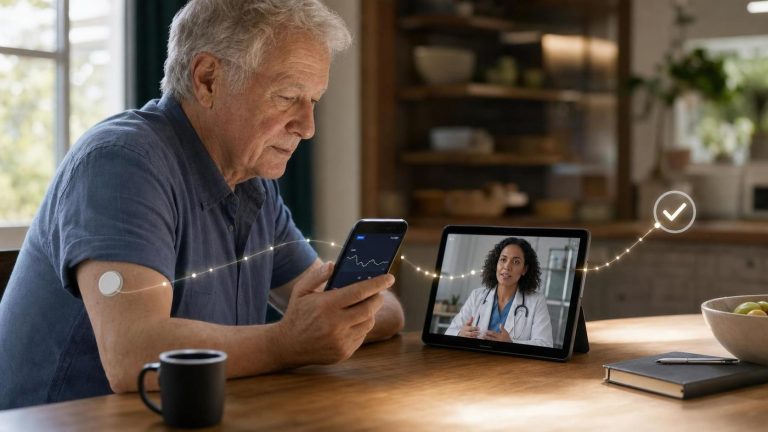
The FDA’s New AI Experiment Asks a Better Question: Did the Patient Get Better?
The FDA and CMS are testing a new bridge from AI-enabled chronic-care technology to Medicare payment, real-world evidence, and measurable patient outcomes. The promise is real. The proof is not…
The Daily Rounds: Longevity & Health Care Brief | April 7, 2026
🔬 Aging Redefined as Systems Failure: Researchers in Berlin are shifting the aging conversation toward preserving biological coordination across systems, not fixing a single defect. 🤖 AI Drug Discovery Reaches Scale: Over 173 AI-discovered drug programs are now in clinical trials, and a new free platform targeting global diseases launched this week. 😴 Sleep as a Disease Predictor: Stanford's SleepFM AI model predicts 130+ conditions from one night of sleep data, positioning sleep as a critical longevity biomarker. 🦠 Gut Microbiome Controls Immunity Directly: Common gut microbes inject proteins into immune cells, and a single bacterial metabolite doubled lung cancer immunotherapy response in mice. ❤️ Long-Term Heart-Aging Study Begins: UTMB's decade-long Galveston Heart Study will track thousands of participants to uncover how cardiovascular and brain health intersect with aging.

Zone 2 Training and the Mitochondrial Engine of Longevity: What the Science Says About Easy Cardio
The most powerful longevity intervention in exercise science is not the hardest workout. It is the easiest. Inside the science of Zone 2 training, the lactate shuttle, Iñigo San Millán’s…

The Patient Does Not Need a Prediction. They Need the Next Step.
A randomized kidney-transplant AI trial shows why healthcare AI cannot stop at predicting risk. The next frontier is closing the loop: referral, navigation, benefits, scheduling, follow-up, and completed care.
