
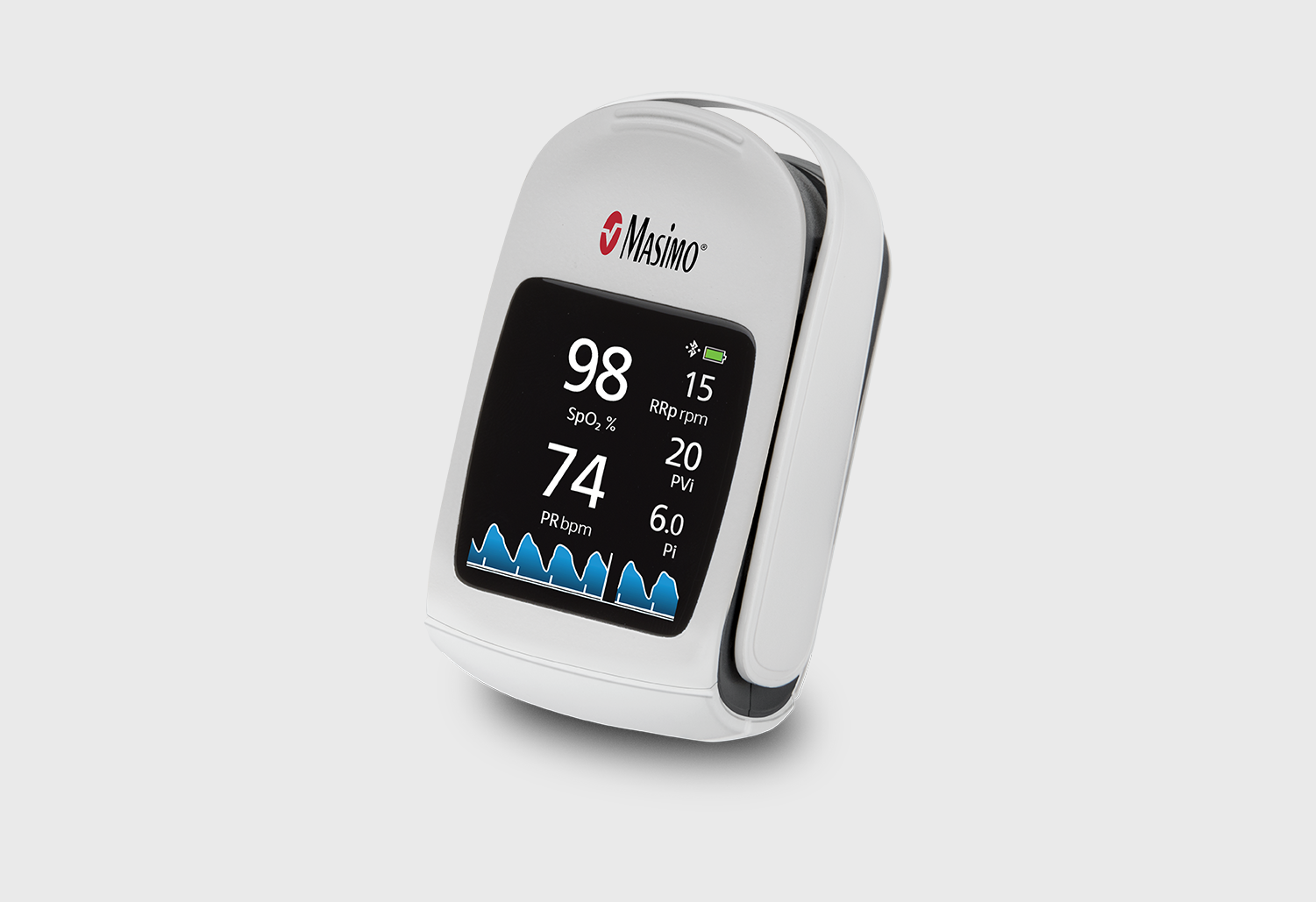
Masimo MightySat: Clinical Grade Pulse Oximetry in a Consumer Fingertip Device
The consumer version of the pulse oximetry technology used in hospital ICUs worldwide, delivering clinical grade SpO2, perfusion index, and pleth variability measurements from your fingertip.
Presented By Our Partners



During the early months of the COVID 19 pandemic, pulse oximeters became household items almost overnight. Millions of consumers purchased inexpensive fingertip devices to monitor blood oxygen levels at home, hoping to detect the “silent hypoxia” that characterized severe COVID progression before symptoms became critical. What most of those consumers did not know was that the accuracy of consumer pulse oximeters varies enormously. Some devices tested during the pandemic demonstrated measurement errors of 4% or more, a margin large enough to mask clinically significant oxygen desaturation.
Masimo Corporation occupies a unique position in this landscape. The company is the dominant manufacturer of hospital grade pulse oximetry systems, with its Signal Extraction Technology (SET) platform installed in virtually every major hospital system in the developed world. Masimo’s technology processes optical signals through proprietary algorithms that filter motion artifact and low perfusion noise, two interference sources that degrade accuracy in conventional pulse oximeters. The MightySat brings this clinical grade technology to a consumer fingertip device.
The difference between a $25 consumer pulse oximeter and the MightySat is not marketing. It is measurement science.
What Is the Masimo MightySat?
The Masimo MightySat is an FDA cleared fingertip pulse oximeter that measures blood oxygen saturation (SpO2), pulse rate, perfusion index (PI), pleth variability index (PVI), and respiration rate (RRp). It uses Masimo’s Signal Extraction Technology, the same platform deployed in their hospital monitoring systems, to deliver accuracy that exceeds typical consumer pulse oximeters by a significant margin.
The device is available in two models: the MightySat Rx (the medical grade version available with a prescription, approximately $299) and the MightySat (the consumer wellness version, approximately $449 for Bluetooth enabled models). Both use the same core sensor technology. The Bluetooth enabled version syncs to the Masimo Personal Health app, which stores readings, tracks trends over time, and can generate reports for healthcare providers.
Beyond standard SpO2 and pulse rate, the MightySat captures two metrics rarely seen in consumer devices. Perfusion Index (PI) measures the strength of the pulsatile signal at the measurement site, serving as a proxy for peripheral blood flow. Pleth Variability Index (PVI) tracks the respiratory variation in the pulse waveform amplitude, which has clinical applications in assessing fluid responsiveness and hemodynamic status. These metrics are standard in clinical settings but virtually absent from consumer pulse oximeters.
The Science Behind Pulse Oximetry and Perfusion Monitoring
Pulse oximetry works by passing two wavelengths of light (typically red at 660nm and infrared at 940nm) through tissue containing arterial blood. Oxygenated and deoxygenated hemoglobin absorb these wavelengths differently, and the ratio of absorption allows calculation of oxygen saturation. This principle has been the foundation of pulse oximetry since the technology’s commercial introduction in the 1980s.
The accuracy challenges in pulse oximetry arise from interference sources: motion artifact (movement during measurement), low perfusion states (cold fingers, peripheral vascular disease), ambient light contamination, skin pigmentation effects, and venous pulsation. Conventional pulse oximeters assume that pulsatile signals originate exclusively from arterial blood, but in reality, venous blood and tissue motion can generate similar pulsatile patterns that confound the measurement.
Masimo’s Signal Extraction Technology addresses these interference sources through advanced signal processing that separates the arterial signal from noise sources. The technology has been validated in hundreds of clinical studies and is considered the reference standard for pulse oximetry accuracy in challenging conditions. In clinical settings, Masimo SET pulse oximeters have demonstrated accuracy to within 1.5% SpO2 (1 standard deviation) in most conditions, compared to 3% to 4% accuracy typical of consumer devices.
Perfusion Index, which the MightySat provides, has emerging clinical significance beyond its traditional use as a signal quality indicator. Research has explored PI as a marker for peripheral vascular health, sympathetic nervous system activity, and even as a screening tool for certain cardiac conditions. PVI, meanwhile, has been extensively studied in anesthesiology and critical care as a non invasive indicator of fluid responsiveness during surgery and resuscitation.
For consumer use, the practical relevance of these advanced metrics is more limited than in clinical settings, but they provide information about peripheral circulation and autonomic regulation that standard pulse oximeters cannot capture.
What the Masimo MightySat Does Well
The MightySat’s defining advantage is accuracy. When the difference between 94% SpO2 and 90% SpO2 determines whether a patient needs supplemental oxygen, measurement precision matters. The MightySat’s Signal Extraction Technology provides a level of accuracy that consumer grade oximeters simply cannot match, particularly in challenging measurement conditions such as cold extremities, motion during measurement, or low perfusion states.
The Perfusion Index and Pleth Variability Index provide information that no other consumer pulse oximeter offers. Athletes and high altitude enthusiasts can use PI to monitor peripheral circulation during training and acclimatization. Users with Raynaud’s phenomenon or peripheral vascular conditions can track perfusion trends over time. While the clinical actionability of these metrics in a consumer context is limited, they provide a more complete picture of cardiovascular physiology than SpO2 and pulse rate alone.
Featured Partner
Invest in the Infrastructure Behind Modern Medicine
As healthcare expands beyond hospital walls, the buildings and campuses supporting that shift are generating compelling returns for investors who move early. The Healthcare Real Estate Fund offers qualified investors direct access to a curated portfolio of medical office, outpatient, and specialty care facilities.
Learn More →
The device’s construction reflects its clinical heritage. Build quality noticeably exceeds typical consumer oximeters, with a robust housing and a finger clip mechanism that maintains consistent contact pressure across different finger sizes. The display is bright, legible, and presents all five metrics simultaneously without requiring menu navigation.
For users with conditions that require reliable SpO2 monitoring, including COPD, sleep apnea, congenital heart disease, or recovery from COVID related lung damage, the MightySat provides measurement confidence that inexpensive alternatives cannot guarantee.
Pricing, Access, and Practical Realities
The Masimo MightySat ranges from $299 for the basic Rx model to $449 for Bluetooth enabled consumer versions. This represents a substantial premium over consumer pulse oximeters available for $20 to $50, and the price requires justification based on the user’s specific accuracy requirements.
The device is confirmed HSA and FSA eligible with a Letter of Medical Necessity, which reduces the effective cost for eligible purchasers. For patients prescribed pulse oximetry monitoring by their physician, the MightySat may be covered through these pre tax healthcare accounts.
FDA 510(k) clearance classifies the MightySat as a medical grade SpO2 monitor. This is important because the FDA’s accuracy requirements for cleared pulse oximeters are substantially more stringent than for general wellness devices, which may claim SpO2 measurement without meeting the same validation standards.
No subscription is required for any MightySat functionality. The Masimo Personal Health app provides data storage and trend tracking at no additional cost. The device uses AAA batteries (replaceable, not rechargeable) with a battery life of approximately 15 hours of continuous use or several hundred spot check measurements.
Who the Masimo MightySat Is Best For
The MightySat is ideal for patients with respiratory or cardiovascular conditions who require accurate, reliable SpO2 monitoring for clinical management. COPD patients monitoring oxygen levels to guide supplemental oxygen use, sleep apnea patients verifying treatment effectiveness, and cardiac patients tracking oxygenation during activity all benefit from clinical grade accuracy.
Athletes training at altitude or monitoring oxygen saturation during endurance exercise will appreciate both the SpO2 accuracy and the Perfusion Index data, which provides insight into peripheral circulation during intense physical effort. Pilots, mountaineers, and aviation enthusiasts who monitor SpO2 at altitude will find the MightySat more reliable than consumer alternatives in the low perfusion and cool temperature conditions common at elevation.
General consumers who want occasional SpO2 checks for wellness curiosity will find the MightySat dramatically overpriced for their needs. A $30 consumer pulse oximeter provides adequate accuracy for healthy individuals monitoring normal oxygen levels. The MightySat’s premium is justified only when accuracy in challenging conditions genuinely matters for clinical decision making or safety.
How the Masimo MightySat Compares
Against consumer pulse oximeters ($20 to $50), the MightySat is 6 to 20 times more expensive but provides substantially better accuracy, particularly in challenging conditions. Consumer devices are adequate for healthy individuals; the MightySat is necessary for patients where measurement errors could affect clinical decisions.
Against smartwatch SpO2 (Apple Watch, Samsung Galaxy Watch, Garmin), the MightySat uses transmission pulse oximetry (light passes through the finger) versus reflectance oximetry (light bounces off the wrist). Transmission oximetry is inherently more accurate than reflectance measurement. Smartwatches offer convenience and continuous monitoring; the MightySat offers superior accuracy in spot check measurements.
Against the Nonin Onyx Vantage 9590, another clinical grade consumer oximeter ($150 to $200), the MightySat adds Perfusion Index, Pleth Variability Index, and respiration rate at a higher price. Both devices provide clinical grade SpO2 accuracy. The choice depends on whether the additional metrics justify the price premium.
Limitations and Open Questions
The MightySat is a spot check device, not a continuous monitor. It requires intentional measurement sessions and cannot track SpO2 overnight during sleep without the user wearing it continuously, which is impractical with a fingertip clip design. Users needing continuous overnight SpO2 monitoring should consider ring form factor devices or wrist worn alternatives that sacrifice some accuracy for wearability.
The price is the most significant barrier for most consumers. At $299 to $449, the MightySat costs more than many FDA cleared blood pressure monitors, ECG devices, and even some smartwatches. The clinical grade accuracy is genuine, but for healthy individuals, it provides marginal benefit over devices costing a fraction of the price.
The Masimo Personal Health app is functional but not as polished as apps from consumer health companies like Withings or Apple. Data visualization and trend analysis are adequate but not exceptional. Users embedded in other health ecosystems may find data portability limited.
The device’s form factor limits its use cases. A fingertip clip is not practical for continuous wear during daily activities, exercise, or sleep. This constrains the MightySat to spot check monitoring rather than the continuous tracking that modern wearables have conditioned consumers to expect.
What This Means for Your Health
Blood oxygen saturation is a vital sign, as fundamental to understanding your body’s status as blood pressure, heart rate, and temperature. Yet until recently, it was the one vital sign that remained confined to clinical settings. The Masimo MightySat brings genuine clinical grade SpO2 monitoring into the home, with accuracy that your physician can trust for clinical decisions.
Within Healthcare Discovery‘s Five Pillars framework, SpO2 monitoring most directly supports the Movement pillar (understanding oxygen delivery during exercise), the Sleep pillar (identifying nocturnal desaturation events that suggest sleep disordered breathing), and the Breathwork pillar (observing how breathing practices affect blood oxygenation). The Perfusion Index adds a window into the cardiovascular system’s peripheral response, connecting to the broader goal of understanding and optimizing cardiovascular health to defend against the Four Villains.
If you have a respiratory condition, a cardiac condition that affects oxygenation, or you train at altitude, the MightySat provides measurement confidence that consumer alternatives cannot match. If you are a healthy individual with no specific clinical need for high precision SpO2 monitoring, a basic consumer oximeter serves the purpose at a fraction of the cost. The right choice depends on what is at stake when the measurement is taken.

Explore the full wearable guide
See how the Masimo MightySat compares with smart rings, watches, ECG devices, and other connected health hardware across the full Healthcare Discovery wearables guide.
Frequently Asked Questions
Is the Masimo MightySat FDA cleared?
Yes. The MightySat holds FDA 510(k) clearance as a medical grade pulse oximeter. It uses Masimo’s Signal Extraction Technology (SET), the same platform installed in hospital monitoring systems worldwide. The FDA clearance means the device has met stringent accuracy validation requirements that most consumer pulse oximeters are not required to demonstrate.
How accurate is the Masimo MightySat compared to consumer oximeters?
Masimo SET technology achieves SpO2 accuracy to within approximately 1.5% (1 standard deviation) in most conditions, compared to 3% to 4% typical of consumer pulse oximeters. The difference is most significant in challenging conditions: cold fingers, low perfusion, motion during measurement, and low SpO2 values where accuracy matters most for clinical decisions.
What are Perfusion Index and Pleth Variability Index?
Perfusion Index (PI) measures the strength of the pulsatile blood flow signal at the measurement site, serving as a proxy for peripheral circulation. Pleth Variability Index (PVI) tracks respiratory induced variation in the pulse waveform, which has clinical applications in assessing fluid responsiveness and hemodynamic status. Both metrics are standard in hospital monitoring but are rarely available in consumer devices.
Does the Masimo MightySat require a subscription?
No. All features, including SpO2, pulse rate, PI, PVI, respiration rate measurement, and the Masimo Personal Health app for data storage and trending, work without any subscription. The device costs $299 to $449 depending on model, with no ongoing fees.
Can I use the Masimo MightySat for overnight sleep monitoring?
The MightySat can measure SpO2 continuously as long as it is worn on the finger, but its fingertip clip design makes overnight wear impractical for most users. For continuous overnight SpO2 monitoring, consider a ring form factor device (such as the Oura Ring or Bodimetrics Circul+ Ring) that can be worn comfortably during sleep, though these devices use reflectance oximetry rather than the MightySat’s more accurate transmission technology.
Masimo MightySat at a glance
- Hardware price
- $299 to $449
- Subscription
- None required
- First year total
- $299
- Form factor
- Fingertip pulse oximeter
- FDA status
- Has FDA clearance
- HSA/FSA
- Possibly, with a letter of medical necessity
Measures Perfusion index, Pleth variability index, Pulse rate, Respiration rate, SpO2
Maintained in the Healthcare Discovery device database and updated automatically.


Similar Posts
COROS APEX 4: Alpine Grade GPS Watch With Zero Lag Mapping and Mountain Sport Analytics
COROS’s mountain sport watch delivers ultra precise dual frequency GPS, instant offline map rendering, and training analytics purpose built for trail runners, climbers, and ski mountaineers at $429 to $479…

Vivoo Urine Wellness Test: AI-Powered Daily Metabolic Tracking
How daily urine biomarkers reveal the invisible accelerators of aging—oxidative stress, metabolic drift, and nutritional gaps—that blood tests miss. Presented By Our Partners The Silent Accelerator: Why Oxidative Stress Matters…

Your VO2 Max May Be the Single Best Predictor of How Long You Will Live: What 3.8 Million People and 58 Clinical Trials Reveal About Cardiorespiratory Fitness and the Science of Living Longer
A meta-analysis of 3.8 million people shows that each one-MET increase in cardiorespiratory fitness reduces all-cause mortality by 14 percent. A 2026 Cochrane review of 58 clinical trials confirms HIIT…

Muscle Span: Why Grip Strength Now Predicts How Long You Live, and the Protein and Strength Playbook to Build It Tonight
A February 2026 JAMA Network Open study of more than 5,000 women found that a firm hand grip predicted survival even in those who fell short of exercise guidelines or…

Nature Is Medicine: What 108 Brain-Imaging Studies Just Proved About Your Mind
New research synthesizing 108 neuroimaging studies reveals a precise cascade of measurable brain changes that begin in as little as three minutes outdoors — and the implications for your health…
Mirror by Lululemon: Interactive Fitness Display and the Science of Visual Coaching
A full-length interactive mirror that streams live and on-demand fitness classes while reflecting your form back to you. Does seeing yourself train change outcomes, or is this just a screen…
