
Nox T3 Home Sleep Test Review: Accuracy, Cost, and Who Needs It
Sleep apnea strains the heart night after night, often without its owner knowing. A small recorder from Iceland is one of the better-validated ways to find out at home.
Presented By Our Partners



In 2012, a randomized trial run across seven accredited US sleep centers tested a heretical idea. Half of 373 patients with suspected moderate to severe sleep apnea were diagnosed the traditional way, with a wired-up night in a sleep laboratory. The other half were diagnosed at home with a portable monitor and started treatment there. Three months later, the home group was using its breathing machines about an hour longer each night, 4.7 hours against 3.7, and on acceptance of treatment, time to treatment, and daytime sleepiness the home pathway was no worse (Sleep, 2012). The test that asked less of patients got more out of them.
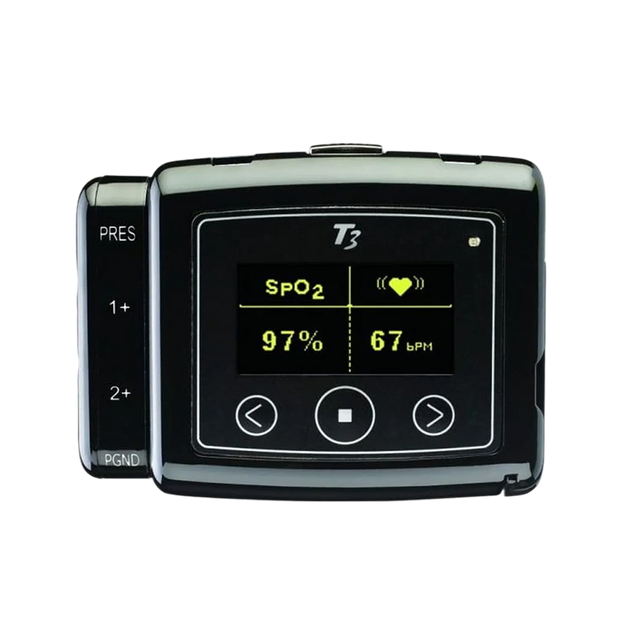
The Nox T3, made by Nox Medical of Reykjavik, Iceland, belongs to the class of device that made that result possible. It is a Type III portable sleep monitor: a small recorder that captures breathing airflow, breathing effort, and blood oxygen through the night, then hands the recording to a sleep clinician for scoring. Nox’s 2025 US materials feature both the original Nox T3 and its successor, the Nox T3s, which the company calls its next-generation home sleep testing device.
The stakes are large and mostly invisible. A 2019 analysis in The Lancet Respiratory Medicine estimated that 936 million adults aged 30 to 69 worldwide have obstructive sleep apnea, 425 million of them in its moderate to severe forms. Sleep laboratories cannot test nearly a billion people. The question is whether a recorder at home can tell them what they need to know.
The short answer: The Nox T3 is a well-validated home sleep apnea test. It records airflow, chest and abdominal breathing effort, and oxygen, which lets clinicians tell obstructive from central events at home. In validation studies it caught 92 to 93 percent of moderate to severe cases. It cannot stage sleep, and it tends to underestimate severity in sicker patients.
- Best for: adults with snoring, witnessed pauses, or daytime sleepiness whose clinician suspects moderate to severe obstructive sleep apnea.
- Not for: people with suspected narcolepsy, parasomnias, or other non-breathing sleep disorders, or anyone looking to buy a sleep tracker.
- Price (October 2026): no retail price; ordered through a sleep clinician or program, with cost set by the provider and your insurance.
- Regulatory status: FDA 510(k) cleared (K082113, Nox T3 with Noxturnal software); ordered through a clinician.
- Evidence: Strong for moderate to severe obstructive sleep apnea in uncomplicated adults; weaker for mild disease and for patients with serious coexisting illness.
What is the Nox T3?
The Nox T3 is a portable sleep recorder made by Nox Medical that measures breathing airflow, chest and abdominal breathing effort, blood oxygen, and snoring sound during a night of sleep, usually at home. A sleep clinician reviews the recording in Nox’s Noxturnal software to diagnose sleep apnea and grade its severity. It is a clinical test, not a consumer sleep tracker.
The FDA’s 510(k) database lists the device as “Nox T3, Noxturnal (PC application)” under clearance K082113, and the agency’s adverse event database classifies it as a ventilatory effort recorder. In clinical terms it is a Type III portable monitor, the category sleep medicine uses for home tests that record airflow, breathing effort, and oxygen but not brain waves. Researchers have used it widely: in pregnancy, in chronic obstructive pulmonary disease, in hospitalized children, in a stroke unit, and in a University of Oslo study of 579 patients with paroxysmal atrial fibrillation.
Nox Medical now also sells the Nox T3s, which it calls its next-generation home sleep testing device. Both models appear in Nox’s 2025 US materials, so a sleep program may send you home with either. The research cited below was done almost entirely with the original Nox T3; we did not find a peer-reviewed validation study of the Nox T3s specifically.
How does the Nox T3 work?
The Nox T3 watches the three things that change when a sleeping airway collapses: air stops moving through the nose, the chest and belly keep straining or go still, and blood oxygen falls. A nasal cannula measures airflow, two stretchable belts measure breathing effort, and a finger sensor measures oxygen. Software and a human scorer turn those signals into an apnea-hypopnea index.
Picture the throat as a soft-walled tube held open by muscle. Awake, those muscles keep it rigid. Asleep, they relax, and in people with obstructive sleep apnea the tube sags shut, sometimes completely (an apnea), sometimes partly (a hypopnea). The chest keeps heaving against the closed door. Oxygen drifts down, carbon dioxide climbs, and the brain finally startles the body into a gasp, often without the sleeper ever knowing. Then the cycle restarts, dozens or hundreds of times a night.
Each Nox T3 sensor catches a different part of that drama. The nasal cannula senses the pressure swings of breathing, so a flat line means air has stopped. The two respiratory inductance plethysmography belts, one around the chest and one around the abdomen, measure how much each expands with every breath. That is the feature that sets Type III devices apart from simpler tests: if airflow stops while the belts keep moving, the airway is blocked, an obstructive event; if airflow stops and the belts go still too, the brain has paused the command to breathe, a central event. The pulse oximeter records the oxygen dips that follow. A built-in microphone records snoring; in a study of 211 people tested with the Nox T3, the share of the night spent in periodic snoring correlated with apnea severity (r = 0.727) (Journal of Clinical Sleep Medicine, 2016).
The result is the apnea-hypopnea index (AHI), the number of breathing events per hour. Sleep medicine generally reads 5 to 15 as mild, 15 to 30 as moderate, and 30 or more as severe, cut points used throughout the studies below. What the Nox T3 does not record is the brain. Without EEG it cannot tell sleep from quiet wakefulness, so a standard home test divides events by recording time rather than true sleep time. Nox has developed an algorithm called BodySleep to close that gap by estimating sleep and wake from the belt and movement signals. In a 2021 proof-of-principle study, co-authored by Nox Research scientists, the algorithm’s AHI correlated with polysomnography at r = 0.91 but detected wake epochs with only 65 percent sensitivity (Sleep and Breathing, 2021). In a 2024 study of 139 polysomnography recordings, it agreed with manual scoring on wake, non-REM, and REM states 83 percent of the time (Nature and Science of Sleep, 2024). We could not confirm which Nox T3 configurations include it.
How accurate is the Nox T3? What the research shows
For moderate to severe obstructive sleep apnea in adults, the Nox T3 performs well: in validation studies against in-lab polysomnography, it identified 92 to 93 percent of cases at an AHI of 15 or higher, with 85 percent specificity. Accuracy is lower for mild disease, and in patients with serious illness it tends to undercount events.
The first head-to-head. In a 2014 pilot study, 40 sleep clinic patients wore the Nox T3 and full polysomnography at the same time; 32 were analyzed (56 percent male, 50 percent Black), and 3 were excluded for poor signal quality. The Nox T3’s automatically scored AHI correlated with polysomnography at r = 0.93. At an AHI threshold of 15, sensitivity was 92 percent and specificity 85 percent; at a threshold of 5, it caught every case but its specificity fell to 70 percent (Sleep and Breathing, 2014). Small, but a clean design.
Home versus lab, the real-world test. In a 2017 validation study, 80 Chinese adults first took the Nox T3 home unattended, then spent a night in the lab wearing it alongside polysomnography. Using an AHI of 15, the home test had 93 percent sensitivity, 85 percent specificity, 89 percent positive predictive value, and 91 percent negative predictive value. The home AHI averaged 24.4 events per hour against 28.6 on polysomnography, and agreement was closer when both devices recorded the same night (Journal of Clinical Sleep Medicine, 2017). That gap between nights is a reminder that some of what looks like device error is simply a different night of sleep.
Harder populations. The same research group tested 90 adults with chronic obstructive pulmonary disease, a group guidelines usually steer to the lab. At an AHI of 5, the home Nox T3 had 95 percent sensitivity and 78 percent specificity, but it underestimated AHI (16.7 versus 21.2 events per hour), increasingly so in more severe disease (Journal of Clinical Sleep Medicine, 2019). In 92 pregnant women with suspected sleep apnea, home testing had 91 percent sensitivity and 85 percent specificity at an AHI of 5, with an acceptable failure rate (Journal of Clinical Sleep Medicine, 2023). In 74 patients with multiple coexisting illnesses, including stroke, kidney disease, and psychiatric conditions, the Nox T3 still diagnosed sleep apnea reliably but undercounted it, with an average index of 31.4 against 42.2 on polysomnography (Clinical Respiratory Journal, 2021). And in a 10-patient pilot of people with left ventricular assist devices, a group in which the authors note a peripheral arterial tone device had failed, the Nox T3’s index correlated with polysomnography at 0.984 (Journal of Clinical Sleep Medicine, 2025).
Can the software be trusted? In the Oslo atrial fibrillation study, 1,043 Nox T3 recordings were scored both automatically and by a sleep specialist; the two AHIs correlated at r = 0.96, and automatic scoring sorted recordings into mild, moderate, and severe with more than 90 percent accuracy, though 11 to 21 percent of recordings near the mild to moderate boundary were misplaced (Journal of Sleep Research, 2020). A study of 283 patients found automatic and manual scores nearly identical above an AHI of 15 but recommended manual confirmation below it (Advances in Respiratory Medicine, 2021). Children are different: in 51 pediatric recordings, automatic analysis overestimated AHI badly, a median of 11.9 against 2.7 when scored by a technologist (Journal of Comparative Effectiveness Research, 2019). The lesson is that a human should review the recording, especially near diagnostic thresholds.
Does setup at home work? A randomized trial of 100 adults aged 18 to 70 compared in-person hookup instructions with a video. Only 1 study (2 percent) failed in the in-person group and 2 (3.9 percent) in the video group, with average sensor quality of about 95 percent in both (Journal of Clinical Sleep Medicine, 2022). Most people can put the Nox T3 on correctly by themselves.
The BodySleep studies include Nox Research scientists among their authors, and the global prevalence estimate quoted above was funded by ResMed, a CPAP maker. The clinical validations come from many different research groups, which is what makes their broadly consistent numbers persuasive. If you want a framework for weighing device evidence, our explainer on what “clinically validated” actually means is a useful companion.
Featured Partner
Invest in the Infrastructure Behind Modern Medicine
As healthcare expands beyond hospital walls, the buildings and campuses supporting that shift are generating compelling returns for investors who move early. The Healthcare Real Estate Fund offers qualified investors direct access to a curated portfolio of medical office, outpatient, and specialty care facilities.
Learn More →
What the Nox T3 gets right
The Nox T3 gets the essential trade right: it brings the breathing channels of a sleep lab into a bedroom. Its other strengths, central event detection, a deep independent evidence base, and dependable self-setup, all follow from measuring breathing directly rather than inferring it.
It measures breathing, not a proxy. A nasal cannula and two effort belts record the same airflow and effort signals that sleep technologists score in the lab. When a clinician reviews a Nox T3 study, the waveforms look like the respiratory half of a polysomnogram, which makes the scoring familiar and auditable.
It can see central apnea. Because the belts show whether the chest is trying to breathe, the Nox T3 can separate obstructive from central events. That matters because the two problems have different causes, one in the airway and one in the brain’s breathing control, and a clinician needs to know which one is driving the events.
Its evidence travels. The Nox T3 has been validated in ordinary sleep clinic patients and in groups many devices never test: pregnant women, people with COPD, people with several chronic illnesses, and patients with mechanical heart pumps. The numbers are not perfect in every group, but they exist, and they come from many different research teams.
People can set it up themselves. A technical failure rate of 2 to 4 percent, whether patients learned the hookup in person or by video, means a sleep program can mail the device or send it home without a technician visit, which is how home testing reaches people who live far from a sleep center.
It is part of a pathway that works. The HomePAP trial showed that diagnosing and starting treatment at home was not inferior to the lab and was associated with an hour more nightly CPAP use. Home Type III testing is not a compromise when it is used for the right patients.
Where the Nox T3 falls short
The Nox T3 cannot see sleep itself, so it can miscount events and cannot diagnose non-breathing sleep disorders. It undercounts apnea in sicker patients, a single night can mislead, the nasal cannula can slip, and the automatic scoring needs a human check.
No brain waves. Without EEG, the Nox T3 cannot stage sleep, detect arousals from brain activity, or diagnose narcolepsy, parasomnias, or most movement disorders. When researchers tested Nox’s portable polygraphy for sleep bruxism, it detected only 48.3 percent of cases against polysomnography (Journal of Oral Rehabilitation, 2024). A home test answers one question well.
It tends to undercount. Across studies in COPD, in patients with multiple illnesses, and in home versus lab comparisons, the Nox T3 reported lower indexes than polysomnography, and the gap widened in more severe disease. In practice that means a home result near a severity threshold may understate the problem, and a negative or mild result in someone with strong symptoms should prompt more testing, not reassurance. A 2026 review in Wiadomosci Lekarskie concluded that in-lab polysomnography remains preferred when home testing is negative, inconclusive, or technically inadequate.
One night is a sample. Breathing during sleep varies from night to night with sleep position, alcohol, and the mix of sleep stages. The same 2026 review noted that single-night testing can misclassify a large share of mild to moderate cases and that multi-night home testing can help around diagnostic thresholds.
The cannula is the weak link. Airflow depends on a tube sitting in the nostrils all night. People who breathe through the mouth, or who pull the cannula out in their sleep, can produce a study that has to be repeated.
Automated scoring is not a diagnosis. Agreement between software and human scorers is excellent in moderate to severe adult cases and poor in children. A good sleep program will have a qualified scorer review the full recording.
A recall worth knowing about. The FDA’s device recall database lists a Class 2 recall involving the Nox T3s recorder. We could not confirm its scope or date from the sources available for this review; if you are offered a Nox T3s, your sleep program can tell you whether its devices were affected.
Nox T3 vs WatchPAT One vs in-lab polysomnography
The Nox T3 records airflow and breathing effort directly; WatchPAT One is a disposable test that infers breathing events from changes in finger arterial tone; and in-lab polysomnography adds brain waves and a technician. Choose the Nox T3 for detailed home breathing data, WatchPAT One for a disposable finger-based test, and the lab for complex cases.
| Feature | Nox T3 | WatchPAT One | In-lab polysomnography (e.g., Alice 6 LDx) |
|---|---|---|---|
| Where | Home, unattended | Home, unattended | Sleep laboratory, attended |
| How breathing is measured | Nasal airflow, chest and abdominal effort belts, oximetry | Peripheral arterial tone at the finger, with oximetry | Airflow, effort, oximetry, plus EEG and more |
| Direct airflow and effort signals | Yes: nasal airflow plus two effort belts | No; infers events from finger arterial tone | Yes |
| Stages sleep with EEG | No | No | Yes |
| Device model | Recorder unit (Nox T3 or newer Nox T3s) | Disposable, single use | Facility system |
| Key evidence | 92 to 93% sensitivity at AHI 15 in two validations | WatchPAT devices: AHI correlation 0.893 with PSG in a 14-study meta-analysis | The reference standard |
WatchPAT One, from ZOLL Itamar, is the Nox T3’s closest rival: a disposable device that reads peripheral arterial tone at the finger instead of measuring nasal airflow. A 2013 meta-analysis of 14 studies and 909 patients found that WatchPAT’s AHI correlated with polysomnography at 0.893 (JAMA Otolaryngology, 2013). That indirect approach has limits: researchers studying patients with heart pumps chose the Nox T3 because it records more channels, noting that WatchPAT had failed to diagnose sleep-disordered breathing accurately in that population.
In-lab polysomnography with systems such as the Alice 6 LDx remains the reference standard because it adds EEG; FDA records classify the Alice 6 as a standard polysomnograph with electroencephalograph. The American Academy of Sleep Medicine’s 2017 guideline calls polysomnography the standard diagnostic test for adults with suspected sleep apnea. As of October 2026, Philips’ US product page for the Alice 6 LDx is headed by a notice about sleep and respiratory portfolio changes; separately, Philips Respironics entered a consent decree with the US government in 2024 after recalling certain sleep therapy machines. Your sleep center may use a different lab system. If you are deciding between home tests and consumer wearables, our editorial on why the sleep score is not sleep explains what consumer trackers can and cannot measure, and our sleep and recovery device reviews cover the rest of the field.
How much does a Nox T3 sleep test cost, and is it covered?
There is no consumer price for a Nox T3 test, because you do not buy the device. A sleep clinician or program orders the test and provides the recorder, and what you pay depends on the provider’s fee and your insurance. As of October 2026, we could not verify a typical per-test price.
Medicare sets its rules in a national coverage determination for sleep testing for obstructive sleep apnea (NCD 240.4.1), and regional Medicare contractors publish local coverage determinations for polysomnography and other sleep studies. Commercial insurers set their own rules. Practically: ask your sleep program for a cost estimate before the test, and ask whether a positive home result will be accepted by your insurer for CPAP coverage, so you do not pay for a test twice.
Because a home sleep test is a prescribed diagnostic service, your out-of-pocket cost is generally a qualified medical expense for HSA and FSA purposes; confirm with your plan administrator. If you are ultimately diagnosed and prescribed therapy, the costs of a CPAP machine such as the ResMed AirSense 11 follow separate coverage rules.
Who should take a Nox T3 test, and who should skip it?
The Nox T3 suits adults whose clinician suspects moderate to severe obstructive sleep apnea and who do not have major heart, lung, or neurological disease that would call for a lab study. It is the wrong test for non-breathing sleep disorders and is not something to buy on your own.
Questionnaires are a starting point, not a substitute. In a study of 48 younger veterans with PTSD and insomnia tested with the Nox T3, the common STOP-BANG screener caught 92.6 percent of sleep apnea at its usual cutoff but had only 47.6 percent specificity (Journal of Clinical Sleep Medicine, 2022). Objective testing is how you find out.
Good candidates, in partnership with a clinician:
- Loud, habitual snoring, witnessed pauses in breathing, or waking up gasping.
- Daytime sleepiness, morning headaches, or unrefreshing sleep without another explanation.
- Atrial fibrillation, especially with snoring or sleepiness; in one Nox T3 study of people with paroxysmal atrial fibrillation, 82.7 percent had at least mild sleep apnea.
- Pregnancy with symptoms, where validation data are encouraging.
Better served by something else:
- Suspected narcolepsy, parasomnias, restless sleep from leg movements, or teeth grinding: these need in-lab polysomnography.
- Significant heart, lung, or neurological disease: guidelines recommend in-lab polysomnography for patients with major comorbidities, though studies show the Nox T3 can work in selected patients.
- A negative or mild home result despite strong symptoms: ask about repeat testing or a lab study.
- People who simply want to track their sleep: a consumer tracker is a different category and cannot diagnose sleep apnea.
If you need a sleep medicine physician to evaluate symptoms and order testing, the Healthcare Discovery doctor directory lists clinicians by state and specialty.
What this means for you
Untreated sleep apnea is one of the quiet ways the Silent Assassin, cardiovascular disease, does its work, the first of the Four Villains of Health and Longevity. Each collapse of the airway drops oxygen and jolts the body toward waking, and the heart absorbs the strain. In a 2005 New England Journal of Medicine cohort of 1,022 patients, obstructive sleep apnea nearly doubled the risk of stroke or death from any cause after adjustment for other risk factors, including high blood pressure (hazard ratio 1.97). In the Oslo study of 579 patients with paroxysmal atrial fibrillation, 42.1 percent had moderate to severe sleep apnea on the Nox T3. If your heart’s rhythm is unstable, a heart monitor such as the Zio patch tells you what the heart is doing; a sleep test may reveal one reason why.
The honest caveat is that treatment’s benefits are clearest for how you feel, not yet for hard cardiac outcomes. In the SAVE trial of 2,717 adults with moderate to severe sleep apnea and established cardiovascular disease, CPAP did not reduce heart attacks, strokes, or cardiovascular deaths over 3.7 years, though participants used it only 3.3 hours a night on average; it did significantly reduce snoring and daytime sleepiness and improved quality of life and mood (New England Journal of Medicine, 2016). Diagnosis is the first step; consistent treatment is the part that changes lives.
Among the Five Pillars, sleep apnea sits where Sleep and Breath meet. The fix starts with a diagnosis, and it rarely ends there. Movement and Nutrition matter: in a pediatric obesity program that tracked children with the Nox T3, falling BMI went with falling apnea scores, and apnea resolved in 27 of 62 children within a year. Alcohol, which the 2026 review lists among the drivers of night-to-night swings in apnea, is worth watching too. Untreated sleep fragmentation also erodes Mindset, through sleepiness and low mood, and it plausibly touches the Energy Arsonist and the Mind Thief, metabolic and neurodegenerative disease, as well. A night wearing a small recorder and two belts is a modest ask for an answer this consequential, if the people who need it actually take it.
Frequently asked questions
How accurate is the Nox T3 compared with an in-lab sleep study?
For moderate to severe obstructive sleep apnea, it performs well. In two validation studies against polysomnography, the Nox T3 identified 92 to 93 percent of cases at an apnea-hypopnea index of 15 or higher, with 85 percent specificity. It cannot measure brain waves, so it cannot stage sleep, and it tends to undercount events in patients with serious illnesses or severe disease.
What does the Nox T3 measure?
The Nox T3 records nasal airflow through a cannula, chest and abdominal breathing effort through two stretchable belts, blood oxygen through a finger sensor, and snoring through a built-in microphone. Together these signals let a sleep clinician count apneas and hypopneas per hour and tell obstructive events, where the chest keeps straining, from central events, where breathing effort stops.
Is the Nox T3 better than WatchPAT One?
They make different trade-offs. The Nox T3 measures airflow and breathing effort directly, which helps identify central sleep apnea and gives clinicians familiar waveforms. WatchPAT One is a disposable, single-use test that infers breathing events from finger arterial tone rather than measuring nasal airflow. In a 14-study meta-analysis, WatchPAT devices correlated with in-lab polysomnography at 0.893.
How much does a Nox T3 home sleep test cost?
There is no retail price, because a sleep clinician or program orders the test and provides the recorder. Your cost depends on the provider’s fee and your insurance, and Healthcare Discovery could not verify a typical per-test price as of October 2026. Ask for an estimate before testing and confirm your insurer will accept a home result for treatment coverage.
Do I need a prescription for a Nox T3 sleep test?
Yes, in practice. The Nox T3 is an FDA-cleared clinical device that sleep programs provide to patients after a clinician orders testing. Sleep medicine guidelines say diagnostic testing for sleep apnea should be part of a comprehensive sleep evaluation with follow-up, so expect a visit with a clinician who reviews your symptoms and history before you take the recorder home.
What is the difference between the Nox T3 and the Nox T3s?
The Nox T3s is the newer model that Nox Medical describes as its next-generation home sleep testing device, and both appear in Nox’s 2025 US materials. Most published validation research used the original Nox T3; Healthcare Discovery did not find a peer-reviewed validation study of the Nox T3s specifically as of October 2026.
Sources
- Rosen CL, et al. A multisite randomized trial of portable sleep studies and positive airway pressure autotitration versus laboratory-based polysomnography (HomePAP). Sleep, 2012. DOI
- Benjafield AV, et al. Estimation of the global prevalence and burden of obstructive sleep apnoea: a literature-based analysis. The Lancet Respiratory Medicine, 2019. DOI
- U.S. Food and Drug Administration. 510(k) premarket notification K082113, Nox T3, Noxturnal (PC application). FDA database
- Nox Medical. The Nox T3s, next generation HST device (manufacturer page). Nox Medical
- Cairns A, et al. A pilot validation study for the NOX T3 portable monitor for the detection of OSA. Sleep and Breathing, 2014. DOI
- Xu L, et al. Validation of the Nox-T3 portable monitor for diagnosis of obstructive sleep apnea in Chinese adults. Journal of Clinical Sleep Medicine, 2017. DOI
- Chang Y, et al. Validation of the Nox-T3 portable monitor for diagnosis of obstructive sleep apnea in patients with chronic obstructive pulmonary disease. Journal of Clinical Sleep Medicine, 2019. DOI
- Wang J, et al. Home monitoring for clinically suspected obstructive sleep apnea in pregnancy. Journal of Clinical Sleep Medicine, 2023. DOI
- To KW, et al. Using a portable monitoring device for diagnosing obstructive sleep apnea in patients with multiple coexisting medical illnesses. Clinical Respiratory Journal, 2021. DOI
- Mutirangura P, et al. Home sleep apnea testing in patients with continuous flow left ventricular assist device: is it feasible? Journal of Clinical Sleep Medicine, 2025. DOI
- Kristiansen S, et al. Comparing manual and automatic scoring of sleep monitoring data from portable polygraphy. Journal of Sleep Research, 2020. DOI
- Valério M, et al. Is the Nox-T3 device scoring algorithm accurate enough for the diagnosis of obstructive sleep apnea? Advances in Respiratory Medicine, 2021. DOI
- Ørntoft M, et al. Agreement between manual and automatic analyses of home sleep examinations in pediatric obstructive sleep apnea. Journal of Comparative Effectiveness Research, 2019. DOI
- Horne AF, et al. In-person vs video hookup instructions: a comparison of home sleep apnea testing quality. Journal of Clinical Sleep Medicine, 2022. DOI
- Alakuijala A, Salmi T. Predicting obstructive sleep apnea with periodic snoring sound recorded at home. Journal of Clinical Sleep Medicine, 2016. DOI
- Dietz-Terjung S, et al. Proof of principle study: diagnostic accuracy of a novel algorithm for the estimation of sleep stages and disease severity based on actigraphy and respiratory inductance plethysmography. Sleep and Breathing, 2021. DOI
- Leger D, Elbaz M. Diagnosing OSA and insomnia at home based only on an actigraphy total sleep time and RIP belts: an algorithm, Nox BodySleep. Nature and Science of Sleep, 2024. DOI
- Martynowicz H, et al. Performance evaluation of portable respiratory polygraphy for assessing sleep bruxism in adults. Journal of Oral Rehabilitation, 2024. DOI
- Bundyra JP, et al. New diagnostic tools for obstructive sleep apnea. Wiadomosci Lekarskie, 2026. DOI
- Kapur VK, et al. Clinical practice guideline for diagnostic testing for adult obstructive sleep apnea: an American Academy of Sleep Medicine clinical practice guideline. Journal of Clinical Sleep Medicine, 2017. DOI
- Yalamanchali S, et al. Diagnosis of obstructive sleep apnea by peripheral arterial tonometry: meta-analysis. JAMA Otolaryngology, Head and Neck Surgery, 2013. DOI
- Lyons R, et al. STOP-BANG screener vs objective obstructive sleep apnea testing among younger veterans with PTSD and insomnia. Journal of Clinical Sleep Medicine, 2022. DOI
- Yaggi HK, et al. Obstructive sleep apnea as a risk factor for stroke and death. New England Journal of Medicine, 2005. DOI
- McEvoy RD, et al. CPAP for prevention of cardiovascular events in obstructive sleep apnea (SAVE). New England Journal of Medicine, 2016. DOI
- Singh J, et al. The feasibility and utility of level III portable sleep studies in the pediatric inpatient setting. Journal of Clinical Sleep Medicine, 2019. DOI
- Haula TM, et al. Relationship between SDB and short-term outcome in Finnish ischemic stroke patients. Brain and Behavior, 2020. DOI
- Andersen IG, et al. Impact of weight-loss management on children and adolescents with obesity and obstructive sleep apnea. International Journal of Pediatric Otorhinolaryngology, 2019. DOI
- Centers for Medicare and Medicaid Services. National coverage determination: sleep testing for obstructive sleep apnea (240.4.1). CMS
- U.S. Food and Drug Administration. Federal court enters consent decree against Philips Respironics following recall of certain sleep therapy machines (press announcement). FDA
- U.S. Food and Drug Administration. Class 2 device recall, Nox T3s recorder. FDA recall database
Nox T3 Home Sleep Test at a glance
- Subscription
- None required
- Form factor
- Home sleep test device
- FDA status
- Has FDA clearance
- HSA/FSA
- Eligible
Measures Airflow, Body position, HR, Respiratory effort, Sleep staging, Snoring, SpO2
Pricing verified October 20, 2026. Maintained in the Healthcare Discovery device database and updated automatically.


Similar Posts
Keto-Mojo GK+ Meter: Dual Glucose and Ketone Monitoring for Metabolic Health
Two biomarkers, one fingerstick. Measuring both glucose and ketones simultaneously reveals a metabolic picture that neither number can provide alone. Presented By Our Partners The ketogenic diet has moved from…
Bello 2 Fat Scanner: Handheld NIR Device for Localized Body Fat Measurement
The fat you can see is not the fat that kills you. A handheld scanner that peers beneath the skin surface is trying to change how we measure the difference….

The NAD+ Renaissance: How a Cellular Fuel Molecule Is Rewriting the Science of Brain Aging, Sleep, and Neurodegeneration
A landmark Nature Aging expert review by 25 scientists, a Science Advances study showing NAD+ reverses Alzheimer’s memory deficits through RNA splicing, and the first human evidence that oral NAD+…
What Is HealthBench? How OpenAI’s Medical AI Benchmark Tests Models Against Doctors
HealthBench is becoming one of medical AI’s most influential scoreboards. Here is how physicians built it, what its model-versus-doctor results mean, and why a high score is not the same…
QardioBase 2: Smart Scale with Pregnancy Mode and Cardiovascular Ecosystem Integration
Pregnancy transforms body composition monitoring from a fitness tool into a clinical necessity. Most smart scales were not designed with this reality in mind. Presented By Our Partners Weight monitoring…

The Daily Rounds: Longevity & Health Care Brief | April 23, 2026
🔥 Inflammation at the Core of Heart Disease: Scientific American's May 2026 cover spotlights chronic inflammation as a central cardiovascular driver, with inexpensive drugs like colchicine entering the prevention playbook. 🧠 Lifelong Learning Delays Alzheimer's by Years: Cognitive enrichment throughout life cuts Alzheimer's risk by 38% and delays onset by approximately five years compared to low-engagement peers. 🤖 GPT-Rosalind Enters Drug Discovery: OpenAI's new life sciences model is live at Amgen, Moderna, and the Allen Institute, built to compress the earliest and slowest stages of drug development. ⚡ Gut Bacteria Drive ALS and Frontotemporal Dementia: Scientists identify a gut-brain mechanism in which microbial sugars trigger immune-mediated brain cell death, with promising targets for intervention now identified. 🌙 Circadian Fragmentation Accelerates Brain Shrinkage: Johns Hopkins confirms that weak, irregular rest-activity rhythms are directly linked to faster volumetric loss in memory-related brain regions over time.
