
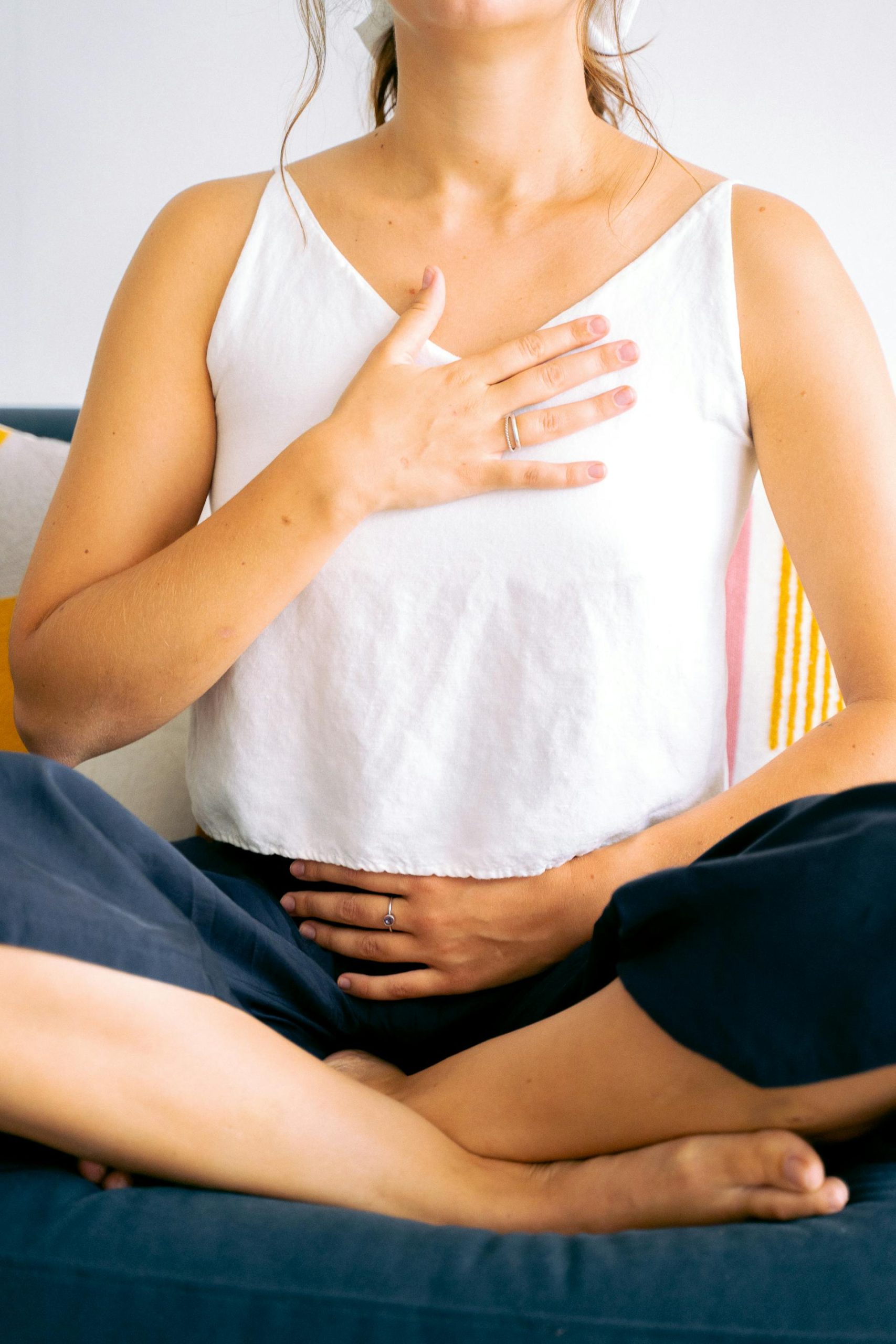
The Science of Slow Breathing: How Five Minutes a Day Rewires Your Nervous System, Lowers Cortisol, and Extends Your Healthspan
You own the most powerful stress intervention ever studied. It costs nothing. It requires no equipment, no prescription, and no appointment. It works in under five minutes. And a remarkable wave of clinical research published in 2025 has finally mapped exactly how and why it works at the level of the vagus nerve, the baroreflex, and the inflammatory cascade.
Presented By Our Partners



The intervention is structured slow breathing. Not a vague instruction to "take a deep breath." Not a meditation app with ambient rainfall. A specific, measurable, repeatable breathing protocol performed at a defined cadence, and the data behind it is now strong enough to change how you think about stress, recovery, pain, cardiovascular health, and long term healthspan.
Here is what the latest science says, who is doing the most important work, and what it means for your daily practice.
The Vagus Nerve: Your Body’s Master Recovery Switch
To understand why slow breathing works, you need to understand the vagus nerve. It is the longest cranial nerve in the body, running from the brainstem through the neck and into the chest, heart, lungs, and gut. It is the primary conduit of the parasympathetic nervous system, the branch of your autonomic nervous system responsible for rest, digestion, recovery, and repair.
When vagal tone is high, your heart rate drops, your blood pressure stabilizes, inflammation decreases, digestion improves, and your brain shifts out of threat detection mode. When vagal tone is low, the opposite happens: chronic sympathetic dominance, elevated cortisol, systemic inflammation, poor sleep, impaired digestion, and accelerated biological aging.
A landmark 2025 review published in Medicine International by researchers examining non-invasive vagal neuromodulation found that heart rate variability biofeedback (HRV-B), which uses paced breathing at an individual’s resonance frequency combined with real-time HRV monitoring, strengthens baroreflex sensitivity, improves autonomic balance, reduces systemic inflammation, and enhances emotional regulation. The review concluded that HRV-B has the largest effect sizes among all studied interventions for anxiety, depression, anger, and athletic performance.
The mechanism is elegant. When you breathe slowly, particularly at a rate of about five to six breaths per minute, your inhalation and exhalation begin to synchronize with natural oscillations in your heart rate and blood pressure. This synchronization activates the baroreflex, a feedback loop in which pressure sensors in the carotid artery and aortic arch signal the brainstem to modulate heart rate. The result is a measurable increase in heart rate variability, the gold standard biomarker for autonomic nervous system health and one of the most reliable predictors of all-cause mortality.
The Evidence: What 2025 Research Actually Shows
Cyclic Sighing Reduces Pain in Clinical Settings
One of the most compelling new findings came from a pilot randomized controlled trial published in the Journal of Behavioral Medicine in April 2025. Researchers tested whether a brief, four-minute cyclic sighing intervention could reduce acute pain in patients waiting for x-rays in an orthopedic clinic.
Cyclic sighing is the breathing protocol developed in collaboration with Stanford neuroscientist Andrew Huberman and psychiatrist David Spiegel. It involves a double nasal inhale (a full inhale followed by a short, sharp top-off inhale that fully inflates the alveoli) followed by a long, slow exhale through the mouth. The technique was previously shown in a 2023 Cell Reports Medicine study to outperform mindfulness meditation at improving mood and reducing physiological arousal.
In the 2025 clinic waiting room trial, participants who performed cyclic sighing reported significantly less pain unpleasantness and pain intensity compared to controls who received a time-matched injury management education condition. The effect was rapid, occurring within just four minutes of practice.
This is a meaningful finding because it demonstrates that structured breathing is not merely a subjective wellness tool. It produces measurable changes in pain perception in a clinical population experiencing real, acute pain.
The A52 Breath Method: A New Protocol With Randomized Trial Data
A new breathwork protocol called the A52 Breath Method, developed by researcher Abbie Little, was the subject of both a narrative review and a single-blind randomized controlled trial published in Stress and Health (Wiley) in 2025 and early 2026.
The A52 method involves a five-second nasal inhalation, a five-second nasal or mouth exhalation, and a two-second post-exhalation hold, repeated for ten minutes. This yields five breaths per minute, which falls squarely within the resonance frequency range identified by decades of HRV biofeedback research.
Featured Partner
Invest in the Infrastructure Behind Modern Medicine
As healthcare expands beyond hospital walls, the buildings and campuses supporting that shift are generating compelling returns for investors who move early. The Healthcare Real Estate Fund offers qualified investors direct access to a curated portfolio of medical office, outpatient, and specialty care facilities.
Learn More →
What makes the A52 method notable is the inclusion of the two-second post-exhalation pause. Research suggests that brief holds after the exhale may enhance relaxation and further reduce sympathetic nervous system drive, adding a parasympathetic boost beyond what standard slow breathing alone provides.
In the randomized controlled trial, paramedic students who practiced the A52 method reported significantly lower stress, anxiety, and depression scores and higher resilience compared to controls, with medium to large effect sizes. These results held even during exam stress, a period when psychological distress typically spikes. The researchers concluded that breathwork shows promise as a scalable, upstream intervention to support mental health in high-stress professions.
Box Breathing vs. Six Breaths Per Minute: Not All Protocols Are Equal
A study published in PLOS One in 2025 delivered a surprising and practically important finding. Researchers compared three post-exercise recovery conditions in 40 physically active university students following high-intensity interval training (HIIT) on a spin bike: spontaneous breathing, box breathing (four seconds inhale, four seconds hold, four seconds exhale, four seconds hold), and slow breathing at six breaths per minute (five seconds inhale, five seconds exhale).
The results challenged a common assumption. Box breathing actually produced a significantly higher post-exercise heart rate (164.65 beats per minute) compared to six breaths per minute (154.77 bpm) and even spontaneous breathing (159.05 bpm). Participants also reported higher perceived exertion with box breathing.
The likely explanation: the four-second breath holds in box breathing create additional physiological and perceptual stress, particularly after intense exercise when the body is demanding oxygen. The six-breaths-per-minute protocol, with its continuous, rhythmic flow and extended exhalation, more effectively activated the parasympathetic branch and facilitated cardiovascular recovery.
This matters for anyone using breathwork after training. If your goal is recovery, skip the holds and breathe slowly and continuously.
HRV Biofeedback and Resonance Frequency Breathing: The Clinical Gold Standard
A 2025 study published in Applied Psychophysiology and Biofeedback examined the effects of a brief resonance frequency breathing exercise on heart rate variability and inhibitory control in the context of generalized anxiety disorder. The researchers found that breathing at one’s personal resonance frequency, typically between 4.5 and 6.5 breaths per minute, significantly increased the LF/HF HRV ratio and improved mood compared to control conditions.
Separately, a large-scale global study published in Scientific Reports in 2025 analyzed HRV biofeedback data and found that positive emotional states were associated with higher coherence scores and more stable HRV frequencies, while negative emotions produced lower coherence and more dispersed frequency patterns. This provides physiological confirmation of what practitioners have long observed: the way you breathe changes the way you feel, and the way you feel changes the way you breathe, creating either a virtuous cycle or a vicious one.
The clinical applications are expanding rapidly. HRV biofeedback is now being studied for hypertension management, PTSD treatment, depression, chronic pain, and athletic performance optimization. The common thread is always the same: slow, rhythmic breathing at resonance frequency activates the vagus nerve, strengthens the baroreflex, and shifts the autonomic nervous system toward parasympathetic dominance.
Deep Breathing Reduces Cortisol and Inflammatory Markers
A 2024 pilot randomized controlled trial published in Stress and Health tested a neofunctional deep diaphragmatic breathing (NDB) technique and found that it effectively increased parasympathetic activity, reduced salivary cortisol, and lowered inflammation markers. The researchers described the results as indicating potential for deep breathing as an adjunctive anti-inflammatory treatment.
This aligns with a growing body of evidence showing that slow breathing reduces allostatic load, the cumulative burden of chronic stress on the body measured through a composite of biomarkers including cortisol, C-reactive protein, blood pressure, and metabolic markers. The effect sizes are robust, and the direction is consistent: structured breathing reduces the biological cost of stress.
Why This Matters for Healthspan
The four fundamentals of health, nutrition, movement, sleep, and breath, do not operate in isolation. They are interconnected through the autonomic nervous system, and the vagus nerve is the bridge that connects them all.
Poor vagal tone impairs digestion, which undermines your ability to absorb nutrients from even the best diet. It disrupts sleep architecture, particularly the deep slow-wave sleep stages that are essential for physical recovery, immune function, and memory consolidation. It suppresses heart rate variability, which reduces your capacity for high-quality movement and limits your ability to recover between training sessions.
Conversely, improving vagal tone through structured breathing creates a cascade of downstream benefits. Better digestion. Deeper sleep. Faster recovery. Lower resting heart rate. Reduced inflammation. Improved emotional regulation. Greater resilience under stress.
The research now makes clear that five minutes of structured slow breathing is not a luxury or a wellness trend. It is a physiological intervention with measurable effects on the nervous system, the endocrine system, and the immune system. It belongs in the same category as strength training, sleep hygiene, and dietary quality: a non-negotiable daily practice for anyone serious about long-term health.
What This Means for Your Practice
Here is the evidence-based prescription, distilled from the research above.
Choose your protocol. The three best-supported options are cyclic sighing (double inhale through the nose, long exhale through the mouth), the A52 method (five seconds in, five seconds out, two-second hold after the exhale, all through the nose), and simple resonance frequency breathing (slow, continuous breathing at five to six breaths per minute with a slight emphasis on extending the exhale). All three activate the vagus nerve and improve HRV. Cyclic sighing has the strongest data for mood improvement. The A52 method has the strongest data for stress resilience. Resonance frequency breathing has the deepest evidence base for cardiovascular and autonomic benefits.
Practice for five minutes daily, minimum. The Stanford cyclic sighing trial used five minutes per day. The A52 trial used ten minutes per day. Even brief sessions of two to four minutes produced measurable effects in the clinic waiting room pain study. Start with five minutes and build from there.
Time it strategically. Use breathwork after exercise to accelerate parasympathetic reactivation, but avoid box breathing post-workout (the holds impair recovery). Use it before bed to shift out of sympathetic dominance and prepare for sleep. Use it before meals to activate the rest-and-digest branch and improve nutrient absorption. Use it during acute stress to interrupt the cortisol cascade.
Track your HRV. If you wear an Oura Ring, Whoop, Apple Watch, or Garmin device, track your morning HRV over time. A consistent breathwork practice should produce a measurable upward trend in resting HRV within two to four weeks. This is not subjective. It is a quantifiable physiological adaptation.
Breathe through your nose. Multiple studies in the 2025 literature specifically note that nasal breathing enhances the parasympathetic effects of slow breathing. Nasal breathing increases nitric oxide production in the sinuses, which improves vasodilation and oxygen delivery. It also slows the breathing rate naturally, making it easier to stay in the five-to-six breaths per minute range.
Use the exhale as your lever. Across every protocol studied, extending the exhalation relative to the inhalation consistently produced the strongest parasympathetic activation. Whether you use cyclic sighing, A52, or simple resonance breathing, make the exhale longer than the inhale. This is the single most important variable in breathwork.
The research is clear, the protocols are free, and the time investment is minimal. Five minutes of structured breathing, performed daily with intention and consistency, is one of the highest-return health practices available to any human being alive today. The vagus nerve is waiting. All you have to do is breathe.


Similar Posts

Garmin Forerunner 965: AMOLED Running Watch With VO2 Max Tracking and Training Load Analytics
Garmin’s premium running watch delivers laboratory caliber VO2 max estimation, training readiness scoring, and built in maps on a vibrant AMOLED display, all without a subscription. Presented By Our Partners The average recreational runner has no idea what their VO2 max is. They know their pace per mile, their resting heart rate, maybe their weekly…

The Daily Rounds: Longevity & Health Care Brief | April 1, 2026
🧬 Epigenetic reprogramming enters its first human trial as Life Biosciences begins treating retinal degeneration with ER-100, a cellular rejuvenation therapy that resets the biological clock without erasing cell identity.
💊 A gut bacteria compound doubles lung cancer immunotherapy response rates in preclinical models, pointing to the microbiome as a powerful and underutilized lever in oncology treatment protocols.
🤖 Over 173 AI-designed drug programs are now in human clinical trials, with 2026 marking the transition from AI-assisted research to AI-native drug discovery as a standard operating model.
🏋️ GLP-1 medications and exercise share a convergent molecular pathway through interleukin-6 signaling, meaning structured resistance and aerobic training is not just complementary to these medications but mechanistically synergistic.
😴 Consumer wearable sleep trackers have cleared the threshold for clinical validation, with the World Sleep Society formalizing recommendations that integrate these devices into clinical practice and disease management protocols.

Epigenetic Reprogramming Goes Human: Three Breakthroughs Signal a Turning Point for Longevity Science
The first human trial of partial epigenetic reprogramming has launched, an AI platform published in Cell is accelerating longevity drug discovery, and a landmark NEJM trial proves cardiovascular primary prevention works in patients who have never yet had a heart attack. Here is what it all means for the future of human healthspan.
Levels Health: The CGM Platform Turning Glucose Data into Metabolic Intelligence
Glucose is the universal metabolic currency. Every cell in your body runs on it. Until recently, tracking it continuously was a privilege reserved for diabetics. That is changing. Presented By Our Partners There is a peculiar asymmetry in modern health monitoring. We track steps, heart rate, sleep stages, and calories burned with consumer devices that…
Philips Actiwatch Spectrum: The Gold Standard in Clinical Sleep and Circadian Research
For three decades, one wrist-worn device has defined how researchers measure sleep, light exposure, and circadian rhythms in clinical studies worldwide. Presented By Our Partners A 2022 meta-analysis published in Sleep Medicine Reviews by Sadeh analyzed data from over 150 studies using actigraphy to assess sleep and circadian function. The analysis confirmed what sleep researchers…
Therabody RecoveryAir JetBoots: Sequential Pneumatic Compression for Athletic Recovery
Professional athletes do not leave recovery to chance. They compress, flush, and restore their legs with the same intentionality they bring to every training session. Presented By Our Partners The science of post-exercise recovery has moved beyond cold tubs and stretching into quantified, mechanized interventions. A 2018 meta-analysis published in Frontiers in Physiology by Dupuy…
