
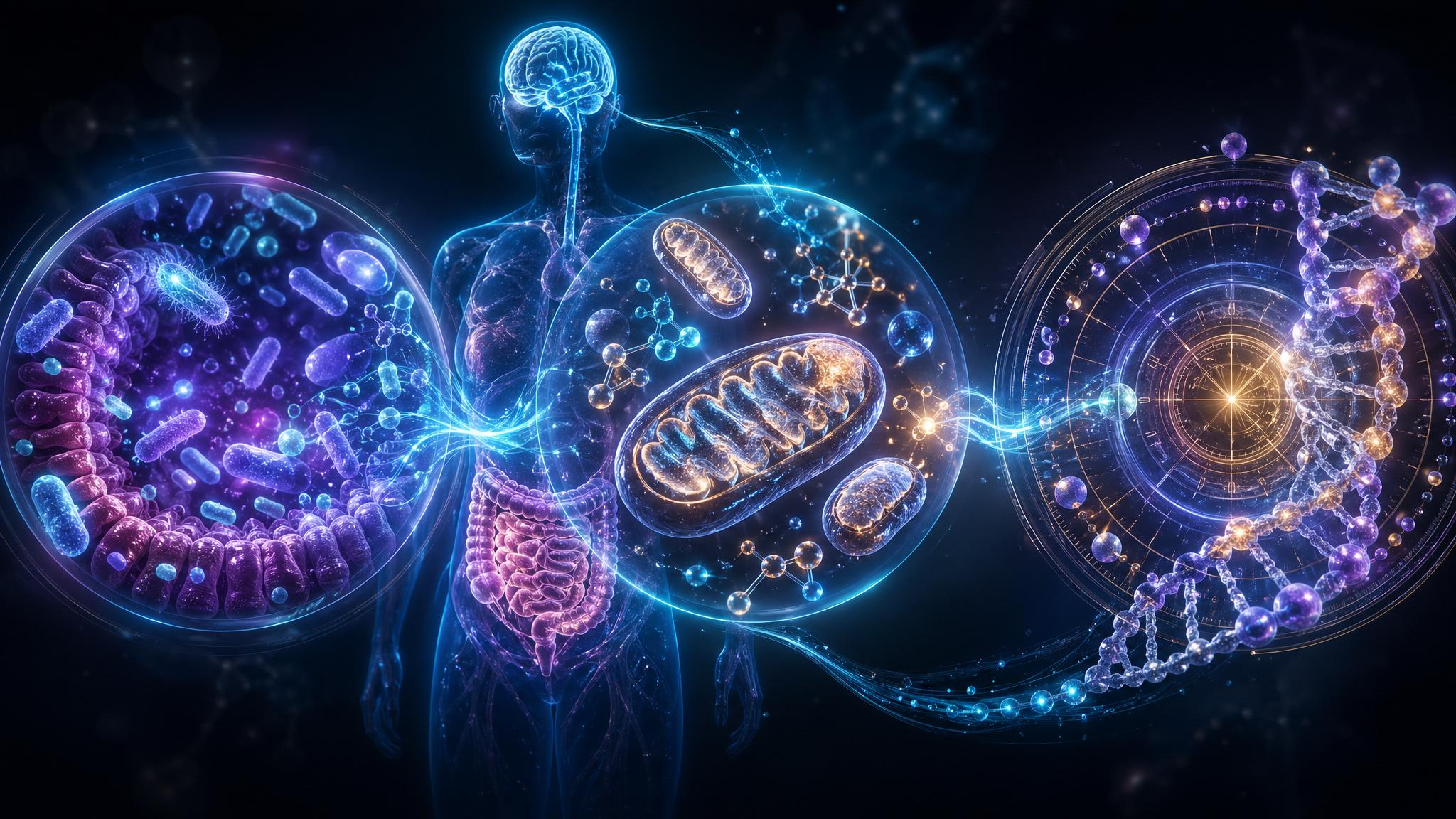
Biological Aging Reversal in 2026: Gut Bacteria, NAD+ Balance, and Epigenetic Clocks Point the Way
For most of human history, aging has been treated as a one-way street. The body accumulates damage, organ systems slowly falter, and the machinery of life winds down in ways that science could document but not fundamentally alter. That assumption is now under extraordinary pressure.
Presented By Our Partners



Three landmark studies published in late 2025 and early 2026 are converging on a provocative new picture of biological aging: not a fixed trajectory but a dynamic process that can be measured with precision, intercepted at multiple biological levels, and in certain contexts, reversed. A University of Pennsylvania and Stanford team published findings in Nature showing that age-related memory loss in mice can be fully reversed by restoring a disrupted gut-to-brain signaling pathway. A Cleveland research group achieved full neurological recovery in mice with advanced Alzheimer’s disease by correcting a cellular energy imbalance at the molecular level. And a sweeping 24-year Italian cohort study demonstrated that the speed at which your biological clock accelerates independently predicts mortality. For anyone tracking the science toward Longevity Escape Velocity, these findings represent a significant inflection point.
The Gut’s Hidden Role in Age-Related Cognitive Decline
When we think about what drives brain aging, we typically focus on what is happening inside the skull: accumulating protein aggregates, declining neurotransmitter levels, shrinking hippocampal volume. A study published March 11 in Nature by researchers at the University of Pennsylvania and Stanford University now suggests we have been missing a critical player located nowhere near the brain at all.
The research, led by graduate student Timothy Cox with senior authors Christoph Thaiss and Maayan Levy of the University of Pennsylvania, identified a specific gut bacterium, Parabacteroides goldsteinii, that proliferates in the gut microbiome as mice age. As its prevalence rises, the bacterium produces medium-chain fatty acids that trigger a localized inflammatory response in a specialized class of immune cells in the gastrointestinal tract called myeloid cells. That inflammation acts as a brake on the vagus nerve, the primary signaling channel connecting the gut and the brain. When vagal transmission is dampened, the hippocampus, the brain’s primary site for memory formation and spatial navigation, begins to underperform measurably.
The consequences in mice were dramatic. Older animals showed significant impairment in recognizing novel objects and navigating mazes compared to young controls. When researchers stimulated vagal activity by administering the gut hormone cholecystokinin, known as CCK, or by treating animals with GLP-1 receptor agonists, a drug class that includes the widely prescribed semaglutide, the aged animals recovered memory performance indistinguishable from that of young mice. The vagus nerve, once unblocked, restored hippocampal function with striking speed.
The study, which carries PubMed ID 41813891, was described as a “tour de force” by outside researchers commenting in Science. Its mechanistic depth is unusual: the researchers did not merely observe an association between gut health and cognition but traced a complete causal chain from bacterial species to metabolite to immune cell to nerve signaling to hippocampal memory. That specificity matters, because it points toward concrete intervention targets rather than general dietary advice.
The clinical implications are substantial. GLP-1 receptor agonists are already in widespread use for weight management and type 2 diabetes. The possibility that these drugs could preserve or restore cognitive function in aging humans by acting on the gut-brain axis opens a clinical avenue that reframes the entire GLP-1 drug category. Researchers are appropriately cautious, noting that mouse models do not always translate to human biology, but the mechanistic clarity of this study makes it a high-priority candidate for clinical investigation in aging populations.
Reversing Advanced Alzheimer’s: What NAD+ Balance Has to Do With It
If the Stanford gut-brain findings challenge how we think about cognitive aging, a study published December 22, 2025 in Cell Reports Medicine challenges something even more foundational: the assumption that Alzheimer’s disease, once advanced, is irreversible.
The research, led by Kalyani Chaubey from the laboratory of neuroscientist Andrew Pieper at Case Western Reserve University, University Hospitals Cleveland, and the Louis Stokes Cleveland VA Medical Center, focused on NAD+, short for nicotinamide adenine dinucleotide. NAD+ is a molecule that sits at the center of cellular energy metabolism, DNA repair, and the cellular stress response. Its levels decline substantially with age and are depleted even further under the chronic metabolic stress that characterizes Alzheimer’s pathology. The Pieper lab hypothesized that this depletion was not merely a symptom of neurodegeneration but one of its principal drivers.
To test this, the team administered a pharmacological agent developed in the Pieper lab called P7C3-A20. This compound does not simply elevate NAD+ levels but instead enables cells to maintain their proper NAD+ balance under conditions of otherwise overwhelming metabolic stress. This distinction is clinically critical. Over-the-counter NAD+ precursors such as NMN and NR have been shown in animal models to raise cellular NAD+ to supraphysiological levels, which carries documented risks including promotion of cancer cell growth. P7C3-A20 operates as a metabolic stabilizer rather than a raw supplement, preserving the cell’s ability to self-regulate its energy state.
Featured Partner
Invest in the Infrastructure Behind Modern Medicine
As healthcare expands beyond hospital walls, the buildings and campuses supporting that shift are generating compelling returns for investors who move early. The Healthcare Real Estate Fund offers qualified investors direct access to a curated portfolio of medical office, outpatient, and specialty care facilities.
Learn More →
In two separate genetic mouse models of Alzheimer’s disease, the results were remarkable. When P7C3-A20 was administered early, it blocked disease progression entirely. When given to animals already displaying advanced pathology, with measurable amyloid plaques, tau tangles, and significant cognitive impairment, the treatment reversed all of these markers and restored cognitive function to normal. Blood levels of phosphorylated tau-217, a biomarker recently approved for clinical Alzheimer’s diagnosis in humans, normalized completely after treatment, providing a translationally credible confirmation of disease reversal. The study was published with DOI 10.1016/j.xcrm.2025.102535 and PubMed ID 41435831.
Pieper was explicit about what makes this work different from prior Alzheimer’s research: current clinical trials have focused on preventing or slowing disease progression, while this study is the first to demonstrate that brains with advanced Alzheimer’s pathology can recover. He also emphasized that the work must move into carefully designed human clinical trials before any definitive conclusions about human patients are warranted. Nevertheless, the study sets a new scientific standard for what preclinical reversal evidence should look like before clinical translation, and the use of a validated human biomarker as a readout adds unusual rigor.
Your Biological Clock Is Ticking. Science Can Now Measure How Fast.
The third piece of the 2026 aging puzzle shifts from mechanism to measurement and mortality prediction. A study published in Nature Aging (DOI: 10.1038/s43587-026-01066-6) followed 699 adults from the InCHIANTI cohort in Tuscany, Italy for up to 24 years and asked a deceptively simple question: does the rate at which your epigenetic biological age accelerates predict when you will die, above and beyond what your baseline age and health status already indicate?
The answer was an unambiguous yes, and the effect was independent of all major confounders.
Epigenetic clocks measure biological age by analyzing DNA methylation patterns at specific sites across the genome. Unlike chronological age, these clocks vary substantially between individuals, capturing the cumulative biological impact of lifestyle, chronic stress, disease history, and environmental exposures. Several generations of these measurement tools have been developed, from the original Horvath and Hannum clocks to more sophisticated second-generation instruments such as DNAmGrimAge, DNAmPhenoAge, DunedinPACE, and GrimAge version 2. Prior research had established that having a higher biological age than your chronological age is associated with worse health outcomes. What had remained uncertain was whether the trajectory of change over time, rather than the baseline measurement alone, carries independent prognostic information.
In the InCHIANTI cohort, 396 of the 699 participants died during the 24-year follow-up period, a mortality rate of approximately 29 deaths per 1,000 person-years. Researchers found that individuals whose epigenetic clocks accelerated faster over the study period faced substantially elevated mortality risk, independent of baseline biological age, smoking history, cardiovascular disease status, and all other measured confounders. The clocks most strongly predictive of mortality included DunedinPACE and GrimAge version 2, both of which are designed to capture the biological pace of aging rather than merely correlate with chronological age.
A companion study in Nature Communications comparing 14 epigenetic clocks across nearly 19,000 individuals reinforced this picture, demonstrating that second-generation clocks consistently outperform earlier tools in predicting disease incidence and mortality, particularly for respiratory and liver-related conditions. The emerging consensus from both studies is that static biological age measurements provide a useful snapshot, but longitudinal tracking of biological aging pace provides something more valuable: a genuinely actionable trajectory.
The Common Thread: Inflammation, Energy, and Epigenetics as a Single System
Taken individually, each of these findings is significant. Taken together, they sketch the outlines of a unified aging biology that the longevity field has been working toward for decades.
The Stanford gut-brain study implicates chronic gut-derived inflammation as a driver of neural dysfunction. The CWRU Alzheimer’s study reveals mitochondrial energy collapse, driven by NAD+ depletion, as a key vulnerability in aging neurons. The epigenetic clock research shows that biological aging is not just a static state but a trajectory, with individuals aging at measurably different speeds. These are not three separate stories. They are three perspectives on the same underlying biological system.
Chronic low-grade inflammation, a phenomenon described in the scientific literature as “inflammaging,” disrupts both the gut-brain axis and mitochondrial integrity simultaneously. NAD+ depletion accelerates epigenetic aging. Epigenetic dysregulation in turn promotes the cellular stress conditions that further deplete NAD+ and compromise immune homeostasis. These feedback loops are increasingly well characterized, and they collectively point toward a set of biological levers that, if engaged strategically, could interrupt the cycle of accelerated aging at its root rather than at its downstream consequences.
Researchers convening at the 2nd World Congress on Targeting Longevity in Berlin in April 2026 have framed this convergence as a paradigm shift: from treating aging as a collection of organ-specific failures to addressing the underlying loss of biological coordination that generates them all. The gut microbiome, mitochondrial metabolism, and the epigenome are three interconnected nodes in a coordinated system, and the evidence of 2026 suggests all three are meaningfully responsive to intervention.
Longevity Pillars in Focus: Where These Findings Land
For those navigating their own longevity journey across the six pillars of longevity science, these three studies make contact with multiple domains simultaneously. The Stanford gut-brain research speaks directly to both the Gut Microbiome pillar and the Neurology pillar, providing the first mechanistically complete explanation for how age-related gut dysbiosis translates into measurable cognitive decline. The gut is not a passive bystander in brain aging. It is an active regulator of hippocampal function, and its bacterial composition shifts with age in ways that can now be characterized and potentially reversed through targeted pharmacological or dietary intervention.
The CWRU Alzheimer’s findings extend the Cellular Health pillar into important new territory. NAD+ has long been discussed in the longevity community primarily as a supplement category. These findings reframe it as a master regulator of the cellular stress response, one whose precise management may determine whether aging neurons degenerate or recover. The critical distinction from the Pieper lab, that indiscriminate elevation of NAD+ may carry risks, points toward the need for pharmaceutical precision rather than broad nutraceutical supplementation for serious neurological applications.
The epigenetic clock study reinforces the measurement imperative at the heart of personalized longevity medicine. Knowing your biological age is useful. Tracking whether your biological aging is accelerating or decelerating over time is transformative. The rate of epigenetic aging is now demonstrably actionable: it predicts mortality with statistical independence, varies substantially with lifestyle factors including exercise, diet quality, sleep, and stress load, and may be directly slowed by interventions that reduce inflammaging, support mitochondrial function, and stabilize the gut microbiome.
What This Means for You
The most immediate takeaway from these three studies is that the biological processes driving aging are responsive to intervention at multiple levels, and those levels are more tightly connected than previously understood. Gut microbiome health, maintained through diverse plant-based nutrition, regular physical activity, stress management, and targeted probiotic strategies, now has a direct mechanistic link to cognitive preservation that runs through the vagus nerve and the hippocampus. Mitochondrial support through habits that sustain cellular energy metabolism matters not only for physical performance but for long-term neurological resilience. And the pace of your biological aging is not fixed: it can be measured with increasing clinical precision and meaningfully altered by how you live. These are not reasons for passive optimism. They are reasons for informed, evidence-based engagement with your own biology.
The Road Ahead
Ray Kurzweil’s prediction that humanity will reach Longevity Escape Velocity by the early 2030s, the point at which science adds more healthy years than time takes away, rests on exactly the kind of scientific momentum visible in the first quarter of 2026. The convergence of gut biology, cellular energy restoration, and epigenetic measurement is not the conclusion of a story. It is the opening of one. As GLP-1 receptor agonist trials expand to include cognitive endpoints, as NAD+-balancing compounds like P7C3-A20 move toward human testing, and as longitudinal epigenetic monitoring becomes a clinical standard alongside blood pressure and cholesterol screening, the gap between “aging is reversible in mice” and “aging is reversible in people” is narrowing faster than at any prior point in the history of medicine. The biology of reversal is no longer a fringe hypothesis. It is becoming a research priority.
Sources:
Cox T et al., Intestinal interoceptive dysfunction drives age-associated cognitive decline, Nature, March 2026 (PubMed 41813891)
Stanford Medicine: Enhancing gut-brain communication reversed cognitive decline in aging mice, March 2026
EurekAlert: The gut can drive age-associated memory loss, 2026
Chaubey K et al., Pharmacologic reversal of advanced Alzheimer’s disease in mice, Cell Reports Medicine, December 2025 (DOI: 10.1016/j.xcrm.2025.102535)
PubMed: Pharmacologic reversal of advanced Alzheimer’s disease in mice, Case Western Reserve University, 2025 (PubMed 41435831)
Case Western Reserve University: Alzheimer’s Disease Can Be Reversed, December 2025
Longitudinal changes in epigenetic clocks predict survival in the InCHIANTI cohort, Nature Aging, 2026 (DOI: 10.1038/s43587-026-01066-6)
Medical Xpress: Changes in pace of epigenetic clocks may help predict mortality risk, March 2026


Similar Posts
NeuroSky MindWave Mobile 2: The Most Affordable Consumer EEG for Beginners and Developers
A single channel EEG headset that costs less than a fitness tracker, offering the lowest barrier to entry for anyone curious about brainwave monitoring, neurofeedback, and brain computer interface development….

The Cure Hiding in Plain Sight: How Every Cure Is Rewriting the Rules of Drug Discovery
Every Cure is a nonprofit using AI and drug repurposing to uncover treatments hidden inside existing medicines. Founded by physician-scientist David Fajgenbaum after a repurposed drug saved his own life,…

Beyond Inheritance by Roxanne Khamsi: A Review
An inaugural entry in HD Reads. Roxanne Khamsi’s Beyond Inheritance is the most important popular biology book of 2026 to date, and the foundation text for a way of seeing…
Oura Ring Gen 4: Next Generation Sleep and HRV Tracking in the World’s Most Discrete Health Monitor
Oura’s latest smart ring delivers improved sensor accuracy, expanded daytime heart rate monitoring, and blood pressure sensing on the horizon, all from a titanium ring that weighs less than most…
How Scientists Are Learning to Reverse Cardiovascular Aging: From Centenarian Genes to Rapamycin
New research reveals that cardiovascular aging can be slowed and even reversed. A centenarian gene rewinds heart age by ten years, rapamycin improves diastolic function in elderly men within weeks,…
Samsung Galaxy Watch 7: Sleep Apnea Detection and Cardiovascular Monitoring
The first smartwatch to receive FDA authorization for sleep apnea detection may have quietly become one of the most important consumer health devices of the decade. Here is the clinical…
