
Muscle Is a Longevity Organ: What the Science of Strength Training Reveals About All-Cause Mortality
For most of the last century, muscle was treated as a cosmetic tissue. Body composition belonged to fitness magazines, not longevity clinics. Mortality science focused on blood pressure, cholesterol, glucose, and a handful of imaging findings. Strength was the business of athletes and bodybuilders. Medicine measured muscle almost as an afterthought.
Presented By Our Partners



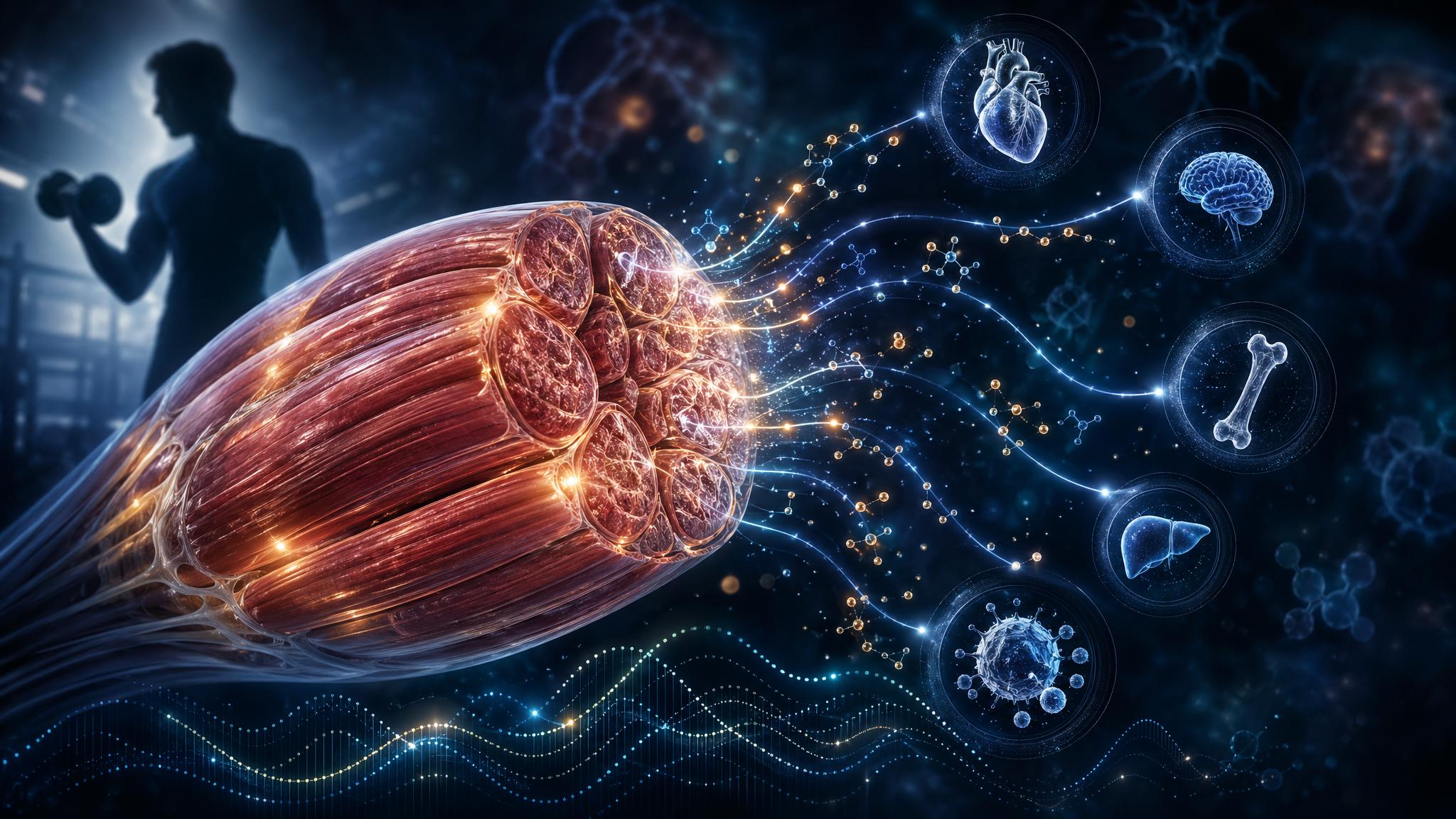
That framing is now collapsing. Over the past fifteen years, a convergence of epidemiology, endocrinology, and molecular biology has reclassified skeletal muscle as something closer to a central longevity organ. It produces hormones. It regulates glucose. It releases signaling molecules that talk to the brain, liver, immune system, and bone. Its mass and function predict all-cause mortality with an accuracy that rivals the most sophisticated blood-based biomarkers. And the intervention that builds and preserves it, resistance training, appears in study after study as one of the most consistent lifestyle predictors of a longer, healthier life.
The shift is not academic. It has real consequences for how you should spend your time this week.
Grip Strength, Muscle Mass, and the Mortality Signal
The simplest evidence for muscle as a longevity organ sits in a handheld device that costs less than fifty dollars. Grip strength, measured with a spring-loaded dynamometer, has emerged as one of the most reliable predictors of all-cause mortality ever studied. In 2015, Darryl Leong and colleagues published a prospective study in The Lancet analyzing 139,691 adults across 17 countries in the PURE study. After adjustment for age, education, employment, physical activity, and other standard covariates, every five kilogram reduction in grip strength was associated with a 16 percent increase in all-cause mortality, a 17 percent increase in cardiovascular mortality, and a 17 percent increase in non-cardiovascular mortality. Grip strength outperformed systolic blood pressure as a mortality predictor in that dataset.
Subsequent research has confirmed and extended the finding. A 2018 BMJ study by Celis-Morales and colleagues analyzed 502,293 UK Biobank participants and found that lower grip strength was significantly associated with cardiovascular disease, respiratory disease, chronic obstructive pulmonary disease, and cancer mortality, with the effect preserved across subgroups by sex, age, socioeconomic status, diet, and baseline health. In 2022, Prasitsiriphon and Pothisiri published a systematic review and meta-analysis in The Journal of Gerontology covering 53 studies and more than two million participants. The pooled result: each one-standard-deviation reduction in grip strength increased all-cause mortality risk by roughly 31 percent.
Grip strength is not magic. It is a proxy. It stands in for total body strength, neuromuscular health, and the integrity of a musculoskeletal system that the body has not yet allowed to decline. When grip goes, something deeper has usually already gone with it.
Muscle mass tells a similar story. A 2014 study in the American Journal of Medicine by Srikanthan and Karlamangla analyzed 3,659 older adults from the NHANES III dataset and found that higher muscle mass index, measured through bioelectrical impedance, was associated with significantly lower all-cause mortality independent of body mass index, metabolic syndrome, and cardiovascular risk factors. A 2018 study in the Journal of Bone and Mineral Research used DXA-derived appendicular lean mass and found that sarcopenic older adults had roughly double the mortality rate of their non-sarcopenic peers over a ten year follow-up. In 2023, a Mayo Clinic Proceedings analysis confirmed that low muscle mass plus low strength, the formal definition of sarcopenia, conferred mortality risk comparable to well-established clinical conditions.
The Intervention Signal: Resistance Training and All-Cause Mortality
Association is not causation. If muscle mass and strength simply marked an otherwise healthy person, training would show weaker effects than the observational data suggest. The intervention data speak for themselves.
In 2022, Haruki Momma and colleagues published a meta-analysis in the British Journal of Sports Medicine synthesizing 16 prospective cohort studies on muscle-strengthening activities and mortality. Participants who performed any regular muscle-strengthening activity had a 15 percent lower risk of all-cause mortality, a 17 percent lower risk of cardiovascular mortality, and a 12 percent lower risk of cancer mortality compared to those who did none. The sweet spot was roughly 30 to 60 minutes per week of resistance exercise. Beyond 60 minutes, the association plateaued for all-cause mortality but continued to deliver additional benefit for some outcomes. Importantly, combining muscle-strengthening activity with aerobic exercise produced the strongest effect. Adults who met both guidelines had a 40 percent lower all-cause mortality risk than those who met neither.
The Momma meta-analysis changed the conversation. It established what cardiologists had long suspected: aerobic exercise alone is incomplete. The 150 minutes of moderate cardio per week that dominates public health messaging captures only part of the longevity equation. The other part lives in the weight room, the resistance band drawer, or a well-loaded backpack on a steep hill.
A 2022 study in the American Journal of Preventive Medicine by Shailendra and colleagues analyzed ten prospective studies comparing exercise modalities. The authors found that any amount of muscle-strengthening activity reduced all-cause mortality, and that participants who did both aerobic and resistance training had substantially better outcomes than those who did either alone. The dose-response curve was flat enough to be democratic. Two sessions per week delivered most of the benefit.
Muscle as an Endocrine Organ: The Myokine Revolution
Why would strength training protect against cardiovascular disease, cancer, and neurodegeneration, not just falls and fractures? The mechanistic answer came from a discovery that began in 2000, when Bente Pedersen and colleagues at the University of Copenhagen started isolating signaling molecules released from contracting muscle fibers. They called them myokines, and the list has grown steadily since.
Interleukin 6, long considered a pro-inflammatory cytokine, turns out to have an opposite role when released from exercising muscle. Acutely, exercise-induced IL-6 mobilizes fuel and, paradoxically, triggers anti-inflammatory cascades by promoting IL-10 and IL-1 receptor antagonist production. A 2015 review in Physiological Reviews by Pedersen laid out the framework: muscle is a secretory organ that speaks to the rest of the body through hundreds of signaling molecules, and the conversation only happens when the muscle is used.
Irisin, identified by Bruce Spiegelman’s lab at Harvard in 2012 and published in Nature, is released during exercise and appears to promote the browning of white adipose tissue, insulin sensitivity, and even neurogenesis in the hippocampus. A 2019 Nature Metabolism paper by Lourenco and colleagues showed that irisin mediates exercise-induced cognitive protection in a mouse model of Alzheimer disease. In 2023 and 2024, follow-up work extended the irisin story into human observational data linking circulating irisin to cognitive performance and cardiovascular markers.
Featured Partner
Invest in the Infrastructure Behind Modern Medicine
As healthcare expands beyond hospital walls, the buildings and campuses supporting that shift are generating compelling returns for investors who move early. The Healthcare Real Estate Fund offers qualified investors direct access to a curated portfolio of medical office, outpatient, and specialty care facilities.
Learn More →
Myostatin operates in the opposite direction. It is a negative regulator of muscle growth, and its levels rise with sedentary living and age. Resistance training suppresses myostatin expression, allowing muscle to grow and adapt. Clinical trials of myostatin inhibitors for sarcopenia continue to advance in 2025 and 2026, but the simplest pharmacology remains the barbell.
Decorin, SPARC, brain-derived neurotrophic factor, and cathepsin B are additional myokines released during muscle contraction. Collectively, they modulate tumor suppression, bone formation, insulin signaling, mood regulation, and cognition. When muscle stops contracting, the signals stop. When muscle atrophies, the amplitude of the signals drops permanently unless training resumes.
This is the mechanistic spine of the longevity argument. Muscle is not passive meat. It is a chemical broadcast station, and strength training turns the volume up.
Sarcopenia: The Silent Epidemic
Sarcopenia is the age-related loss of muscle mass and function. It was formally recognized as a disease by the World Health Organization in 2016, and its prevalence is staggering. Estimates published in 2022 in the Journal of Cachexia, Sarcopenia and Muscle put global sarcopenia prevalence at roughly 10 to 16 percent of adults over 60, rising sharply with each subsequent decade. By age 80, many studies find prevalence above 30 percent.
The loss is not linear. After age 30, adults lose roughly 3 to 8 percent of muscle mass per decade, with acceleration after 60. More concerning than the mass loss is the strength loss. Strength declines up to three times faster than mass, driven by denervation of motor units, decline in fast-twitch type II fiber function, and a reduction in neuromuscular efficiency. A 2020 study in the Journal of the American Medical Directors Association followed older adults for five years and found that loss of strength, not loss of mass, predicted mortality and disability most strongly.
The compound effect of sarcopenia and metabolic disease has its own name: sarcopenic obesity. When muscle atrophies while fat mass remains high or grows, the metabolic consequences multiply. A 2021 meta-analysis in Obesity Reviews found that sarcopenic obesity carries a significantly higher mortality risk than either condition alone. The combination reflects a body that has lost its glucose sink, its postural framework, and its capacity to withstand illness, injury, or surgery.
Resistance training is the only intervention with consistent evidence for reversing or slowing sarcopenia. A 2023 systematic review in Ageing Research Reviews covering 84 randomized trials concluded that progressive resistance training increased muscle mass, strength, and physical function in older adults across every age group studied, including those in their 90s. Protein supplementation alone did not produce the same effect. Exercise alone produced most of it. The combination was modestly additive.
Protein, Leucine, and the Timing Question
If resistance training is the stimulus, protein is the substrate. The two work together. Muscle protein synthesis, the cellular process that builds new contractile tissue, requires both mechanical tension and adequate amino acids, particularly the branched-chain amino acid leucine, which activates the mTOR signaling pathway.
A 2018 meta-analysis in the British Journal of Sports Medicine by Morton and colleagues analyzed 49 studies and established that protein supplementation meaningfully increased muscle mass and strength gains during resistance training, with benefits plateauing around 1.6 grams of protein per kilogram of body weight per day. For an 80 kilogram adult, that is roughly 130 grams per day, distributed across meals to maximize muscle protein synthesis windows.
Older adults may need more, not less. The concept of anabolic resistance describes the age-related reduction in muscle protein synthesis response to a given protein dose. A 2019 paper in Nutrients by Moore and colleagues proposed that adults over 65 require approximately 1.2 to 2.0 grams of protein per kilogram per day to maintain and build muscle, substantially above the standard RDA of 0.8 grams per kilogram.
The timing debate has matured. The classic anabolic window hypothesis, which suggested protein had to be consumed within 30 minutes of training, has been revised. Current evidence supports a broader window of several hours. What matters more is the distribution across the day. Multiple meals containing 25 to 40 grams of high-quality protein each appear to produce greater total muscle protein synthesis than the same daily total concentrated in one or two large meals.
The Minimum Effective Dose
The Momma meta-analysis raised a practical question that matters for anyone reading this at 10:00 p.m.: what is the minimum dose that moves the needle?
A 2022 study in Medicine and Science in Sports and Exercise by Androulakis-Korakakis and colleagues reviewed the minimum dose literature and concluded that as little as one working set per exercise, performed to technical failure, two or three times per week, produced meaningful strength gains in trained and untrained individuals. A 2023 meta-analysis in Sports Medicine by Schoenfeld and colleagues found that even weekly training volumes as low as four to six sets per muscle group produced measurable hypertrophy, though higher volumes generated greater gains in experienced lifters.
In practical terms, a complete weekly longevity-oriented strength program can fit in 60 to 90 minutes per week. Two to three sessions. Six to eight compound movements. Two to three sets per movement. Taken close to technical failure. That is the floor, and the mortality data suggest that anyone doing this much beats anyone doing nothing by a meaningful margin.
Strength Training and Cardiometabolic Health
The mortality benefit is not abstract. Strength training directly influences the metabolic machinery that governs cardiovascular and neurodegenerative risk.
A 2019 meta-analysis in Sports Medicine by Ashton and colleagues examined 24 randomized controlled trials and found that resistance training reduced systolic blood pressure by 4.3 mmHg and diastolic blood pressure by 3.8 mmHg in adults with prehypertension or hypertension. A 2022 meta-analysis in Diabetes Care concluded that resistance training improved HbA1c by roughly 0.3 percentage points in adults with type 2 diabetes, comparable to many glucose-lowering medications. Skeletal muscle is the largest site of glucose disposal in the body. When it is trained and active, it pulls glucose out of the bloodstream with or without insulin. When it is small and untrained, it cannot.
A 2023 review in Circulation Research summarized the cardiovascular benefits of resistance training: improved endothelial function, lower arterial stiffness, favorable remodeling of cardiac muscle, and enhanced lipid profiles. Contrary to older concerns, properly performed resistance training does not elevate long-term blood pressure or harm the heart. It protects it.
What This Means For Your Practice
The research is consistent enough to translate into specific, concrete actions.
Start strength training this week if you are not already. Two sessions of 30 to 45 minutes each is enough to shift the mortality curve. Pick six movements: a squat pattern, a hip hinge, an upper body push, an upper body pull, a carry, and a core movement. Use weights or resistance bands that force the last two or three reps to feel genuinely hard. Train close to failure on the final set of each exercise. Progress the load over time.
Measure your grip. A simple hand dynamometer costs twenty to forty dollars and provides a longitudinal reference point. Track it quarterly. If grip is declining, something upstream has already shifted.
Eat protein at every meal. For most adults, aiming for 25 to 40 grams of high-quality protein three or four times per day, landing somewhere between 1.2 and 1.6 grams of protein per kilogram of body weight daily, covers the research-supported target. Older adults should aim for the higher end.
Walk daily, but do not use walking as a substitute for resistance training. The two exercises are not interchangeable. The best longevity data belong to adults who do both.
Reframe your mental model. Muscle is not a vanity tissue. It is a metabolic regulator, an endocrine gland, and a mortality hedge. Every set you complete is a signal to your organs that you still intend to use them. That signal has biological consequences.
Track one strength movement longitudinally. A squat, a deadlift, a push-up, or a farmer carry. Write down the weight, distance, or repetitions today. Check it in 12 weeks. The line should be moving up or holding steady. If it is moving down, investigate promptly.
The science has caught up to what strength coaches have asserted for a century: muscle is a longevity organ, and the stimulus to maintain it cannot be delegated. Nothing in the pharmacopoeia replaces the set you walked out on. The good news is that the dose required to benefit is modest, the equipment is cheap, and the results compound. Tonight, before bed, plan two training sessions for this week. That single planning act has better evidence behind it than most supplements you could consider instead.


Similar Posts

QardioBase 2: Smart Scale with Pregnancy Mode and Cardiovascular Ecosystem Integration
Pregnancy transforms body composition monitoring from a fitness tool into a clinical necessity. Most smart scales were not designed with this reality in mind. Presented By Our Partners Weight monitoring…

Why Muscle Is the Organ of Longevity: New Research Reveals the Exercise Prescription That Actually Extends Your Life
New research from the UK Biobank, a landmark Cochrane review, and a breakthrough randomized controlled trial reveal why skeletal muscle is the most important organ for longevity, and why the…
Normatec 3 Legs: Sequential Pneumatic Compression for Athletic Recovery
The legs that carried you through today’s training need more than rest tonight. They need active circulation support to flush metabolic waste and accelerate tissue repair. Presented By Our Partners…
Suunto Vertical: Solar Charging Adventure Watch With Free Offline Maps and Dual Band GPS
Finland’s iconic outdoor watch brand delivers solar charging, dual band GPS, free offline topographic maps, and military grade durability in a package that spans $499 to $699 with no subscription…

The CBT-I Question: What 40 Years of Insomnia Research Reveal About the First Line Treatment Doctors Still Underprescribe
What 40 years of research from Charles Morin, Richard Bootzin, and Arthur Spielman reveal about Cognitive Behavioral Therapy for Insomnia, the evidence based first line treatment for chronic insomnia that…

Surrogate Endpoints and the Long Wait for Truth
A measurable proxy for a clinical outcome is a useful tool, until the field forgets that the proxy is not the outcome. Healthcare AI and longevity science have not yet…
