For decades, the most widely repeated number in nutrition science has been a quiet failure of imagination. The Recommended Dietary Allowance for protein, set at 0.8 grams per kilogram of body weight, was derived in the 1980s from short term nitrogen balance studies in young, healthy adults. It was never designed to protect muscle, metabolic flexibility, or healthspan across decades of aging. It was designed only to prevent overt deficiency.
The gap between minimum and optimum is the gap between landing in a hospital after a fall at seventy-five and walking unassisted at eighty-five. It is the gap between recovering from surgery in two weeks and three months. It is, increasingly, the gap between losing or holding bone density through menopause. And in 2026, the scientific consensus on how to close that gap has matured into a remarkably consistent picture.
A growing body of work led by Stuart Phillips, PhD at McMaster University, Luc van Loon, PhD at Maastricht University, Don Layman, PhD at the University of Illinois, and Doug Paddon-Jones, PhD at the University of Texas Medical Branch points to a daily protein target well above the RDA, smarter distribution across meals, and a per-meal leucine threshold that determines whether muscle protein synthesis actually fires. The arguments inside the field are no longer about whether to eat more protein or how much. They are about how to distribute it, where to source it, and how to combine it with the right loading on muscle tissue to protect healthspan.
Here is what the research actually says, and here is what to do at your next meal.
## How Muscle Protein Synthesis Actually Works
Every cell in the body breaks down and rebuilds protein continuously. The total amount of body protein turned over each day in a typical adult is roughly 250 to 300 grams, far more than dietary intake. The body is a constant recycling operation, and skeletal muscle is one of its largest reservoirs.
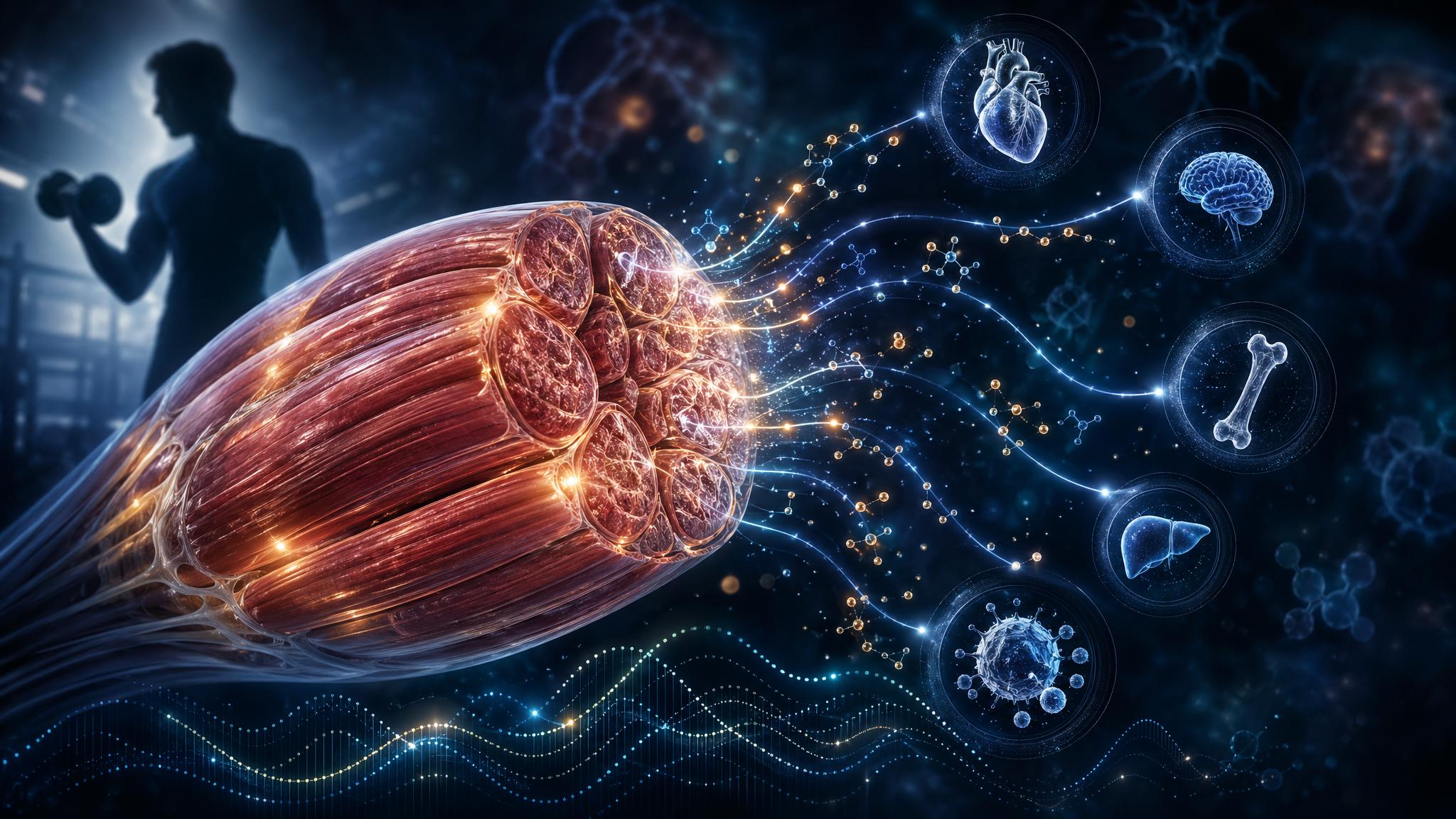
Skeletal muscle is not just a movement organ. It is the body’s largest sink for blood glucose, the principal driver of resting metabolic rate, the source of dozens of myokines that signal across the brain, immune system, and metabolic organs, and the protein bank the body draws on during illness, surgery, fasting, or trauma. When sarcopenia, the age related loss of muscle mass and function, takes hold, it does not just look like weakness. It increases fall risk, lengthens hospital stays, predicts surgical mortality, and worsens almost every chronic disease outcome from diabetes to cancer to dementia.
Two stimuli activate muscle protein synthesis, the cellular process that builds new contractile tissue. The first is mechanical loading from resistance training. The second is dietary protein, specifically the branched-chain amino acid leucine. Without enough of either input, the balance between protein synthesis and protein breakdown drifts negative over years and decades. With both inputs in the right amounts, even adults in their seventies and eighties can rebuild lean mass, as the LIFE study at Wake Forest, the STRONG-D trial, and Maren Fragala’s American Physical Therapy Association position statement work all demonstrate.
The crucial implication is that protein intake is not just about avoiding deficiency. It is about reaching the threshold that triggers anabolism. Below that threshold, the meal feeds metabolism but does not build muscle. The body uses excess amino acids in three ways. It builds new tissue, it converts them to glucose through gluconeogenesis, and it oxidizes them for fuel. Only the first option grows or maintains muscle, and only after a clear physiological switch is flipped.
## The Leucine Threshold and Why Distribution Beats Total
The leucine threshold is one of the most replicated findings in modern protein nutrition. Don Layman’s lab in Illinois first identified it in the early 2000s, and Luc van Loon’s group at Maastricht has expanded it across two decades of stable isotope tracer studies. A typical 20 gram protein meal robustly triggers muscle protein synthesis in young adults, but blunts the response in older adults, who develop a phenomenon called anabolic resistance. Older muscle requires more leucine and more total protein to fire. The per-meal target rises with age.
The implication becomes dramatic when paired with how most adults actually eat. Surveys including the National Health and Nutrition Examination Survey consistently show that American adults front-load protein at dinner and eat very little at breakfast and lunch. A typical day might run 5 grams of protein at breakfast, 15 at lunch, and 50 at dinner. Total daily intake may sound respectable, but only the dinner meal cleared the leucine threshold. The other two meals stimulated little or no muscle protein synthesis at all.
Even distribution across meals consistently outperforms uneven distribution in muscle protein synthesis trials. Madonna Mamerow’s 2014 study in The Journal of Nutrition randomized adults to either an even 30 to 30 to 30 gram pattern or a skewed 10 to 15 to 65 gram pattern with the same daily total. The even group showed 25 percent greater 24 hour muscle protein synthesis. The takeaway is that three or four protein anchored meals, each clearing the threshold, are more anabolic than the same total protein eaten in one large evening dose.
Van Loon’s group has further shown that pre-sleep protein, on the order of 30 to 40 grams of casein, increases overnight muscle protein synthesis without disturbing sleep architecture. For adults training seriously, recovering from surgery, or in their seventies and eighties, that fourth dosing window can be meaningful. For most adults, three solid protein meals are sufficient.
The numbers most frequently cited in 2026 clinical practice are roughly 30 grams of high quality protein per meal for adults under sixty, anchored by 2.5 to 3 grams of leucine, and 35 to 40 grams per meal for adults over sixty, anchored by 3 to 4 grams of leucine. Whey, milk, eggs, fish, poultry, and lean red meat naturally hit the leucine threshold at these portion sizes. Plant proteins generally require somewhat larger portions or strategic blending to match.
## How Much Daily Protein the Best Evidence Supports
For total daily intake, the highest quality evidence converges on a band rather than a single number. Stuart Phillips and colleagues’ 2018 meta-analysis in the British Journal of Sports Medicine, covering 49 studies and 1,863 participants, established that protein intake above roughly 1.62 grams per kilogram of body weight provided no further benefit for resistance training adaptations in young adults. Below that threshold, more protein produced more muscle and more strength.
For older adults, the optimal range is higher, not lower. The PROT-AGE Study Group, an international consensus of geriatric and nutrition experts including Jurgen Bauer and Yves Boirie, published a 2013 position paper in JAMDA recommending 1.0 to 1.2 grams per kilogram of body weight daily for healthy adults over sixty-five, and 1.2 to 1.5 grams per kilogram daily for older adults with chronic disease, recovering from acute illness, or who are physically active. The European Society for Clinical Nutrition and Metabolism endorses similar ranges, and the International Society of Sports Nutrition recommends 1.4 to 2.0 grams per kilogram for active adults across the lifespan.
Translating these numbers, an active 75 kilogram, or 165 pound, adult lands in the range of 105 to 165 grams of protein per day for muscle and longevity goals. A 60 kilogram, or 132 pound, older adult lands at roughly 80 to 110 grams per day. These targets are well above the RDA of approximately 60 grams per day for either example, and most people do not hit them by accident. Intentional protein placement at every meal is the only reliable path.
Recent 2024 to 2026 evidence has refined two open questions. First, the upper limit of useful protein appears to be around 2.2 to 2.4 grams per kilogram daily. Beyond that, additional protein does not produce additional muscle in healthy adults and is largely oxidized for energy. Second, plant protein sources can match animal sources for muscle protein synthesis when total leucine and total protein quantity are matched, although doing so usually requires somewhat larger plant portions because of lower digestibility and different amino acid profiles. A 2023 study by Hevia-Larrain and colleagues in Sports Medicine showed equivalent gains in lean mass between a vegan and an omnivore arm in resistance trained men, with the vegan group consuming approximately 1.9 grams per kilogram daily.
## The mTOR and Longevity Counter Argument
A persistent counter argument deserves a fair hearing. Some longevity researchers, most prominently Valter Longo, PhD at the University of Southern California Leonard Davis School of Gerontology, have argued that lower protein intake during midlife may extend lifespan by reducing mTOR signaling, IGF-1 levels, and cancer risk. Longo’s 2014 Cell Metabolism paper based on NHANES data reported a higher mortality risk in middle-aged adults consuming high protein diets, particularly from animal sources.
The picture is more complicated than the headline. Longo’s same paper showed the opposite signal in adults over sixty-five, where higher protein intake was associated with lower mortality. The Phillips and Bauer reading of the literature is that the relevant question is not high or low protein in absolute terms, but whether protein is being used to drive muscle protein synthesis paired with mechanical loading. Protein eaten without resistance training and in the absence of muscle demand is metabolically and biologically different from protein eaten by an adult who is actively building or maintaining muscle.
The April 2026 PEARL trial finding that rapamycin blunted exercise gains adds another wrinkle. mTOR inhibition is useful for cellular cleanup, autophagy, and probably for cancer prevention, but it is the same pathway muscle protein synthesis depends on. The interaction between rapamycin protocols, fasting protocols, and protein dosing is now an active research frontier. Most clinicians counseling adults on rapamycin recommend maintaining robust protein intake on non-dosing days and pairing it with regular resistance training to protect lean mass.
The pragmatic conclusion is that protein optimized for muscle and paired with strength training is one of the highest leverage interventions adults over forty can make for healthspan. The cancer and longevity considerations argue for source diversity, meal-by-meal threshold hitting, and broader dietary quality, not for chronic protein restriction. A 2023 BMJ Medicine analysis of the Nurses’ Health Study and Health Professionals Follow-up Study, totaling 48,762 women and men, reinforced this view, finding that higher plant protein intake in midlife was associated with greater odds of healthy aging at age seventy.
## Protein Quality, Sources, and the Three Pitfalls That Matter
Protein quality is measured most rigorously by the Digestible Indispensable Amino Acid Score, or DIAAS, developed by the Food and Agriculture Organization and now replacing older measures like PDCAAS. By DIAAS, whole milk, whey, casein, eggs, and lean beef rank highest, generally above 1.0. Soy protein and certain legume blends fall in the 0.85 to 0.95 range. Grains and most plant proteins eaten alone tend to fall below 0.7. The practical implication is that animal protein sources naturally hit muscle protein synthesis thresholds with smaller portions, while plant-based diets need either larger portions or strategic combining of sources to reach the same effect.
Three pitfalls show up repeatedly in clinical practice.
The first is skipping protein at breakfast. A 30 to 40 gram protein anchored breakfast adds an entire muscle protein synthesis cycle to the day. Three eggs and a serving of Greek yogurt, or a whey shake with cottage cheese and berries, hits the threshold and sets the metabolic tone for the day. Coffee and toast does neither.
The second is over-relying on bars and powders at the expense of whole food. Real food protein matters because of the broader nutrient matrix, including B vitamins, choline, creatine, zinc, iron, and the satiety effects of intact food structure. A daily whey shake to bridge a gap is a low-friction, evidence-supported tool. A diet built primarily on processed protein products is not.
The third is misreading protein labels. Yogurt that lists 12 grams of protein on the front often delivers far less digestible protein than 12 grams of chicken breast or eggs after accounting for digestibility and amino acid completeness. Total grams matters less than total leucine and total digestible essential amino acids per meal.
## What This Means For Your Practice
You can implement everything the research says with three commitments and a list of foods. The commitments are quantity, distribution, and stimulus.
Set a daily protein target of 1.2 to 1.6 grams per kilogram of body weight. For most adults, that lands between 90 and 160 grams per day. Use the higher end of the range if you are over sixty, recovering from injury or illness, training seriously, or losing weight intentionally. Use the lower end if you are sedentary and weight stable in your twenties or thirties. Adults over seventy who are physically active and weight bearing should consider the upper end of the range, 1.5 to 1.7 grams per kilogram, in line with the PROT-AGE recommendations.
Distribute protein across three or four meals, each clearing 30 to 40 grams of high quality protein. Anchor breakfast first, since it is the meal most adults skimp on. A breakfast of three eggs and Greek yogurt, or a whey shake with cottage cheese, gets you to the threshold. Anchor lunch and dinner the same way with a serving of fish, poultry, lean red meat, tofu, tempeh, lentils with a complementary grain, or a protein-fortified plant-based blend. If you train hard or are over seventy, add a 30 to 40 gram pre-sleep portion of casein-rich food such as cottage cheese or a slow protein shake.
Pair protein with mechanical loading. Two to four resistance training sessions per week, hitting all major muscle groups, are the partner stimulus that turns protein into muscle. Without it, much of the protein you eat is metabolized rather than built into tissue. The combination of adequate protein and progressive resistance training is one of the few interventions that has been validated to reverse sarcopenia in adults in their seventies and eighties.
Track three numbers. Protein in grams at each meal, using a free app like Cronometer or MacroFactor for two to three weeks until your portions become intuitive. Grip strength, using an inexpensive dynamometer or a yearly clinic measurement, since grip strength is one of the strongest noninvasive predictors of all-cause mortality, outperforming blood pressure in some recent analyses. Lean mass trajectory, ideally using a DEXA scan once or twice a year if available, or a bioelectrical impedance device with consistent measurement conditions.
Skip nothing if you have advanced kidney disease, advanced liver disease, or specific metabolic conditions where protein intake should be individualized with a clinician. For nearly everyone else, the protein floor for longevity is well above the RDA, and reaching it is one of the most evidence-supported interventions available in the entire medical literature.
## The Bottom Line
The fundamentals always win. Protein, paired with the muscle that uses it, may be the most underrated of all of them. The science is no longer ambiguous. The RDA underestimates what aging adults need. Distribution matters as much as total. The leucine threshold is real. Resistance training is the partner stimulus that turns protein into outcomes.
You can act on all of this tonight. The next meal is the next opportunity to either hit the threshold or miss it. Over years and decades, those small daily decisions compound into the kind of muscle that carries a person across their eighth and ninth decade with strength, independence, and resilience to the diseases that define modern aging. Five minutes of planning at the grocery store and a small adjustment to breakfast may be one of the highest leverage daily decisions in all of preventive medicine.
The research has done its job. The translation is now yours.
Free Daily Briefing
Presented By Our Partners
The Latest Longevity Science. Delivered Every Morning.
Join researchers, physicians, and health professionals getting daily breakthroughs in AI-driven medicine, epigenetics, and longevity research.
Support the research that powers this editorial
No spam. Unsubscribe anytime. We respect your inbox.
Featured Partner
Invest in the Infrastructure Behind Modern Medicine
As healthcare expands beyond hospital walls, the buildings and campuses supporting that shift are generating compelling returns for investors who move early. The Healthcare Real Estate Fund offers qualified investors direct access to a curated portfolio of medical office, outpatient, and specialty care facilities.
🔬 Naked Mole Rat Gene Extends Mouse Lifespan — University of Rochester researchers transferred the HMW-HA longevity gene from naked mole rats into mice, extending median lifespan by 4.4 percent while reducing tumors and systemic inflammation. 🤖 NIH AI Repurposes Three Drugs for Neurodegeneration — A deep-learning model screening 12,456 compounds identified three candidates for Alzheimer's and Parkinson's, with finerenone cutting amyloid plaque by 42 percent in mouse models. 🥗 ION224 Halts Fatty Liver Disease in 60 Percent of Trial Patients — The DGAT2-targeting drug achieved significant liver health improvement in a Phase IIb trial of 160 MASH patients with no serious adverse events, advancing toward Phase III. 🧠 Vitamin K Hybrid Compounds Drive 3x More Neurogenesis — Japanese researchers combined vitamin K with retinoic acid to produce compounds that convert neural stem cells into neurons three times more effectively than natural vitamin K, opening a regenerative pathway for Alzheimer's and Parkinson's treatment. 💪 Muscle Strength Cuts Mortality Risk by a Third in Older Women — A JAMA Network Open study of 5,472 women found grip and functional strength independently reduce all-cause mortality by 33 percent or more, establishing strength testing as a key clinical longevity marker.
Why the first 1,000 days of microbial colonization may be the most consequential window for lifelong health, and what parents can actually do about it Presented By Our Partners In…
🦠 Akkermansia Muciniphila Cuts Post-Diet Weight Regain in Half: A Nature Medicine RCT shows pasteurized Akkermansia supplementation slows weight regain and preserves insulin sensitivity during a 24-week maintenance period after dieting. 🧠 Thymus Organ Predicts Longevity and Cancer Survival: Mass General Brigham's study of over 25,000 adults links a healthy thymus to 50% lower mortality and 63% lower cardiovascular death risk throughout adulthood. 🔬 Naked Mole Rat Longevity Gene Successfully Transferred to Mice: University of Rochester demonstrates cross-species transfer of the HMW-HA-producing HAS2 gene extends median lifespan and reduces cancer risk in mice, establishing a proof of principle for interspecies longevity translation. ❤️ Ultra-Processed Foods Linked to 67% Higher Heart Attack Risk: A European Heart Journal consensus statement calls for immediate patient counseling to reduce ultra-processed food intake as a primary cardiovascular prevention measure. 😴 Weak Circadian Rhythms Drive Nearly 2.5x Dementia Risk: Neurology study confirms that circadian amplitude and timing, not just sleep hours, are major independent drivers of brain aging and dementia risk.
Approximately one billion adults worldwide have obstructive sleep apnea, and more than 80% of them do not know it. A sensor hidden beneath your mattress could be the first step…
🧬 Epigenetic reprogramming has entered human trials — Life Biosciences is now enrolling patients in the first FDA-cleared age-reversal study. 🧠 Two major Alzheimer's breakthroughs this week — a newly identified "death switch" molecule and CAR-astrocyte plaque cleaners. 🤖 AI co-scientists are validating drug discoveries in real time — Google's system confirmed AML drug candidates; NVIDIA + Lilly committed $1B to the space. 🦠 A single gut bacteria molecule doubled cancer immunotherapy response — Bac429 is moving toward human drug development. 😴 Sleep is about daytime function, not just nighttime hours — a new clinical framework is changing how insomnia is measured and treated.
Half of all women who attempt Kegel exercises perform them incorrectly. The most common error, bearing down instead of lifting, can actually worsen the pelvic floor dysfunction the exercises are…