

The Daily Rounds: Longevity & Health Care Brief | May 3, 2026
Your daily briefing on the science of living longer, better. Covering the past 24 to 48 hours in longevity, medicine, and healthspan research.
Presented By Our Partners



🧠 NEUROLOGY & COGNITIVE HEALTH
🔓 Scientists Uncover Hidden “Death Switch” That Destroys Neurons in Alzheimer’s Disease
Researchers discovered a toxic pairing of two proteins that acts as a molecular “death switch,” triggering the destruction of brain cells and accelerating memory loss in Alzheimer’s disease. A new compound that breaks apart this protein pair slowed disease progression, protected neurons, and reduced amyloid buildup in laboratory models. Small-molecule inhibitors already in development for other conditions may be repurposed to target this pathway.
🩸 Blood Test Detects Alzheimer’s Risk Decades Early via Mitochondrial DNA Variants
Researchers at the Icahn School of Medicine at Mount Sinai found that variants in mitochondrial genes including ND6 and ATP8, detectable in blood samples from adults aged 40 to 65, were associated with reduced cognitive task performance and elevated neurodegeneration risk years before symptoms emerge. The minimally invasive test could enable large-scale early screening for Alzheimer’s risk in midlife, long before clinical intervention becomes urgent. Scientists say mitochondrial DNA monitoring may become a routine early-warning tool in preventive neurology.
❤️ CARDIOVASCULAR HEALTH
🧬 New DNA-Based Molecules Silence PCSK9 Gene, Cut Bad Cholesterol by 50% Without Statins
Researchers from the University of Barcelona and University of Oregon developed polypurine reverse Hoogsteen hairpin (PPRH) molecules that block the PCSK9 gene, which regulates how much LDL cholesterol circulates in the blood, achieving major reductions in bad cholesterol in early results with no typical statin side effects. The gene-silencing approach represents a new class of cardiovascular intervention for the millions of patients who are statin-intolerant or unresponsive to existing therapies. The findings were published in Biochemical Pharmacology.
🫀 Gut Microbes Form “Early Warning System” for Heart Disease Years Before Symptoms Appear
A study led by Imperial College London analyzing data from more than 8,000 adults identified a gut-kidney-heart axis in which gut bacterial metabolites predict cardiovascular risk long before clinical symptoms emerge, offering a potential microbiome-based early detection pathway. The research, published in Nature Communications, found that specific gut microbial profiles and their metabolic outputs were consistently associated with downstream cardiometabolic dysfunction. Researchers say microbiome profiling could allow physicians to identify high-risk patients years earlier than current diagnostic approaches permit.
📌 Read more → Imperial College London
💪 MUSCLE MASS, STRENGTH & METABOLIC HEALTH
⚠️ Longevity Drug Rapamycin May Blunt Exercise Fitness Gains in Older Adults
The RAPA-EX-01 randomized, double-blind trial published in the Journal of Cachexia, Sarcopenia and Muscle found that weekly rapamycin supplementation in sedentary older adults showed no enhancement of resistance and endurance training adaptations and, in sensitivity analyses, significantly blunted functional fitness gains including chair-stand performance and walking distance compared to placebo. The finding raises important questions for the growing community of longevity enthusiasts self-administering rapamycin alongside structured exercise programs. Researchers suggest that mTORC1 blockade and the anabolic demands of exercise-driven muscle adaptation may be fundamentally at odds in aging populations.
📌 Read more → Journal of Cachexia, Sarcopenia and Muscle
🏃 Exercise Variety Across Activity Types Linked to 19% Lower Premature Mortality Risk
A BMJ Medicine study following more than 111,000 adults over 30 years found that engaging in the broadest variety of physical activities, from walking to resistance training to gardening, was associated with a 19% lower risk of all-cause premature death even when total exercise volume was held constant. Cardiovascular disease death risk dropped by 13 to 41% in those with the highest exercise variety, suggesting that diversity of movement may be as important as total volume in longevity exercise prescriptions. Researchers say the findings support a “movement portfolio” approach rather than specializing in a single exercise mode.
📌 Read more → Harvard T.H. Chan School of Public Health
Featured Partner
Invest in the Infrastructure Behind Modern Medicine
As healthcare expands beyond hospital walls, the buildings and campuses supporting that shift are generating compelling returns for investors who move early. The Healthcare Real Estate Fund offers qualified investors direct access to a curated portfolio of medical office, outpatient, and specialty care facilities.
Learn More →
⚡ Just Minutes of Daily Vigorous Activity Cuts Risk of 8 Chronic Diseases
A study published in the European Heart Journal found that adding small amounts of high-intensity exercise, even just a few minutes per day, was associated with substantially lower risk across eight chronic conditions including cardiovascular disease, cancer, and metabolic disorders. Researchers emphasize that the benefit is not solely about total exercise volume but also about intensity, with brief vigorous bouts offering disproportionately large health returns. The findings support incorporating short high-intensity intervals into daily routines as a practical longevity strategy for time-limited individuals.
📌 Read more → CNN / European Heart Journal
🦠 GUT MICROBIOME & IMMUNE HEALTH
🧪 Harvard: Gut Bacterium Plus Common Pollutant Triggers Hidden Inflammation Linked to Depression
Researchers at Harvard and the Broad Institute found that Morganella morganii, a gut bacterium previously linked to depression and inflammatory bowel disease, interacts with the environmental contaminant diethanolamine to produce an abnormal molecule that activates cytokine release, particularly interleukin-6, driving the inflammatory pathway strongly associated with major depressive disorder. The discovery strengthens the argument that a subset of depression cases are fundamentally inflammatory in nature and could respond to immune-modulating therapies rather than standard antidepressants. DEA-modified lipids identified in the study may serve as biomarkers for this inflammation-driven depression subtype, published in the Journal of the American Chemical Society.
📌 Read more → ScienceDaily / Harvard Medical School
🤰 Gut Microbiome Produces Protective Metabolites That Support Maternal-Fetal Immune Tolerance
Cornell University researchers found that the amniotic fluid of pregnant mice with healthy gut microbiomes contained tryptophan-derived metabolites produced by specific gut bacteria, which maintained protective immune cells at the maternal-fetal interface and promoted the immune tolerance necessary for successful pregnancy. The research suggests that gut microbiome composition may be a modifiable factor in pregnancy outcomes with implications for miscarriage prevention and maternal immune health. Researchers say dietary and probiotic interventions targeting microbiome health before and during pregnancy may reduce immune-related pregnancy complications.
📌 Read more → Cornell Chronicle
🔬 CELLULAR HEALTH, SENOLYTICS & EPIGENETICS
🎯 npj Aging: Field Advances From Broad Senolytics Toward Precision Tissue-Specific Reprogramming
A major review published in npj Aging found that the senolytic field is moving beyond broad-spectrum compounds toward precision reprogramming strategies that selectively target senescent cell subpopulations based on tissue context and molecular identity, substantially reducing off-target effects that have challenged clinical translation. The review identifies combination approaches pairing senolytics with epigenetic modulators as the most clinically promising near-term development pathway. Single-cell atlas technologies are enabling a new era of tissue-specific aging interventions rather than uniform anti-senescence protocols applied across all organ systems.
📊 Organ-Specific Epigenetic Clocks Reveal Biological Age Is a Multi-Tissue Profile, Not One Number
Large-scale validation studies confirm that next-generation epigenetic clocks including GrimAge and DunedinPACE substantially outperform earlier methylation-based aging measures, forecasting outcomes from cardiovascular events to cognitive decline with greater precision. New research demonstrates that different organs age at measurably different rates within the same individual, meaning that biological age is not a single number but a profile of tissue-specific trajectories that can diverge substantially from chronological age. Researchers say organ-specific clocks may soon become clinical tools for identifying which biological systems are aging fastest and for tailoring longevity interventions accordingly.
🌍 Targeting Longevity 2026: Scientists Reframe Aging as Loss of Biological System Coordination
The 2nd World Congress on Targeting Longevity, held in Berlin in April 2026, marked a conceptual turning point in the field, with researchers increasingly arguing that aging is fundamentally a progressive loss of coordination between biological systems rather than a collection of individual molecular failures. The congress brought together scientists working across mitochondria, microbiota, redox biology, senescence, regeneration, genomics, and systems medicine to advance this integrated framework. Researchers say shifting from single-target interventions toward systems-level coordination strategies may be the key to achieving meaningful healthspan extension in humans.
🤖 AI IN MEDICINE & DRUG DISCOVERY
🐕 Stanford Engineers Immune Cell “Bloodhounds” That Hunt Solid Tumors by Metabolic Scent
Stanford Medicine researchers equipped natural killer cells with G-protein coupled receptors (GPCRs) that sense metabolic byproducts secreted by solid tumors, enabling the engineered cells to migrate to, infiltrate, and suppress tumor growth in breast and ovarian cancer mouse models, published in Nature Immunology. The approach directly addresses a fundamental barrier to existing CAR-T therapies, which struggle to penetrate solid tumor microenvironments due to limited spatial navigation capabilities. Researchers say the metabolite-sensing strategy is broadly applicable across a wide range of solid tumor types and could be combined with existing immunotherapy regimens for synergistic effect.
📌 Read more → Stanford Medicine
🔒 Blocking a Single Checkpoint Protein Supercharges the Immune System Against Multiple Cancer Types
Researchers published findings in April 2026 showing that blocking a specific immune checkpoint protein substantially amplified T cell activity against tumor cells across multiple cancer types in laboratory models, with treated animals showing significantly slower tumor growth and improved survival. The protein target was identified through genome-wide screening and represents a novel pathway distinct from the PD-1/PD-L1 and CTLA-4 targets that anchor most current checkpoint immunotherapies. Scientists say the discovery opens a new class of checkpoint inhibitor suitable for development as a standalone therapy or a combination partner alongside existing immunotherapy agents.
⌚ WEARABLES, BIOMARKERS & PRECISION HEALTH
💧 Sweat-Based Sensor Measures Cortisol and Melatonin Through Skin for Real-Time Circadian Monitoring
Researchers from the University of Texas at Dallas, in partnership with biotech company EnLiSense, demonstrated a wearable perspiration-based sensor that continuously measures cortisol and melatonin levels through sweat, representing the first non-invasive device to capture circadian rhythmicity of both the stress and sleep hormones simultaneously. The sensor could enable around-the-clock hormonal monitoring without blood draws or saliva sampling, opening new possibilities for personalized sleep, stress, and chronobiology interventions. Researchers say the platform paves the way for consumer wearables that offer clinical-grade hormonal feedback as part of daily health tracking.
🧠 JMIR Review: AI Plus Wearables Enable Scalable Early Detection of Cognitive Impairment
A 2026 systematic review in the Journal of Medical Internet Research analyzed AI-driven prediction models that combine continuous wearable data including sleep architecture, physical activity patterns, and circadian rhythm metrics as digital biomarkers for early cognitive impairment and dementia detection. The review found that multi-stream wearable data integrated with machine learning substantially improved early detection sensitivity compared to standard clinical screening tools alone. Researchers call for standardized wearable biomarker frameworks that could enable population-scale early intervention in neurodegenerative disease before irreversible decline occurs.
📌 Read more → Journal of Medical Internet Research
😴 SLEEP & CIRCADIAN HEALTH
😔 Circadian Desynchronization Raises Depression Screening Scores by Clinically Meaningful 2.5 Points
Research confirms that when individuals’ sleep cycles become misaligned with their internal circadian clocks, depression screening scores increase by an average of 2.5 points, a threshold considered clinically significant in psychiatric assessment. The finding adds mechanistic weight to growing evidence that circadian disruption is not merely a symptom of depression but a direct biological contributor driving the condition through neurochemical and inflammatory pathways. Researchers say chronotherapy approaches that realign sleep timing and light exposure deserve greater clinical attention as primary treatment strategies for mood disorders.
📌 TODAY’S TOP TAKEAWAYS
- 🧠 Alzheimer’s “Death Switch” Identified — Scientists found a toxic protein pair that triggers neuron destruction, with a compound that breaks it apart slowing disease progression in laboratory models.
- ❤️ Gene Silencing Cuts LDL 50% Without Statins — DNA-based PPRH molecules silence the PCSK9 gene, offering a new cardiovascular treatment pathway for the millions who cannot tolerate statins.
- ⚠️ Rapamycin Caution for Exercising Adults — The RAPA-EX-01 randomized trial found weekly rapamycin supplementation blunted functional fitness gains in older adults, raising important questions for longevity enthusiasts combining the drug with exercise.
- 🦠 Gut Bacteria Drive Inflammatory Depression Pathway — Harvard researchers traced a hidden mechanism in which a gut bacterium interacting with a common environmental pollutant produces a molecule that triggers cytokine-driven inflammation linked to major depressive disorder.
- 🐕 Immune Bloodhounds Hunt Solid Tumors — Stanford engineered NK cells with metabolite-sensing receptors that navigate to and infiltrate solid tumors, addressing a longstanding barrier to immunotherapy for solid cancers.
Sources compiled from ScienceDaily, Mount Sinai, Imperial College London, Nature Communications, Journal of Cachexia Sarcopenia and Muscle, Harvard T.H. Chan School of Public Health, BMJ Medicine, CNN, European Heart Journal, Harvard Medical School, Journal of the American Chemical Society, Cornell University, npj Aging, GESDA Global, EurekAlert, Stanford Medicine, Journal of Medical Internet Research, Medical Xpress. Published: May 3, 2026.


Similar Posts

The Peptide Boundary Problem: Why GLP-1 Drugs and Research Peptides Are Not One Category
A source-backed guide to the six categories commonly blurred together in peptide marketing: FDA-approved drugs, compounded medication, investigational drugs, research-use products, longevity protocols, and supplements.
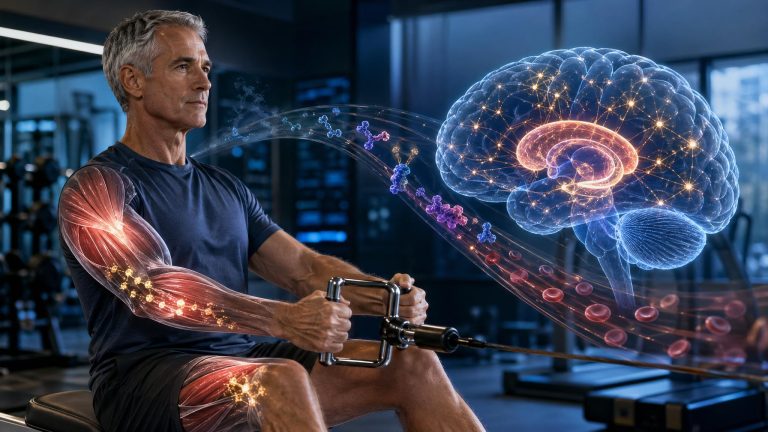
Myokines and the Muscle-Brain Axis: How Strength Training Rewires Your Brain for Longevity
A growing body of research from Bente Pedersen’s Copenhagen lab, Henriette van Praag at Florida Atlantic, and the 2024 to 2026 wave of muscle-brain studies is reframing skeletal muscle as…

23andMe Health + Ancestry: Consumer Genetics, BRCA Screening, and What Your DNA Actually Tells You
The most recognizable name in consumer genetics offers FDA-authorized health reports alongside ancestry data. But how much clinical value does a saliva test deliver, and where do its limitations begin?…

From Epigenetic Speedometers to AI Drug Design, Science Is Learning to Reverse Aging at Its Source
Three landmark studies are transforming how scientists understand biological aging in 2026. From epigenetic clock data predicting mortality over 24 years, to brain training that reverses a decade of neural…

GI-MAP: The Functional Medicine Gold Standard for Comprehensive Stool Analysis
What quantitative PCR technology reveals about gut pathogens, digestive function, and immune markers that consumer microbiome tests cannot detect Presented By Our Partners In clinical gastroenterology, the gap between consumer…
Moxy Monitor: Real-Time Muscle Oxygen Saturation for Training Zone Precision
Heart rate tells you how hard your cardiovascular system is working. Muscle oxygen tells you how hard your muscles are actually working, and more importantly, when they are about to…
