

The Daily Rounds: Longevity & Health Care Brief | May 6, 2026
Your daily briefing on the science of living longer, better. Covering the past 24 to 48 hours in longevity, medicine, and healthspan research.
Presented By Our Partners



🧠 NEUROLOGY & COGNITIVE HEALTH
🤝 Relationships Recognized as Core Biological Driver of Cognitive Aging in Growing Research
A wave of long-term aging studies reviewed in May 2026 confirms that social engagement is a measurable biological driver of cognitive decline, not merely a lifestyle choice. Populations with consistently low social engagement show faster loss of memory, executive function, and processing speed, independent of cardiovascular and metabolic risk factors. Researchers are now calling for social connection to be formally integrated into brain health screening alongside blood pressure and glucose monitoring.
📌 Read more → Scott Free Clinic / Research Review
🧠 Sleep and Daily Activity Patterns May Reveal Hidden Cognitive Risk Before Symptoms Appear
Wearable-tracked patterns of sleep architecture and daily activity levels can identify individuals at elevated risk for cognitive decline years before clinical symptoms emerge, according to recent research. Disrupted circadian rhythmicity captured by accelerometers was among the strongest digital predictors of dementia trajectory, outperforming many standard cognitive tests in early detection. Researchers say continuous wearable monitoring may become a scalable and low-cost early warning system for preclinical brain aging.
📌 Read more → Fox News Health / Research Review
❤️ CARDIOVASCULAR HEALTH
🔥 Inexpensive Anti-Inflammatory Drug Colchicine Gains Traction as Heart Disease Preventive
Scientific American’s May 2026 cover story examines mounting clinical evidence that chronic low-grade inflammation, not just elevated cholesterol, may be the central driver of cardiovascular disease in many patients. Research into colchicine, an inexpensive anti-inflammatory drug long used for gout, shows it can significantly reduce cardiovascular events in patients with coronary artery disease, independent of its cholesterol-lowering effects. The findings are reshaping how cardiologists think about treating the inflammatory substrate of heart disease alongside traditional lipid-lowering therapy.
📌 Read more → Scientific American May 2026
⏰ Chaotic Sleep Schedule in Your 40s Linked to Doubled Heart Attack Risk Decades Later
A decade-long tracking study published via ScienceDaily on May 5, 2026, found that highly inconsistent bedtimes in midlife, particularly when combined with sleeping fewer than seven hours, were associated with significantly elevated cardiovascular risk in later decades. Researchers say timing irregularity appears to disrupt circadian regulation of blood pressure, inflammation, and arterial stiffness in ways that accumulate over years into measurable cardiac risk. The findings add to growing evidence that sleep regularity, not just duration, is a critical and underappreciated heart health factor.
📌 Read more → Heart Advisor / Research Roundup May 2026
🔬 CELLULAR HEALTH, SENOLYTICS & EPIGENETICS
🧹 Senolytic Drugs Clear Up to 70% of Zombie Cells and Reduce Residual Tissue Damage
A 2026 preclinical study found that senolytic drugs eliminate between 30% and 70% of senescent cells in the body, and critically, leave the remaining cells less inflammatory and less tissue-damaging than before treatment. Researchers theorize that the inflammatory microenvironment surrounding senescent cells increases the vulnerability of remaining cells to senolytic clearance, creating a therapeutic window for staged intervention. The findings are informing a new generation of senosensitizer protocols designed to prime zombie cells before administering the senolytic agent.
🎯 Precision Senotherapy Moves Beyond Broad-Spectrum Zombie Cell Clearance
A 2026 review in npj Aging outlines emerging strategies that go beyond simply removing all senescent cells, instead developing precision tools that distinguish between beneficial and harmful senescent cell populations. The approach includes senomorphics, which modulate the damaging inflammatory output of senescent cells without destroying them, and partial cellular reprogramming strategies that reset senescent cells toward a more youthful state. Researchers argue this nuance is essential because indiscriminate senescent cell clearance may disrupt tissue repair and wound healing in ways that cause net harm.
Featured Partner
Invest in the Infrastructure Behind Modern Medicine
As healthcare expands beyond hospital walls, the buildings and campuses supporting that shift are generating compelling returns for investors who move early. The Healthcare Real Estate Fund offers qualified investors direct access to a curated portfolio of medical office, outpatient, and specialty care facilities.
Learn More →
📌 Read more → npj Aging / Nature
🦠 GUT MICROBIOME & IMMUNE HEALTH
☕ Coffee Rewires Gut Bacteria in Ways Linked to Mood, Memory, and Stress Resilience
A 2026 Nature Communications study from University College Cork followed 62 healthy adults through coffee drinking, withdrawal, and reintroduction phases, mapping changes in gut microbiome composition alongside cognition and mood throughout. Both caffeinated and decaffeinated coffee shifted bacteria in ways tied to improved emotional wellbeing and lower stress markers, with caffeine specifically linked to better focus and reduced anxiety while decaf showed stronger effects on learning and memory. The findings identify the gut-brain axis as a primary pathway through which coffee exerts its well-documented mental health benefits.
📌 Read more → Nature Communications
🏆 Bowel Cancer Patients Show Zero Relapses at 33 Months After Pre-Surgical Immunotherapy
Updated results from the NEOPRISM-CRC trial, presented at AACR 2026, showed that 100% of patients who received nine weeks of pembrolizumab before surgery for stage II or III MMR-deficient colorectal cancer remained relapse-free after a median follow-up of 33 months. This contrasts sharply with standard care, under which roughly 25% of similar patients experience cancer recurrence within three years of surgery and chemotherapy. Researchers describe the results as practice-changing for the 10 to 15% of colorectal cancer patients with this genetic subtype.
📌 Read more → ScienceDaily / AACR 2026
🤖 AI IN MEDICINE & DRUG DISCOVERY
💊 AI-Discovered Cancer Drug PEP08 Enrolls First Patients in Phase I Solid Tumor Trial
XtalPi and PharmaEngine announced on May 4, 2026, that PEP08, a next-generation PRMT5 inhibitor identified through XtalPi’s AI-driven platform, has successfully enrolled its first patients in a Phase I solid tumor trial. The companies simultaneously initiated a second program targeting a separate synthetic lethality mechanism, demonstrating how AI platforms enable parallel drug discovery pipelines at a fraction of traditional timelines and costs. The milestone adds to a growing roster of over 173 AI-discovered compounds now in clinical development globally.
📌 Read more → PR Newswire / XtalPi
🏛️ FDA Launches Pilot for Real-Time AI-Monitored Clinical Trials
FDA Commissioner Marty Makary announced in April 2026 that the agency is piloting a program using artificial intelligence and cloud computing to monitor clinical trial data in real time, marking what officials called the first ever real-time clinical trial in FDA history. The initiative enables continuous safety and efficacy signal detection rather than waiting for scheduled data lock points, potentially compressing trial review timelines significantly. The pilot represents a structural shift in how pharmaceutical trials are designed, monitored, and ultimately approved.
📌 Read more → Government Executive
⚗️ Synthegy AI Platform Lets Chemists Design Complex Molecules Using Plain Language
A new AI molecular design system called Synthegy, reported in May 2026, allows chemists to guide drug synthesis and reaction planning through simple natural language prompts while powerful algorithms generate and optimize candidate molecular structures. The platform abstracts away much of the computational complexity that previously required specialist training, opening AI-guided drug design to a broader community of researchers and academic labs. Early benchmarks suggest Synthegy can propose viable synthesis routes for novel compounds in minutes rather than weeks.
📌 Read more → ScienceDaily / Medical Technology
⌚ WEARABLES, BIOMARKERS & PRECISION HEALTH
⌚ Wristwatch Aging Clock Built from 213,000 Apple Study Participants Predicts Disease Onset
Researchers developed PpgAge, an aging clock derived from photoplethysmography signals recorded by a consumer wrist wearable, drawing on data from over 213,000 participants in the Apple Heart and Movement Study. Individuals whose PpgAge exceeded their chronological age showed significantly elevated rates of heart disease, heart failure, and type 2 diabetes on follow-up, establishing the metric as a non-invasive biomarker of accelerated biological aging. The study shows how continuous consumer wearable data can be transformed into clinically meaningful aging clocks without blood draws or specialized imaging.
📌 Read more → Nature Communications
💪 MUSCLE MASS, STRENGTH & METABOLIC HEALTH
🏋️ JAMA Perspective: Exercise Must Be Co-Prescribed with GLP-1 Drugs, Not Treated as Optional
A May 2026 medical perspective in JAMA highlights that up to 40% of weight lost on high-efficacy GLP-1 receptor agonists is lean muscle mass rather than fat, raising serious concerns about accelerated sarcopenic obesity, especially in older adults with pre-existing age-related muscle decline. The authors argue that structured resistance training and adequate protein intake must be prescribed alongside GLP-1 therapy as a clinical standard, not offered as an optional lifestyle recommendation. Next-generation adjunct therapies including myostatin inhibitors are now in development to chemically preserve muscle tissue during rapid GLP-1-induced weight loss.
📌 Read more → Medical Xpress / JAMA
🦵 Landmark 10-Year Trial: Common Knee Surgery No Better Than Placebo for Most Patients
Results from a major 10-year randomized clinical trial reported in May 2026 found that partial meniscectomy, one of the most commonly performed orthopedic procedures globally, offers no meaningful pain relief or functional improvement over placebo surgery in patients with degenerative meniscal tears. The findings reinforce earlier shorter-term studies and are expected to significantly reshape orthopedic practice guidelines, steering patients toward physical rehabilitation rather than surgery as a first-line approach. Researchers clarify that results apply to degenerative tears in older adults, not acute traumatic injuries in younger patients.
📌 Read more → ScienceDaily / Health and Medicine
😴 SLEEP & CIRCADIAN HEALTH
🦠 Gut Dysbiosis Disrupts Circadian Rhythm and Sleep Through Vagal Nerve Interference
A 2026 review published in Sleep Science and Practice (Springer Nature) found that gut dysbiosis disrupts the sleep-wake cycle and circadian rhythm through multiple converging pathways including vagal nerve transmission, disordered short-chain fatty acid and tryptophan metabolism, and heightened immune inflammation. Patients with insomnia show characteristic reductions in microbial diversity alongside enrichment of pathogenic bacterial species, suggesting that microbiome-targeted strategies may be a viable complementary approach to treating chronic sleep disorders. The review deepens understanding of the bidirectional gut-sleep relationship and points toward probiotic and dietary interventions as an emerging area of sleep medicine.
📌 Read more → Sleep Science and Practice / Springer Nature
📌 TODAY’S TOP TAKEAWAYS
- ☕ Coffee and the Gut-Brain Axis — A Nature Communications study of 62 adults found both caffeinated and decaf coffee reshape gut microbiome composition in ways tied to better mood, memory, and stress resilience.
- 🏆 Bowel Cancer Trial: Zero Relapses at 33 Months — The NEOPRISM-CRC trial found nine weeks of pre-surgical pembrolizumab kept 100% of MMR-deficient colorectal cancer patients relapse-free well past the three-year mark.
- ⌚ Wrist Wearables Now Measure Biological Age — PpgAge, built from 213,000 Apple Study participants, predicts heart disease and diabetes onset from a wristwatch sensor, pushing consumer health into clinical biomarker territory.
- 💊 AI Drug Discovery Reaches Phase I — XtalPi’s AI-discovered PRMT5 inhibitor PEP08 enrolled its first patients in a Phase I solid tumor trial, adding to 173 AI-discovered compounds now in human trials globally.
- 🏋️ GLP-1 and Muscle Loss Demand Clinical Action — Up to 40% of weight lost on GLP-1 drugs is lean muscle, and a JAMA perspective argues structured exercise must be co-prescribed as a clinical standard, not a lifestyle afterthought.
Sources compiled from Nature Communications, ScienceDaily, Scientific American, Medical Xpress, JAMA, npj Aging, Sleep Science and Practice, PR Newswire, Government Executive, Heart Advisor, Fox News Health. Published: May 6, 2026.


Similar Posts

AI Is Now Building Drugs That Target Aging Itself: Inside the Longevity Board and the New Science of Healthspan Medicine
A Nobel laureate on its board. The world’s largest pharmaceutical company as a founding partner. And a scientific mission to build drugs that target aging itself. Inside Insilico Medicine’s Longevity…
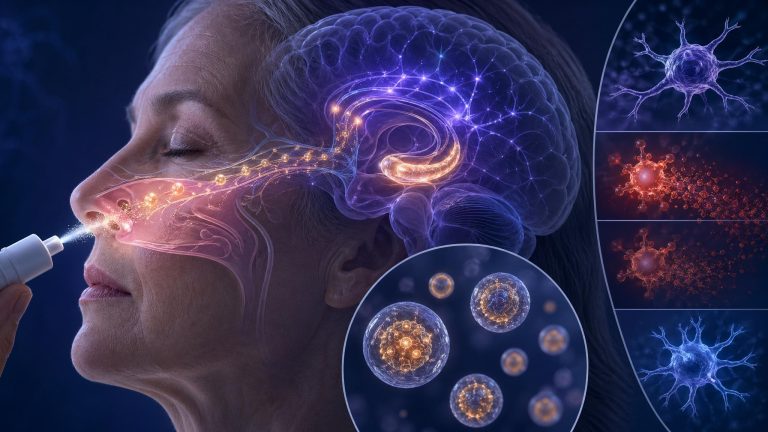
A Nasal Spray That Reverses Brain Aging: The Texas A&M Breakthrough Reshaping Alzheimer’s Research
A two-dose nasal spray built from human neural stem cell-derived particles silenced the inflammation signals that drive cognitive decline, restored memory in aged mice, and is now being positioned for…

SleepScore Max: Bedside Sonar Sleep Tracking Without Wearables or Mattress Sensors
What if tracking your sleep required nothing on your body and nothing under your mattress, just a small device on your nightstand listening to the way you breathe? Presented By…

The First Wave of AI-Designed Drugs Hits Human Trials: A 2026 Status Report on Insilico, Isomorphic, and Recursion
As of May 2026, more than 75 AI-discovered drugs are in human trials. Inside the Insilico IPF Phase 2 program, Isomorphic Labs partnerships with Novartis and Lilly, Recursion’s Phase 2…

COROS VERTIX 2S: Ultra Long Battery Adventure Watch With Dual Frequency GPS and Offline Maps
COROS’s flagship expedition watch delivers up to 140 hours of GPS tracking, titanium and sapphire construction, and comprehensive training analytics at $699 with no subscription, redefining value in the premium…
Dexcom G7: The Gold Standard CGM for Glucose Monitoring and Metabolic Health
A landmark study reveals that 40% of people with “normal” fasting glucose would be reclassified as prediabetic under continuous monitoring. The implications for how we measure metabolic health are profound….
