
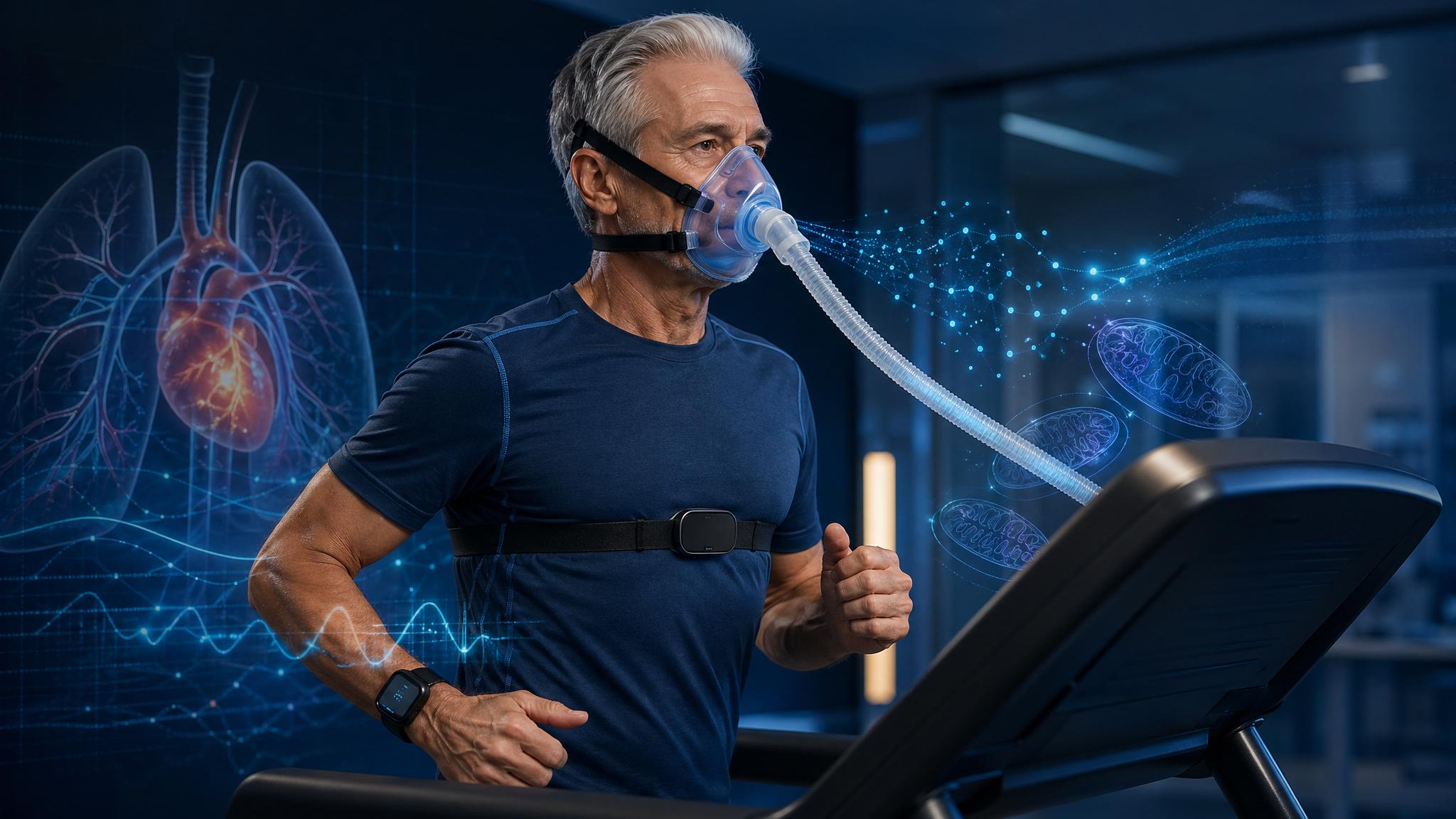
Your VO2 Max May Be the Single Best Predictor of How Long You Will Live: What 3.8 Million People and 58 Clinical Trials Reveal About Cardiorespiratory Fitness and the Science of Living Longer
The Number That Matters More Than Your Cholesterol, Blood Pressure, or BMI
There is a number sitting inside your body right now that predicts your risk of dying from any cause over the next decade more accurately than your cholesterol level, your blood pressure reading, or your body mass index. It is not measured during a standard physical. Most physicians never mention it. And yet, a convergence of massive epidemiological studies, Cochrane systematic reviews, and wearable technology research published between 2024 and 2026 has made the case so overwhelming that ignoring it borders on medical negligence.
Presented By Our Partners



That number is your VO2 max, the maximum rate at which your body can consume oxygen during intense exercise, and it is the single most powerful biomarker of cardiorespiratory fitness (CRF) that science has ever validated against long-term survival.
Here is what the latest research says, and here is exactly what you can do about it starting today.
3.8 Million People, One Unmistakable Signal
In September 2024, a research team led by Ben Singh at the University of South Australia published the largest meta-analysis ever conducted on cardiorespiratory fitness and mortality. Published in the Journal of Sport and Health Science, the study synthesized 42 individual studies representing 35 cohorts and a staggering 3,813,484 total observations. It tracked 362,771 deaths from all causes and 56,471 deaths from cardiovascular disease specifically.
The headline finding was striking in its clarity: for every one-MET increase in cardiorespiratory fitness (equivalent to roughly 3.5 mL/kg/min of oxygen consumption), all-cause mortality risk dropped by 14 percent. Cardiovascular disease mortality dropped by 16 percent.
To put that in perspective, a single MET is roughly the difference between being able to walk briskly up a flight of stairs without getting winded and needing to stop halfway. It is an achievable improvement for virtually any adult willing to train consistently for eight to twelve weeks. And the mortality reduction it confers is larger than what most blood pressure medications deliver.
The study also revealed something that dramatically expands the clinical utility of this finding: the association held regardless of whether CRF was measured directly through gold-standard cardiopulmonary exercise testing (CPET) or estimated through submaximal exercise tests and even non-exercise algorithms. Objectively measured CRF showed risk reductions of 10 to 14 percent per MET, while non-exercise estimates showed reductions of 15 to 19 percent per MET, with no statistically significant difference between methods.
This means you do not need a laboratory, a metabolic cart, or a sports medicine clinic to get a meaningful estimate of where you stand. A validated questionnaire, a submaximal step test, or even a well-calibrated fitness tracker can place you on the risk curve with clinically useful accuracy.
The American Heart Association Got It Right. Your Doctor May Not Have Heard.
The American Heart Association formally recommended in 2016 that cardiorespiratory fitness be assessed as a clinical vital sign during routine medical visits. Nearly a decade later, most primary care practices still do not include any measure of CRF in their intake protocols.
The Singh meta-analysis makes the case for changing that practice essentially irrefutable. The dose-response relationship between CRF and survival is consistent across age groups, across genders, across global regions, and across measurement methods. Whether the data came from the Cooper Clinic in Dallas, population cohorts in Scandinavia, or Veterans Affairs databases in the United States, the signal was the same: fitter people live longer, and the relationship is graded and continuous. There is no threshold below which improvement stops mattering and no ceiling above which further gains are wasted.
Barbara Ainsworth, a leading exercise epidemiologist at Shanghai University of Sport, wrote in an accompanying commentary that the findings should prompt populations with low CRF to engage in moderate-intensity physical activity to reduce their risks for all-cause and cardiovascular disease mortality. The evidence, she noted, now spans every major method of fitness assessment and every major population subgroup.
Fitness Predicts Survival Even After a Cancer Diagnosis
If the general population data were not convincing enough, a 2025 systematic review and meta-analysis published in the British Journal of Sports Medicine by Francesco Bettariga and colleagues at Edith Cowan University extended the finding into one of the most consequential clinical populations: people diagnosed with cancer.
Across 42 studies and 46,694 cancer patients, individuals with high cardiorespiratory fitness had a 31 to 46 percent lower risk of dying from any cause compared with those who had low fitness levels. Each unit increase in CRF was associated with an 18 percent reduction in cancer-specific mortality.
The protective effect was not limited to early-stage diagnoses. Patients with advanced cancer stages who maintained higher fitness levels showed an 8 to 46 percent reduction in all-cause mortality. The signal was particularly strong in lung cancer and digestive cancers.
The clinical implication is profound. CRF is not merely a wellness metric for healthy people trying to optimize their longevity curves. It is a survival variable for patients actively fighting disease. And unlike many prognostic factors in oncology, it is modifiable. A patient who improves their VO2 max by even a few mL/kg/min during or after treatment is measurably improving their odds of being alive five years later.
The Cochrane Verdict on HIIT: 58 Trials, 2,075 Participants, and a Clear Winner
If the evidence that CRF predicts survival is now overwhelming, the next question becomes practical: what is the most efficient way to improve it?
In March 2026, the Cochrane Collaboration published its definitive systematic review on high-intensity interval training (HIIT) for sedentary populations. Led by Juliette Strauss at Liverpool John Moores University, the review included 58 randomized controlled trials and 2,075 participants. It is the highest-quality evidence synthesis available on the topic, applying the rigorous Cochrane methodology and GRADE certainty-of-evidence framework.
The results were unambiguous. Compared with no exercise, HIIT likely increases VO2 max by approximately 6 mL/min/kg, a clinically meaningful improvement that, based on the Singh meta-analysis, would translate to roughly a 24 percent reduction in all-cause mortality risk. HIIT also reduced waist circumference by an average of 3.56 centimeters versus sedentary controls, with high-certainty evidence supporting that finding.
Compared with moderate-intensity continuous training (MICT), the kind of steady-state cardio most people default to when they think of exercise, HIIT produced a small but consistent additional VO2 max improvement of approximately 1.4 mL/min/kg. The two modalities showed no meaningful differences in blood pressure, waist circumference, waist-to-hip ratio, or triglyceride levels.
Featured Partner
Invest in the Infrastructure Behind Modern Medicine
As healthcare expands beyond hospital walls, the buildings and campuses supporting that shift are generating compelling returns for investors who move early. The Healthcare Real Estate Fund offers qualified investors direct access to a curated portfolio of medical office, outpatient, and specialty care facilities.
Learn More →
The practical translation: if your goal is purely metabolic risk reduction (blood pressure, lipids, waist circumference), moderate-intensity training gets you most of the way there. But if your goal is maximizing VO2 max, which the mortality data suggests should be everyone’s goal, adding structured HIIT sessions provides an additional edge that steady-state cardio alone does not deliver.
Importantly, all 58 studies in the Cochrane review examined supervised HIIT interventions. The review authors specifically called for future research into unsupervised HIIT to determine whether these benefits translate into real-world, gym-based, and home-based settings. For now, the safest path is to begin with supervision or follow well-validated protocols.
Your Step Count Is Now a Biological Age Clock
While VO2 max testing remains the gold standard for assessing cardiorespiratory fitness, a November 2025 study published in GeroScience introduced a remarkably simple alternative: a biological age clock built entirely from wearable step count data.
Researchers led by Jessica Lu at the National University of Singapore developed MoveIt! Age, an algorithm that predicts biological age using only three inputs derived from a wrist-worn accelerometer: chronological age, maximum daily step count, and step count variability. The model was trained on data from the United States National Health and Nutrition Examination Survey (NHANES) and validated in two independent cohorts: healthy young and older adults in the Netherlands, and geriatric rehabilitation inpatients in Australia.
The results were striking. MoveIt! Age predicted chronological age with a correlation of 0.97 and a root mean squared error of just 5.4 years. More importantly, it was more significantly associated with mortality than PhenoAge, a well-established blood biochemistry-based biological age clock that requires a full panel of laboratory tests.
In the Dutch MitoHealth cohort, MoveIt! Age correlated significantly with muscle NAD+ levels, a key marker of mitochondrial function and cellular energy metabolism, while chronological age did not. In the Australian rehabilitation cohort, delta MoveIt! Age (the gap between predicted biological age and chronological age) associated more strongly with frailty, handgrip strength, and functional performance than either PhenoAge or SenoClock-BloodAge.
The implication is transformative. A metric derived entirely from how you move throughout the day, captured passively by a device you already wear, can tell you more about your biological age and mortality risk than a standard blood panel. Your daily movement pattern is not just a fitness indicator. It is a window into your cellular health.
The Fundamentals Bridge: What This Means for How You Train
The convergence of these studies paints a remarkably clear picture. Cardiorespiratory fitness is the most powerful modifiable predictor of longevity we have. Improving it by even one MET, roughly a 3.5 mL/kg/min increase in VO2 max, delivers a mortality risk reduction that rivals pharmaceutical interventions. And the tools to both improve and track it are more accessible than ever.
But knowing the science is only half the equation. The other half is building a training protocol that actually moves the needle on VO2 max while remaining sustainable, safe, and integrated with the other fundamentals of health: nutrition, sleep, and recovery.
Here is how to do it.
The Two-Zone Training Model
The most evidence-supported approach to improving VO2 max combines two distinct training zones, each targeting different physiological adaptations:
Zone 2 (Low Aerobic): The Mitochondrial Builder. Zone 2 training occurs at the highest intensity you can sustain while keeping your breathing controlled enough to hold a slightly choppy conversation. Physiologically, this corresponds to the intensity at which your muscles rely primarily on fat oxidation and your lactate levels remain below approximately 2 mmol/L. This is where mitochondrial density increases, capillary networks expand, and your body becomes more efficient at extracting and utilizing oxygen at the cellular level. Zone 2 is the foundation that makes everything else work.
Target: three to four sessions per week, 30 to 60 minutes each. Walking uphill, easy cycling, rowing at a conversational pace, or swimming at an effort where you could sustain the pace for hours all qualify. If you are wearing a heart rate monitor, zone 2 typically falls between 60 and 70 percent of your maximum heart rate, though individual variation means the talk test remains the most reliable gauge.
Zone 5 (High Intensity Intervals): The VO2 Max Driver. The Cochrane review confirms that HIIT produces a meaningful VO2 max improvement beyond what moderate training alone delivers. Zone 5 intervals push you to 85 to 95 percent of your maximum heart rate for short bursts, forcing your cardiovascular system to operate at or near its maximum oxygen delivery capacity. This is the stimulus that directly raises the ceiling of your VO2 max.
Target: one to two sessions per week. A well-validated protocol is four intervals of four minutes at 85 to 95 percent of max heart rate, separated by three minutes of active recovery (the "4×4" Norwegian protocol). Alternatives include 30-second all-out sprints with four-minute recovery periods (the Wingate-style approach) or eight rounds of 20 seconds maximum effort followed by 10 seconds rest (the Tabata protocol). Begin with one session per week and add a second only after four to six weeks of consistent training.
The Weekly Blueprint
A practical weekly structure that respects both the training stimulus and the recovery demands looks like this:
Monday: Zone 2, 45 minutes (walking, cycling, or rowing at conversational pace)
Tuesday: Strength training (compound movements: squats, deadlifts, presses, rows)
Wednesday: Zone 5 HIIT session (4×4 Norwegian protocol or equivalent)
Thursday: Zone 2, 30 to 45 minutes (active recovery emphasis, lower intensity end of zone 2)
Friday: Strength training
Saturday: Zone 2, 45 to 60 minutes (longest session of the week, can be a hike, long walk, or easy bike ride)
Sunday: Full rest or gentle movement (yoga, stretching, walking)
This structure delivers three to four zone 2 sessions and one HIIT session per week, which aligns with the training volumes shown to produce significant VO2 max improvements in the clinical trial literature. The strength training sessions complement the aerobic work by supporting the muscle strength and cancer survival findings from the Bettariga meta-analysis.
Track What Matters
The MoveIt! Age research suggests that two wearable metrics deserve daily attention: your maximum step count (your most active day in a rolling window) and your step count variability (how consistent your movement is day to day). High variability, meaning large swings between very active and very sedentary days, was associated with accelerated biological aging in the NHANES data.
The practical takeaway is not simply to hit a daily step target but to maintain consistency. A person who walks 8,000 steps every day has a more favorable biological age profile than someone who alternates between 15,000 and 2,000. Consistency of movement is itself a signal of metabolic health.
If you have access to a fitness tracker that estimates VO2 max (Apple Watch, Garmin, COROS, and others now provide this), track your trend over months rather than fixating on any single reading. A rising VO2 max trend over a 12-week training block is the most meaningful signal that your protocol is working.
What This Means for Your Practice
For clinicians: The Singh meta-analysis, with 3.8 million observations, makes CRF assessment a clinical imperative. Consider adding a simple CRF estimate to annual physicals, whether through a six-minute walk test, a submaximal step test, or a validated non-exercise questionnaire like the FRIEND equation. Patients stratified as low-CRF (below the 20th percentile for their age and sex) should receive exercise prescriptions with the same urgency as statin prescriptions.
For cancer care teams: The Bettariga data showing 31 to 46 percent mortality reductions in fit cancer patients should prompt routine CRF assessment at diagnosis and structured exercise programming throughout treatment. Prehabilitation programs that improve VO2 max before surgery or chemotherapy are supported by this evidence base.
For coaches and trainers: The Cochrane review validates HIIT as a time-efficient strategy for VO2 max improvement but emphasizes that all current evidence comes from supervised settings. Invest in proper screening (PAR-Q at minimum) and graduated intensity progressions for sedentary clients beginning HIIT protocols.
For individuals: Your VO2 max is the most important number you are probably not tracking. Start a zone 2 training habit this week: three sessions of 30 to 45 minutes at conversational pace. After four weeks, add one HIIT session per week using the 4×4 protocol. Track your step count consistency, not just your daily total. And if your fitness tracker estimates VO2 max, write down today’s number. Revisit it in 12 weeks. The improvement you see is, quite literally, years added to your life.
The research is no longer ambiguous. Cardiorespiratory fitness is the most modifiable, most measurable, and most consequential health metric available to you. The only question left is whether you will train it.
This article draws on research retrieved from PubMed and published in peer-reviewed journals. Key studies cited include Singh et al. in the Journal of Sport and Health Science (DOI: 10.1016/j.jshs.2024.100986), the Cochrane systematic review by Strauss et al. (DOI: 10.1002/14651858.CD013617.pub2), Bettariga et al. in the British Journal of Sports Medicine (DOI: 10.1136/bjsports-2024-108671), and Lu et al. in GeroScience (DOI: 10.1007/s11357-025-01999-7).


Similar Posts

When AI Finds the Signal, Medicine Still Has to Finish the Job
The next serious test for healthcare AI is not whether it can notice something humans might miss. It is whether the health system can turn that notice into completed care.

The Centenarian Gut: How Bile Acids, Akkermansia, and Microbial Diversity Are Rewriting Longevity Science in 2026
New 2026 research is reshaping longevity medicine through the gut. From Kenya Honda’s discovery of isoalloLCA in Japanese centenarians, to Patrice Cani’s Akkermansia muciniphila trials at UCLouvain, to the ARMOR…

The Daily Rounds: Longevity & Health Care Brief | May 28, 2026
🔬 Naked Mole Rat Gene Extends Mouse Lifespan — University of Rochester researchers transferred the HMW-HA longevity gene from naked mole rats into mice, extending median lifespan by 4.4 percent while reducing tumors and systemic inflammation. 🤖 NIH AI Repurposes Three Drugs for Neurodegeneration — A deep-learning model screening 12,456 compounds identified three candidates for Alzheimer's and Parkinson's, with finerenone cutting amyloid plaque by 42 percent in mouse models. 🥗 ION224 Halts Fatty Liver Disease in 60 Percent of Trial Patients — The DGAT2-targeting drug achieved significant liver health improvement in a Phase IIb trial of 160 MASH patients with no serious adverse events, advancing toward Phase III. 🧠 Vitamin K Hybrid Compounds Drive 3x More Neurogenesis — Japanese researchers combined vitamin K with retinoic acid to produce compounds that convert neural stem cells into neurons three times more effectively than natural vitamin K, opening a regenerative pathway for Alzheimer's and Parkinson's treatment. 💪 Muscle Strength Cuts Mortality Risk by a Third in Older Women — A JAMA Network Open study of 5,472 women found grip and functional strength independently reduce all-cause mortality by 33 percent or more, establishing strength testing as a key clinical longevity marker.

Biosense Breath Ketone Meter: Non-Invasive Ketosis Monitoring Without Blood Draws
Every breath you exhale carries chemical signatures of your metabolic state. Biosense captures one of the most revealing: acetone, the volatile byproduct of fat metabolism. Presented By Our Partners The…

The Two-Week Phone Reset: What Blocking Mobile Internet Does to Your Mind, and How to Reclaim Your Attention Tonight
A 467-person randomized trial found that blocking mobile internet for two weeks improved mental health more than antidepressants and rivaled cognitive behavioral therapy. Inside the digital wellbeing science, the attention…

AI Outdiagnoses Emergency Room Doctors in Landmark Harvard Study: What It Means for the Future of Medical Care
A peer-reviewed study published in Science finds OpenAI’s o1 model correctly diagnosed 67% of real emergency room cases, beating two attending physicians and triggering one of the most consequential debates…
