
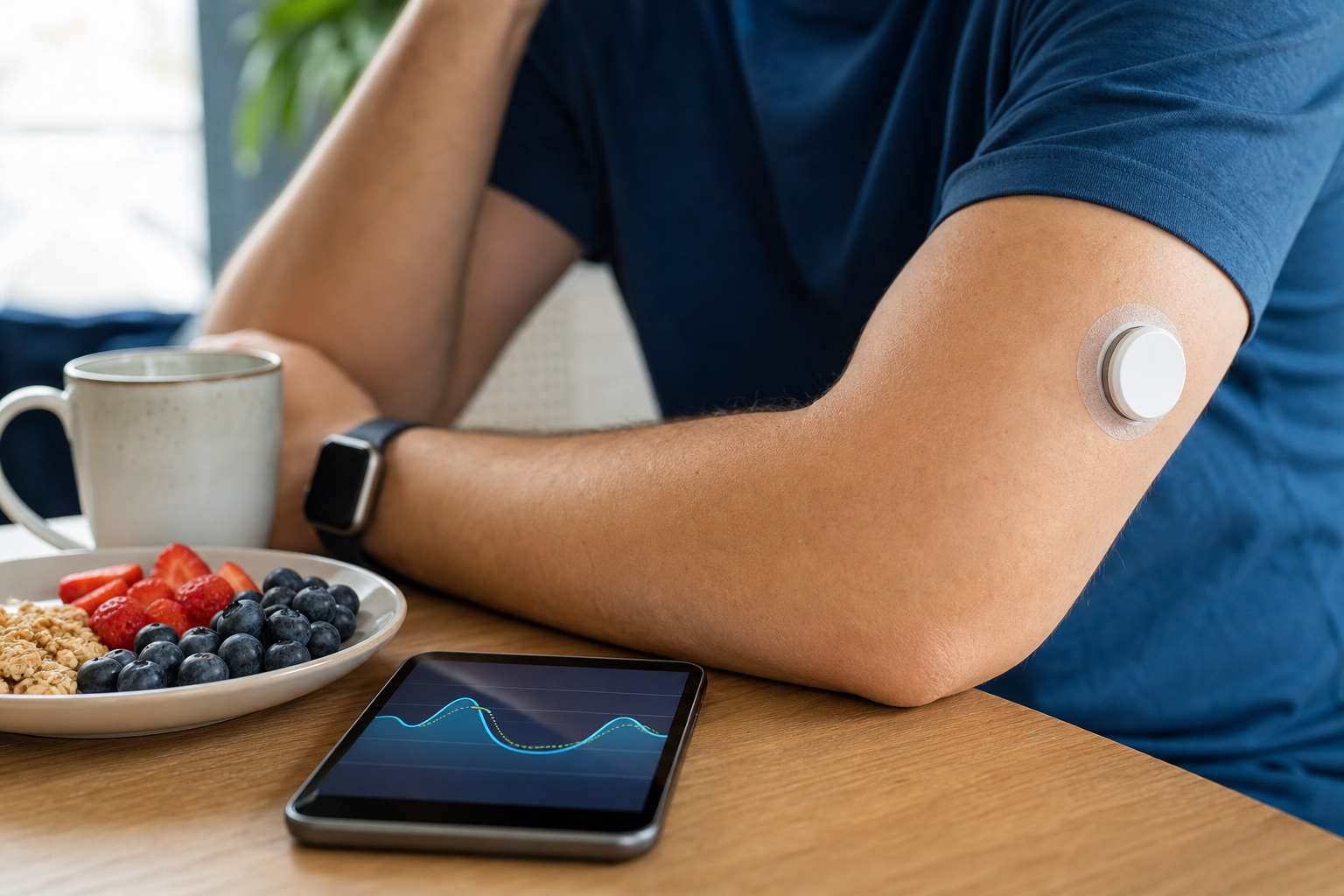
The Future of Wearable Blood Sugar Monitoring: From Glucose Tracking to Metabolic Intelligence
The next great wearable health race will not be won by the device that counts steps more accurately. It will be won by the device that explains what the body is doing with energy.
Presented By Our Partners



That is why blood sugar has become the new frontier. Heart rate made wearables familiar. Sleep tracking made them intimate. Glucose may make them clinically consequential. The shift is not just that more people will be able to see a number that used to belong mostly to diabetes care. The deeper shift is that glucose data can turn food, stress, sleep, exercise, medication, and recovery into one connected metabolic story.
The current consumer landscape is already hinting at the next phase. Apple Watch and Garmin can display glucose data from compatible continuous glucose monitors. Samsung is publicly circling future non-invasive sensing. Oura is moving toward glucose integration through Dexcom. Withings sits near the daily-health dashboard. Movano’s Evie Ring points toward a future in which smart rings may eventually measure more than heart rate and sleep. But the most important story is bigger than any one watch, ring, or patch. The future of blood sugar monitoring is not simply a glucose sensor on the wrist. It is the birth of consumer metabolic intelligence.
That future is arriving in stages. First came medical continuous glucose monitoring for diabetes. Then came over-the-counter glucose biosensors for people who do not use insulin. Next comes the fusion layer: glucose plus sleep, stress, food, exercise, heart rate variability, temperature, and context. After that comes the harder prize: truly non-invasive or minimally invasive sensing that disappears into everyday wearables.
The science is not there yet for a perfect no-needle consumer glucose watch. Anyone pretending otherwise is selling the future as if it has already cleared the FDA. But the direction is unmistakable. Glucose is moving from a disease-management metric to a general signal of metabolic resilience.
The Glucose Number Was Never Just a Number
Blood sugar is often treated like a simple dashboard light: too high, too low, normal. In reality, glucose is a moving signal. It rises after a meal, drops during exertion, drifts under stress, changes with sleep loss, and behaves differently in two people eating the same food. It is not only a diabetes marker. It is a window into how the body handles fuel.
That is why continuous glucose monitoring changed diabetes care so profoundly. A fingerstick gives a moment. A CGM gives a movie. Instead of one isolated reading before breakfast, the sensor shows the shape of the day: the breakfast spike, the afternoon crash, the post-dinner walk that softened the curve, the poor night’s sleep that made the next morning worse.
For people with diabetes, that movie can be life-changing and sometimes life-preserving. For people without diabetes, it can be educational, motivating, occasionally anxiety-producing, and frequently misinterpreted. That tension is exactly why the next generation of glucose wearables needs to become more intelligent, not merely more available.
A raw glucose trace is not wisdom. It is a biologic signal asking for context.
The Over-the-Counter Breakthrough
The consumer glucose market changed when the FDA cleared Dexcom’s Stelo Glucose Biosensor System as the first over-the-counter continuous glucose monitor. The device is intended for adults 18 and older who are not on insulin and who do not have problematic hypoglycemia. Abbott followed with Lingo and Libre Rio, expanding the category into wellness users and adults with type 2 diabetes who do not use insulin.
That regulatory shift matters. For years, CGM belonged mainly to prescription diabetes care. Now glucose biosensing is entering the same consumer-health channel that made sleep, HRV, resting heart rate, and step counts ordinary. The difference is that glucose sits closer to clinical medicine. A sleep score can be squishy. A glucose curve feels immediate. It makes breakfast visible. It makes late-night snacking visible. It turns the invisible chemistry of daily life into a line on a screen.
Healthcare Discovery has already covered several of the platforms building this bridge. Levels Health helped define the idea of CGM as metabolic education. Nutrisense paired glucose data with registered dietitian coaching. Signos connected CGM to weight management and AI-guided behavioral nudges. Veri pushed the consumer metabolic-health model further with food logging and personalized scoring. Supersapiens showed how athletes could use glucose as a fueling signal rather than a disease marker.
Those products were early chapters. The next chapter is broader: glucose will become one signal inside a multi-sensor metabolic operating system.
The Wearable Stack Is Starting to Converge
A useful distinction is often missed in the consumer conversation. Most mainstream wearables do not measure glucose directly today. Apple Watch, Garmin, Oura, Withings, and Samsung watches are mostly display surfaces, context engines, or future contenders. They can show data from CGMs, integrate with apps, or combine glucose-adjacent signals with sleep and activity. The actual glucose measurement still usually comes from a patch sensor in the skin.
That may sound underwhelming, but it is exactly how platform shifts often begin. The first iPhone health use case was not a medical tricorder. It was a place to collect data. The first glucose-enabled wearable future may look similar: one sensor measures interstitial glucose, another wearable measures sleep, heart rate, activity, temperature, and stress, and software learns how the streams interact.
This is where Oura’s glucose direction is especially interesting. A ring cannot currently replace a CGM. But a ring may provide the context that makes CGM data more meaningful: sleep timing, sleep regularity, nighttime physiology, resting heart rate, HRV, skin temperature, recovery, and stress. A glucose spike after a meal is one thing. The same spike after three nights of poor sleep, elevated stress, and low activity is a different story.
That is the near-term future: not one magic sensor, but a stack. A glucose biosensor plus a watch. A glucose biosensor plus a ring. A metabolic app plus food photos. A coaching layer plus sleep and activity. The value moves from measurement to interpretation.
Why Non-Invasive Glucose Is So Hard
The dream is obvious: no fingerstick, no filament, no disposable patch. Just a watch or ring that measures glucose through the skin all day. Apple has reportedly worked on the problem for years. Samsung has openly discussed the ambition. Movano has described radio-frequency technology that could eventually support glucose and blood-pressure sensing. Research groups are exploring Raman spectroscopy, near-infrared and mid-infrared spectroscopy, microwave sensing, sweat chemistry, optical fibers, fluorescence, plasmonic nanopillars, and other approaches that sound like they belong in a physics lab because, for now, they largely do.
Featured Partner
Invest in the Infrastructure Behind Modern Medicine
As healthcare expands beyond hospital walls, the buildings and campuses supporting that shift are generating compelling returns for investors who move early. The Healthcare Real Estate Fund offers qualified investors direct access to a curated portfolio of medical office, outpatient, and specialty care facilities.
Learn More →
The problem is that glucose is a small signal buried inside a noisy body. Skin thickness varies. Hydration changes. Temperature changes. Motion corrupts readings. Sweat is not blood. Interstitial fluid lags behind blood. Optical signals are distorted by water, tissue, fat, and pigmentation. A sensor that works on a benchtop, or even on a handful of volunteers, can fail when it meets daily life: exercise, showers, lotion, cold weather, poor sleep, dehydration, and thousands of different bodies.
That does not mean non-invasive glucose is fantasy. It means the bar is brutally high. A recent wave of research is promising. A 2025 Microsystems & Nanoengineering paper described a portable optical sweat-glucose system using functionalized plasmonic nanopillars with detection down to 22 micromoles per liter in artificial sweat and validation against human sweat samples. Reviews of optical and microwave biosensors describe real progress in Raman, infrared, and other sensing modalities. But a working research prototype is not the same thing as a regulated consumer product that millions can trust for health decisions.
The next few years will likely produce intermediate forms rather than a single miraculous leap. Needle-free does not necessarily mean fully non-invasive. Biolinq Shine, for example, received FDA De Novo clearance as a needle-free glucose sensor that uses a microsensor array in the uppermost skin layers and displays color-coded trend feedback. That is not the same as a watch shining light through the wrist, but it may be a more realistic step toward less burdensome glucose wear.
From Blood Sugar Monitoring to Metabolic Intelligence
The phrase “blood sugar monitoring” undersells where the category is going. Monitoring is passive. Intelligence is interpretive.
The next generation of glucose wearables will probably answer better questions. Not just, “What is my glucose?” but: Why did this meal hit differently today? Did poor sleep reduce my glucose tolerance? Did Zone 2 training improve my post-meal curve? Did stress keep glucose elevated overnight? Did a short walk after dinner flatten the spike? Is my morning glucose drifting upward over weeks? Do I respond better to protein before carbohydrates? Are my fasting, postprandial, sleep, and activity signals telling the same story?
That is where AI becomes useful without becoming theatrical. It does not need to diagnose everything. It needs to recognize patterns across time and context. A single spike after sushi may not matter. Repeated elevated overnight glucose, worsening post-meal recovery, rising resting heart rate, lower HRV, fragmented sleep, and reduced activity may tell a more important story.
This is also where glucose connects to the broader wearable-health map. The field is no longer about isolated gadgets. Cardiovascular monitors, sleep trackers, metabolic tools, respiratory sensors, and activity devices are converging into a single question: what is the body doing before disease becomes obvious?
Glucose may become one of the strongest signals in that stack because metabolism touches almost everything.
The Athlete, the Patient, and the Healthy Worried
Three populations will shape the market.
The first is the patient. People with diabetes, prediabetes, or type 2 diabetes not using insulin remain the clearest medical population. For them, CGM can support time-in-range, treatment decisions, food choices, medication adjustment, and behavior change. The clinical evidence base is strongest here, and the stakes are highest.
The second is the athlete. Glucose can act as a real-time fueling signal, especially for endurance training. That is the logic behind Supersapiens and other performance-oriented CGM use cases. The goal is not to pathologize every spike. It is to understand when the engine is under-fueled, over-fueled, or poorly timed for the work being asked of it.
The third is the healthy worried: people without diabetes who want more control over metabolic health. This is the largest and most complicated market. For some, CGM may reveal actionable patterns: breakfast composition, post-meal walking, late alcohol, sleep loss, stress eating, or exercise timing. For others, it may create false precision, food anxiety, or obsessive optimization around normal physiology.
That is why the future cannot simply be more data. It has to be better interpretation, better guardrails, and better education. A normal glucose rise after carbohydrates is not a personal failure. A flat glucose curve is not the definition of health. The goal is metabolic flexibility: the capacity to use fuel well, recover well, and maintain stable physiology over time.
The Next Sensor May Measure More Than Glucose
One of the most important future directions is multi-analyte sensing. Glucose is powerful, but metabolism is not glucose alone. Lactate, ketones, cortisol-related stress physiology, hydration, temperature, oxygenation, and inflammatory markers may eventually become part of the same picture.
Abbott has already discussed a future in which biosensors move beyond glucose, including ketone sensing. That matters because ketones can signal metabolic state, fasting response, low-carbohydrate adaptation, or risk states in diabetes. Lactate could connect training intensity to metabolic strain. Temperature and HRV already give recovery context. Food-photo AI, like the direction covered in January AI, could help predict a glucose response before the meal rather than merely explaining it afterward.
The future wearable will not just say, “Your glucose went up.” It will say something closer to: “This meal usually produces a larger spike when your sleep is short, but a ten-minute walk brings the curve down faster.” That is when glucose monitoring becomes coaching.
The Medical Risk: Mistaking a Consumer Signal for a Diagnosis
The danger is not that consumers will learn too much. The danger is that they will learn the wrong lesson from partial data.
Glucose varies for reasons that are not always obvious. Sensor readings can lag. Compression during sleep can distort values. Exercise can raise or lower glucose depending on intensity and timing. Menstrual cycle phase, illness, medications, alcohol, stress, and sleep debt can all change the curve. Even when the sensor is accurate, the interpretation can be wrong.
That is why the regulatory distinction matters. Some CGMs support diabetes treatment decisions. Some over-the-counter biosensors are not intended for people using insulin or with problematic hypoglycemia. Some wellness tools are educational rather than diagnostic. Non-invasive prototypes may be promising but not yet ready for medical decisions.
The future of blood sugar wearables should not erase clinicians. It should give clinicians and individuals better longitudinal context. The strongest version of this market is not a self-diagnosis machine. It is a feedback system that helps people notice patterns early enough to change them, and serious enough to bring to a clinician before they become harder to unwind.
What the Next Iteration Looks Like
The next iteration of blood sugar wearables will likely have five defining traits.
First, sensors will become easier to wear. Longer sensor life, smaller patches, less painful insertion, better adhesives, and needle-free designs will matter as much as new algorithms because compliance is physical before it is digital.
Second, glucose will move into mainstream wearable dashboards. Apple Watch, Garmin, Oura, Withings, and Samsung do not all need to own the glucose sensor to own the glucose experience. The wrist or finger may become the interface even when the biochemical measurement comes from a patch.
Third, non-invasive sensing will keep advancing, but credibility will depend on validation. The companies that win will be the ones that can prove performance across real bodies in real life, not the ones with the best keynote demo.
Fourth, glucose will become contextual. Food, sleep, stress, exercise, menstrual cycle, medications, and recovery will sit next to the glucose curve. This will make the data less scary and more useful.
Fifth, metabolic health will become preventive. Glucose trends may help identify risk patterns earlier, especially when paired with weight, waist circumference, lipids, blood pressure, sleep, activity, and family history. The wearable does not replace the lab panel. It fills in the days between lab panels.
The Real Future Is Not a Glucose Watch
The most seductive version of the story is simple: Apple or Samsung eventually launches a watch that measures glucose without breaking the skin, and everything changes.
Maybe that happens. But the more realistic and more interesting future is already forming around us. It is a networked system: CGM patches, needle-free sensors, smart rings, watches, food-photo AI, coaching platforms, sleep data, exercise data, and medical-grade devices all feeding into a more complete model of metabolic life.
That model will not be perfect. It will be noisy, uneven, and sometimes overhyped. But it will also move medicine closer to the rhythms that actually shape health: what people eat, how they sleep, how they move, how stress hits the body, and how quickly the system returns to baseline.
The future of wearable blood sugar monitoring is not really about sugar. It is about feedback. It is about seeing the body in motion. It is about turning daily life into a readable physiologic pattern before that pattern hardens into disease.
That is why this category matters. The next health wearable will not merely count what you did. It will help explain what your body did with it.
Sources
- Healthcare Discovery: The Complete Guide to Wearable Health Technology: 257 Devices Across 17 Categories
- TechRepublic: Wearables and blood sugar monitoring overview
- FDA: FDA clears first over-the-counter continuous glucose monitor
- Abbott: Lingo glucose system FDA-cleared overview
- FDA 510(k): Lingo Glucose System summary
- Microsystems & Nanoengineering: Portable optical sweat glucose detection using plasmonic nanopillars
- Royal Society of Chemistry: Minimally and non-invasive glucose monitoring: the road toward commercialization


Similar Posts
Joovv Solo 3.0: Red Light and Near-Infrared Therapy for Cellular Recovery and Skin Health
Light is not merely something we see. At specific wavelengths, it penetrates tissue and directly stimulates the mitochondria that power every cell in the body. Presented By Our Partners Photobiomodulation,…
CORE Body Temperature Sensor: Continuous Core Temp Monitoring for Athletes and Heat Safety
A chest-strap sensor that continuously estimates core body temperature during exercise, offering athletes and military personnel a real-time window into thermoregulation that was previously available only through invasive clinical methods….
Marc Pro Plus: Non-Fatiguing Electrical Muscle Stimulation for Recovery and Pain Relief
The muscles that powered today’s training cannot recover faster than the circulatory system can deliver nutrients and remove waste. Electrical muscle stimulation accelerates both. Presented By Our Partners Recovery at…

Liquid Biopsy Is Rewriting Cancer Detection: How a Single Blood Draw May Find Dozens of Cancers Before Symptoms Appear
A convergence of cfDNA methylation analysis, multi-omics integration, and artificial intelligence is transforming cancer screening. From the PATHFINDER 2 trial showing a seven-fold increase in cancer detection to the PROMISE…
Nix Biosensors Sweat Patch: Real-Time Hydration and Electrolyte Monitoring
Dehydration degrades athletic performance before you feel thirsty, and sweat composition varies so widely between individuals that generic hydration advice may be worse than none at all. Presented By Our…

The Grip Strength Signal: What 30 Years of Research Reveals About the Most Underrated Longevity Biomarker and How to Build It
A two dollar handheld dynamometer can predict mortality better than blood pressure in millions of people across 17 countries. Inside the Leong PURE cohort, the Saeidifard and Stamatakis meta-analyses, the…
