
The Daily Rounds: Longevity & Health Care Brief | May 9, 2026
Your daily briefing on the science of living longer, better. Covering the past 24 to 48 hours in longevity, medicine, and healthspan research.
Presented By Our Partners



🧠 NEUROLOGY & COGNITIVE HEALTH
⚖️ Weight Management May Slow Brain Aging by Two Years, 24-Year Study Finds
A new analysis of 24 years of longitudinal data finds that sustained weight management significantly reduced the rate of cognitive decline in aging adults, with researchers estimating that maintaining a healthy BMI trajectory may preserve brain age by up to two years compared to progressively overweight peers. Higher BMI over time was linked to faster declines in memory and executive functioning beyond what is typically seen in normal aging. The findings strengthen the case for treating metabolic health as a direct cognitive intervention rather than a secondary benefit of weight control.
🕰️ A Weak Internal Body Clock Is an Early Warning Signal for Dementia
Researchers tracking over 2,000 older adults with wrist-worn monitors found that those with weaker, more fragmented circadian rhythms were significantly more likely to develop dementia in the years that followed, even when controlling for other known risk factors. The study frames circadian robustness as a measurable early biomarker of neurodegeneration risk rather than a symptom of existing decline. Scientists say this opens a new window for early intervention, with circadian strengthening through light exposure, meal timing, and sleep consistency as accessible lifestyle targets.
❤️ CARDIOVASCULAR HEALTH
🫀 Heart Failure Is the First Cardiovascular Event in 1 in 6 Adults with Type 2 Diabetes
A five-year prospective study of 6,175 adults with type 2 diabetes but no prior cardiovascular history found that 16.8% experienced heart failure hospitalization or death as their very first cardiovascular event, a rate researchers describe as substantially underappreciated in standard risk frameworks. Key predictors included older age, elevated BMI, and urinary albumin-to-creatinine ratio, a marker of kidney stress. The findings suggest that heart failure prevention strategies, not just atherosclerosis screening, should be integrated earlier into diabetes care protocols.
📌 Read more → Heart Advisor / Research Roundup May 2026
🧬 Declining Estrogen After Menopause Rewires Gene Activity to Elevate Heart Disease Risk
Virginia Tech researchers published findings showing that the post-menopausal cardiovascular risk spike is driven not only by lower circulating estrogen but by how estrogen loss alters epigenetic gene regulation, changing which cardiovascular-protective genes are expressed in vascular tissue. The study, published in the journal Cells, identifies specific epigenetic changes that could serve as targets for precision interventions beyond standard hormone replacement strategies. Researchers say this reframes menopause-related heart risk as an epigenetic transition with tractable therapeutic leverage points.
📌 Read more → Virginia Tech News
🦠 GUT MICROBIOME & IMMUNE HEALTH
💉 Gut Bacteria Discovered to Inject Proteins Directly Into Human Immune Cells
Scientists published a landmark study showing that gut bacteria use microscopic protein-injection systems to deliver molecules directly into intestinal immune cells, actively modulating the immune response from within the gut lining. Even non-pathogenic bacterial strains were found to influence inflammatory signaling and metabolic pathways through this mechanism, helping explain how microbiome composition so profoundly shapes systemic health outcomes. The discovery opens new therapeutic avenues for conditions like Crohn’s disease, where immune overactivation in the gut is central to disease progression.
🫁 Six Gut Bacterial Strains Boost Lung Cancer Immunotherapy Response in New Findings
University of Florida Health researchers identified six specific bacterial strains, out of more than 180 screened, that when administered to mice with lung tumors significantly amplified their response to immunotherapy, pointing toward a new class of microbiome-based treatment adjuvants. The gut-immune axis has long been implicated in cancer treatment outcomes, but this study offers the most precise strain-level identification to date of which microbes drive the benefit. Clinical translation is being fast-tracked, with researchers exploring oral supplementation protocols ahead of planned human trials.
Featured Partner
Invest in the Infrastructure Behind Modern Medicine
As healthcare expands beyond hospital walls, the buildings and campuses supporting that shift are generating compelling returns for investors who move early. The Healthcare Real Estate Fund offers qualified investors direct access to a curated portfolio of medical office, outpatient, and specialty care facilities.
Learn More →
🔬 CELLULAR HEALTH, SENOLYTICS & EPIGENETICS
🔗 Nature Aging: Aging Tissue Matrix Traps Cells in Senescence and Amplifies Dysfunction
New research in Nature Aging identifies the extracellular matrix, the structural scaffold surrounding cells, as an active driver of senescent cell accumulation rather than a passive bystander of aging. As the matrix ages and stiffens, it sends mechanical signals through integrin receptors that push cells into senescence, and senescent cells in turn remodel the matrix further, creating a self-amplifying cycle of tissue dysfunction. Researchers say breaking this feedback loop through targeted matrix interventions or senolytic therapies could substantially slow tissue aging across multiple organ systems.
🧫 Immune T Cell Senescence Mapped Epigenetically, Revealing a New Immunotherapy Target
A 2026 study mapped the epigenomic changes that drive immune T cells into senescence, finding that the shift to cellular senescence, not chronological age, accounts for the vast majority of gene expression changes seen in aging immune cells. Inhibiting specific transcription factors partially reversed the functional blunting of senescent T cells, suggesting a path toward restoring immune surveillance in older adults. The findings have immediate implications for both longevity science and cancer immunotherapy, where T cell exhaustion is a central treatment barrier.
📌 Read more → Fight Aging! / 2026 Research
🤖 AI IN MEDICINE & DRUG DISCOVERY
🔓 OpenBind Releases First Public AI Model for Protein-Drug Binding at Atomic Resolution
The UK-led OpenBind consortium published its first publicly available dataset and AI model for predicting how drugs bind to proteins at atomic detail, a foundational capability that has historically been accessible only to well-resourced pharmaceutical companies. By providing standardized, high-quality binding data in open access, the initiative is designed to dramatically level the drug discovery playing field for academic labs and rare disease researchers. The release is expected to accelerate development of new medicines across dozens of disease areas where experimental binding data has been a critical bottleneck.
🎯 ByteDance’s Anew Labs Presents First AI-Designed Molecule Hitting a Previously Undruggable Target
ByteDance’s drug discovery unit Anew Labs unveiled its first AI-designed therapeutic candidate at a major immunology conference in Boston, a generative-AI-engineered small molecule targeting IL-17, a protein-protein interaction long considered impossible to drug with small molecules. The company simultaneously published AnewOmni, a generative AI framework trained on five million biomolecular complexes claimed to be the first system capable of designing functional molecules across all scales of biological complexity. The entry of a major technology company into de novo drug design marks a significant shift in who is driving pharmaceutical innovation.
⌚ WEARABLES, BIOMARKERS & PRECISION HEALTH
📊 Nature Study: Wearables Plus Routine Blood Tests Predict Insulin Resistance with 80% Accuracy
The WEAR-ME study, published in Nature, combined time-series data from consumer wearable devices with standard clinical blood biomarkers and trained deep neural networks to predict insulin resistance with an AUROC of 0.80, sensitivity of 76%, and specificity of 84%, without requiring any specialized metabolic testing. The approach could enable population-scale metabolic screening using devices most people already own, identifying insulin resistance years before it progresses to type 2 diabetes. Researchers describe the model as a template for expanding AI-powered preventive diagnostics across a range of metabolic conditions.
🧠 AI and Wearables Now Detecting Alzheimer’s Signs Years Before Clinical Symptoms Appear
A 2026 clinical review documents how combinations of AI-driven analysis and consumer wearable biomarkers, including sleep pattern irregularities, gait variability, and voice biomarkers, are enabling detection of Alzheimer’s-related changes years before a formal diagnosis is possible through traditional means. This shift from episodic, symptom-driven care to continuous, data-driven monitoring reframes Alzheimer’s as a potentially interceptable condition rather than an inevitable outcome. Researchers say pre-symptomatic intervention windows, once theoretical, are now a clinical reality for appropriately monitored patients.
💪 MUSCLE MASS, STRENGTH & METABOLIC HEALTH
🏋️ JAMA Study: Women with Highest Grip Strength Have a 33% Lower Mortality Risk
A large prospective study of more than 5,000 women ages 63 to 99, published in JAMA Network Open, found that those in the highest grip strength quartile had a 33% lower risk of death over the follow-up period, while those with the fastest chair-stand times saw a 37% risk reduction. Crucially, the protective effect persisted even among women who did not meet standard aerobic exercise recommendations, suggesting muscle strength confers independent longevity benefits beyond cardiovascular fitness. The findings add to growing evidence that strength, not just cardio fitness, should be a primary clinical target in older adults.
📌 Read more → Medical News Today / JAMA Network Open
🥗 NUTRITION & METABOLIC HEALTH
🔬 Metabolomics Identifies 19 Blood Biomarkers That Objectively Measure Dietary Adherence
New research using metabolomic analysis identified 19 blood-based biomarkers, including hippurate and methylhistidines, that accurately reflect adherence to healthy dietary patterns, offering a far more objective measure of dietary compliance than self-reported food logs. Low-compliance diets were marked by elevated carnitine, creatine, and glucose, providing a metabolic fingerprint of poor dietary follow-through. Researchers say this approach could replace subjective dietary recall methods in clinical trials and precision nutrition programs, enabling real-time feedback on whether interventions are actually working.
📌 Read more → PMC / Dietary Modulation of Metabolic Health 2026
😴 SLEEP & CIRCADIAN HEALTH
🌙 Preventive “Sleep Checkups” Emerging as a Standard Tool in Clinical Circadian Medicine
A new paper in npj Biological Timing and Sleep makes the case for routine circadian profiling as a preventive health measure, proposing that clinical sleep checkups measuring circadian phase, amplitude, and regularity should become standard components of preventive care visits. The authors argue that circadian disruption is a modifiable upstream driver of cardiovascular, metabolic, and neurological disease, and that identifying it early creates intervention windows before downstream damage accumulates. Several health systems are now piloting wearable-based circadian monitoring protocols ahead of broader clinical rollout.
📌 Read more → npj Biological Timing and Sleep / Nature
📌 TODAY’S TOP TAKEAWAYS
- ⚖️ Weight and Brain Age — A 24-year study finds that sustained weight management may preserve brain age by up to two years, directly slowing the rate of memory and executive function decline.
- 💉 Gut Bacteria Inject Proteins Into Immune Cells — Scientists discover microbes use molecular injection systems to directly modulate immune cell behavior, explaining how microbiome composition drives systemic health outcomes.
- 🔓 OpenBind Opens AI Drug Discovery to Everyone — A UK consortium releases the first public AI model for atomic-level protein-drug binding prediction, leveling the pharmaceutical research playing field.
- 📊 Wearables Predict Insulin Resistance at 80% Accuracy — The WEAR-ME study shows wearable data plus standard blood tests can identify insulin resistance years before diabetes develops, using devices most people already own.
- 🏋️ Grip Strength Cuts Mortality Risk by 33% in Older Women — A JAMA study of 5,000 older women finds that high grip strength independently predicts survival, even among those who do not meet aerobic exercise guidelines.
Sources compiled from Medical Xpress, ScienceDaily, Heart Advisor, Virginia Tech News, UF Health, Nature Aging, Fight Aging!, Phys.org, The Next Web, Nature, Medical News Today, npj Biological Timing and Sleep, OneDayMD, PMC. Published: May 9, 2026.


Similar Posts
Alice 6 LDx PSG System: The Definitive Polysomnography Platform for Sleep Laboratories
Every night, roughly 70 million Americans struggle with a sleep disorder, yet the diagnostic gold standard for unraveling what happens in their brains after lights out has remained fundamentally the…

BIOHM Gut Test: The Case for Testing Fungi Alongside Bacteria
Why the gut mycobiome matters, what most microbiome tests miss, and whether BIOHM’s dual-kingdom approach delivers meaningful clinical insight Presented By Our Partners When researchers at the Case Western Reserve…
The Art of Not Aging: New Science Reveals That Museums, Music, and Reading Slow Your Biological Clock as Powerfully as Exercise
A landmark UCL study of 3,556 adults finds that regular arts engagement, such as reading, music, museum visits, and theater, slows biological aging by 4%, an effect size identical to…
Hilo Core Blood Pressure Wearable: What the U.S. System Actually Does
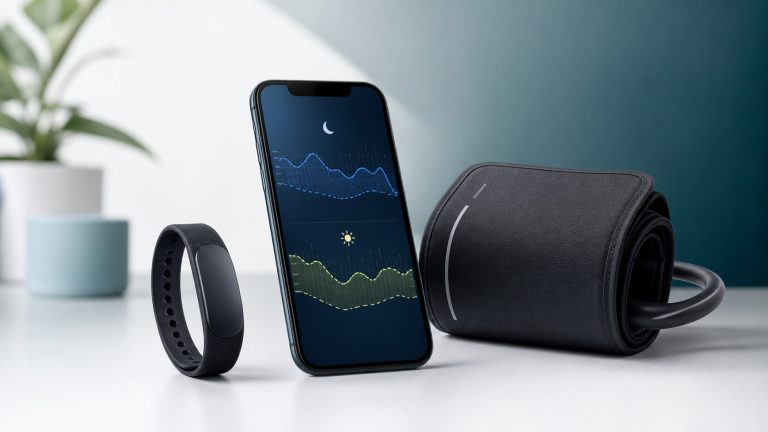
Hilo Core brings Aktiia’s optical blood-pressure technology to the United States in a $239.98 first-year system. The wristband is a wellness trend tool, while exact reference readings come from the…
One Shot to Silence Heart Disease: How CRISPR Gene Editing Is Making Daily Cholesterol Pills Obsolete
A single infusion of CRISPR gene editing therapy has cut LDL cholesterol by up to 87 percent and triglycerides by up to 84 percent in landmark clinical trials. With Phase…
PowerBreathe Plus: Inspiratory Muscle Training for Cardiovascular and Respiratory Performance
The muscles you use to breathe can be trained like any other muscle in your body. The evidence suggests doing so may lower blood pressure, improve exercise endurance, and reshape…
