
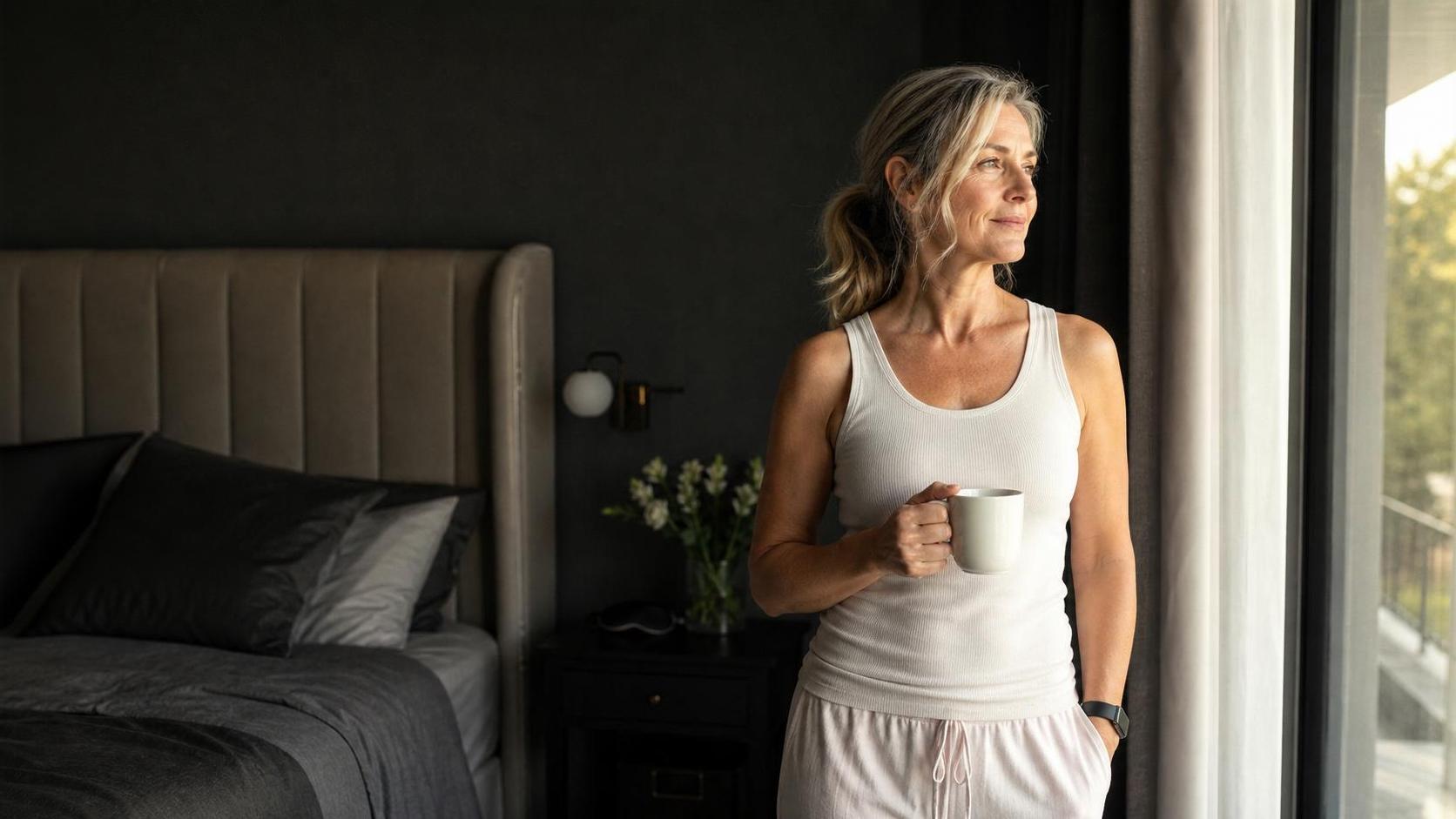
Your Light Diet: How Bright Days and Dark Nights Shape Your Healthspan
For most of human history, the brightness of your day and the darkness of your night were settled by the sun. Then we lit the indoors, and the deal quietly changed. We now spend roughly 90 percent of our waking hours inside, under light that is far dimmer than the sky and far brighter than the campfire our biology expects after dusk. A growing body of research suggests this single inversion, dim days and bright nights, may be one of the most underappreciated risk factors in modern health. And unlike your genome, it is something you can change before you go to bed tonight.
Presented By Our Partners



The most striking evidence comes from the wrist. In 2024, researchers led by Daniel Windred and chronobiologists Sean Cain and Andrew Phillips, working across Flinders University and Monash University, published a landmark analysis in the Proceedings of the National Academy of Sciences. They did not ask people to remember their habits or fill out a questionnaire. Instead, they used roughly 13 million hours of objective light data, captured by wrist-worn sensors that more than 88,000 UK Biobank participants wore around the clock for about a week. Then they followed those people for close to eight years and counted who lived and who did not.
The Study That Turned Light Into a Vital Sign
What the data showed was clean and, frankly, a little unsettling. After accounting for age, sex, ethnicity, season, physical activity, diet, smoking, alcohol, and socioeconomic status, the people exposed to the brightest nights had a measurably higher risk of dying during the follow-up period. For those in the top 10 percent of nighttime light exposure, the adjusted hazard ratio for all-cause mortality ran between 1.21 and 1.34 compared with people who kept their nights genuinely dark. In plain terms, the brightest-night group carried roughly a 21 to 34 percent higher risk of death over the study window. For cardiometabolic deaths specifically, the elevated risk climbed as high as 46 percent.
Daylight pointed the other way. People who got the most bright light during the day had a lower risk of dying, with hazard ratios falling to between 0.66 and 0.83 for the upper daytime-light groups. That is a meaningful protective signal, and it held independently of how much light people were exposed to at night. The study also found that two more abstract measures, a blunted circadian rhythm (low amplitude, meaning the body’s internal day and night were not clearly distinguished) and a circadian clock running too early or too late, each predicted higher mortality as well.
The headline a reader should take away is not complicated. Bright days and dark nights tracked with living longer. Dim days and bright nights tracked with dying sooner. With nearly 3,750 deaths recorded across the cohort, this was not a fragile finding teased out of a handful of cases. It was one of the largest objective light studies ever conducted, and it reframed everyday light exposure as something closer to a vital sign than a lifestyle footnote.
Why Light Is Not Just About Sleep
It is tempting to file all of this under sleep hygiene and move on. That would miss the deeper biology. Light is the single most powerful signal your body uses to set its internal clock, and that clock governs far more than when you feel drowsy.
Deep in the eye sit specialized cells called intrinsically photosensitive retinal ganglion cells. They contain a pigment named melanopsin, and unlike the rods and cones that build the images you see, their main job is not vision at all. They are light meters. They report the brightness and color of your environment directly to the suprachiasmatic nucleus, a cluster of roughly 20,000 neurons in the hypothalamus that functions as the master clock of the body. That master clock then synchronizes thousands of smaller clocks in nearly every organ, tissue, and cell, coordinating the timing of hormone release, body temperature, blood pressure, immune activity, and metabolism across the 24-hour day.
Melatonin is the most familiar output. In a dark environment, the pineal gland releases melatonin in the evening to signal biological night. Bright light at night, even ordinary room light in the range of 100 to 300 lux, can suppress that melatonin surge and shove the entire clock later. The consequences are not limited to a groggy morning. When the internal day and the external day fall out of step, a state chronobiologists call circadian misalignment, the downstream effects ripple into glucose regulation, blood pressure, inflammation, and mood. This is the mechanism the PNAS authors point to when they explain why brighter nights might raise cardiometabolic mortality: light at the wrong time is not a nuisance, it is a disruption of the schedule your physiology runs on.
The Mental Health Thread
The same research group had already shown, a year earlier, that this is not only a story about the heart. In a 2023 paper in Nature Mental Health, Sean Cain and colleagues analyzed objective light data from 86,772 UK Biobank adults and matched it against psychiatric outcomes. The pattern rhymed with the mortality findings.
Featured Partner
Invest in the Infrastructure Behind Modern Medicine
As healthcare expands beyond hospital walls, the buildings and campuses supporting that shift are generating compelling returns for investors who move early. The Healthcare Real Estate Fund offers qualified investors direct access to a curated portfolio of medical office, outpatient, and specialty care facilities.
Learn More →
People with high daytime light exposure had about a 20 percent lower risk of major depression. People with high nighttime light exposure had about a 30 percent higher risk. The night-light association did not stop at depression. Greater light at night tracked with elevated risk across a striking range of conditions, including generalized anxiety disorder, post-traumatic stress disorder, psychosis, bipolar disorder, and self-harm. Greater daytime light, by contrast, was protective against depression, PTSD, psychosis, and self-harm, and the authors framed bright daytime exposure as a genuinely non-pharmacological lever for mental health.
This matters for the practical reader because it widens the payoff. Fixing your light environment is not a narrow intervention aimed at one organ or one number on a lab report. It touches mood, cognition, metabolic health, and cardiovascular risk through a single shared pathway, the circadian system. Few habits offer that kind of leverage for so little cost.
A Dose, and Most of Us Are Underdosed
The reason this is actionable comes down to a number almost nobody intuits correctly: lux, the unit of light intensity. A bright summer day outdoors delivers 50,000 to 100,000 lux. An overcast winter day still gives you several thousand. A typical office or living room, the place most of us actually spend our daylight hours, sits at 100 to 500 lux. The human eye adapts so smoothly that indoor light feels perfectly bright, but biologically it is dim. Your melanopsin cells are getting a fraction of the daytime signal they evolved to expect.
Then comes the inversion at night. After sunset, our ancestors had firelight, perhaps a handful of lux. We have overhead fixtures, glowing screens, and bright kitchens running at hundreds of lux right up until we lie down. A leading consensus statement on light and health, published by chronobiology researchers including Cain, Phillips, and Kenneth Wright in 2022, recommended keeping evening light below about 10 lux in the hours before bed and sleeping in a room as close to fully dark as possible. Most homes are nowhere near that. The gap between the light we live in and the light our biology is tuned for is large in both directions at once, and the wrist-sensor studies suggest that gap has a cost measured in years.
The Cardiometabolic Through-Line
If the mortality study raised the question, more recent work has been filling in the mechanism. In 2025, a large analysis published in JAMA Network Open, again drawing on the wrist-worn light data of more than 88,000 UK Biobank participants, found that brighter personal night light predicted a higher incidence of cardiovascular disease, including heart failure, coronary artery disease, myocardial infarction, atrial fibrillation, and stroke. The associations were strongest in women and in younger participants, and they persisted after adjusting for physical activity, sleep duration, smoking, alcohol, diet, and genetic cardiovascular risk.
The proposed chain of events is coherent. Light at night suppresses melatonin and misaligns the circadian clocks that govern blood pressure and glucose handling. Over years, that nightly misalignment nudges metabolic and vascular risk upward. It is the same logic that has long made permanent night-shift work a recognized hazard, now traced down to the ordinary light exposure of ordinary people sleeping in ordinary, not-quite-dark bedrooms. None of these studies can prove causation on their own, since they are observational, but the consistency across mortality, cardiovascular disease, and mental health, all pointing the same direction through the same biological pathway, is the kind of agreement that turns a curiosity into a recommendation.
It is worth naming who carries the most risk, because the answer is not just shift workers. The wrist-sensor data captured people living entirely conventional lives, and plenty of them were getting too little light by day and too much by night without ever working an overnight shift. Anyone who commutes in the dark, eats lunch at a desk, and unwinds in a brightly lit living room with screens glowing until midnight is living the exact inversion the studies flagged. That describes a large fraction of modern adults. The encouraging corollary is that the same people stand to gain the most, because they have the widest gap to close and the change requires no prescription, no equipment, and no expense.
What This Means For Your Practice
The beauty of the light story is that the intervention is free, immediate, and almost entirely within your control. The research points to two goals that work together: brighten your days and darken your nights. Here is how to act on each, starting today.
Get bright light early and often during the day. Aim for outdoor light within an hour or two of waking, even for 10 to 20 minutes. On a cloudy day the outdoors still vastly outguns your living room. If you work indoors, sit near a window, take walking meetings outside, and treat your lunch break as a light break. The daytime signal was independently protective in every study above, so this is not optional polish, it is half the prescription.
Dim aggressively after sunset. In the two to three hours before bed, drop your indoor light toward the 10 lux range. Use lamps instead of overhead fixtures, switch bulbs to warmer tones, and lean on the night modes built into your phone, tablet, and computer. The goal is not total darkness while you are still awake, it is a clear signal to your clock that night has arrived.
Make your bedroom genuinely dark. This is the highest-leverage single move. Blackout curtains, a sleep mask, and the removal of glowing standby lights and bright clock displays can take a bedroom from a problematic 10 to 40 lux down toward the near-zero darkness the consensus guidelines recommend. If you wake to use the bathroom, use the dimmest light that lets you move safely rather than flipping on a bright overhead.
Mind the small night-light sources that add up. A bright bathroom at 2 a.m., a phone checked in bed, a television left on as you drift off: each delivers a pulse of light at exactly the wrong time. You do not need to live by candlelight, but treating bright light after dark the way you would treat a late espresso, as something with real physiological consequences, is the right mental model.
Use your wearable, if you have one, to find your blind spots. The Oura ring, Apple Watch, and similar devices do not measure lux directly, but they track sleep timing and consistency, which respond quickly to better light habits. Pairing a week of light-aware behavior with the data you already collect turns an abstract recommendation into a feedback loop you can actually see.
The fundamentals of health are often framed as nutrition, movement, sleep, and breath. Light deserves a place in that conversation, because it sits upstream of at least two of them. It sets the clock that decides when you sleep well and how your metabolism behaves while you do. The wrist-sensor studies did not hand us a new drug or a new gadget. They handed us back something our ancestors had for free and we accidentally gave away: bright days and dark nights. Reclaiming it costs nothing, and the evidence suggests the return on that small change is measured not in better sleep alone, but potentially in years of life.


Similar Posts

Natural Cycles: The Only FDA-Cleared Digital Contraceptive App
In 2018, the FDA did something it had never done before: it cleared a smartphone app as a method of contraception. The decision was controversial, the science behind it was…
January AI: Predicting Glucose Responses from Food Photos Using Artificial Intelligence
What if you could predict how your blood sugar will respond to a meal before you eat it? January AI is building the technology to make that possible. Presented By…
Sacituzumab Tirumotecan Slashes Lung Cancer Progression Risk by 65%: The TROP2 Breakthrough Just Published in The Lancet
A Phase III trial presented at ASCO 2026 and simultaneously published in The Lancet shows that pairing a precision TROP2-targeting weapon with the world’s most prescribed immunotherapy rewrites what is…
Ulta Lab Tests: The Most Affordable Path to Preventive Blood Testing
Direct-access lab testing without the prescription markup. Panels from $9 to $199, nationwide availability, and the transparency that preventive health demands. Presented By Our Partners The Cost Barrier to Preventive…

The Walking Cure: What a Decade of Step Count Research Reveals About the Most Underrated Longevity Tool in Modern Medicine
A 226,889 person meta-analysis, a 78,500 person UK Biobank study, and a decade of cohort work have transformed walking from a soft wellness recommendation into one of the most rigorously…

The First Longevity Board: How Insilico Medicine Is Using AI to Target the Biology of Aging Itself
Insilico Medicine has formed the industry’s first Longevity Board, chaired by Eli Lilly’s Group VP of Molecular Discovery and featuring Nobel laureate Michael Levitt. Inside the AI strategy, dual-purpose targets,…
