
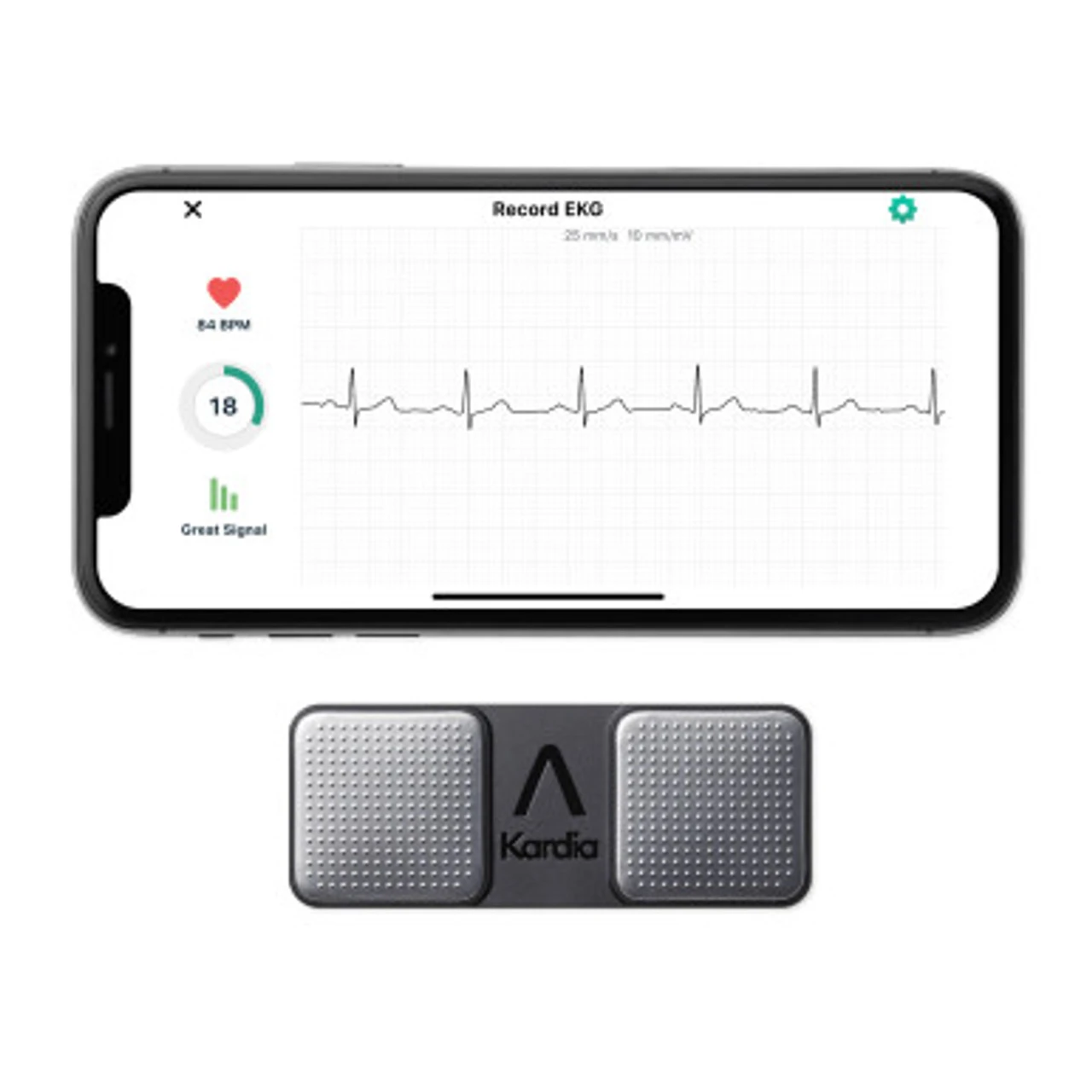
AliveCor KardiaMobile: The Most Affordable FDA Cleared Personal ECG
A credit card sized, $99 device that records a medical grade single lead ECG in 30 seconds, detects six arrhythmia types, and lets you email the results to your cardiologist before the next heartbeat.
Presented By Our Partners



Atrial fibrillation is the most common sustained cardiac arrhythmia in the world, affecting an estimated 37.6 million people globally, and its prevalence is rising as populations age. The condition increases stroke risk by approximately fivefold, yet it frequently goes undetected because episodes can be intermittent and asymptomatic. A patient might experience an AFib episode during sleep, during a stressful work meeting, or during a quiet evening at home, and a standard annual ECG at the doctor’s office would capture none of it.
The BASEL Wearable Study, published in 2023 in JACC: Clinical Electrophysiology by Mannhart et al., tested the AliveCor KardiaMobile alongside four other consumer smart devices in 201 cardiology patients. The KardiaMobile demonstrated 79% sensitivity and 69% specificity for atrial fibrillation detection. While the automated algorithm flagged 26% of tracings as inconclusive, manual physician review of those recordings resolved the rhythm in 99% of cases. The data was clear: the device captures clinically useful electrocardiographic information, and when paired with physician interpretation, it functions as a legitimate screening tool.
AliveCor has been building toward this moment for over a decade, and the KardiaMobile is the product that put personal ECG monitoring into the hands of millions of consumers and patients worldwide.
What Is the AliveCor KardiaMobile?
The AliveCor KardiaMobile is a portable, smartphone connected single lead ECG device about the size of a credit card and roughly the thickness of two stacked coins. To record an ECG, the user opens the Kardia app on their smartphone, places two fingers from each hand on the device’s metal electrodes for 30 seconds, and receives an immediate rhythm analysis. The entire process takes less than a minute from the moment you pick up the device to the moment you have a classified ECG result on your phone screen.
The KardiaMobile holds FDA 510(k) clearance for six arrhythmia determinations: atrial fibrillation, bradycardia, tachycardia, normal sinus rhythm, unclassified rhythm, and unreadable recording. This is the broadest automated arrhythmia detection capability available in the single lead consumer ECG category. The device uses ultrasonic communication with the smartphone (no Bluetooth pairing required for the standard model), which simplifies setup and eliminates connectivity issues.
The Kardia app stores all recordings with timestamps, provides historical trend views, and enables one tap sharing of ECG PDFs with healthcare providers. An optional KardiaCare subscription ($9.99 per month or $99 per year) adds medication tracking, monthly heart health reports, and unlimited ECG storage. The core ECG recording and arrhythmia detection functions work without any subscription. The device retails at $99 and is confirmed HSA and FSA eligible.
The Science Behind Personal ECG Monitoring
The electrocardiogram is the foundational tool of cardiac rhythm diagnosis, invented over a century ago and refined through generations of clinical use. A standard clinical ECG uses 12 leads placed across the chest and limbs to create a comprehensive electrical map of cardiac activity. A single lead ECG, by contrast, captures a single vector of that electrical activity, typically Lead I (the vector between right arm and left arm), which is sufficient to identify the most clinically significant rhythm disturbances.
The clinical value of single lead ECG screening centers on atrial fibrillation detection. AFib produces a characteristic pattern on ECG: irregularly irregular R to R intervals with absence of distinct P waves. This pattern is identifiable even on a single lead recording, which is why consumer devices using Lead I configuration can achieve clinically meaningful sensitivity and specificity for AFib detection.
The 2020 study by Lown et al. published in PLoS One demonstrated that machine learning applied to consumer wearable heart rate data could achieve 100% sensitivity and 97.6% specificity for AFib detection in a validation cohort of 415 participants, using a support vector machine classifier trained on Lorenz plot patterns of consecutive R to R intervals. While this study used a different device, it validated the broader principle that consumer grade cardiac data, when processed with sophisticated algorithms, can approach clinical diagnostic accuracy.
AliveCor’s own published validation data spans over a decade and includes studies in diverse populations. The company’s algorithms have been refined through millions of consumer recordings, creating a feedback loop between clinical validation and algorithm improvement that newer entrants to the consumer ECG space have not yet replicated.
The clinical significance of detecting AFib extends beyond diagnosis. Early detection enables early anticoagulation therapy, which reduces stroke risk by approximately two thirds. For patients with paroxysmal AFib (intermittent episodes), the ability to capture a recording during an episode provides diagnostic evidence that routine clinical ECGs frequently miss. This is the core clinical use case for the KardiaMobile: recording symptoms when they happen, wherever they happen.
What the AliveCor KardiaMobile Does Well
The KardiaMobile’s greatest strengths are simplicity and portability. There is no charging (the device uses a coin cell battery lasting approximately 12 months), no pairing process for the standard model, no wristband to wear, and no complex setup. Place fingers on electrodes, wait 30 seconds, receive result. This simplicity makes it accessible to elderly patients, technophobic users, and anyone who would be intimidated by the setup complexity of a smartwatch based ECG.
The 30 second recording time captures a clinically meaningful ECG window. The Kardia app provides immediate, on screen rhythm classification: “Normal,” “Possible Atrial Fibrillation,” “Bradycardia,” “Tachycardia,” or “Unclassified.” This instant feedback enables users to take action in real time, whether that means recording additional tracings, noting symptoms, or contacting their healthcare provider.
The device’s portability is unmatched in the consumer ECG space. It fits in a wallet, purse, or pocket, and can be used anywhere there is a compatible smartphone. For patients who experience intermittent symptoms (palpitations, dizziness, chest discomfort), the ability to perform an ECG at the moment symptoms occur transforms diagnosis from reactive (wait for an episode during a clinical visit) to proactive (capture the episode wherever it happens).
Featured Partner
Invest in the Infrastructure Behind Modern Medicine
As healthcare expands beyond hospital walls, the buildings and campuses supporting that shift are generating compelling returns for investors who move early. The Healthcare Real Estate Fund offers qualified investors direct access to a curated portfolio of medical office, outpatient, and specialty care facilities.
Learn More →
AliveCor’s extensive clinical validation history provides a credibility foundation that matters when sharing results with physicians. The KardiaMobile is one of the most widely recognized and trusted consumer ECG devices among cardiologists, which means the PDF recordings it generates are more likely to be taken seriously in clinical settings than results from lesser known devices.
Pricing, Access, and Practical Realities
The AliveCor KardiaMobile retails at $99 for the device. Core ECG recording and arrhythmia detection functions require no subscription. The optional KardiaCare subscription at $9.99 per month or $99 per year adds enhanced features including medication tracking, monthly heart health reports, cardiologist reviewed flagged recordings, and unlimited ECG storage. Without the subscription, storage is limited but the core clinical functionality is fully available.
First year total cost ranges from $99 (device only) to $199 (device plus annual KardiaCare subscription). This positions the KardiaMobile as the most affordable FDA cleared personal ECG on the market, substantially less expensive than smartwatches with ECG capability ($250 to $800+) while providing equivalent or superior ECG recording quality for the specific use case of on demand rhythm screening.
The device is confirmed HSA and FSA eligible with a Letter of Medical Necessity. FDA 510(k) clearance covers six arrhythmia determinations, placing it in the same regulatory category as clinical grade single lead ECG monitors. The device does not diagnose conditions; it provides recordings and algorithmic interpretations that serve as screening data for physician review.
The coin cell battery (CR2016) lasts approximately 12 months with typical use, and replacement batteries cost under $5. The device is compatible with most iOS and Android smartphones manufactured within the last five years.
Who the AliveCor KardiaMobile Is Best For
The KardiaMobile is ideal for patients with diagnosed or suspected paroxysmal atrial fibrillation who need the ability to capture ECG recordings during symptomatic episodes. It is also well suited for patients on anticoagulation therapy who monitor their rhythm status as part of ongoing management. Older adults at elevated AFib risk due to age, hypertension, or family history represent a primary target audience.
Travelers and professionals who want a pocket sized ECG device for use anywhere will appreciate the portability. Patients whose cardiologists have recommended event monitoring between formal Holter or event recorder prescriptions may find the KardiaMobile a practical interim solution. Users who want the simplest possible ECG recording experience without the complexity of setting up and wearing a smartwatch will find the KardiaMobile’s approach compelling.
Users who want continuous, passive cardiac rhythm monitoring should consider a smartwatch with ECG capability (Apple Watch, Samsung Galaxy Watch, Withings ScanWatch) instead. The KardiaMobile requires intentional use for each recording; it cannot detect arrhythmias that occur when the user is not actively recording. Users seeking blood pressure monitoring alongside ECG should consider the Omron Complete ($99.99), which combines both functions. Users who need a 6 lead ECG for more detailed cardiac evaluation should consider the AliveCor KardiaMobile 6L ($149).
How the AliveCor KardiaMobile Compares
Against the Apple Watch Series 9, the KardiaMobile provides equivalent single lead ECG recording quality in a dedicated, portable form factor at a fraction of the price ($99 vs $399+). The Apple Watch adds continuous passive rhythm monitoring, wrist based convenience, and a comprehensive health ecosystem. For users who want only ECG capability without the complexity and cost of a smartwatch, the KardiaMobile is the clear value leader. For users who want 24/7 rhythm monitoring as part of a broader health platform, the Apple Watch offers more.
Against the AliveCor KardiaMobile 6L ($149), the standard KardiaMobile provides the same single lead recording quality at $50 less. The 6L adds five additional ECG leads, enabling detection of premature ventricular contractions and other conditions that single lead recordings may miss, plus providing more diagnostic information for physician review. Users with straightforward AFib screening needs are well served by the standard model; users with more complex arrhythmia concerns or physician recommendation for multi lead recording should consider the 6L upgrade.
Against the Omron Complete ($99.99), which integrates AliveCor’s ECG technology with blood pressure monitoring, the standalone KardiaMobile offers greater portability and a dedicated ECG experience. The Omron Complete adds blood pressure measurement at a comparable price point. For patients who need both ECG and blood pressure monitoring, the Omron Complete consolidates both functions; for patients who already have a blood pressure monitor and want the most portable ECG option, the KardiaMobile wins.
Limitations and Open Questions
The KardiaMobile requires intentional use for each recording. It does not provide continuous monitoring, event triggered recording, or any passive screening between active recording sessions. Paroxysmal AFib episodes that occur when the user is not actively recording will be missed. This is a fundamental limitation of all on demand ECG devices versus continuous monitoring wearables.
The 26% inconclusive tracing rate observed in the BASEL Wearable Study means that approximately one in four recordings may not receive a definitive automated classification. While physician review resolves nearly all ambiguous recordings, users relying on the device without physician oversight may find the inconclusive rate frustrating. Movement artifact, dry skin, and poor electrode contact are common causes of inconclusive readings.
Single lead ECG provides limited diagnostic information compared to multi lead or 12 lead configurations. While sufficient for AFib detection, it cannot reliably identify structural heart disease, ischemic changes, or many complex arrhythmias. The KardiaMobile is a screening tool, not a diagnostic replacement for clinical ECG.
The device has no display of its own; it requires a smartphone for all functionality. Users without compatible smartphones cannot use the device. The ultrasonic communication method used in the standard model requires the phone’s microphone, which means it may not work reliably in very noisy environments.
What This Means for Your Health
Cardiovascular disease is one of the Four Villains, and atrial fibrillation is among its most insidious manifestations: silent, intermittent, and carrying a fivefold increase in stroke risk. The AliveCor KardiaMobile puts a clinically validated screening tool in your pocket for the cost of a modest dinner out. It will not replace your cardiologist, but it can give your cardiologist data they would not otherwise have.
Within Healthcare Discovery‘s Five Pillars framework, cardiac rhythm monitoring supports the Movement pillar (detecting exercise induced arrhythmias), the Breathwork pillar (observing how stress and anxiety affect heart rhythm), and the Sleep pillar (recording symptoms that occur during or immediately after sleep). Most importantly, it empowers the Mindset pillar by replacing uncertainty with data. When you feel palpitations at 2 AM, the difference between “I wonder what that was” and “I have a recording I can show my doctor” is the difference between anxiety and agency.
If you have risk factors for atrial fibrillation, including age over 65, hypertension, diabetes, heart failure, or a family history of AFib, a personal ECG device is worth considering as part of your monitoring toolkit. The KardiaMobile is the most accessible entry point: affordable, simple, portable, and backed by the deepest clinical validation in the consumer ECG space. Use it when you feel symptoms, use it at regular intervals, and share every recording with your healthcare team.

Explore the full wearable guide
See how AliveCor KardiaMobile compares with smart rings, watches, ECG devices, and other connected health hardware across the full Healthcare Discovery wearables guide.
Frequently Asked Questions
Is the AliveCor KardiaMobile FDA cleared?
Yes. The AliveCor KardiaMobile holds FDA 510(k) clearance for six arrhythmia determinations: atrial fibrillation, bradycardia, tachycardia, normal sinus rhythm, unclassified rhythm, and unreadable recording. It is one of the most extensively validated consumer ECG devices on the market, with over a decade of clinical studies supporting its use.
Does the AliveCor KardiaMobile require a subscription?
No. The core ECG recording and arrhythmia detection functions work without any subscription. The optional KardiaCare subscription ($9.99 per month or $99 per year) adds medication tracking, monthly heart health reports, unlimited ECG storage, and cardiologist reviewed flagged recordings. Most users can use the device effectively without subscribing.
How accurate is the AliveCor KardiaMobile for detecting AFib?
In the 2023 BASEL Wearable Study published in JACC: Clinical Electrophysiology, the KardiaMobile demonstrated 79% sensitivity and 69% specificity for automated AFib detection in 201 patients. Approximately 26% of tracings were classified as inconclusive by the algorithm, but manual physician review resolved 99% of those recordings. When used with physician interpretation, the device is a clinically useful screening tool.
Is the AliveCor KardiaMobile HSA or FSA eligible?
Yes. The KardiaMobile is confirmed HSA and FSA eligible with a Letter of Medical Necessity. At $99 for the device, it is one of the most affordable FDA cleared medical devices eligible for pre tax healthcare spending, making it accessible for patients who need cardiac rhythm monitoring.
How long does the AliveCor KardiaMobile battery last?
The KardiaMobile uses a CR2016 coin cell battery that lasts approximately 12 months with typical use. Replacement batteries are widely available and cost under $5. There is no charging required; when the battery runs out, you simply replace it. This eliminates the charging compliance issue that affects rechargeable devices.
Can my doctor use AliveCor KardiaMobile recordings?
Yes. The Kardia app generates PDF reports of each ECG recording that can be shared directly with healthcare providers via email, messaging, or printed copy. The recordings include the full ECG tracing, heart rate, and algorithmic rhythm classification. AliveCor’s clinical reputation means most cardiologists are familiar with the device and accept its recordings as clinically useful screening data.


Similar Posts

Ice Barrel Cold Plunge Review: Passive Cold Water Immersion for Recovery Without Electricity
The Ice Barrel strips cold water immersion to its essential elements: cold water, your body, and nothing else. Presented By Our Partners Before cold plunges became a wellness industry, they…
Mendi Neurofeedback Headband: fNIRS Brain Training for Focus and Cognitive Performance
The only consumer neurofeedback device that measures brain blood flow rather than electrical activity, using functional near infrared spectroscopy to train prefrontal cortex activation through a gamified interface with no…
InBody H20N: Professional-Grade Body Composition Analysis in a Home Smart Scale
The same company whose devices measure body composition in 65,000 hospitals and research facilities worldwide has built a consumer scale. The question is how much clinical precision survives the transition….

Before You Believe a GLP-1 Claim, Find Its Place on the Evidence Ladder
A seven-rung evidence ladder for separating FDA labels, clinical trials, real-world evidence, sponsor reports, testimonials, and unapproved GLP-1 sales claims.

The Aging Body’s Hidden Brake: Scientists Discover a Glycolytic Metabolite That Suppresses Chronic Inflammation
A landmark 2026 study in Nature Aging reveals that phosphoenolpyruvate (PEP), a glycolytic metabolite, acts as a natural brake on the cGAS-STING inflammatory pathway. As PEP levels decline with age,…

The NAD+ Renaissance: How a Cellular Fuel Molecule Is Rewriting the Science of Brain Aging, Sleep, and Neurodegeneration
A landmark Nature Aging expert review by 25 scientists, a Science Advances study showing NAD+ reverses Alzheimer’s memory deficits through RNA splicing, and the first human evidence that oral NAD+…
