
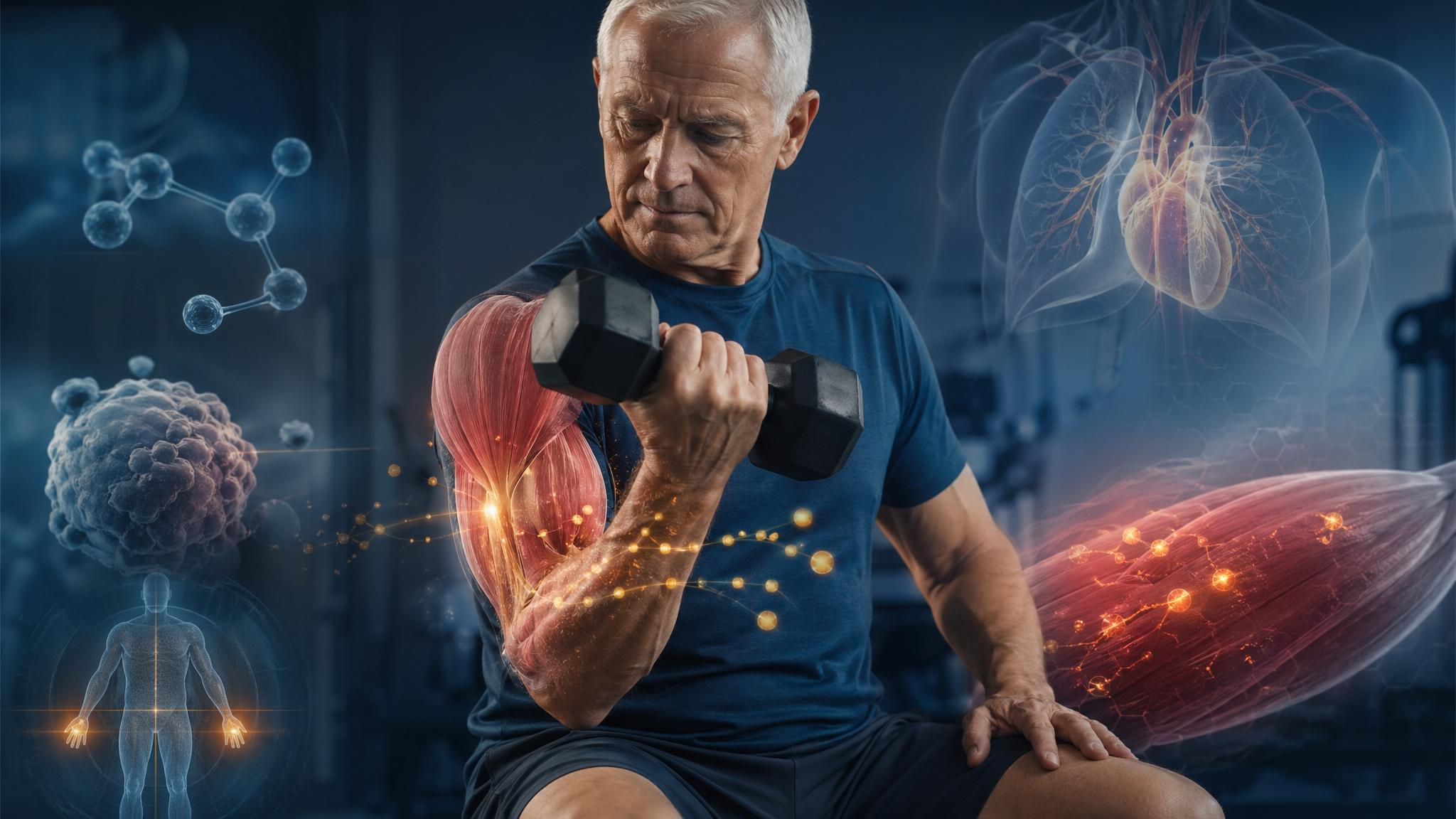
Grip Strength: The Underrated Vital Sign That Predicts Healthspan Better Than Blood Pressure
In 2015, a quiet study published in The Lancet did something the cardiology world was not prepared to see. A team led by Darryl Leong at McMaster University followed 139,691 adults across 17 countries for an average of four years. They measured the usual longevity inputs: blood pressure, body mass index, smoking history, lipid profiles. But they also did something unusual. They handed each participant a Jamar hand dynamometer and asked them to squeeze.
Presented By Our Partners



What they found rewrote the way clinicians and longevity researchers thought about a number that had been quietly hiding in plain sight. For every 5 kilogram decrease in grip strength, the risk of all cause mortality rose by 16 percent. The risk of cardiovascular death rose by 17 percent. And the predictive power of a hand squeeze, a measurement that takes about three seconds, was stronger than systolic blood pressure for forecasting who would die in the years to follow.
A decade later, with the UK Biobank, the EPIC cohort, and a wave of replications now layered on top, grip strength has become one of the most powerful and most under utilized biomarkers in medicine. It is cheap. It is fast. And it tells a story about the underlying biology of aging that no single blood test can match.
Here is what the research actually shows, why a hand squeeze maps so well onto whole body biology, and what to do about it starting today.
Why a Hand Squeeze Predicts Total Body Health
Grip strength is not really about your hands. It is a downstream signal of muscle quality, neural drive, mitochondrial density, hormonal balance, nutritional status, and chronic inflammation. When any of those upstream systems start to fail, the hands are often the first place a clinician can see it.
The PURE study, published in The Lancet by Leong and colleagues, was the first global look at this signal. Across high, middle, and low income countries, the relationship was nearly identical. Stronger grip predicted lower mortality, lower cardiovascular events, lower stroke, and lower hospitalization. The relationship held after adjusting for age, sex, education, employment, smoking, alcohol, diet, physical activity, BMI, blood pressure, diabetes, and prior cardiovascular disease. In other words, grip strength was not just a proxy for being a generally healthy person. It carried independent predictive weight.
The UK Biobank then confirmed and extended the picture. A 2018 paper in the British Medical Journal led by Carlos Celis Morales analyzed 502,293 participants. Lower grip strength was associated with higher all cause mortality, higher cardiovascular mortality, higher cancer mortality, and a striking increase in the risk of incident chronic obstructive pulmonary disease. The risk patterns were dose dependent. Each additional kilogram of grip strength was a small but real bend in the long term mortality curve.
A separate UK Biobank analysis published in Age and Ageing by Avan Aihie Sayer and colleagues confirmed that grip strength predicts a wide range of disease specific outcomes including hip fracture, type 2 diabetes, hospital admission, and even depression. The Maastricht group led by Yvonne van der Schouw has shown grip strength tracking with insulin resistance and metabolic syndrome before either is clinically apparent.
In short, when researchers go looking for a single simple measurement that carries the most signal about future health, the hand dynamometer keeps winning.
The Cognitive Connection
The grip story does not stop at the heart and the metabolism. A growing body of research connects hand strength to brain aging.
A 2022 analysis from Marco Carlier and colleagues using the UK Biobank showed that grip strength correlated with measures of executive function, processing speed, and reaction time across hundreds of thousands of adults. The Lothian Birth Cohort, run by Ian Deary and colleagues at the University of Edinburgh, has demonstrated that midlife grip strength predicts later life cognitive performance. A 2020 Journal of Aging and Physical Activity meta analysis tied lower grip strength to a meaningfully higher risk of incident dementia.
The mechanism is not a one way street between muscle and brain. Both organs share underlying biology: vascular health, mitochondrial integrity, inflammatory tone, and the molecular byproducts of muscle contraction known as myokines. When the muscles work, they release brain derived neurotrophic factor, irisin, and cathepsin B, all of which support neurogenesis and synaptic plasticity. A weaker grip is often a sign that the muscle to brain conversation has gone quiet.
Dynapenia, Sarcopenia, and the Loss of Strength With Age
The biology behind grip strength is the biology of dynapenia and sarcopenia. Dynapenia is the loss of muscle strength with age. Sarcopenia is the loss of muscle mass with age. They overlap, but they are not the same. Todd Manini and Brian Clark at the University of Florida have argued for years that dynapenia is the more clinically important of the two, because strength loss outpaces mass loss and is the variable most directly tied to falls, disability, and mortality.
Without intervention, adults lose roughly 1 to 2 percent of muscle mass per year after age 50, and 1.5 to 5 percent of strength per year. Strength fades faster than size. By age 80, a sedentary adult may have lost a third of the muscle they had at 30 and almost half of their peak strength. The grip captures this trajectory because it integrates upper limb muscle quality, motor unit recruitment, and central nervous system drive in one number.
What separates dynapenia from a normal aging story is that the trajectory is not fixed. It responds to training. It responds to protein. It responds to vitamin D and to sleep. The dynamometer is the dashboard light, but the engine can be repaired.
Why Grip Reflects Mitochondria and Metabolism
A growing literature is now connecting grip strength to mitochondrial function. The work of Iñigo San Millán on muscle bioenergetics has emphasized that mitochondrial capacity is the central engine of metabolic health, and that this capacity is reflected in both endurance and strength outputs. People with poor mitochondrial density tend to have lower grip, lower VO2 max, and worse glucose tolerance.
The same biology shows up in the cellular health literature. Inflammatory cytokines such as interleukin 6 and tumor necrosis factor alpha rise with age and impair muscle protein synthesis. Insulin resistance reduces the muscle’s ability to take up amino acids. A weaker grip is often a weaker insulin signal, a weaker immune profile, and a weaker metabolic response, all rolled into one easy to measure output.
Featured Partner
Invest in the Infrastructure Behind Modern Medicine
As healthcare expands beyond hospital walls, the buildings and campuses supporting that shift are generating compelling returns for investors who move early. The Healthcare Real Estate Fund offers qualified investors direct access to a curated portfolio of medical office, outpatient, and specialty care facilities.
Learn More →
This is why the grip number predicts so many outcomes that on the surface look unrelated. The hand is downstream of the same biology that drives cardiovascular disease, type 2 diabetes, cognitive decline, and frailty.
How Strong Is Strong Enough
Translating research into a personal target requires a few practical reference points. The most widely cited adult norms come from work by Richard Bohannon, who compiled grip strength data from healthy populations across age and sex. For middle aged men, average grip strength is roughly 100 to 110 pounds, or about 45 to 50 kilograms, on the dominant hand. For middle aged women, it is roughly 60 to 70 pounds, or about 27 to 32 kilograms.
The PURE study used a clinically relevant cutoff. Grip strength below 26 kilograms in men and below 16 kilograms in women was associated with markedly higher mortality. The UK Biobank applied a slightly different framework, with each 5 kilogram drop predicting a meaningful rise in all cause mortality risk. A reasonable healthspan target is to stay well above the population median for your age and sex, with the upper third of the distribution as a stretch goal.
For body weight loaded movements, two practical screens matter. The first is the dead hang. A healthy 40 year old should be able to hang from a pull up bar for 30 to 60 seconds. By 60, holding 20 to 30 seconds is a strong sign of preserved upper body integrity. The second is the farmer carry. Walking 30 to 50 meters with about half body weight in each hand is a useful proxy for total trunk and grip durability.
It is worth knowing that grip strength comes in three flavors, all of which respond to different stimuli. Crush grip is what a dynamometer measures. Pinch grip is what holds a heavy plate between thumb and fingers. Support grip is what carries a weighted bag for time. A complete training program touches all three, and each one slightly different in what it builds.
A Practical Training Playbook
The encouraging news in the grip strength literature is that this is one of the most trainable biomarkers in the human body. Within 8 to 12 weeks of focused work, most adults can move their grip strength substantially upward. Stuart Phillips at McMaster, Brad Schoenfeld at Lehman College, and Luc van Loon at Maastricht have all documented robust strength gains in older adults given progressive resistance training and adequate dietary protein.
A simple weekly grip training plan looks like this.
Two days a week of heavy compound lifting. Deadlifts, rows, pull ups, and overhead carries all challenge the grip indirectly while building the muscle mass that supports it. Heavy hex bar deadlifts, in particular, have been shown to build forearm and hand strength quickly because the load is held without straps for the duration of the set. The goal is mechanical tension, not novelty.
Two short grip specific sessions per week. Each session might include a 30 to 60 second dead hang, a set of farmer carries with the heaviest manageable weight, and a couple of sets of plate pinches or towel hangs. These finishers add up to roughly 10 minutes of total work but produce outsized returns over a few months.
One eccentric overload day every other week. Slow lowering pull ups, eccentric only deadlifts, and heavy holds at lockout build the connective tissue and hand integrity that protect the joints into later life. Eccentric work is also where most of the hypertrophic signal is concentrated.
Total weekly time required to move the dial on grip strength is roughly 30 to 45 minutes of focused work, layered on top of normal strength training. The return on that investment is one of the highest in the longevity literature.
Nutrition, Sleep, and the Inputs Most People Miss
Grip strength does not improve in a vacuum. The same fundamentals that protect every other system in the body protect the grip. Adequate dietary protein, in the range of 1.2 to 1.6 grams per kilogram of body weight per day, is the floor that Phillips and van Loon have repeatedly shown matters for muscle protein synthesis after age 40. Skipping breakfast protein or relying on a carbohydrate heavy lunch with little leucine often shortchanges the morning anabolic window.
Sleep matters as much as the lifting. The Stanford sleep extension studies and the Cheri Mah research on athletes show that sleep deprivation suppresses both motor unit recruitment and protein synthesis. A consistent 7 to 9 hours of sleep is the inexpensive performance enhancer that most adults under invest in.
Vitamin D status is also a quiet driver. The work of Heike Bischoff Ferrari at the University of Zurich has connected adequate 25 hydroxyvitamin D levels with better muscle function, lower fall risk, and better strength. A target of roughly 40 to 60 nanograms per milliliter is reasonable for most adults, though specific dosing should be calibrated to baseline labs and ideally guided by a clinician.
Inflammation control matters. A diet high in fiber, polyphenols, and omega 3 fatty acids reduces the chronic low grade inflammation that erodes muscle quality. Smoking, ultra processed food, and chronic alcohol use accelerate the same degradation that grip strength measures.
The Recovery Side of the Equation
Strength is built during recovery, not during training. Grip work is no different. The forearm flexors, the wrist extensors, and the small muscles of the hand fatigue and remodel slowly, and adults over 40 generally need 48 hours between heavy grip sessions for the tissue to come back stronger.
Heart rate variability tracking can help calibrate the load. A consistently suppressed morning HRV signal often means the previous training week was too aggressive. Sauna use, contrast therapy, and gentle aerobic work on rest days have all been shown to support recovery, though no recovery modality replaces sleep itself.
A practical rule of thumb is to alternate heavy grip days with lighter mobility focused work. Wrist circles, wrist flexion and extension drills, and stretching of the forearm flexors keep the tissue resilient and protect against tendinopathy as the load increases.
Why Wearables Are Catching Up to the Dynamometer
A handful of consumer devices now incorporate grip and force based metrics. Whoop, Oura, and Garmin are emphasizing strength training tracking and recovery, but the dynamometer remains the gold standard for grip itself. A reasonable home setup is an inexpensive Camry or Jamar style digital dynamometer for under 50 dollars, used once a month on each hand. The number is private, repeatable, and far more informative than most lab tests.
Pairing a monthly grip measurement with HRV trends, resting heart rate, and weekly time in zone 2 cardio gives a four variable longevity dashboard that captures most of what the modern wearable economy is trying to approximate. Adding a quarterly DEXA or InBody for body composition completes the picture.
There is also a coaching value to the dynamometer that is hard to replicate. The act of squeezing a measured device once a month, watching the number drift upward through training, and seeing the trajectory bend in the right direction over a year is one of the most reinforcing feedback loops in self quantified health.
What This Means For Your Practice
The longevity message in the grip strength literature is concrete. The biology of aging is not abstract, and it does not require expensive scans or proprietary panels to monitor. A hand squeeze, repeated quarterly, captures more about the trajectory of your healthspan than most lab tests on a typical primary care visit.
Start with these moves this week.
Buy a digital hand dynamometer. Measure both hands. Record the value. Compare against population norms for your age and sex. This becomes your baseline.
Add two short grip sessions to your week. Ten minutes each. One dead hang, one set of farmer carries with the heaviest dumbbells in your gym, one set of plate pinches. Track total time under load.
Keep your protein floor steady. Aim for 1.2 to 1.6 grams per kilogram of body weight per day, distributed across at least three meals, with a leucine rich source at breakfast.
Lift heavy at least twice a week. Deadlifts, rows, pull ups, and overhead carries. Skip the straps when the weight allows. Let the grip do the work.
Sleep 7 to 9 hours. Get morning sunlight exposure to anchor circadian rhythm. Both directly support recovery and motor unit recruitment.
Re measure your grip every 90 days. The signal will move. Stronger grip means stronger insulin signaling, better mitochondrial density, and a meaningfully lower mortality risk.
The science is unusually clear on this one. A hand squeeze is not just a hand squeeze. It is a window into the mitochondria, the muscle, and the metabolic posture of an entire body. Train it, feed it, sleep on it, and the rest of the longevity dashboard tends to follow.


Similar Posts

Oova Fertility Monitor: AI-Powered LH and Progesterone Tracking
Personalized hormone baselines, not population averages, may hold the key to solving the puzzle of unexplained infertility for millions of women. Presented By Our Partners Standard fertility testing operates on…
Oura Ring Gen 3: What HRV, Sleep Staging, and Skin Temperature Actually Tell You About Your Health
A deep look at the science behind the metrics, the clinical validation behind the device, and whether a titanium ring on your finger can actually help you live longer. Presented…

The Daily Rounds: Longevity & Health Care Brief | May 9, 2026
⚖️ Weight and Brain Age — A 24-year study finds that sustained weight management may preserve brain age by up to two years, directly slowing the rate of memory and executive function decline. 💉 Gut Bacteria Inject Proteins Into Immune Cells — Scientists discover microbes use molecular injection systems to directly modulate immune cell behavior, explaining how microbiome composition drives systemic health outcomes. 🔓 OpenBind Opens AI Drug Discovery to Everyone — A UK consortium releases the first public AI model for atomic-level protein-drug binding prediction, leveling the pharmaceutical research playing field. 📊 Wearables Predict Insulin Resistance at 80% Accuracy — The WEAR-ME study shows wearable data plus standard blood tests can identify insulin resistance years before diabetes develops, using devices most people already own. 🏋️ Grip Strength Cuts Mortality Risk by 33% in Older Women — A JAMA study of 5,000 older women finds that high grip strength independently predicts survival, even among those who do not meet aerobic exercise guidelines.
Willow Go Wearable Breast Pump: Affordable Hands-Free Pumping with App Tracking
The wearable breast pump category was born from a simple observation: the technology meant to help mothers sustain breastfeeding was itself a barrier to breastfeeding. Willow Go brings that innovation…
Dexcom G7: The Gold Standard CGM for Glucose Monitoring and Metabolic Health
A landmark study reveals that 40% of people with “normal” fasting glucose would be reclassified as prediabetic under continuous monitoring. The implications for how we measure metabolic health are profound….
The Centenarian Gut: How Bile Acids, Akkermansia, and Microbial Diversity Are Rewriting Longevity Science in 2026
New 2026 research is reshaping longevity medicine through the gut. From Kenya Honda’s discovery of isoalloLCA in Japanese centenarians, to Patrice Cani’s Akkermansia muciniphila trials at UCLouvain, to the ARMOR…
