
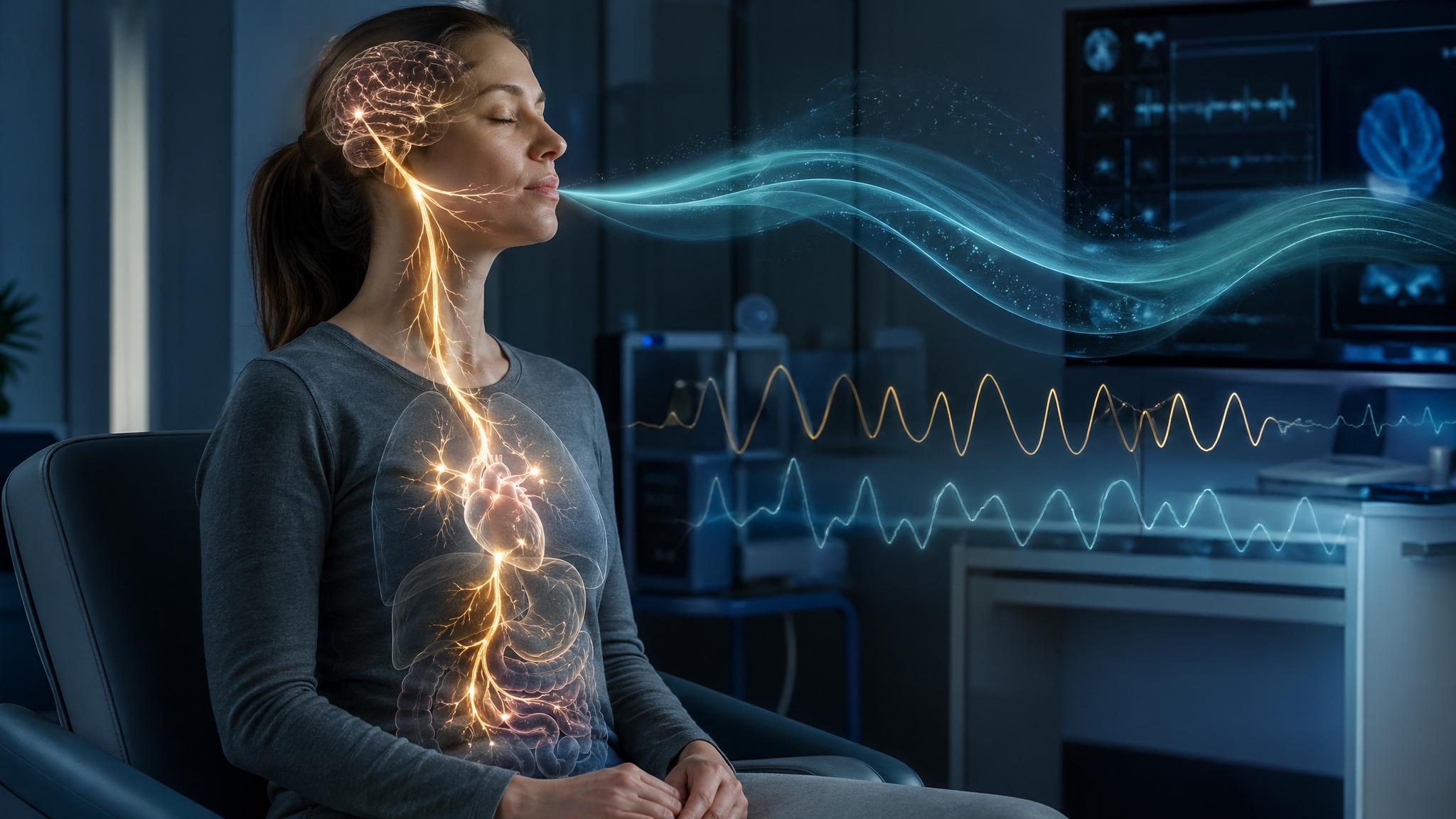
Five Minutes of Slow Breathing Rewires Your Nervous System: What a New Wave of Clinical Research Reveals About Vagal Tone, Heart Rate Variability, and the Most Underused Tool in Medicine
The most powerful intervention in stress medicine costs nothing, requires no prescription, fits inside a five-minute window, and has been hiding in plain sight for thousands of years. It is the deliberate act of slowing your breath to roughly six cycles per minute. And in 2025, the clinical evidence supporting that simple practice has crossed a threshold that demands the attention of every clinician, coach, and person who owns a pair of lungs.
Presented By Our Partners



A new scoping review published in Acta Neurologica Belgica by researchers Federica Giorgi and Roberto Tedeschi at the IRCCS Institute of Neurological Sciences in Bologna analyzed six rigorous studies on slow breathing and heart rate variability biofeedback. Every single study demonstrated significant improvements in parasympathetic nervous system activity, cardiovascular adaptability, and autonomic flexibility. The high-frequency band of heart rate variability, the gold-standard marker of vagal tone, improved across the board. Respiratory sinus arrhythmia increased in studies that emphasized longer exhalations. Baroreflex sensitivity, the cardiovascular system’s ability to correct blood pressure changes in real time, improved when slow breathing was combined with HRV biofeedback. One study even documented neural synchronization between heart rate variability and cortical brain potentials during decelerated breathing, providing some of the first direct evidence that breathing slowly literally changes the electrical conversation between your heart and your brain.
These findings did not appear in a vacuum. They landed on top of a growing mountain of evidence that has been building for years and accelerated sharply in the past 18 months. And the practical implications for how you manage stress, sleep, recovery, and long-term health are profound.
The Vagus Nerve: Your Body’s Master Recovery Channel
To understand why slow breathing works, you need to understand the vagus nerve. It is the longest cranial nerve in the human body, running from the brainstem down through the neck, chest, and abdomen, touching nearly every major organ along the way. The vagus nerve is the primary conduit of the parasympathetic nervous system, the branch of your autonomic nervous system responsible for rest, digestion, repair, and recovery.
When vagal tone is high, your heart rate slows, inflammation decreases, digestion improves, immune function strengthens, and your brain shifts toward calm, focused states. When vagal tone is low, you are stuck in sympathetic overdrive: elevated cortisol, poor sleep, chronic inflammation, impaired digestion, and a nervous system that cannot downshift even when the threat has passed.
Heart rate variability, or HRV, is the most accessible proxy for vagal tone. It measures the variation in time between successive heartbeats. Counterintuitively, more variation is better. A high HRV means your autonomic nervous system is flexible and responsive. A low HRV means it is rigid and stuck. HRV predicts cardiovascular mortality, correlates with depression and anxiety severity, and tracks closely with subjective reports of energy, resilience, and well-being.
The question that researchers have been chasing for years is deceptively simple: can you train vagal tone upward? And if so, how?
The Resonance Frequency Discovery
The answer turns out to involve a phenomenon called cardiovascular resonance. Every person has a breathing rate, typically somewhere between 4.5 and 6.5 breaths per minute, at which the natural oscillations of heart rate, blood pressure, and respiration align into a single, amplified wave. This is called the resonance frequency. Breathing at this rate maximally stimulates the baroreflex, the feedback loop between the heart and the brainstem that regulates blood pressure and heart rate on a beat-to-beat basis. Baroreflex stimulation, in turn, activates the vagus nerve.
The Giorgi and Tedeschi review confirmed this mechanism across multiple study designs. When participants breathed at or near their individual resonance frequency, parasympathetic markers surged. The effect was not subtle. High-frequency HRV, the component most tightly linked to vagal activity, increased significantly even in single-session interventions. When participants practiced daily over four to eight weeks, the gains compounded.
This is not meditation. It is not mindfulness. It is a specific physiological manipulation of the cardiorespiratory system. The distinction matters because the clinical data now show that deliberate slow breathing outperforms passive meditation on key autonomic and mood outcomes.
Stanford’s Cyclic Sighing Study: The Landmark Trial
The study that brought this science into mainstream awareness was published in Cell Reports Medicine in January 2023 by a team at Stanford University led by Melis Yilmaz Balban, Eric Neri, Manuela Kogon, and Andrew Huberman. The randomized controlled trial assigned 114 participants to one of four daily five-minute practices over 28 days: cyclic sighing (a pattern emphasizing prolonged exhalations), box breathing (equal-duration inhales, holds, and exhales), cyclic hyperventilation with retention, or mindfulness meditation.
The results were striking. All three breathwork groups showed greater improvements in positive affect, anxiety reduction, and physiological calm compared with the mindfulness meditation group. But cyclic sighing, the technique built around extended exhalation, produced the largest effects. Participants who practiced five minutes of cyclic sighing daily experienced the greatest reductions in respiratory rate at rest, the greatest improvements in mood, and the most consistent adherence to the practice.
The mechanism maps directly onto the resonance frequency research. Extended exhalation prolongs the phase of the breathing cycle during which the vagus nerve is most active. Each long exhale is a direct pulse of parasympathetic activation. Stack 30 of those pulses into a five-minute session, repeat daily for a month, and the autonomic nervous system begins to recalibrate its baseline.
Breathing Through Long COVID: Real-World Evidence
If slow breathing only worked in healthy college students, the clinical relevance would be limited. But a 2024 study published in Biomedicines by Marcella Mauro and colleagues at the University of Trieste tested resonant slow-paced breathing in healthcare workers suffering from long COVID. This was not a convenience sample of wellness enthusiasts. These were nurses and physicians dealing with persistent cognitive impairment, chest pain, chronic fatigue, headaches, and dizziness months after their initial infection.
The researchers enrolled 58 healthcare workers with long COVID and instructed them to perform resonant slow breathing using visual HRV biofeedback three times per day: morning, early afternoon, and before sleep. After just one month of home practice, the intervention group showed significant improvements in confusion and cognitive impairment, chest pain, chronic fatigue, headache, and dizziness.
The study had limitations, including modest sample size and lack of significant changes in resting cardiac parasympathetic markers, suggesting that the neurological and symptom-level benefits may precede measurable shifts in baseline autonomic tone. But the direction was clear: even in a population with profound autonomic dysfunction, a simple breathing protocol moved the needle on symptoms that had resisted other interventions.
Featured Partner
Invest in the Infrastructure Behind Modern Medicine
As healthcare expands beyond hospital walls, the buildings and campuses supporting that shift are generating compelling returns for investors who move early. The Healthcare Real Estate Fund offers qualified investors direct access to a curated portfolio of medical office, outpatient, and specialty care facilities.
Learn More →
Slow Breathing Versus Transcutaneous Vagus Nerve Stimulation
One of the most fascinating developments in this field is the emerging comparison between slow breathing and transcutaneous vagus nerve stimulation, or taVNS. Devices that deliver mild electrical stimulation to the auricular branch of the vagus nerve through the ear have become commercially available and are being tested in clinical trials for depression, anxiety, epilepsy, and inflammatory conditions.
A 2025 study published in Physical and Occupational Therapy in Pediatrics compared deep breathing exercises against taVNS in mothers of children with cerebral palsy, a chronically stressed population. Both interventions produced significant improvements in sleep quality, depressive symptoms, caregiver burden, and autonomic symptom scores. The breathing group performed comparably to the device group across most outcomes.
Meanwhile, a study published in Psychophysiology by Kaduk and colleagues found something unexpected: auricular vagus nerve stimulation actually decreased HRV markers including RMSSD, high-frequency HRV, and SDRR, contradicting the widely held assumption that taVNS increases cardiovagal activity. The authors suggested that the autonomic effects of taVNS may be more complex than previously understood and may depend heavily on stimulation parameters and individual baseline physiology.
The practical takeaway is striking. The free, zero-risk, self-administered breathing practice is matching or outperforming a technology-dependent intervention on key outcomes. And in some cases, the technology is producing autonomic effects opposite to what was expected while breathing is reliably moving the system in the intended direction.
The Anxiety Connection: From Lab to Living Room
A 2025 study published in Scientific Reports examined the acute effects of slow breathing on anxiety regulation and found that breathing at six cycles per minute significantly reduced subjective anxiety and modulated physiological arousal markers in real time. A separate study published in Frontiers in Human Neuroscience in 2025 demonstrated that slow-paced breathing at a four-second inhale and six-second exhale pattern not only reduced anxiety but enhanced midfrontal alpha asymmetry, an EEG marker associated with approach motivation and emotional resilience. The breathing pattern buffered participants’ autonomic and emotional responses to aversive visual stimuli, suggesting that slow breathing does not simply calm you down. It changes how your brain processes threats.
The implications extend to clinical populations. A 2025 randomized controlled trial of conscious connected breathwork in 107 adults with anxiety found that six weeks of structured practice produced a Cohen’s d effect size of 1.44 for anxiety reduction, a large effect by any clinical standard. The intervention group reduced anxiety scores by 10.56 points compared to 1.89 in the waitlist control.
These are not marginal findings. An effect size of 1.44 places structured breathwork in the same efficacy range as frontline pharmacological treatments for generalized anxiety, without side effects, withdrawal risk, or monthly prescription costs.
The Mechanism: Why Exhaling Longer Changes Everything
The physiological pathway is now well-characterized. During inhalation, the diaphragm descends, thoracic pressure drops, venous return to the heart increases, and the heart rate briefly accelerates. This is sympathetic activation. During exhalation, the diaphragm rises, intrathoracic pressure increases, venous return decreases, and the heart rate slows. This deceleration is driven by vagal efferent activity.
When you deliberately extend the exhalation phase, you are increasing the proportion of each breathing cycle during which the vagus nerve is actively braking the heart. At six breaths per minute with a 4:6 inhale-to-exhale ratio, you spend 60 percent of every cycle in parasympathetic dominance. Over a five-minute session, that is three full minutes of sustained vagal activation.
The baroreflex amplification adds a second layer. At resonance frequency, the oscillations of blood pressure and heart rate enter a positive feedback loop that drives HRV to its maximum amplitude. This is not relaxation in the colloquial sense. It is a cardiovascular workout for the autonomic nervous system, strengthening the neural pathways that allow rapid shifting between sympathetic and parasympathetic states. Researchers call this autonomic flexibility, and it is one of the strongest predictors of resilience, both physiological and psychological.
What the Wearable Data Confirms
The clinical research aligns with what millions of users are seeing on their wrists. Oura Ring, Whoop, Apple Watch, and Garmin devices all track HRV as a core health metric. Users who adopt consistent breathwork practices routinely report HRV increases of 10 to 30 percent over periods of four to twelve weeks. The morning HRV reading, taken during sleep or immediately upon waking, is particularly responsive because it reflects the autonomic state during the recovery window when parasympathetic activity should dominate.
Coaches and practitioners working with athletes and high-performers have noticed a pattern: the individuals who prioritize breathwork alongside their training recover faster, maintain more consistent HRV trends, and report fewer illness episodes during heavy training blocks. This is consistent with the anti-inflammatory effects of vagal activation documented in the research literature, where higher vagal tone is associated with lower circulating levels of C-reactive protein, interleukin-6, and tumor necrosis factor-alpha.
Building Your Protocol: The Evidence-Based Approach
The research converges on a clear set of parameters for an effective slow breathing practice.
Breathing rate: Aim for approximately six breaths per minute. For most adults, this means an inhale of roughly four seconds and an exhale of roughly six seconds. If six breaths per minute feels strained, start at eight and work downward over days or weeks.
Exhale emphasis: The exhale should be longer than the inhale. A 4:6 ratio is well-supported in the literature. The Stanford cyclic sighing protocol uses a double inhale (inhale through the nose, then a brief second inhale to fully expand the lungs) followed by an extended exhale through the mouth.
Duration: Five minutes is the minimum effective dose for a single session. The Stanford study used five minutes daily. The long COVID study used three sessions per day. More is generally better, up to a point of diminishing returns around 20 minutes per session.
Timing: Morning practice sets autonomic tone for the day. A session before sleep enhances the transition into parasympathetic dominance and may improve sleep onset latency and deep sleep duration. A midday session can interrupt the cortisol accumulation of a stressful workday.
Consistency: Daily practice over a minimum of four weeks is required to see baseline shifts in resting HRV and vagal tone. The Giorgi and Tedeschi review found that chronic interventions (four to eight weeks of daily practice) produced larger and more durable effects than single sessions.
Optional biofeedback: Using an HRV biofeedback app or device during practice can help identify your individual resonance frequency and provides real-time confirmation that the breathing pattern is producing the intended cardiovascular response. Apps that display real-time HRV during breathing sessions are widely available and inexpensive.
What This Means For Your Practice
The clinical evidence for slow breathing as a tool for autonomic regulation, anxiety reduction, cardiovascular health, and recovery enhancement is now too strong to dismiss as wellness culture. This is a physiological intervention with measurable, reproducible effects validated across multiple populations and study designs. Here is what to do with that evidence, starting today.
Start a five-minute daily practice this week. Set a timer. Inhale through your nose for four seconds, exhale through your nose or mouth for six seconds. Repeat for five minutes. Do not overthink technique. The extended exhale is the active ingredient.
Track your HRV. If you own a wearable device that measures HRV, note your baseline over the first week before starting the practice. After four weeks of daily breathwork, compare. Most people will see a meaningful upward trend in morning HRV readings.
Use breathing as your first-line anxiety intervention. Before reaching for a supplement, a drink, or a screen, try two minutes of slow breathing with extended exhales. The Stanford data show that even a single session produces acute improvements in mood and physiological calm. Five minutes produces effects that last hours.
Stack breathwork with your existing recovery practices. If you already prioritize sleep hygiene, nutrition, and exercise, breathwork is the missing pillar. It directly enhances the parasympathetic environment in which recovery occurs. Practice before sleep, after training, or during transitions between high-stress and low-stress periods of your day.
Consider breathwork before medication for mild to moderate anxiety. This is not medical advice to discontinue any prescribed treatment. But the effect sizes documented in recent trials place structured breathwork in the same efficacy range as first-line pharmacological treatments for anxiety, without side effects or dependency. If you are managing subclinical anxiety or stress-related symptoms, a structured breathing protocol deserves a trial before escalation.
Recognize that this is a skill, not a hack. The benefits compound over weeks and months of consistent practice. The autonomic nervous system adapts slowly. Treat breathwork like strength training for the vagus nerve: short daily sessions, progressive consistency, patience for adaptation.
The most elegant interventions in medicine are often the simplest. The research now tells us, with increasing clarity and confidence, that the way you breathe is one of the most powerful levers you have over your own biology. Five minutes a day. Six breaths per minute. Extended exhales. That is the protocol. The only question left is whether you will use it.
This article is part of the Fundamentals Bridge series at Healthcare Discovery AI, connecting cutting-edge research to the daily practices that build resilient health: nutrition, breath, recovery, and movement."


Similar Posts

The Daily Rounds: Longevity & Health Care Brief | June 3, 2026
🦠 Akkermansia Muciniphila Cuts Post-Diet Weight Regain in Half: A Nature Medicine RCT shows pasteurized Akkermansia supplementation slows weight regain and preserves insulin sensitivity during a 24-week maintenance period after dieting. 🧠 Thymus Organ Predicts Longevity and Cancer Survival: Mass General Brigham's study of over 25,000 adults links a healthy thymus to 50% lower mortality and 63% lower cardiovascular death risk throughout adulthood. 🔬 Naked Mole Rat Longevity Gene Successfully Transferred to Mice: University of Rochester demonstrates cross-species transfer of the HMW-HA-producing HAS2 gene extends median lifespan and reduces cancer risk in mice, establishing a proof of principle for interspecies longevity translation. ❤️ Ultra-Processed Foods Linked to 67% Higher Heart Attack Risk: A European Heart Journal consensus statement calls for immediate patient counseling to reduce ultra-processed food intake as a primary cardiovascular prevention measure. 😴 Weak Circadian Rhythms Drive Nearly 2.5x Dementia Risk: Neurology study confirms that circadian amplitude and timing, not just sleep hours, are major independent drivers of brain aging and dementia risk.

Nature Is Medicine: What 108 Brain-Imaging Studies Just Proved About Your Mind
New research synthesizing 108 neuroimaging studies reveals a precise cascade of measurable brain changes that begin in as little as three minutes outdoors — and the implications for your health…

BioTelemetry MCOT Patch: 30-Day Continuous ECG for Arrhythmia Detection
When a two-week cardiac monitor is not enough, the BioTelemetry MCOT Patch extends the diagnostic window to 30 continuous days of real-time ECG surveillance. Presented By Our Partners In 2019,…
Ulta Lab Tests: The Most Affordable Path to Preventive Blood Testing
Direct-access lab testing without the prescription markup. Panels from $9 to $199, nationwide availability, and the transparency that preventive health demands. Presented By Our Partners The Cost Barrier to Preventive…
Game Ready GRPro 2.1: Clinical Cold and Compression Therapy for Acute Recovery
When a professional athlete tears an ACL on the field, the first device they encounter in the training room is almost always a Game Ready. There is a reason it…
PNOĒ Portable Metabolic Analyzer: Clinical Indirect Calorimetry for Gyms and Clinics
A portable indirect calorimetry system that brings VO2max testing and resting metabolic rate measurement out of the research lab and into the gym, the wellness clinic, and the coaching studio….
