
The Daily Rounds: Longevity & Health Care Brief | April 30, 2026
Your daily briefing on the science of living longer, better. Covering the past 24 to 48 hours in longevity, medicine, and healthspan research.
Presented By Our Partners



🧠 NEUROLOGY & COGNITIVE HEALTH
🧬 SuperAgers Over 80 Produce Twice as Many New Neurons as Typical Peers
New research from Northwestern University and Harvard confirms that SuperAgers, adults over 80 who perform memory tests matching people decades younger, generate new hippocampal neurons at roughly twice the rate of cognitively healthy peers and 2.5 times the rate of Alzheimer’s patients. Researchers found two routes to SuperAger status: resistance, where brains form little to no amyloid or tau pathology, and resilience, where brains accumulate pathology but sustain function through sustained neurogenesis. Scientists say maintaining hippocampal neurogenesis may be the most measurable biological factor separating exceptional brain longevity from normal cognitive aging.
🔬 Immature Neuron Behavior Determines Whether Alzheimer’s Pathology Leads to Dementia
A Netherlands Institute for Neuroscience study published in Cell Stem Cell found that approximately 30% of older adults who carry full Alzheimer’s pathology never develop dementia, and the distinction lies not in the quantity of immature neurons but in how those neurons behave. In resilient individuals, immature neurons activate survival and anti-inflammatory programs that suppress the cell-death signals accelerating neurodegeneration in others. Researchers say this opens an entirely new class of therapeutic targets centered on immature neuron programming rather than amyloid clearance.
📌 Read more → Netherlands Institute for Neuroscience
👁️ Eye Microvascular Damage Identified as an Accessible Early Signal of Alzheimer’s Neurodegeneration
A Rutgers Brain Health Institute study found that microvascular abnormalities in the white of the eye, detected via computer-assisted intravital microscopy paired with MRI brain imaging, correlate with white matter hyperintensities and reduced gray matter in memory-critical regions. Participants with cognitive impairment also showed elevated blood homocysteine, suggesting that eye microvessel pathology combined with this amino acid marker could form a practical, noninvasive early screening panel for dementia risk. Researchers say the eye may become a standard clinical window for detecting neurodegeneration years before symptoms appear.
📌 Read more → Rutgers Brain Health Institute
❤️ CARDIOVASCULAR HEALTH
😮 Sleep Apnea Amplifies Vascular Risk by Reshaping the Gut Microbiome
A 2026 study in Frontiers in Aging Neuroscience found that obstructive sleep apnea drives significant gut microbiome composition shifts in patients with symptomatic intracranial atherosclerotic stenosis, suggesting sleep apnea compounds cerebrovascular risk through gut dysbiosis beyond its direct hypoxic effects. The three-way interaction among disrupted sleep, microbial dysregulation, and vascular inflammation is not captured by conventional cardiovascular risk scores. Researchers say aggressive sleep apnea treatment in high vascular-risk patients could produce microbiome-mediated benefits that slow atherosclerotic progression beyond what sleep improvement alone would predict.
📌 Read more → Frontiers in Aging Neuroscience
🦠 GUT MICROBIOME & IMMUNE HEALTH
☕ Daily Coffee Rewires Gut Bacteria and Modifies Memory, Mood, and Attention via the Gut-Brain Axis
A controlled human trial published in Nature Communications on April 21 found that habitual coffee intake produces distinct gut microbiome profiles and shifts cognition and mood through microbial intermediaries rather than caffeine action alone. Decaffeinated coffee improved learning and memory performance while caffeinated coffee reduced anxiety and sharpened attention, with polyphenols identified as the primary cognitive drivers. University College Cork researchers say the findings reveal previously unrecognized pathways through which one of the world’s most widely consumed beverages modifies brain function via the gut-brain axis.
📌 Read more → Nature Communications
🌙 Meta-Analysis Confirms Sleep Deprivation Consistently Disrupts Gut Microbiome Diversity
A systematic review and meta-analysis published in the Journal of Sleep Research confirmed that both acute and chronic sleep deprivation alter gut microbiome taxonomy and diversity across human and rodent studies, positioning the gut as a key mediator of the inflammatory and metabolic consequences of poor sleep. The review found that the specific species affected vary by method and duration of sleep restriction, suggesting different sleep disruption patterns produce different downstream microbial and health effects. Researchers call for human trials specifically designed to test whether microbiome-targeted interventions can break the bidirectional feedback loop between gut dysbiosis and chronic poor sleep.
Featured Partner
Invest in the Infrastructure Behind Modern Medicine
As healthcare expands beyond hospital walls, the buildings and campuses supporting that shift are generating compelling returns for investors who move early. The Healthcare Real Estate Fund offers qualified investors direct access to a curated portfolio of medical office, outpatient, and specialty care facilities.
Learn More →
📌 Read more → Journal of Sleep Research
🤖 AI IN MEDICINE & DRUG DISCOVERY
💊 Novo Nordisk and OpenAI Partner to Accelerate Drug Discovery and Transform Pharmaceutical Operations
Novo Nordisk announced a sweeping partnership with OpenAI in April 2026 to deploy AI across drug discovery, manufacturing, supply chain, and corporate operations, with full integration planned by year-end and global workforce upskilling programs rolling out in parallel. The collaboration is designed to accelerate Novo’s next-generation GLP-1 pipeline against rival Eli Lilly while reducing the time from research to patient access across all therapeutic areas. Analysts describe the deal as one of the most comprehensive AI integration commitments by a major pharmaceutical company, extending well beyond discovery into end-to-end operational transformation.
🤖 Insilico CEO: AI Has Compressed Drug Discovery from Four Years to 18 Months
Appearing on CNBC April 29, Insilico Medicine founder Alex Zhavoronkov stated that AI tools are reducing the time to reach a developmental drug candidate to approximately 18 months from more than four years using traditional methods, and that certain AI diagnostic models are approaching or exceeding physician-level performance in specific clinical domains. Biocon CEO Shreehas Tambe, also featured, stressed rigorous human oversight to validate AI-generated candidates before clinical deployment. The exchange underscores the sharpening industry debate about how much autonomous authority AI should hold in drug discovery and medical decision-making as early clinical data accumulates.
🎯 Insilico Launches TargetPro-TargetBench to Validate AI Drug Target Predictions Before Clinical Investment
Insilico Medicine released the TargetPro-TargetBench framework, pairing AI drug target prediction with a rigorous benchmarking system designed to evaluate AI-generated candidates before the expensive lead optimization stage, surfacing gene targets that conventional genome-wide association studies miss due to complex gene-interaction effects. The platform builds on the same end-to-end AI engine that moved Insilico’s ISM001-055 compound from target identification to Phase I trials in under 30 months. Researchers say validated AI benchmarking infrastructure of this type could become the pharmaceutical industry standard for de-risking AI-discovered drug candidates at the earliest possible pipeline stage.
🔬 CELLULAR HEALTH, SENOLYTICS & EPIGENETICS
🧬 Geroscience Review: Targeting Aging Biology Could Prevent Multiple Chronic Diseases Simultaneously
A landmark review in ACS Pharmacology and Translational Science argues that treating biological aging as the shared upstream driver of multiple chronic conditions, through senolytics, mTOR inhibition, and NAD+ restoration, could delay the onset of several age-related diseases simultaneously rather than managing each in isolation. The authors cite early clinical evidence from rapamycin, dasatinib-quercetin, and metformin trials as proof-of-concept that directly targeting aging mechanisms can shift multimorbidity trajectories at a population level. Researchers say reframing regulatory and insurance systems around multimorbidity prevention rather than single-disease treatment is now the most urgent policy challenge facing longevity medicine.
📌 Read more → ACS Pharmacology and Translational Science
⌚ WEARABLES, BIOMARKERS & PRECISION HEALTH
📷 Landmark UK Study Uses Wearable Cameras and Metabolomics to Reimagine Nutrition Research
A first-of-its-kind UK nutrition study is deploying wearable camera glasses to passively record all meals and beverages, combined with home blood monitoring devices and urine metabolomic analysis, across 133 adults over five weeks, building the most granular real-world picture of diet and metabolic response yet attempted. The approach replaces traditional dietary recall questionnaires with objective, device-collected data reflecting what participants’ bodies actually absorb rather than what they believe they consumed. Scientists say the methodology could set a new gold standard for precision nutrition trial design and reshape how dietary interventions are evaluated in clinical research.
📌 Read more → Nutrition Insight
🏥 Adipokines and Gut-Derived Metabolites Emerge as Precision Biomarkers for Personalized Obesity Care
A 2026 Medscape narrative review identified adipokines, inflammatory cytokines, insulin resistance indices, and gut microbiota-derived metabolites as the most promising biomarker panel for stratifying obesity risk and guiding individualized interventions beyond BMI-based assessment. The review highlights that standard BMI classification misses metabolically healthy obese individuals while failing to identify lean patients carrying high visceral fat and systemic inflammation. Researchers say incorporating this biomarker panel into routine evaluation could transform obesity management from generic lifestyle advice to precision, mechanism-targeted care pathways.
🥗 NUTRITION & METABOLIC HEALTH
🌿 Google and AMILI Launch Personalized Nutrition App Combining CGM Data and Gut Microbiome Profiling
Google announced a partnership with Singapore-based gut health company AMILI to launch AMILI Optimise, a personalized nutrition app integrating continuous glucose monitor data, gut microbiome analysis, meal photography, and self-reported questionnaires to generate individualized dietary guidance tailored to each user’s metabolic and microbial profile. The platform represents one of the first large-scale commercial deployments of microbiome-informed precision nutrition powered by AI and is set to roll out as a mobile application this month. Scientists say combining real-time CGM data with microbiome profiling addresses a core limitation of current nutrition apps, which rely on population averages rather than individual biological responses to food.
📌 Read more → NutraIngredients
🌐 2026 Healthspan Nutrition Report: Precision Platforms and Chronobiology Eating Define the New Frontier
The Global Wellness Institute’s 2026 Nutrition for Healthspan initiative identifies precision nutrition platforms integrating CGM data, gut microbiome profiling, genetics, and wearable physiological metrics as the defining shift in longevity nutrition, moving from population-level food guidelines to individualized metabolic guidance. The report also highlights chronobiology-aligned eating, including time-restricted feeding windows synchronized with circadian biology, as one of the most accessible and rapidly expanding longevity nutrition practices. Authors argue that the convergence of affordable omics testing, continuous biosensors, and AI-driven dietary coaching is bringing precision nutrition from elite clinical settings into mainstream practice.
📌 Read more → Global Wellness Institute
😴 SLEEP & CIRCADIAN HEALTH
🌙 Sleep Quality, Social Jet Lag, and Chronotype Each Linked to Distinct Gut Microbiome Compositions
A Nature Communications investigation of 6,941 Dutch adults found that specific sleep characteristics, including sleep quality, daytime sleepiness, social jet lag, and chronotype, are each associated with distinct gut microbiome compositions, suggesting that the type of sleep disruption shapes which microbial species are enriched or depleted. The findings position gut microbiome profiling as a potential sleep health indicator and point toward dietary and probiotic interventions designed to restore microbiome configurations associated with better sleep quality. Scientists say the bidirectional gut-sleep relationship may be modifiable in both directions, with microbiome-targeted strategies offering a novel nonpharmacological approach to improving sleep outcomes.
📌 Read more → Nature Communications
📌 TODAY’S TOP TAKEAWAYS
- 🧬 SuperAgers Reveal the Biology of Exceptional Brain Longevity — Adults over 80 with 50-year-old memory function produce twice as many new hippocampal neurons as peers, with resistance and resilience to Alzheimer’s pathology both playing a role in cognitive fate.
- 🤖 Novo Nordisk and Insilico Advance the AI Drug Discovery Era — Novo’s sweeping OpenAI partnership and Insilico’s new TargetPro-TargetBench framework signal that AI is moving from research novelty to core pharmaceutical operational infrastructure.
- ☕ Coffee Rewires the Gut Microbiome and Modifies Brain Function — A Nature Communications human trial confirms habitual coffee intake shifts microbial communities and alters cognition and mood through gut-brain axis pathways distinct from caffeine’s direct neurological effects.
- 🔬 Immature Neuron Behavior, Not Quantity, Determines Alzheimer’s Resilience — Netherlands researchers found that the 30% of Alzheimer’s patients who never develop dementia have immature neurons that activate protective programs, opening a new class of therapeutic targets beyond amyloid clearance.
- 🧬 Geroscience Proposes Preventing Multiple Diseases by Targeting Aging Itself — ACS Pharmacology researchers argue that senolytic, mTOR-inhibition, and NAD+ interventions targeting biological aging upstream could delay several chronic conditions simultaneously, calling for regulatory reform to support multimorbidity prevention.
Sources compiled from ScienceDaily, Netherlands Institute for Neuroscience, Rutgers Brain Health Institute, Frontiers in Aging Neuroscience, Nature Communications, Journal of Sleep Research, CNBC, EurekAlert, ACS Pharmacology and Translational Science, Nutrition Insight, Medscape, NutraIngredients, and Global Wellness Institute. Published: April 30, 2026.


Similar Posts
Luna Band: Voice-Led Recovery Wearable with No Subscription and LifeOS AI Engine
A screenless, subscription-free fitness and recovery band that uses a proprietary LifeOS AI engine to deliver real-time voice-led health guidance, processing thousands of physiological signals per minute through research-grade optical…
The Daily Rounds: Longevity & Health Care Brief | June 3, 2026
🦠 Akkermansia Muciniphila Cuts Post-Diet Weight Regain in Half: A Nature Medicine RCT shows pasteurized Akkermansia supplementation slows weight regain and preserves insulin sensitivity during a 24-week maintenance period after dieting. 🧠 Thymus Organ Predicts Longevity and Cancer Survival: Mass General Brigham's study of over 25,000 adults links a healthy thymus to 50% lower mortality and 63% lower cardiovascular death risk throughout adulthood. 🔬 Naked Mole Rat Longevity Gene Successfully Transferred to Mice: University of Rochester demonstrates cross-species transfer of the HMW-HA-producing HAS2 gene extends median lifespan and reduces cancer risk in mice, establishing a proof of principle for interspecies longevity translation. ❤️ Ultra-Processed Foods Linked to 67% Higher Heart Attack Risk: A European Heart Journal consensus statement calls for immediate patient counseling to reduce ultra-processed food intake as a primary cardiovascular prevention measure. 😴 Weak Circadian Rhythms Drive Nearly 2.5x Dementia Risk: Neurology study confirms that circadian amplitude and timing, not just sleep hours, are major independent drivers of brain aging and dementia risk.

From Prediction to Navigation: The AI Shift Healthcare Has Been Waiting For
Clinical AI has spent years predicting risk. The next test is harder: whether AI can help patients and clinicians choose the right next action and complete the path to care.

Tiny Health: The First Microbiome Test Designed for Babies, Children, and Pregnancy
Why the first 1,000 days of microbial colonization may be the most consequential window for lifelong health, and what parents can actually do about it Presented By Our Partners In…

Akkermansia Muciniphila and the New Science of Metabolic Health: What 2026 Research Reveals About the Gut Bacterium Redefining Insulin Sensitivity
Two decades after a Dutch researcher isolated a strange mucus eating bacterium from a healthy human gut, Akkermansia muciniphila has become one of the most studied targets in metabolic medicine….
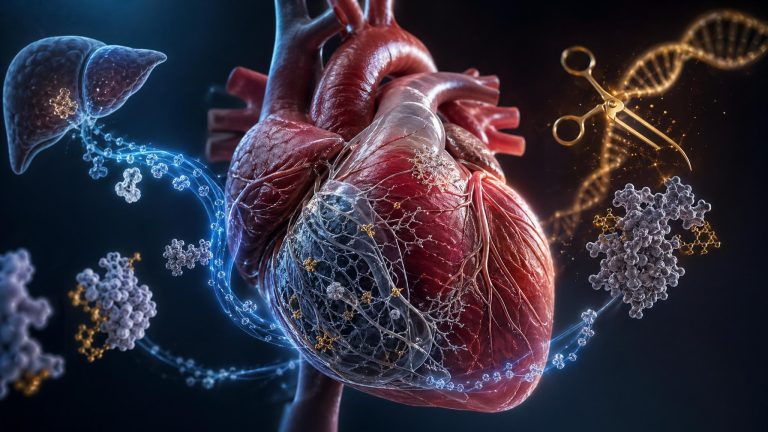
The Cardiac Amyloidosis Revolution: How ATTR Therapies Are Rewriting Heart Failure Treatment in 2026
For decades, cardiac amyloidosis was a diagnosis cardiologists whispered and patients rarely heard. In 2026, tafamidis, acoramidis, RNA silencers, and a CRISPR gene editing therapy are transforming ATTR care and…
