

Heart Rate Variability Explained: What Your HRV Score Really Means and How to Train It
The most misunderstood number on your wearable
The most misunderstood number on your wearable is also the most important. Heart rate variability, or HRV, sits at the intersection of cardiology, neuroscience, and behavioral health, and it is the single biomarker most likely to tell you, in real time, how your body is actually handling life.
Presented By Our Partners



Most people glance at their morning HRV score, see a number, compare it to yesterday, and move on. That is a missed opportunity. HRV is not a stress score. It is not a recovery score. It is a window into the autonomic nervous system, the part of you that runs your heart, your gut, your breathing, and your stress response, all without conscious thought. When you learn to read it correctly, the number on your Whoop or Oura ring stops being a daily lottery ticket and starts becoming a coaching signal you can actually train.
Here is what the research from Framingham, Stanford, the University of Eastern Finland, and the UK Biobank actually shows about HRV, what it can predict about your future, and the practical playbook that builds higher vagal tone, better recovery, and a longer healthspan.
What HRV actually measures
Take your pulse for a minute. The intervals between each beat are not perfectly even. They jitter. The size of that jitter, measured in milliseconds, is your heart rate variability.
A healthy heart is not a metronome. It is a responsive instrument that speeds up on the inhale and slows down on the exhale, modulated by two competing branches of the autonomic nervous system. The sympathetic branch, your fight or flight system, accelerates the heart. The parasympathetic branch, your rest and digest system, mediated by the vagus nerve, brakes it. The constant negotiation between those two branches is what creates variability.
When you are calm, well slept, and well recovered, the vagus nerve dominates and the spread between beats grows. HRV goes up. When you are stressed, sleep deprived, fighting an infection, drunk, dehydrated, overtrained, or grieving, the sympathetic branch dominates and the spread compresses. HRV goes down.
Different wearables report different metrics. Whoop and Oura typically use RMSSD, the root mean square of successive differences between adjacent beats, measured during sleep. Garmin and Polar often display SDNN, the standard deviation of all normal to normal intervals across a longer window. Researchers also use frequency domain measures like high frequency power, which is a cleaner reflection of vagal activity. The numbers are not directly comparable across devices. A Whoop HRV of 65 ms is not the same as an Oura HRV of 65 ms.
What matters is your trend, not the absolute number, and what that trend is telling you about your nervous system.
The vagus nerve connection
The vagus nerve is the longest cranial nerve in the body, running from the brainstem down through the neck, chest, and abdomen, and innervating the heart, lungs, gut, and most of the viscera. About 80 percent of vagal fibers are afferent, meaning they carry information from the body up to the brain, not the other way around. This is the biological basis for what people call the gut brain axis and the reason a slow exhale can calm the mind.
Stephen Porges of the University of North Carolina laid the theoretical foundation with what he called Polyvagal Theory, which framed the vagus nerve as a social engagement system, not just a parasympathetic brake. Julian Thayer at Ohio State extended this into the neurovisceral integration model, showing that high HRV correlates with prefrontal cortex activity, emotional regulation, and cognitive flexibility. When the vagus is well toned, the brain and body talk fluently. When it is suppressed, you become rigid, reactive, and inflamed.
This is not metaphor. Vagal tone, measured through HRV, is associated with lower systemic inflammation. Kevin Tracey’s laboratory at the Feinstein Institutes has spent two decades demonstrating that vagal stimulation suppresses tumor necrosis factor alpha and other inflammatory cytokines through what is now called the cholinergic anti inflammatory pathway. Implantable vagal nerve stimulators have moved from animal models into approved devices for refractory depression and rheumatoid arthritis. The mechanism your wearable is glimpsing every night is the same mechanism that surgeons are now targeting with electrodes in the operating room.
What the science says HRV predicts
The evidence on HRV as a clinical biomarker has matured rapidly. The 1996 Framingham Heart Study landmark analysis followed 2,501 men and women for four years and found that low HRV was an independent predictor of all cause mortality even after adjusting for traditional cardiovascular risk factors. A subsequent meta analysis in 2010 by Hillebrand and colleagues, pooling data from over 21,000 subjects, confirmed that low HRV was associated with a 32 to 45 percent increased risk of a first cardiovascular event.
In 2017, Fred Shaffer and J P Ginsberg published an overview in Frontiers in Public Health that has become a standard reference for the field. They reviewed the evidence linking HRV to cardiovascular disease, diabetes, depression, anxiety, post traumatic stress, asthma, and even academic performance. The pattern was consistent. Higher HRV was associated with better outcomes across nearly every domain studied.
Athletes have been using HRV for years. A 2019 systematic review in Sports Medicine by Bellenger and colleagues found that HRV guided training, where workouts are intensified on high HRV days and reduced on low HRV days, produced larger fitness gains than standard periodized training in middle distance runners and cyclists. The same approach is now showing up in clinical settings, with HRV guided cardiac rehabilitation outperforming fixed protocols in some trials.
The most striking finding from the recent literature is the cumulative effect. In a 2024 analysis from the UK Biobank cohort, individuals in the lowest quintile of HRV had a substantially higher rate of all cause mortality over a ten year follow up, after controlling for age, sex, body mass index, and exercise frequency. HRV was a stronger predictor of mortality than resting heart rate alone, which is a striking finding given how routinely doctors look at resting heart rate and how rarely they look at HRV.
Why your daily HRV score is misleading
If HRV is so meaningful, why does your morning number feel so noisy? Three reasons.
Featured Partner
Invest in the Infrastructure Behind Modern Medicine
As healthcare expands beyond hospital walls, the buildings and campuses supporting that shift are generating compelling returns for investors who move early. The Healthcare Real Estate Fund offers qualified investors direct access to a curated portfolio of medical office, outpatient, and specialty care facilities.
Learn More →
First, single day variation is enormous. A poor night of sleep, a late dinner, a glass of wine, a head cold you do not yet feel, even the position you slept in, can move HRV by 20 percent or more overnight. A single number on a single day tells you almost nothing.
Second, HRV is highly individual. The optimal range for a 30 year old elite endurance athlete might be 90 to 130 ms. The optimal range for a sedentary 60 year old might be 25 to 45 ms. Comparing yourself to anyone else is a category error. The only useful comparison is to your own baseline.
Third, high HRV is not always good. A sudden spike during acute illness can signal severe parasympathetic dominance and is sometimes seen in elite athletes deep in non functional overreaching. The pattern that matters is a stable or slowly rising baseline punctuated by clear dips after specific stressors and clear rebounds after recovery.
What you want is a 30 day rolling average that trends sideways or upward over months, with predictable acute responses to known stressors. That is the signal that your nervous system is regulated and responsive.
What crushes HRV
The list of HRV killers is essentially the list of modern lifestyle habits. The most consistent findings across the literature:
Alcohol. Even one or two drinks within four hours of bed reduces HRV through the night. Whoop’s 2022 internal analysis of more than 30 million sleeps showed a clear dose response relationship, with three drinks dropping overnight HRV by an average of around 20 percent. Many users find that one weekly drinking episode is the single largest contributor to their worst HRV nights of the month.
Late eating. A meal within three hours of bedtime elevates sympathetic activity through digestion and disrupts the early night HRV recovery window. The size of the effect tracks with meal size, glycemic load, and saturated fat content.
Insufficient sleep. Total sleep deprivation cuts HRV roughly in half. Even a single night of five or six hours produces measurable suppression the following day. Chronic short sleep produces a flattened, low HRV pattern that is among the most reliable signs of nervous system dysregulation.
Acute illness. HRV often drops 24 to 48 hours before subjective symptoms of an infection appear. This is the same pattern validated in early COVID detection studies and is the basis for Whoop’s and Oura’s illness prediction features.
Chronic stress. Cortisol and catecholamine elevation, sustained over weeks or months, produces a downward HRV drift that correlates strongly with burnout markers, depression scores, and inflammatory biomarkers.
Overtraining. High training load without adequate recovery suppresses HRV. The pattern is paradoxical at first. Fit athletes have high HRV at rest and high HRV adaptability under load. The first sign of non functional overreaching is a flattening of that adaptability, with a baseline that drifts down despite continued training. Coaches who track HRV across teams routinely see it pick up overreaching seven to ten days before performance markers fall.
What builds HRV over time
The good news is that HRV is exquisitely trainable. The intervention list overlaps significantly with the longevity playbook.
Slow paced breathing. The single most replicated finding in HRV training research is that slow breathing at five to six breaths per minute, with a longer exhale than inhale, increases HRV in real time and raises baseline vagal tone over weeks of practice. Resonance frequency breathing, popularized by Paul Lehrer at Rutgers, is the most studied protocol. Twenty minutes a day for four to six weeks produces measurable gains.
Zone 2 cardio. Low intensity steady state aerobic work, performed below the first lactate threshold, builds parasympathetic capacity by training the heart to be efficient at rest. The Norwegian and Spanish endurance science traditions are built on this principle. Three to four hours per week is the consensus minimum dose, and a meaningful portion of that benefit shows up first in baseline HRV before it shows up in race performance.
Sleep regularity. The recent UK Biobank study on the Sleep Regularity Index found that consistency of sleep timing was a stronger predictor of mortality than sleep duration. Regular sleep raises HRV. Erratic sleep flattens it. The implication is that going to bed at midnight every night may serve your nervous system better than going to bed at ten one night and two the next.
Cold exposure. Acute cold immersion, in the two to three minute range at water temperatures around 10 to 15 degrees Celsius, produces a rebound elevation in vagal tone that can persist for several hours. The chronic effect on baseline HRV is more modest but consistent across the small randomized trials available. The mechanism likely involves catecholamine spike followed by parasympathetic rebound.
Sauna bathing. The Finnish KIHD study cohort of 2,315 men, followed for over twenty years by Jari Laukkanen at the University of Eastern Finland, found that frequent sauna users had lower cardiovascular and all cause mortality. HRV is one of the proposed mechanisms, alongside heat shock protein induction and cardiovascular conditioning.
Social connection. Bethany Kok and Barbara Fredrickson’s work at the University of North Carolina found that loving kindness meditation and positive social interaction produced measurable increases in vagal tone over six weeks of practice. Loneliness, by contrast, suppresses HRV at a population level. The vagus is, among other things, the nerve of belonging.
Meditation. A 2018 meta analysis in the Journal of Psychosomatic Research found that mindfulness based interventions produced small to moderate increases in HRV across 19 studies. The effect was strongest in clinical populations and in protocols that emphasized breath awareness over open monitoring.
Wearable accuracy: what to trust
The validation literature on consumer wearables is now substantial enough to draw clear conclusions. Whoop, Oura, Polar H10, and Garmin’s chest strap accessories produce HRV measurements that correlate at r equals 0.85 to 0.95 with research grade ECG when measured under standardized conditions, typically during sleep.
Wrist worn devices using photoplethysmography are less reliable during waking activity due to motion artifact, but their overnight HRV captures are clinically useful. The key is consistency. Pick one device, wear it the same way every night, and look at the trend.
Smart rings and chest straps remain the most accurate categories. Smartwatches are generally accurate for sleep HRV but should not be relied on for spot checks during the day. The 2023 Stanford Wearables Performance Review remains one of the best single comparisons of consumer device accuracy across HRV, sleep staging, and SpO2 metrics.
What This Means For Your Practice
The five action items most likely to move your HRV in the right direction over the next 90 days:
Build a 30 day HRV baseline before judging anything. Wear your device every night for a month. Look at the rolling average, not the daily score. The variability of the daily number should make you skeptical of any one reading.
Practice slow breathing for ten minutes a day. Use a resonance frequency app or simply inhale four seconds, exhale six seconds, for ten minutes either before bed or on waking. This is the single highest yield intervention in the published literature.
Stop drinking alcohol within four hours of bed and ideally limit total intake to two drinks or fewer per week. The HRV cost of alcohol is steeper than most people realize, and a single night of heavy drinking can undo a week of recovery practice.
Move your last meal earlier. Aim for three hours between dinner and lights out. The metabolic and nervous system benefits compound. Your sleep HRV typically rises within a week.
Add three sessions of zone 2 cardio per week, 45 to 60 minutes each. This is the foundation of long term parasympathetic capacity. It does not need to be hard. It needs to be consistent.
The promise of HRV is not that you will hack your way to a higher number. The promise is that, for the first time in human history, the autonomic nervous system has become observable in daily life. With a little patience, the noise resolves into signal, and the signal points consistently back to the fundamentals: sleep, breath, movement, recovery, and connection. The number is just the messenger.


Similar Posts

Mitochondrial Transplantation Enters Human Trials: How Moving Living Powerhouses Between Cells Is Rewriting Longevity Medicine
Mitochondrial transplantation, once a fringe idea, is now being tested in human clinical trials for heart failure, stroke, and age-related cellular decline. A new wave of 2026 research shows that…

Senolytics in 2026: Inside the Clinical Trials Targeting Zombie Cells to Extend Healthy Lifespan
More than 30 senolytic and senomorphic clinical trials are now active, spanning diabetic macular edema, pulmonary fibrosis, osteoarthritis, and frailty. Inside the science of zombie cells, the first-generation compounds from…
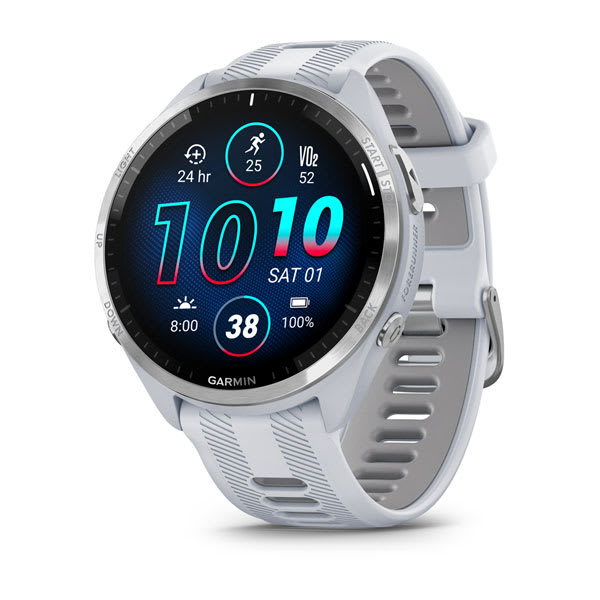
Garmin Forerunner 965 Review: The Most Accurate Wrist Based VO2 Max Estimate for Serious Endurance Athletes
Garmin’s flagship running watch pairs Firstbeat analytics with an AMOLED display to deliver the most comprehensive wrist based cardiorespiratory fitness tracking available. Presented By Our Partners Product status update, August…

MIR Smart One Spirometer Review: The Most Portable FDA Cleared Spirometer for Telehealth and Daily Lung Monitoring
Pocket sized, Bluetooth connected, and FDA cleared, the MIR Smart One puts clinical spirometry in a form factor smaller than a smartphone. Presented By Our Partners The history of spirometry…
PNOĒ Portable Metabolic Analyzer: Clinical Indirect Calorimetry for Gyms and Clinics
A portable indirect calorimetry system that brings VO2max testing and resting metabolic rate measurement out of the research lab and into the gym, the wellness clinic, and the coaching studio….
SelfDecode: AI-Powered DNA Analysis and Personalized Health Recommendations From Your Existing Genetic Data
Upload your existing genetic data from 23andMe or AncestryDNA and unlock over 100 AI-generated health reports with personalized supplement and lifestyle recommendations. But how much clinical weight should you give…
