

Zio Patch by iRhythm: Gold-Standard 14-Day Continuous Ambulatory ECG Monitor
Atrial fibrillation is the most common cardiac arrhythmia, affecting an estimated 6 million Americans, but its intermittent nature means that traditional 24 to 48 hour Holter monitors miss the majority of episodes. A 14-day continuous ECG patch, analyzed by artificial intelligence, fundamentally changes the diagnostic yield.
Presented By Our Partners



Cardiac arrhythmias are, by nature, elusive. A patient experiences palpitations, dizziness, or unexplained syncope, visits a cardiologist, and receives a standard 12-lead ECG that captures perhaps 10 seconds of cardiac rhythm. If the arrhythmia is not occurring during those 10 seconds, the ECG is normal and the diagnosis is missed. Holter monitors extend the recording window to 24 to 48 hours, but research consistently shows that many clinically significant arrhythmias, particularly paroxysmal atrial fibrillation (PAF), occur less frequently than every two days. A landmark study by iRhythm demonstrated that the Zio Patch’s 14-day continuous monitoring period detected arrhythmias in 63% of patients referred for ambulatory monitoring, compared to significantly lower detection rates with traditional 24-hour Holter monitors. The Zio Patch, developed by iRhythm Technologies, has become the most widely prescribed ambulatory ECG monitor in the United States, fundamentally shifting clinical practice from short-window monitoring to extended continuous recording analyzed by AI-assisted algorithms.
What Is the Zio Patch?
The Zio Patch is a single-lead, adhesive ECG monitor worn continuously on the chest for up to 14 days. The device records every heartbeat during the monitoring period, generating a continuous ECG dataset of approximately 1.5 million heartbeats. After the wear period, the patient mails the patch to iRhythm’s clinical analytics center, where the ZEUS (Zio ECG Utilization Software) AI platform analyzes the entire recording, flagging arrhythmia events including atrial fibrillation, atrial flutter, supraventricular tachycardia (SVT), ventricular tachycardia (VT), premature ventricular complexes (PVCs), and bradyarrhythmias.
A board-certified cardiac technician reviews the AI-flagged events, and the final report is delivered to the ordering physician within 48 hours of patch receipt. The report includes a comprehensive arrhythmia summary, heart rate trends, symptom-event correlation (the patient can press a button on the device to mark symptomatic episodes), and AF burden quantification (total time in atrial fibrillation as a percentage of the monitoring period).
The Zio Patch is FDA cleared as an ambulatory ECG monitor (Class II medical device) and requires a physician’s prescription. It is covered by most major insurance plans, including Medicare. Out-of-pocket cost for uninsured patients ranges from approximately $300 to $500. The device is waterproof and designed for continuous wear during all daily activities including showering and light exercise.
The Science Behind Extended Ambulatory ECG Monitoring
The clinical rationale for extended ambulatory monitoring rests on the temporal characteristics of cardiac arrhythmias. Atrial fibrillation, the most clinically important arrhythmia for both its prevalence and its stroke risk implications, often occurs in paroxysmal episodes lasting minutes to hours. Between episodes, the heart rhythm is normal and the ECG is unremarkable. The probability of capturing a paroxysmal episode is directly proportional to the monitoring duration: longer recording periods yield higher diagnostic sensitivity.
Studies comparing monitoring durations have consistently demonstrated this relationship. Research published in the Journal of the American College of Cardiology found that extending monitoring from 24 hours (standard Holter) to 14 days (Zio Patch) significantly increased arrhythmia detection rates. The incremental yield is not linear; the greatest diagnostic gains occur in the first 7 to 10 days, with diminishing but still meaningful returns through day 14.
The AI component is clinically important. A 14-day continuous ECG recording generates an enormous dataset that would take a human technician hours to review manually. iRhythm’s ZEUS algorithm processes the entire recording, classifying each heartbeat and identifying rhythm patterns that correspond to specific arrhythmias. The AI serves as a high-sensitivity screening filter, flagging events for human review rather than replacing human interpretation. This hybrid AI-plus-human workflow balances computational efficiency with clinical accuracy.
Atrial fibrillation detection has particular clinical urgency because undiagnosed AF is a major risk factor for ischemic stroke. AF increases stroke risk approximately fivefold, and anticoagulation therapy reduces stroke risk by 60 to 70%. Every undiagnosed AF episode represents an unmitigated stroke risk. Extended monitoring that detects previously unknown AF can therefore lead to anticoagulation initiation that meaningfully reduces a patient’s stroke and mortality risk.
That is the science. Here is how the Zio Patch applies it.
What the Zio Patch Does Well
The Zio Patch’s 14-day continuous recording represents a tenfold increase in monitoring duration compared to standard 24-hour Holter monitors. This extended window dramatically increases the probability of capturing intermittent arrhythmias, which is the fundamental diagnostic challenge in ambulatory cardiac monitoring. For patients with infrequent symptoms (episodes occurring every few days to every few weeks), the Zio Patch provides the recording duration necessary for diagnosis.
The single-lead, adhesive form factor is a significant usability advancement over traditional Holter monitors, which require multiple lead wires, a recording box clipped to a belt, and careful electrode management. The Zio Patch is a single, small adhesive device worn on the left pectoral area. Patients can shower with it, exercise with it, and sleep with it without managing wires or equipment. This ease of use directly improves patient compliance, which translates to more complete data and higher diagnostic yield.
The AI-assisted analysis pipeline (ZEUS) processes the massive 14-day dataset with consistency and speed that manual analysis cannot match. The hybrid model, AI flagging with human technician review, maintains clinical accuracy while reducing turnaround time. Reports are typically delivered within 48 hours of patch receipt, enabling rapid clinical decision-making.
The AF burden quantification is a clinically valuable metric. Rather than simply identifying the presence or absence of AF, the Zio report quantifies total AF time as a percentage of the monitoring period. This burden metric informs treatment decisions: a patient with 0.5% AF burden may be managed differently than one with 15% burden, even though both have AF.
Featured Partner
Invest in the Infrastructure Behind Modern Medicine
As healthcare expands beyond hospital walls, the buildings and campuses supporting that shift are generating compelling returns for investors who move early. The Healthcare Real Estate Fund offers qualified investors direct access to a curated portfolio of medical office, outpatient, and specialty care facilities.
Learn More →
Pricing, Access, and Practical Realities
The Zio Patch is a prescription medical device, not a consumer product. It is ordered by a physician (typically a cardiologist, electrophysiologist, or primary care provider) for specific clinical indications including palpitation evaluation, syncope workup, post-ablation monitoring, cryptogenic stroke evaluation, and AF screening in high-risk patients.
The device is covered by most major insurance plans, including Medicare and Medicaid in most states. For insured patients, out-of-pocket cost depends on individual plan copay and deductible structures. For uninsured patients, the out-of-pocket cost ranges from approximately $300 to $500, which includes the device, the 14-day monitoring period, and the AI-assisted clinical report.
The Zio Patch is FDA cleared as a Class II ambulatory ECG monitor. The ZEUS AI analysis platform has been validated against board-certified electrophysiologist readings. iRhythm is the largest ambulatory cardiac monitoring service in the United States, processing over one million Zio recordings to date. This scale provides a training dataset for the AI algorithms that smaller competitors cannot match.
The device is designed for single use. After the 14-day wear period, the patient removes the patch and mails it to iRhythm in a prepaid envelope. The recording is uploaded, analyzed, and the report is delivered electronically to the ordering physician. The patient does not receive the report directly; it flows through the physician for clinical interpretation and follow-up.
Who the Zio Patch Is Best For
The Zio Patch is indicated for patients with suspected cardiac arrhythmias who need extended monitoring to capture intermittent events. The most common clinical indications include unexplained palpitations, syncope or presyncope evaluation, post-cardiac ablation monitoring, cryptogenic stroke evaluation (searching for undiagnosed AF as the stroke mechanism), and AF burden assessment for treatment management.
Patients with daily symptoms may be adequately served by 24 to 48 hour Holter monitors. The Zio Patch’s extended monitoring is most valuable when symptoms are infrequent (weekly or less) and standard Holter monitoring has failed to capture events. Post-stroke patients represent a particularly high-value population, as AF detection in this group directly leads to anticoagulation therapy that reduces recurrent stroke risk.
The Zio Patch is not a consumer wellness device. It is not available for self-purchase and is not appropriate for general cardiac screening in asymptomatic individuals without a clinical indication. Consumer wearables (Apple Watch, KardiaMobile) serve the personal ECG monitoring market; the Zio Patch serves the clinical diagnostic market.
How the Zio Patch Compares
The BioTelemetry MCOT Patch (Philips) offers 30-day continuous monitoring with real-time transmission capability, allowing immediate alert notification when dangerous arrhythmias are detected. The MCOT system is superior for high-risk patients who need real-time monitoring (post-cardiac arrest, symptomatic VT), while the Zio Patch is optimized for comprehensive retrospective analysis of the full 14-day recording. The MCOT’s 30-day duration captures longer observation windows but at higher cost and with a larger, more complex device.
Traditional Holter monitors (24 to 48 hours) remain appropriate for patients with daily or near-daily symptoms where extended monitoring is unnecessary. Holters are less expensive and widely available, but their short monitoring window means they miss intermittent arrhythmias that the Zio Patch would capture.
Consumer ECG devices (Apple Watch, KardiaMobile by AliveCor) provide spot-check, single-lead ECG recordings initiated by the user. These are useful for symptom-triggered recording but capture only seconds to minutes of data and cannot provide the continuous, multi-day recording that the Zio Patch delivers. Consumer devices are screening tools; the Zio Patch is a diagnostic instrument.
Limitations and Open Questions
The Zio Patch records a single ECG lead, which limits its ability to localize arrhythmia origins or evaluate complex rhythm disturbances that require multi-lead analysis. For detailed arrhythmia characterization, in-hospital multi-lead monitoring or implantable loop recorders may be necessary.
The retrospective analysis model means that results are not available until after the monitoring period ends and the patch is mailed, received, and processed. Patients experiencing potentially dangerous arrhythmias during the monitoring period do not receive real-time alerts. For high-risk patients who need immediate notification of life-threatening rhythms, real-time monitoring systems (BioTelemetry MCOT, implantable cardiac monitors) are more appropriate.
Skin adhesive wear for 14 continuous days causes irritation in some patients, particularly those with sensitive skin. Adhesive failure before the full 14 days can reduce the monitoring window and diagnostic yield. Physical activities involving heavy sweating or prolonged water submersion may accelerate adhesive degradation.
The prescription-only access model means patients cannot self-refer for monitoring. Clinical gatekeeping ensures appropriate use but may delay diagnosis for patients who have difficulty accessing cardiology appointments.
What This Means for Your Health
Cardiovascular disease is the first of the Four Shadows in Healthcare Discovery‘s longevity framework, and atrial fibrillation is one of its most insidious manifestations. AF increases stroke risk fivefold, but because it is intermittent, it often escapes detection until a stroke occurs. The Zio Patch represents a direct intervention in this diagnostic gap: by extending the observation window from hours to weeks and applying AI to analyze every heartbeat, it catches arrhythmias that shorter monitoring periods miss.
The broader longevity implication is that diagnostic technology directly enables preventive therapy. Every case of AF detected by the Zio Patch represents a patient who can start anticoagulation therapy before a stroke occurs. The downstream impact, strokes prevented, disabilities avoided, years of independent living preserved, is the kind of measurable health outcome that justifies the investment in clinical-grade monitoring technology.
Within the Five Pillars framework, cardiac rhythm integrity connects to movement (arrhythmia-limited exercise capacity), sleep (AF is associated with sleep apnea and nocturnal arrhythmias), and mindset (the anxiety of unexplained palpitations affects quality of life). Resolving diagnostic uncertainty through definitive monitoring provides both clinical data and psychological relief.
The Zio Patch is not a consumer device, and most people will never need one. But for the millions of Americans with unexplained palpitations, unexplained syncope, or undiagnosed stroke mechanisms, it represents the difference between diagnostic uncertainty and a definitive answer. In cardiovascular medicine, that answer often arrives with a treatment that changes the trajectory of a life.
Frequently Asked Questions
How long do you wear the Zio Patch?
The Zio Patch is worn continuously for up to 14 days. It records every heartbeat during this period, generating a continuous ECG dataset. The device is waterproof and designed for 24/7 wear during all daily activities including showering and light exercise. After 14 days, the patient removes the patch and mails it to iRhythm for AI-assisted analysis.
Does insurance cover the Zio Patch?
Yes. The Zio Patch is covered by most major insurance plans, including Medicare. Out-of-pocket cost depends on individual plan copay and deductible structures. For uninsured patients, the cost ranges from approximately $300 to $500, including the device, monitoring period, and clinical report. A physician’s prescription is required.
How does the Zio Patch compare to a Holter monitor?
The Zio Patch records for up to 14 continuous days versus 24 to 48 hours for a standard Holter monitor. This extended duration significantly increases the probability of capturing intermittent arrhythmias. The Zio Patch is also smaller, wireless, waterproof, and more comfortable than traditional Holter systems, which require multiple leads and an external recording device.
Can the Zio Patch detect atrial fibrillation?
Yes. Atrial fibrillation detection is one of the Zio Patch’s primary clinical applications. The AI-assisted analysis identifies AF episodes and quantifies AF burden (total time in AF as a percentage of the monitoring period). The Zio Patch has been validated against electrophysiologist interpretation and has processed over one million recordings, providing the largest ambulatory ECG dataset in the world.
Is the Zio Patch available without a prescription?
No. The Zio Patch is a prescription medical device ordered by a physician for specific clinical indications. It is not available for consumer self-purchase. Patients who want personal ECG monitoring without a prescription should consider consumer devices like the Apple Watch or KardiaMobile, which provide spot-check ECG recordings for personal wellness use.


Similar Posts

AI Case Finding: The Healthcare Delivery Use Case That Finds Patients Medicine Keeps Missing
AI case finding may be one of the most important healthcare delivery use cases of 2026: finding patients who already qualify for proven care but remain invisible to the system.

The Daily Rounds: Longevity & Health Care Brief | May 29, 2026
🧠 Blocking Parkinson's Spread Protein — Penn Medicine researchers identified GPNMB as the key driver of alpha-synuclein propagation in Parkinson's disease, with monoclonal antibodies successfully halting the spread in preclinical models and opening the first potential disease-modifying treatment pathway. 🔬 FDA Approves First Epigenetic Reprogramming Trials — The FDA greenlit the first human trials testing partial epigenetic reprogramming as an anti-aging intervention, marking the most significant regulatory milestone for longevity medicine in years. 🤖 GLP-1 Drugs Show Cancer Prevention Signal at ASCO 2026 — Opening-day research at the world's largest oncology conference showed GLP-1 receptor agonists reduce breast cancer incidence in high-risk women, extending the drugs' clinical case well beyond weight management. 🧠 Long COVID Is Not Brain Inflammation — A landmark neuroimaging study found no widespread brain inflammation in long COVID patients, redirecting research and treatment toward stress-response and emotional regulation pathways instead. 🥗 Microbiome Ranking Links Gut Species to Longevity — A 34,000-person study produced the first species-level gut microbiome ranking tied to longevity markers, providing a precision nutrition framework for designing diets that specifically promote healthspan.

The Omega 3 Index: What 20 Years of Research Reveal About the Blood Marker Modern Medicine Still Underuses
A 2004 Harris and von Schacky proposal in Preventive Medicine turned omega 3 status into a measurable, modifiable blood marker. Two decades of cohort and trial evidence, from VITAL to…

Your Gut Microbiome Is Talking to Your Brain, Heart, and Kidneys: Five 2026 Studies Reveal the Body’s Hidden Communication Network
A Stanford Nature study shows gut bacteria drive age-related memory loss through vagus nerve inflammation, while new research in Nature Communications, npj Biofilms and Microbiomes, and Microbiology Spectrum reveals that…
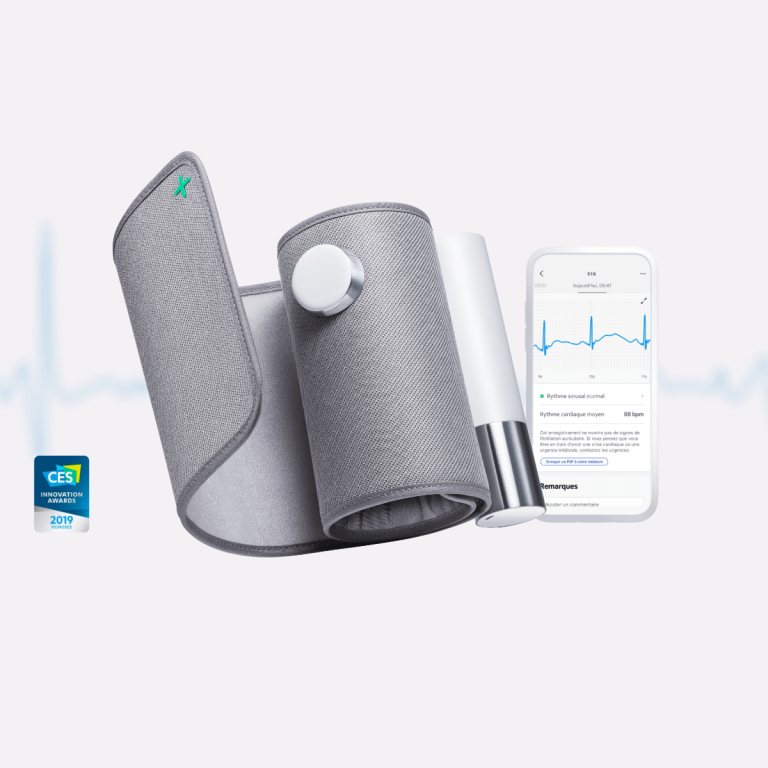
Withings BPM Core: Blood Pressure, ECG, and Digital Stethoscope in One Device
The most comprehensive home cardiac monitor available combines blood pressure measurement, a single lead ECG, and a digital stethoscope for valvular heart disease screening in a single arm cuff. Presented…

Perifit Pelvic Floor Trainer: Biofeedback Kegel Device with Gamified App
Roughly one in three women will experience pelvic floor dysfunction in her lifetime. The treatment is deceptively simple: strengthen the muscles through targeted exercise. The challenge is that most women…
