
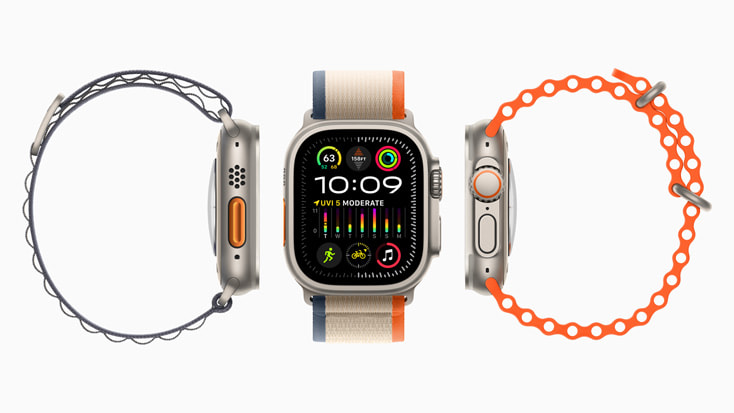
Apple Watch Ultra 2: Rugged Cardiovascular Monitoring for Extreme Environments
The athletes who push hardest against physical limits are often the last to discover cardiac abnormalities. A medical-grade heart monitor built to survive their training may be exactly what they need.
Presented By Our Partners



Endurance athletes face a paradox that the broader medical research community has documented extensively. Regular vigorous exercise is one of the most protective factors against cardiovascular disease and all-cause mortality, yet sustained high-intensity training can remodel the heart in ways that increase the risk of atrial fibrillation, particularly in athletes over 40. Studies of marathon runners, ultra-endurance cyclists, and elite triathletes have found AF prevalence rates two to five times higher than the general population. The mechanism appears related to atrial stretch, fibrosis from repeated high-volume training loads, and autonomic nervous system adaptations that create the substrate for arrhythmia.
For these athletes, a cardiac monitoring device needs to survive their environment: saltwater immersion, extreme temperatures, impact, altitude, and multi-day expeditions without access to a charger. The Apple Watch Ultra 2 is Apple’s answer to this need, packaging the same FDA-cleared health monitoring features found in the Series 9 into a 49mm titanium case rated to 100 meters of water resistance, with a 36-hour battery (up to 72 hours in low power mode), a depth gauge, water temperature sensor, and the brightest display Apple has ever shipped. It is the most rugged FDA-cleared cardiac monitor available in a consumer wearable.
What Is the Apple Watch Ultra 2?
The Apple Watch Ultra 2 is Apple’s premium adventure smartwatch, built on the same S9 chip and health sensor platform as the Series 9 but housed in a 49mm Grade 5 titanium case with a flat sapphire crystal display rated at 3,000 nits peak brightness. It is designed for outdoor athletes, divers, and adventurers who need a device that can survive conditions that would destroy standard smartwatches.
The health monitoring suite is identical to the Series 9: electrical heart sensor for single-lead ECG, optical heart rate sensor for continuous HR and HRV, blood oxygen sensor (SpO2), wrist temperature sensor, FDA-cleared ECG with atrial fibrillation detection, AFib History, hypertension notifications, irregular rhythm notifications, sleep apnea notifications, fall detection, and crash detection. The Ultra 2 adds a depth gauge accurate to 40 meters (recreational diving limit), a water temperature sensor, and a customizable Action Button that can be mapped to workouts, waypoints, or other functions.
Battery life reaches approximately 36 hours in standard use and up to 72 hours in low power mode, roughly double the Series 9. The Ultra 2 is priced at $799 and requires an iPhone for setup and operation.
The Science Behind Cardiac Monitoring in Athletes
The intersection of endurance athletics and cardiac risk is one of the most active research areas in sports cardiology. While moderate exercise unequivocally reduces cardiovascular mortality, the relationship between extreme training volumes and cardiac health follows a J-curve: beyond a certain threshold, additional training volume may increase arrhythmia risk, particularly atrial fibrillation.
According to PubMed, the BASEL Wearable Study (2023) published in JACC: Clinical Electrophysiology by Mannhart et al. validated consumer smartwatch ECG accuracy for AF detection in 201 cardiology patients, finding that the Apple Watch achieved 85% sensitivity and 75% specificity. The study also found that 18% of Apple Watch tracings were inconclusive, requiring physician review (DOI). For athletes, the ability to capture an ECG tracing during or immediately after a symptomatic episode (palpitations during a run, irregular heartbeat during recovery) provides data that can guide clinical evaluation.
A 2019 study published in Circulation: Arrhythmia and Electrophysiology by Wasserlauf et al. demonstrated 97.5% sensitivity for detecting AF episodes lasting one hour or longer when comparing a smartwatch system against an implanted cardiac monitor over 31,348 hours of simultaneous recording (DOI). This level of sensitivity in ambulatory monitoring is particularly relevant for athletes who may experience intermittent AF triggered by specific training intensities or dehydration states.
VO2 max, which the Apple Watch Ultra 2 estimates through its optical heart rate sensor and motion algorithms, is recognized by the broader medical research community as one of the strongest predictors of all-cause mortality across all age groups. A 2022 meta-analysis spanning over 750,000 participants found that each 1 MET increase in cardiorespiratory fitness was associated with a 13% reduction in all-cause mortality and a 15% reduction in cardiovascular mortality. For athletes who already have high VO2 max, tracking this metric over years provides early warning of cardiovascular or pulmonary decline.
That is the science. Here is how the Apple Watch Ultra 2 applies it.
What the Apple Watch Ultra 2 Does Well
The Apple Watch Ultra 2 excels where durability meets health monitoring. Its titanium construction and 100-meter water resistance mean that the same FDA-cleared ECG available in the Series 9 can now accompany athletes into environments where other medical wearables would fail: open water swimming, surfing, diving to 40 meters, mountain climbing in freezing temperatures, and multi-day backcountry expeditions.
The 36-hour battery (72 hours in low power mode) is a critical health monitoring advantage for multi-day adventures. An ultramarathon runner can track heart rate, HRV, and activity through an entire race and recovery period without charging. A mountaineer can maintain cardiac surveillance through a multi-day summit attempt. This extended battery life transforms the Ultra 2 from a daily health tracker into an expedition health monitor.
The 3,000-nit display ensures readability in direct sunlight, a practical necessity for outdoor athletes who need to check health metrics mid-activity. The Action Button provides one-press access to workout tracking, enabling immediate data capture when symptoms occur during activity.
The depth gauge and water temperature sensor make the Ultra 2 one of the few health monitoring devices that functions as a dive computer, tracking depth, water temperature, and cardiac metrics simultaneously during recreational dives. For dive-medicine applications, the ability to correlate heart rate and rhythm data with depth profiles offers research and personal safety possibilities that did not previously exist in a consumer device.
Featured Partner
Invest in the Infrastructure Behind Modern Medicine
As healthcare expands beyond hospital walls, the buildings and campuses supporting that shift are generating compelling returns for investors who move early. The Healthcare Real Estate Fund offers qualified investors direct access to a curated portfolio of medical office, outpatient, and specialty care facilities.
Learn More →
Pricing, Access, and Practical Realities
The Apple Watch Ultra 2 is priced at $799, making it the most expensive mainstream health smartwatch. Apple Fitness+ is available as an optional subscription at $9.99/month or $79.99/year but is not required for any health monitoring feature. First-year cost of ownership ranges from $799 (no subscription) to approximately $879 (with Fitness+ annual). This is a significant premium over the Series 9 ($399) for the same health sensor suite.
The Ultra 2 carries the same FDA clearances as the Series 9: 510(k) clearance for ECG, AFib detection, AFib History, hypertension notifications, and irregular rhythm notifications. Sleep apnea notifications are available for Series 9 and later, including the Ultra 2. The device requires an iPhone 8 or later.
HSA/FSA eligibility is possible with a Letter of Medical Necessity, with the same considerations as the Series 9. The $400 premium over the Series 9 may be harder to justify from a pure health monitoring standpoint unless the physician’s recommendation specifically references monitoring in environments that require the Ultra 2’s durability specifications.
Who the Apple Watch Ultra 2 Is Best For
The Apple Watch Ultra 2 is designed for a specific user at the intersection of serious athletics and health monitoring. Open water swimmers, triathletes, ultra-runners, mountaineers, and recreational divers who want cardiac monitoring during their activities are the primary audience. Athletes over 40 with higher baseline AF risk who train in extreme conditions benefit from having ECG capability in a device that survives their environment. Adventurers on multi-day expeditions who need extended battery life for continuous health tracking find the 36 to 72 hour battery essential.
Users who may want other options include anyone who does not regularly expose their watch to extreme conditions (the Series 9 offers identical health features at $399), budget-conscious health trackers (the Ultra 2’s health monitoring advantage over the Series 9 is purely durability), and users who prioritize battery endurance above all else (the Garmin Fenix 7X Pro offers 28+ days with solar charging, though at a similar price point).
How the Apple Watch Ultra 2 Compares
The Apple Watch Series 9 ($399) offers identical health monitoring features in a lighter, more affordable package with the same FDA clearances. The $400 premium for the Ultra 2 buys titanium construction, 100m water resistance (versus 50m), 36-hour battery (versus 18 hours), a depth gauge, and water temperature sensing. For users who do not need rugged construction or extended battery, the Series 9 is the smarter health monitoring purchase.
The Samsung Galaxy Watch Ultra ($649.99) is Samsung’s rugged competitor, offering 10 ATM water resistance, a titanium case, and approximately 100 hours of battery in power-saving mode. It includes Samsung’s BioActive sensor, ECG, and sleep apnea detection (which Apple’s Ultra 2 lacks in its FDA-authorized form). However, Samsung requires an Android phone and restricts some features to Samsung devices.
The Garmin Fenix 7X Pro Sapphire Solar ($999.99) offers superior battery life (up to 28 days with solar), FDA-cleared ECG, multi-band GPS, advanced navigation, and a rugged design built for expedition use. It lacks Apple’s health ecosystem integration but provides more advanced outdoor navigation, longer battery life, and no subscription requirement. For pure adventure athletes who do not need iPhone integration, the Fenix 7X Pro is the endurance champion.
Limitations and Open Questions
The Apple Watch Ultra 2’s primary limitation as a health device is that its health monitoring capabilities are identical to the $399 Series 9. The $400 premium buys physical durability, not additional health intelligence. Users who do not regularly stress-test their equipment in extreme environments are paying for capability they will never use.
Battery life, while improved at 36 hours, still cannot match Garmin’s multi-week endurance. Multi-day expeditions in low-power mode sacrifice some health monitoring granularity to extend battery, requiring users to trade monitoring completeness for battery preservation.
The requirement for an iPhone limits the Ultra 2’s audience in the athletic community, where many endurance athletes prefer Garmin’s ecosystem and platform independence. The Ultra 2 cannot function as a standalone health device without an iPhone for setup, data syncing, and advanced health analysis.
At 61.4 grams (with band), the Ultra 2 is noticeably heavier than the Series 9 (38.7 to 42.3 grams), which some users find uncomfortable during sleep tracking, a core health monitoring function.
What This Means for Your Health
The Apple Watch Ultra 2 addresses a specific gap in the health monitoring landscape: athletes who push their bodies the hardest often have the least access to cardiac monitoring during their most physiologically demanding activities. Open water, altitude, extreme cold, and multi-day durations create environments where standard consumer health devices fail. By packaging FDA-cleared cardiac monitoring into hardware designed to survive these conditions, the Ultra 2 ensures that health surveillance does not stop when training intensity peaks.
Within Healthcare Discovery‘s longevity framework, the Ultra 2 connects most directly to the Movement pillar at its most demanding expression. VO2 max tracking, heart rate zone analysis, and post-exercise recovery data help endurance athletes optimize the cardiovascular benefits of their training while monitoring for the cardiac risks that extreme volume can introduce. The ECG feature provides a clinical safety net for athletes in the age group where exercise-induced atrial fibrillation becomes a meaningful risk.
Cardiovascular disease, the first of The Four Villains, presents a nuanced challenge for serious athletes: the same activity that protects against heart disease can, at extreme volumes, create arrhythmia substrates. The Apple Watch Ultra 2 is the only FDA-cleared consumer device built specifically to monitor for these risks in the environments where they are most likely to manifest. For athletes committed to longevity through movement, it provides peace of mind that the heart fueling their performance is being watched, even at 40 meters underwater or 4,000 meters above sea level.

Explore the full wearable guide
Apple Watch Ultra 2 is one piece of a much larger wearable health landscape. For a broader comparison of smartwatches, rings, glucose monitors, sleep trackers, recovery tools, and clinical-grade devices, see the full HealthcareDiscovery.ai guide to wearable health technology.
Frequently Asked Questions
Is the Apple Watch Ultra 2 worth it over the Series 9 for health tracking?
If you regularly expose your watch to extreme conditions (open water swimming, diving, mountaineering, ultra-endurance events), the Ultra 2’s titanium construction, 100m water resistance, 36-hour battery, and depth gauge justify the $400 premium. If you train in standard gym and road environments, the Series 9 offers identical health monitoring features (same ECG, same sensors, same FDA clearances) at $399. The health monitoring hardware is the same; you are paying for environmental durability and battery life.
Can the Apple Watch Ultra 2 be used for scuba diving?
Yes. The Apple Watch Ultra 2 includes a depth gauge accurate to 40 meters and a water temperature sensor. It supports recreational diving with the Oceanic+ app (subscription required), which provides dive planning, decompression monitoring, and dive logging. It is rated to EN 13319, the international standard for dive computers. During dives, it simultaneously tracks heart rate and depth, providing cardiac data correlated with dive profiles. It is not intended for technical diving, mixed-gas diving, or depths beyond 40 meters.
How long does the Apple Watch Ultra 2 battery last during GPS workouts?
During continuous GPS workout tracking with standard settings, the Apple Watch Ultra 2 battery lasts approximately 12 hours. In low power workout mode (reduced GPS polling), this extends to approximately 17 hours. In standard smartwatch use without GPS, battery life reaches 36 hours, and low power mode extends this to approximately 72 hours. For an ultra-marathon or long triathlon, low power workout mode provides sufficient endurance for most events.
Apple Watch Ultra 2 vs Garmin Fenix 7X Pro for health?
Both are premium adventure watches with FDA-cleared ECG. The Ultra 2 ($799) offers Apple’s health ecosystem, AFib History, hypertension notifications, and a depth gauge for diving. The Fenix 7X Pro ($999.99) offers solar charging for up to 28 days of battery, multi-band GPS, advanced navigation, flashlight, and no subscription requirement. Choose Ultra 2 for Apple ecosystem integration and dive capability. Choose Fenix 7X Pro for extreme battery endurance, superior navigation, and platform independence (works with both iOS and Android).
Does the Apple Watch Ultra 2 track VO2 max accurately?
The Apple Watch Ultra 2 estimates VO2 max using optical heart rate data during outdoor walks, runs, and hikes. Apple reports its estimate typically falls within 5 to 10% of laboratory-measured VO2 max under controlled conditions. This is consistent with other wrist-based optical estimates. The estimate improves with consistent use over several weeks as the algorithm calibrates to the user’s physiology. For clinically precise VO2 max measurement, a laboratory cardiopulmonary exercise test remains the reference standard, but wrist-based tracking provides meaningful longitudinal trends.
Apple Watch Ultra 2 at a glance
- Hardware price
- $799
- Subscription
- $79.99 per year
- First year total
- $878.99
- Form factor
- Smartwatch (wrist)
- FDA status
- Has FDA clearance
- HSA/FSA
- Possibly, with a letter of medical necessity
Measures AFib, Crash detection, Depth gauge, ECG, HR, HRV, Sleep, SpO2, VO2max, Water temp sensor, Wrist temp
Maintained in the Healthcare Discovery device database and updated automatically.


Similar Posts

GeneSight Pharmacogenomics: How Genetic Testing Is Changing Psychiatric Medication Selection
For the millions of patients who cycle through antidepressant after antidepressant without relief, GeneSight offers a genetic map of how their body metabolizes psychiatric medications. The science of pharmacogenomics is…

Tim Ferriss’s Health and Longevity Stack: The Biohacker Who Got More Conservative
Tim Ferriss’s current health and longevity stack is less extreme than many expect: sleep, exercise, food quality, creatine, vitamin D, metabolic experiments, mitochondrial health, and cautious interest in rapamycin, ketones,…

What the Latest Heart Research Means for Cardiology Patients in 2026
Cardiology is moving unusually fast right now. Several large trials published in the last year are reshaping how doctors think about protecting the heart, especially for people who also live…

The Wearable That Rewires Walking: How Cionic’s Neural Sleeve 2 Is Redefining Neurological Mobility
A former Apple and Jawbone engineer built the first FDA-cleared wearable that simultaneously activates muscles and relaxes spasms, giving millions with MS, stroke, cerebral palsy, and spinal cord injuries the…
WatchPAT One: The Most Comfortable FDA-Cleared Home Sleep Apnea Test
An estimated 80% of moderate to severe obstructive sleep apnea cases remain undiagnosed. A wrist-worn device that requires no nasal cannula is changing the diagnostic calculus. Presented By Our Partners…

Genova GI Effects: A Multi-Method Approach to Comprehensive Stool Analysis
Why some clinicians prefer Genova’s multi-method stool panel for assessing digestive function, intestinal inflammation, and microbial balance Presented By Our Partners A 2019 study published in Alimentary Pharmacology and Therapeutics…
