
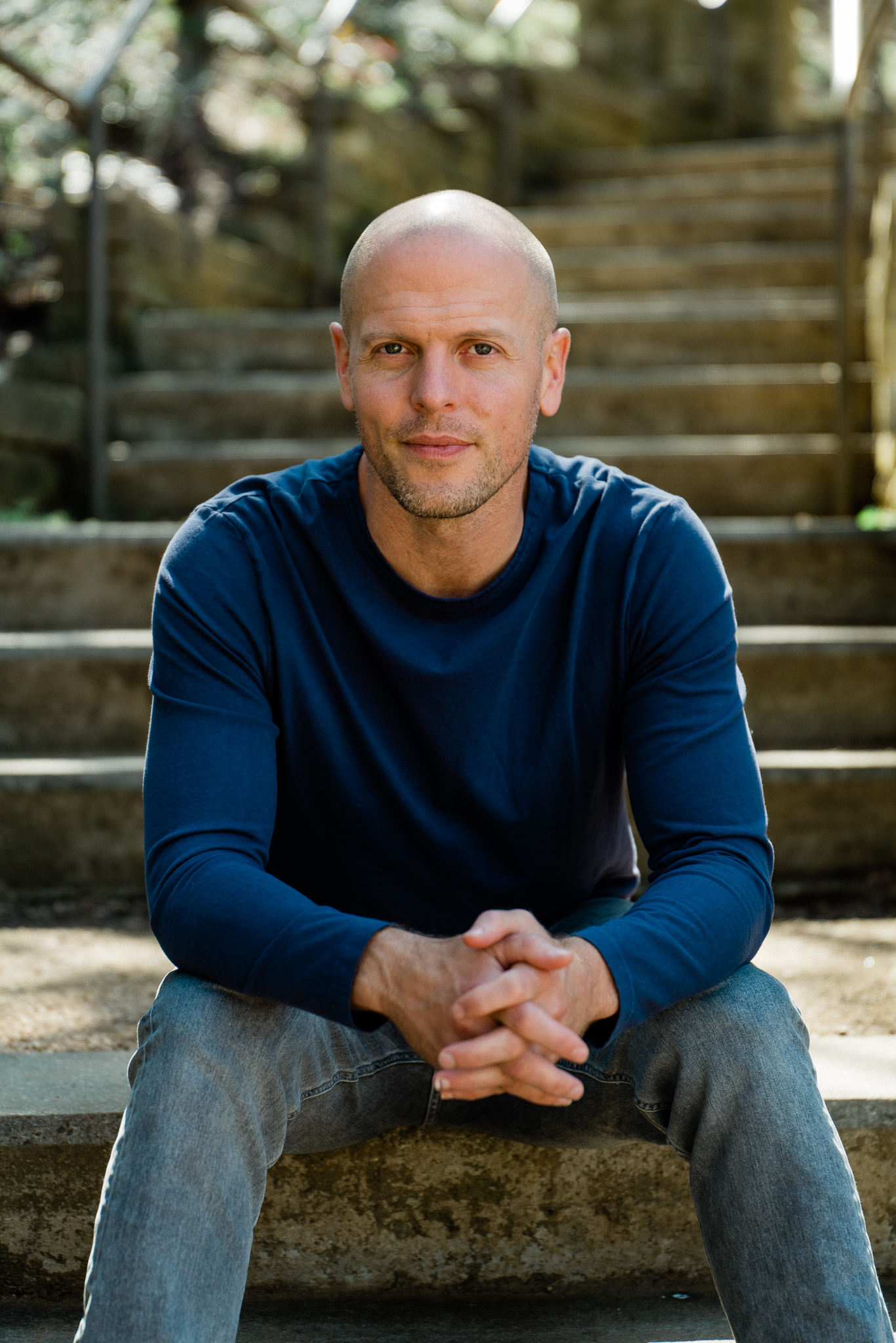
Tim Ferriss’s Health and Longevity Stack: The Biohacker Who Got More Conservative
There is a version of Tim Ferriss that still lives in the public imagination: the human guinea pig, the self-quantification evangelist, the man who made slow-carb dieting, kettlebell swings, blood testing, glucose monitors, ice baths, and exotic self-experimentation feel like a single operating system for a more optimized life.
Presented By Our Partners



That version is not wrong. It is just incomplete.
In a recent conversation posted under the title “My Current Longevity Stack,” Ferriss sounds less like the patron saint of biohacking excess and more like a veteran test pilot who has learned to distrust shiny dashboards. The surprising thing about his current health and longevity stack is not how extreme it is. It is how much of it has collapsed back toward basics: sleep, exercise, food quality, creatine, vitamin D, metabolic flexibility, mitochondrial health, and a wary respect for interventions that can cut both ways.
That makes the conversation more interesting, not less.
Ferriss was there early. In the video, he recalls experimenting with first-generation Dexcom continuous glucose monitors around 2008 or 2009, when they were still unpleasant, obscure, and largely confined to people with type 1 diabetes. He was part of the quantified-self era when a dozen people could sit around Kevin Kelly’s house and talk about measuring life with Excel spreadsheets. Today, the same impulse has become an industry. There are continuous glucose monitors for non-diabetics, sleep rings, ketone meters, microbiome tests, epigenetic clocks, peptide clinics, rapamycin forums, GLP-1 transformations, cold plunges, red light devices, AI-generated supplement plans, and more health podcasts than anyone can metabolize.
Against that background, Ferriss’s current answer lands almost like a corrective.
He is still curious. Still experimental. Still interested in ketone esters, urolithin A, rapamycin, fasting, brain stimulation, ibogaine research, and the future of bioelectric medicine. But the center of gravity has shifted. The younger Ferriss pushed the frontier because the frontier was empty. The older Ferriss seems more interested in separating what is plausible, what is useful, what is overmarketed, and what might quietly be dangerous.
His stack is less a shopping list than a philosophy of controlled exposure.
The stack starts with the unsexy things
When asked where he has landed personally on longevity interventions, Ferriss does not begin with a molecule. He begins with a collapse.
A lot, he says, comes down to sleeping well, exercising a lot, and eating well. There are “a handful of things that kind of matter.”
That line matters because it cuts against the economic structure of the longevity industry. No one gets rich telling people to sleep more consistently, build aerobic capacity, lift weights, eat enough protein and fiber, avoid metabolic chaos, and stop confusing stimulation with restoration. The money tends to live at the edge: proprietary compounds, off-label drugs, clinic protocols, lab panels, peptides, devices, and monthly subscriptions.
But the biology is stubborn. Sleep regulates hormone signaling, immune function, glymphatic clearance, glucose control, emotional regulation, and appetite. Exercise improves cardiovascular capacity, insulin sensitivity, muscle mass, bone density, mood, cognition, and all-cause mortality risk. Food quality shapes metabolic health, inflammation, body composition, gut function, and energy regulation.
Ferriss’s current stack starts there because almost every exotic intervention is weaker when layered on top of bad fundamentals. Creatine cannot rescue chronic sleep deprivation. Rapamycin cannot make an unhealthy lifestyle coherent. Ketone esters cannot compensate for a life that never gives mitochondria a reason to adapt.
This is the first principle of the Tim Ferriss health and longevity stack: the base layer is not glamorous, but it is load-bearing.
The short list: vitamin D and creatine
When the conversation turns to “things that seem helpful to take,” the first compact answer — vitamin D and creatine — comes from Ferriss’s guest, not Ferriss himself. The distinction matters. It is the guest’s shorthand list, and then the conversation turns back to Ferriss for the fuller account of what he is actually taking, testing, and watching.
Even so, vitamin D and creatine are worth dwelling on because they represent the kind of low-drama, higher-plausibility interventions that often anchor serious health conversations.
Vitamin D is not a longevity hack in the internet sense. It is a hormone-like nutrient involved in calcium metabolism, bone health, muscle function, and immune regulation. The intelligent version of supplementation is not mega-dosing as identity; it is measuring deficiency risk, sun exposure, diet, geography, skin pigmentation, medical context, and blood levels with a clinician when appropriate.
Creatine is more interesting than its gym-bro reputation suggests. It is central to phosphocreatine energy buffering in muscle and brain tissue. Its strongest evidence remains in strength, power, lean mass, and exercise performance, especially when paired with training. But the cognitive angle is becoming harder to ignore. Reviews of creatine and aging suggest possible benefits for cognition in older adults, particularly around memory and attention, while also making clear that the evidence is still developing rather than settled.
What Ferriss’s own answer makes clear is that his stack is still conservative in spirit even when it ranges far beyond these two basics. A good stack does not begin with the rarest molecule. It begins with the highest ratio of plausibility, safety, cost, evidence, and personal relevance.
Creatine is not magic. That is almost the point.
The mitochondrial layer: urolithin A, fasting, ketones, and mitophagy
The next layer of Ferriss’s stack points toward mitochondria: the energy-transforming organelles that sit at the center of aging research, metabolic disease, muscle function, neurodegeneration, and fatigue.
Ferriss mentions urolithin A as “pretty interesting,” with data that “keeps mounting.” Urolithin A is a postbiotic compound produced by gut microbes from ellagitannins found in foods like pomegranates and certain berries and nuts. Its appeal in longevity circles comes from its relationship to mitophagy — the cellular process of clearing damaged mitochondria so healthier mitochondrial networks can function more effectively.
Human research is still young. But clinical studies and reviews have made urolithin A one of the more credible mitochondrial-health candidates in the supplement world, especially compared with many compounds whose marketing has sprinted far ahead of the data. The claim is not that urolithin A “reverses aging.” The more disciplined claim is narrower: it may support mitochondrial quality-control pathways relevant to muscle function, immune aging, and cellular energy regulation.
Ferriss also brings up intermittent fasting and occasional three-to-seven-day fasting or fast-mimicking diets, influenced recently by Dr. Dominic D’Agostino. The stated goal is not permanent deprivation. It is periodic stimulation of autophagy and mitophagy — the body’s recycling and cellular cleanup systems.
Featured Partner
Invest in the Infrastructure Behind Modern Medicine
As healthcare expands beyond hospital walls, the buildings and campuses supporting that shift are generating compelling returns for investors who move early. The Healthcare Real Estate Fund offers qualified investors direct access to a curated portfolio of medical office, outpatient, and specialty care facilities.
Learn More →
That distinction matters. Ferriss says he is not trying to optimize for autophagy “all the time.” This is a more sophisticated view than the common internet posture of turning every biological process into a maximum-volume dial. Autophagy is not a moral virtue. mTOR is not evil. Growth and repair are both necessary. The body is not a machine that improves when every pathway associated with stress resistance is pinned at full throttle.
Then there are ketone esters and salts, which Ferriss says he is experimenting with because of his family history of Alzheimer’s disease and Parkinson’s disease. Ketones are not simply a diet-culture fad. The brain can use ketone bodies as an alternative fuel, and there is serious research into ketogenic strategies, exogenous ketones, cerebral metabolism, and neurodegenerative disease. But the human evidence remains uneven. Studies in Alzheimer’s-related contexts often describe the field as promising but still limited, with more work needed to know who benefits, at what dose, in what disease stage, and with what tradeoffs.
This is where Ferriss’s stack becomes more than a list. The logic is not “ketones are good.” The logic is: family risk plus plausible cerebral-energy mechanisms plus emerging evidence equals a carefully watched personal experiment.
That is a very different claim.
Rapamycin and the “no biological free lunch” rule
Rapamycin is one of the most consequential molecules in modern longevity discourse. It inhibits mTOR, a nutrient-sensing pathway involved in growth, protein synthesis, immune function, metabolism, and aging biology. In animals, rapamycin and related mTOR modulation have produced some of the most reproducible lifespan-extension signals in the field.
In humans, the story is far less settled.
Ferriss calls rapamycin “interesting,” but immediately adds “a lot of asterisks.” His caution is blunt: if you are playing with an immunosuppressant, you have to be careful. This is the sentence that should be printed on the front door of every longevity clinic.
The appeal of rapamycin is obvious. It sits at the intersection of aging pathways, immune function, autophagy, and cellular growth regulation. The risk is equally obvious. mTOR is not a villain pathway. It is part of normal physiology. Suppress it in the wrong person, at the wrong dose, on the wrong schedule, with the wrong medical context, and “longevity” can become a euphemism for self-inflicted dysregulation.
Ferriss floats a possible future experiment: combining Norwegian 4×4 interval training with rapamycin pulsing and looking for volumetric changes in the hippocampus and other brain regions. It is a fascinating hypothesis because it pairs a behavioral intervention with a pharmacological one: exercise as adaptive stress, rapamycin as pathway modulation, brain imaging as a readout.
It is also an example of why self-experimentation can become hard to interpret. Ferriss admits that a cleaner signal would come from testing one intervention at a time, but real life is not always so tidy. This is the central tension of biohacking: humans want answers faster than science can isolate variables.
That tension does not make experimentation worthless. It makes humility mandatory.
The future stack may not be pills
The most provocative part of Ferriss’s answer comes later, when the conversation shifts from supplements and drugs to the idea of a biological “reboot.” If a computer can be fixed by restarting it, is there any equivalent for the human nervous system?
Ferriss is cautious about the metaphor, but his answer opens a door. He talks about GLP-1 agonists and their sometimes surprising effects on impulse control — not just weight loss, but reductions in smoking, drinking, or other reward-driven behaviors. He talks about ibogaine, especially in medically supervised settings, while emphasizing danger, cardiac risk, and the need for caution. He references work on veterans with traumatic brain injury, where magnesium-ibogaine therapy has been studied for PTSD, depression, anxiety, and functioning.
This is not wellness content anymore. It is frontier neurobiology.
He also discusses photobiomodulation, including through the eyes or transcranially, but adds caution. He has become more careful around general anesthesia, partly because many anesthetic mechanisms remain poorly understood and because some people experience cognitive or personality changes after going under. He notes that medicine contains many common interventions that appear to work, appear to be tolerated, and yet remain mechanistically murky.
That observation may be the deepest part of the whole stack. The public often divides interventions into “scientific” and “alternative,” as if approved medicine always knows exactly how it works and frontier experimentation never does. Reality is stranger. Some conventional drugs are widely used before their mechanisms are fully understood. Some fringe-sounding interventions eventually become medicine. Some exciting mechanisms fail in the clinic. Some boring interventions save lives.
Ferriss’s real frontier interest seems to be brain stimulation and bioelectric medicine. He describes non-invasive brain stimulation, and possibly implant-based approaches, as one of the next great frontiers — not only for psychiatric disorders but potentially for performance enhancement. This is where the Ferriss stack points beyond the supplement shelf.
The next era of longevity may not look like a cabinet full of capsules. It may look like targeted stimulation, closed-loop devices, metabolic-state manipulation, nervous-system resets, personalized imaging, and outpatient neuromodulation procedures.
A longevity stack, in other words, may become less like a supplement protocol and more like an operating interface for the brain-body system.
The health and longevity stack as a new content category
Ferriss is a good first case study because he embodies the entire arc of the field.
He was early to quantified self. He helped popularize self-experimentation. He investigated continuous glucose monitoring before CGMs became consumer wellness accessories. He has hosted scientists and clinicians across lifespan biology, metabolic health, psychedelics, neuroscience, performance, sleep, strength, and behavior change. And now, after years inside the machinery of optimization culture, his current posture is more conservative than many imitators would expect.
That makes Tim Ferriss’s health and longevity stack a useful template for decoding other public figures.
Not “what does this famous person take?” That is the shallow version.
The better frame is:
- What is the base layer?
- What is evidence-backed?
- What is speculative?
- What is personal-risk-driven?
- What is brand-driven?
- What is clinically supervised?
- What is measurable?
- What is performative?
- What is missing?
- What would the person stop doing if better evidence arrived?
That last question may be the most important. A serious health stack should be falsifiable. It should be able to evolve. If a person’s stack only grows and never subtracts, it is probably not a stack. It is an identity.
Ferriss’s current stack is compelling because it contains subtraction. It contains caution. It contains a memory of past experimentation without being trapped by it.
The decoded Tim Ferriss health and longevity stack
Here is the practical map of what Ferriss appears to be emphasizing now, based on the video and surrounding context. Where the transcript reflects the guest’s shorthand list instead of Ferriss’s own list, that distinction is noted above and not folded into Ferriss’s stack by accident.
Foundation
- Sleep well.
- Exercise a lot.
- Eat well.
- Avoid making the stack more complicated than the base can support.
Basic supplementation
- Vitamin D, likely context-dependent.
- Creatine, especially given its muscle and possible cognitive-health relevance.
Metabolic and mitochondrial experiments
- Ketone esters and salts, especially because of family neurodegenerative-disease risk.
- Intermittent fasting.
- Occasional three-to-seven-day fasting or fast-mimicking diet.
- Urolithin A as a mitochondrial-health candidate.
- Interest in autophagy and mitophagy, but not constant optimization for either.
Higher-risk or higher-uncertainty interventions
- Rapamycin as interesting but medically serious, with many caveats.
- Possible rapamycin pulsing paired with Norwegian 4×4 interval training and brain-imaging readouts.
- Obicetrapib as a molecule to watch, not yet ready for prime time.
- Peptides viewed partly through a cosmetic-health lens, with caution implied.
Nervous-system and future-frontier layer
- GLP-1 agonists as evidence that metabolic drugs may shift broader impulse-control systems.
- Ibogaine as a powerful but dangerous intervention requiring medical supervision.
- Photobiomodulation as interesting but caution-worthy.
- Brain stimulation and bioelectric medicine as major future frontiers.
- General anesthesia approached with more caution than in the past.
The pattern is not maximalism. It is tiering.
Ferriss separates basics from experiments, experiments from frontier medicine, and frontier medicine from things one should only touch with serious supervision.
The lesson: biohacking is growing up
The early biohacking movement was built around access: access to data, access to tools, access to tests, access to fringe protocols, access to conversations that used to be trapped inside academic journals or specialist conferences.
The next phase needs judgment.
That is what Ferriss’s current health and longevity stack reveals. The interesting question is no longer whether a person can find a new compound, device, or protocol. They can. The internet will provide one by lunchtime. The harder question is whether they can classify it correctly.
Is this a foundation? A supplement? A medical intervention? A speculative frontier? A family-risk-driven experiment? A cosmetic intervention? A performance enhancer? A clinical treatment? A narrative with weak evidence? A molecule whose mechanism is plausible but whose human outcomes remain unknown?
This is where HealthcareDiscovery.ai can own a distinctive lane: not simply reporting health and longevity stacks, but decoding them.
A famous person’s stack is not a prescription. It is a map of beliefs, incentives, risks, evidence, biography, and technology adoption. Tim Ferriss’s map is unusually valuable because it shows what happens when a self-experimenter survives long enough to become more careful.
The punchline is not that Ferriss has abandoned biohacking.
It is that his biohacking has matured into something more like verification intelligence: fewer miracles, more mechanisms; fewer hacks, more hypotheses; fewer declarations, more caveats.
That may be the future of longevity culture if it wants to be taken seriously.
Not the end of experimentation.
The end of pretending every experiment is already proven.
This article is for health journalism and analysis, not medical advice. Higher-risk interventions discussed here — including rapamycin, ibogaine, GLP-1 agonists, fasting, ketone products, photobiomodulation, and brain stimulation — carry real risks and should not be copied from a public figure’s stack without appropriate clinical supervision.
Source attribution
This article was based primarily on Tim Ferriss’s YouTube video, “My Current Longevity Stack”.


Similar Posts

Hyperice Venom 2 Back Review: Heat and Vibration Therapy for Back Pain Relief and Recovery
The Venom 2 Back combines targeted heat with vibration therapy in a wearable wrap designed for the most common pain site in the human body. Presented By Our Partners Low…
COROS VERTIX 2S: Ultra Long Battery Adventure Watch With Dual Frequency GPS and Offline Maps
COROS’s flagship expedition watch delivers up to 140 hours of GPS tracking, titanium and sapphire construction, and comprehensive training analytics at $699 with no subscription, redefining value in the premium…

The Omega 3 Index: What 20 Years of Research Reveal About the Blood Marker Modern Medicine Still Underuses
A 2004 Harris and von Schacky proposal in Preventive Medicine turned omega 3 status into a measurable, modifiable blood marker. Two decades of cohort and trial evidence, from VITAL to…

Your Cells Have a Mechanical Age, and AI Can Now Read It to Predict Breast Cancer Risk
A UC Berkeley and City of Hope team published a landmark AI platform called MechanoAge in Lancet’s eBioMedicine that measures the physical stress-response of individual breast cells to identify cancer…
Neurosity Crown: Eight Channel EEG for Flow State and Productivity Monitoring
An eight channel EEG headset designed not for meditation or research, but for the specific challenge of measuring and sustaining deep focus during knowledge work. Presented By Our Partners The…
