
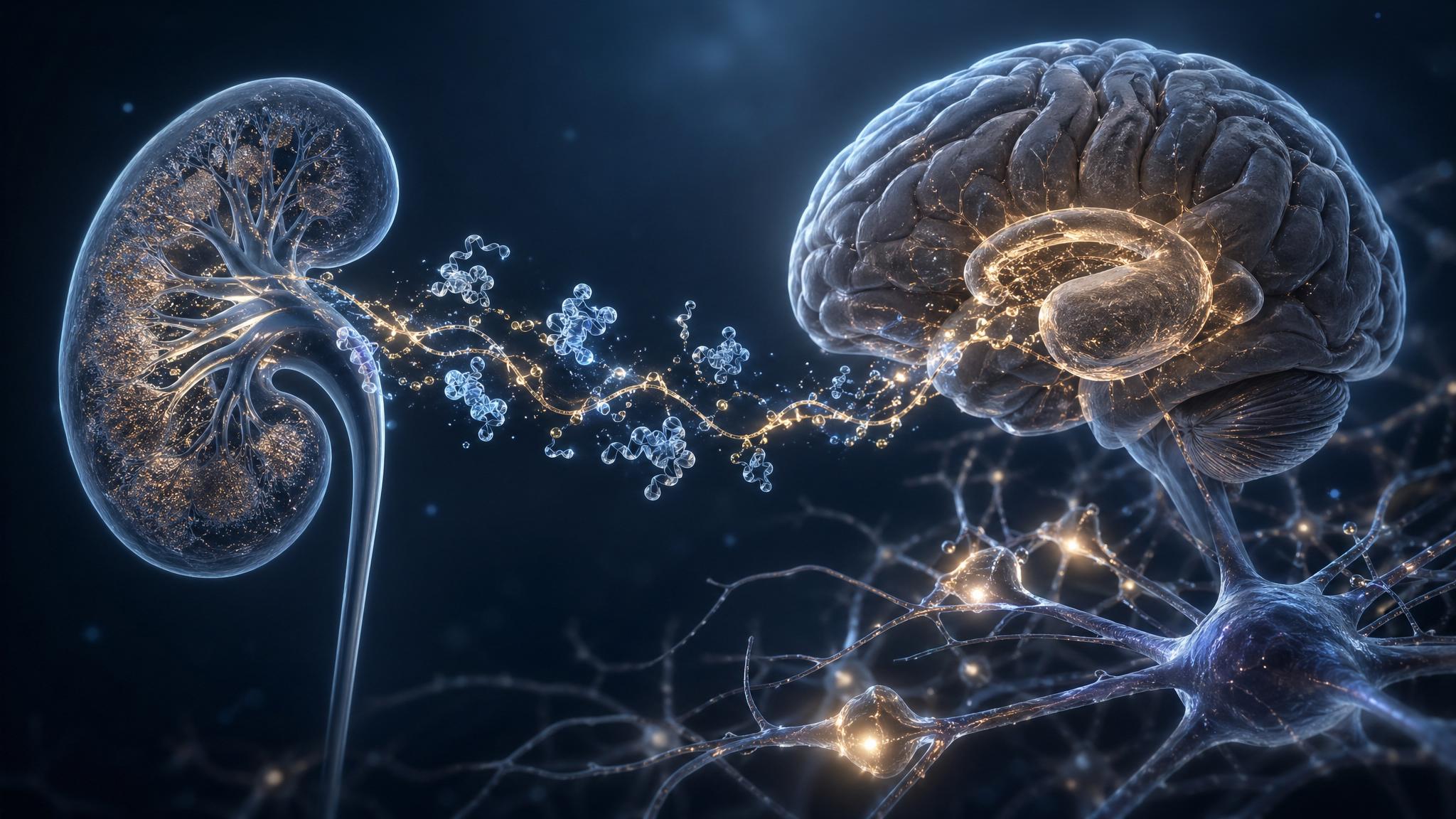
The Klotho Protein: How a Single Longevity Hormone Is Reshaping Brain Aging Research in 2026
In 1997, a team of Japanese researchers led by Makoto Kuro-o at the National Institute of Neuroscience in Tokyo accidentally bred a mouse that aged in fast forward. By the time the animals were three weeks old, their skin had thinned, their bones were brittle, their arteries had calcified, and their thymus had shrunk to almost nothing. The mice died at about eight weeks of age, roughly one tenth of a normal mouse lifespan. Kuro-o traced the problem to a single disrupted gene. He named the gene after one of the three Moirai of Greek mythology, Klotho, the fate who spins the thread of life.
Presented By Our Partners



Almost thirty years later, klotho has moved from a curious short-lived mouse into one of the most actively studied molecules in longevity science. In 2026, it sits at the center of research programs in cognitive aging, chronic kidney disease, cardiovascular protection, and age-related muscle and bone decline. The most striking recent work, from Dena Dubal’s laboratory at the University of California San Francisco, suggests that a single injection of a klotho fragment can measurably improve memory and cognition in aged primates, raising the possibility that a hormone produced naturally by the human kidney might become a treatable target for brain aging.
A Gene Named After Fate
The original Kuro-o paper, published in Nature in 1997, was a revelation. Klotho knockout mice developed a syndrome that looked, at the tissue level, almost identical to human accelerated aging. They had osteoporosis, vascular calcification, emphysema, skin atrophy, cognitive decline, and infertility. When Kuro-o’s team reversed the experiment and overexpressed klotho in normal mice, the animals lived 20 to 30 percent longer than controls. That 2005 Science paper, led by Hiroshi Kurosu, cemented klotho’s status as one of the few genes whose overexpression is sufficient to extend mammalian lifespan.
Humans have three related klotho genes. Alpha klotho, encoded by the gene Kuro-o discovered, is expressed most strongly in the kidney, parathyroid gland, and choroid plexus of the brain. Beta klotho is concentrated in the liver and fat tissue and regulates metabolism through the fibroblast growth factor 21 hormone. Gamma klotho has a narrower role and is still being characterized.
Alpha klotho exists in two forms. The membrane bound form sits on the surface of kidney cells, where it acts as a co-receptor for fibroblast growth factor 23, or FGF23, a hormone secreted by bone to regulate phosphate and vitamin D. The soluble form is produced when the extracellular domain of membrane klotho is cleaved and released into the blood, where it circulates as a hormone in its own right. It is this soluble form that has captured the attention of longevity researchers.
Klotho in the Aging Brain
Dena Dubal’s laboratory at UCSF began studying klotho in the brain around 2014. In a landmark Cell Reports paper that year, Dubal and colleagues showed that giving mice a single peripheral injection of recombinant alpha klotho improved performance on memory and learning tasks within hours, and enhanced synaptic plasticity in the hippocampus. The striking part of the finding was that klotho does not efficiently cross the blood brain barrier, yet its effects on cognition were rapid and robust. The mechanism involved increased NMDA receptor activity in the hippocampus through a subunit called GluN2B, and downstream signaling through the small GTPase RhoA.
In 2017, the Dubal lab extended the work, showing that klotho enhancement reduced cognitive deficits in a mouse model of Alzheimer’s disease despite the presence of amyloid and tau pathology. The animals still had plaques and tangles, but they behaved as though they did not. That observation reframed klotho as something closer to a cognitive resilience factor rather than a simple disease reversal agent.
The field crossed a major threshold in 2023, when Dubal, Stacy Castner, and colleagues published a Nature Aging study showing that a single subcutaneous injection of low dose klotho improved working memory and prefrontal cortex function in aged rhesus macaques. Macaques are an order of magnitude closer to humans than mice, and the cognitive tasks used in the study mapped closely onto executive function tests used in human studies of cognitive aging. The effect persisted for at least two weeks after a single dose. The result has become the scientific basis for a wave of klotho focused drug development programs now moving toward human trials in 2026.
The KL-VS Variant and Human Genetics
About 25 percent of people carry a single copy of a common genetic variant in the klotho gene known as KL-VS. The variant was first linked to human longevity by Dan Arking and colleagues at Johns Hopkins in 2002, and subsequent studies have consistently associated it with reduced risk of cardiovascular disease, longer life expectancy, and better cognitive function in older age.
A 2014 Cell Reports analysis by Dubal and Lennart Mucke at the Gladstone Institutes, covering over 700 individuals from three independent cohorts, found that people heterozygous for KL-VS scored higher on tests of executive function, working memory, and processing speed than non-carriers, and that the protective effect grew stronger with age. Homozygous carriers, who inherit two copies, appear to lose the advantage, which is consistent with a nonlinear dose response pattern seen in other longevity genes.
The APOE4 connection is one of the most studied aspects of klotho genetics. APOE4 is the strongest common genetic risk factor for Alzheimer’s disease, increasing risk roughly three fold per copy. In 2020, Dubal’s group showed that the KL-VS variant partially offsets APOE4 risk. APOE4 carriers who also carry one copy of KL-VS have a 30 percent lower risk of developing Alzheimer’s than APOE4 carriers without the variant. The finding has been replicated in multiple cohorts, including the Alzheimer’s Disease Neuroimaging Initiative and the Wisconsin Registry for Alzheimer’s Prevention.
The Young Blood Connection
Klotho is also part of a broader story about circulating factors and brain aging. Saul Villeda, Tony Wyss-Coray, and their collaborators at UCSF and Stanford spent more than a decade showing that factors in young blood can partially reverse cognitive aging in old mice, and that factors in old blood can accelerate it in young animals.
Featured Partner
Invest in the Infrastructure Behind Modern Medicine
As healthcare expands beyond hospital walls, the buildings and campuses supporting that shift are generating compelling returns for investors who move early. The Healthcare Real Estate Fund offers qualified investors direct access to a curated portfolio of medical office, outpatient, and specialty care facilities.
Learn More →
Klotho declines sharply with age in both mice and humans. Serum klotho levels drop roughly 50 percent between the ages of 40 and 80. Wyss-Coray’s 2019 proteomics work, which produced the organ aging clocks later refined in the 2024 Nature organ age study, identified klotho as one of the strongest plasma markers of kidney aging, and found that low klotho levels predict faster overall biological aging and higher mortality risk.
The implications are practical. Klotho is not just a molecule that happens to fall with age. It is a molecule whose decline is both a marker and possibly a driver of systemic aging. Restoring it to youthful levels in humans is now one of the most active frontiers in longevity biotech.
Klotho Beyond the Brain
Although the cognitive data are the most dramatic, klotho’s role extends across organ systems.
In the kidney, membrane klotho controls phosphate balance through the FGF23 axis. When klotho is low, as in chronic kidney disease, phosphate accumulates, FGF23 rises, and the combination accelerates vascular calcification and bone loss. This klotho deficient state explains why cardiovascular disease is the leading cause of death in dialysis patients. Research groups led by Orson Moe at UT Southwestern and Ming Chang Hu at the same institution have shown in animal models that restoring klotho slows kidney disease progression and reduces cardiovascular calcification.
In the cardiovascular system, low klotho levels are associated with left ventricular hypertrophy, arterial stiffness, and endothelial dysfunction. A 2020 European Heart Journal study followed over 2,000 older adults and found that serum klotho levels in the lowest quartile predicted a 30 percent higher risk of cardiovascular events over eight years, independent of traditional risk factors.
In muscle and bone, klotho appears to support stem cell function and tissue regeneration. Sumit Ahuja, working with Tom Rando at Stanford, showed that klotho expression in muscle stem cells declines with age and that restoring it partially rescues regenerative capacity. In the immune system, klotho has anti-inflammatory effects and appears to suppress NF-kB signaling, the master switch for chronic low grade inflammation that Luigi Ferrucci at the National Institute on Aging has long proposed as a central driver of age-related disease.
The 2026 Biotech Landscape
The translation of klotho biology into medicine is accelerating. Klotho Neurosciences, a company founded on the Dubal laboratory’s findings, has announced an IND enabling package for a first in human trial of a modified recombinant klotho fragment in mild cognitive impairment. The company is pursuing a subcutaneous delivery route based on the preclinical primate data.
Other programs include soluble klotho mimetic small molecules being developed by Unity Biotechnology partners, and AAV based gene therapy approaches from at least two stealth biotech companies backed by Altos Labs and Retro Biosciences investors. A Japanese academic consortium led by Makoto Kuro-o, now at UT Southwestern, is advancing a peptide fragment of alpha klotho called KL1 into early phase clinical studies in chronic kidney disease.
A critical question for the field is whether exogenous klotho protein can deliver the cognitive benefits seen in animal models, or whether the natural hormone’s effects depend on its endogenous release patterns. Some researchers, including Carmela Abraham at Boston University, are pursuing klotho enhancing small molecules that work by boosting production of the endogenous protein rather than replacing it.
Behavioral Interventions That Raise Klotho
While drug development progresses, a growing body of research identifies lifestyle factors that naturally raise klotho levels. These are not substitutes for future drugs, but they are among the most evidence backed levers currently available.
Exercise is the single strongest documented klotho booster. A 2018 study in Aging Cell led by Shigehiko Ogoh and colleagues showed that 12 weeks of aerobic training increased circulating klotho levels by 20 to 30 percent in middle aged adults, with larger gains in those who started at lower baseline. Resistance training has smaller but consistent effects.
Heat exposure, particularly through sauna bathing, has been linked to elevated klotho in Finnish population studies led by Jari Laukkanen at the University of Eastern Finland. Regular sauna use of four or more sessions per week is associated with both higher klotho levels and reduced dementia risk, though the causal link remains to be established.
Time restricted eating and caloric restriction increase klotho in multiple rodent studies and in early human trials. A 2021 Cell Metabolism paper from Leonie Heilbronn at the University of Adelaide reported a 15 percent increase in circulating klotho in humans after eight weeks of time restricted eating.
Vitamin D and phosphate balance interact with klotho biology in complex ways. Adequate but not excessive vitamin D status supports klotho expression. Very high phosphate intake, common in heavily processed foods, suppresses klotho and drives FGF23. This relationship is one reason that ultra processed food consumption has been repeatedly linked to accelerated biological aging in epidemiological studies.
What This Means For You
Klotho is not yet a therapy. No regulatory agency has approved a klotho based drug, and the first human cognitive trials are still years from readout. The most responsible stance today is informed engagement with the science and practical attention to the factors that appear to support endogenous klotho production.
If you are interested in measuring klotho. Serum klotho assays are available in research settings and in some specialty longevity clinics, but reference ranges are not well standardized and clinical interpretation remains inexact. The SomaLogic proteomics platform used in research cohorts can measure klotho, and services such as Quest Diagnostics offer alpha klotho assays for research use. Discuss with a physician whether measurement adds value for your situation.
If you carry the APOE4 variant. Knowing whether you also carry the KL-VS klotho variant is not yet clinically actionable, but it may become so within the next several years. Companies that provide whole genome sequencing, including Nucleus Genomics and Variantyx, can report KL-VS status on request. The variant does not change current prevention recommendations, but it provides potentially useful context for personal risk understanding.
If you want to support your own klotho biology. The strongest levers are familiar ones that also support cardiovascular and cognitive health through multiple mechanisms. Aim for 150 minutes per week of moderate aerobic exercise plus two or three sessions of resistance training. Consider adding regular sauna use if available and safe for your cardiovascular status. Limit ultraprocessed foods, which are high in inorganic phosphate additives that suppress klotho. Maintain adequate vitamin D status, typically a 25 hydroxyvitamin D level in the 30 to 50 nanogram per milliliter range for most adults. Prioritize quality sleep and stress regulation, both of which influence the inflammatory signaling that affects klotho expression.
If you are worried about cognitive aging. Klotho is one promising target among several in active clinical development. Other pathways that overlap with klotho biology include GLP-1 receptor signaling, senolytic therapy, and epigenetic reprogramming. The most evidence based near term actions remain aerobic exercise, adequate sleep, the MIND diet or similar Mediterranean style pattern, and tight control of vascular risk factors such as blood pressure, LDL cholesterol, and HbA1c. These cut dementia risk by 30 to 40 percent in large prevention trials, a magnitude of benefit that no current drug approaches.
The Bigger Picture
Klotho sits at an unusual crossroads in longevity science. It is one of a small number of molecules with both strong genetic evidence in humans, showing that natural variants change lifespan and cognitive trajectory, and mechanistic evidence in animals, showing that manipulating its levels is sufficient to change biological outcomes. Very few candidate longevity interventions meet both bars.
The 2026 clinical translation effort will not be quick or clean. Human trials will take years, and early studies may show disappointing effect sizes in the real world, as has happened with other longevity candidates. The biology of klotho in humans is not identical to its biology in mice, and the blood brain barrier remains a puzzle. Delivery, dose, patient selection, and endpoint choice are all open questions.
What seems increasingly clear is that klotho is real, that it matters, and that its decline with age is more than a passive marker. Whether it becomes a practical medicine or joins the long list of promising longevity candidates that never quite arrived will depend on the next several years of trials. In the meantime, the lifestyle factors that support endogenous klotho production are the same factors that support nearly every other longevity pathway. The thread, at least for now, is still yours to spin.


Similar Posts

LetsGetChecked: At Home Blood Testing With Nurse Support and Physician Review
A comprehensive at home blood testing platform that combines finger prick convenience with CLIA certified lab analysis, dedicated nurse support, and physician reviewed results across dozens of health panels. Presented…

The Daily Rounds: Longevity & Health Care Brief | May 29, 2026
🧠 Blocking Parkinson's Spread Protein — Penn Medicine researchers identified GPNMB as the key driver of alpha-synuclein propagation in Parkinson's disease, with monoclonal antibodies successfully halting the spread in preclinical models and opening the first potential disease-modifying treatment pathway. 🔬 FDA Approves First Epigenetic Reprogramming Trials — The FDA greenlit the first human trials testing partial epigenetic reprogramming as an anti-aging intervention, marking the most significant regulatory milestone for longevity medicine in years. 🤖 GLP-1 Drugs Show Cancer Prevention Signal at ASCO 2026 — Opening-day research at the world's largest oncology conference showed GLP-1 receptor agonists reduce breast cancer incidence in high-risk women, extending the drugs' clinical case well beyond weight management. 🧠 Long COVID Is Not Brain Inflammation — A landmark neuroimaging study found no widespread brain inflammation in long COVID patients, redirecting research and treatment toward stress-response and emotional regulation pathways instead. 🥗 Microbiome Ranking Links Gut Species to Longevity — A 34,000-person study produced the first species-level gut microbiome ranking tied to longevity markers, providing a precision nutrition framework for designing diets that specifically promote healthspan.
The Art of Not Aging: New Science Reveals That Museums, Music, and Reading Slow Your Biological Clock as Powerfully as Exercise
A landmark UCL study of 3,556 adults finds that regular arts engagement, such as reading, music, museum visits, and theater, slows biological aging by 4%, an effect size identical to…

Spermidine and the Autophagy Switch: What 2026 Science Says About the Polyamine That May Mimic Caloric Restriction
Spermidine triggers autophagy, the cell’s recycling system, and a 20 year Austrian cohort linked higher dietary intake to roughly 5 fewer years of mortality. Inside the Frank Madeo Graz research,…

Nature Is Medicine: What 108 Brain-Imaging Studies Just Proved About Your Mind
New research synthesizing 108 neuroimaging studies reveals a precise cascade of measurable brain changes that begin in as little as three minutes outdoors — and the implications for your health…
The Cardiac Amyloidosis Revolution: How ATTR Therapies Are Rewriting Heart Failure Treatment in 2026
For decades, cardiac amyloidosis was a diagnosis cardiologists whispered and patients rarely heard. In 2026, tafamidis, acoramidis, RNA silencers, and a CRISPR gene editing therapy are transforming ATTR care and…
