
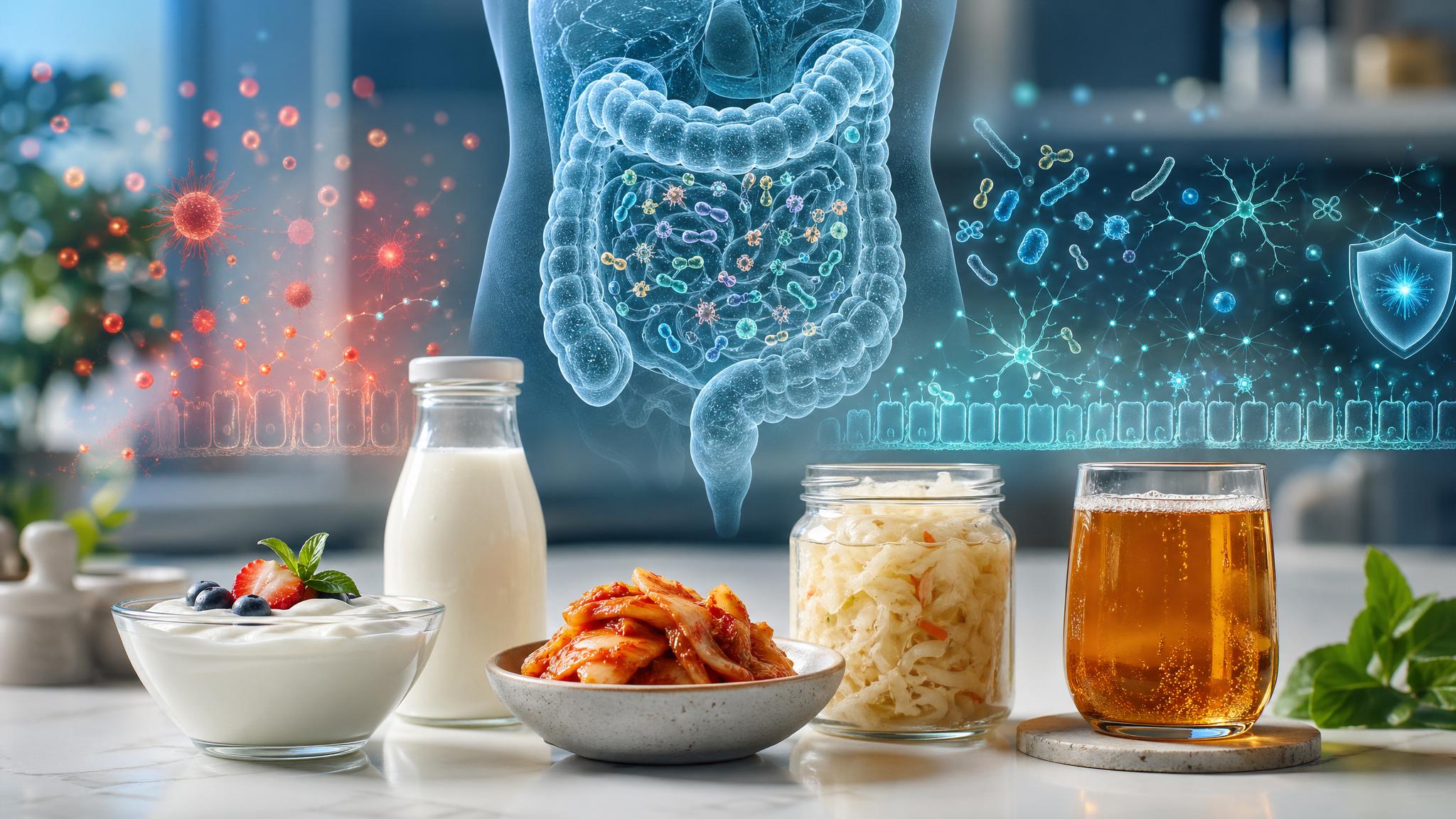
The Stanford Fermented Foods Study: What It Means for Gut Health, Inflammation, and Longevity
For years, the advice around gut health has followed a predictable arc: eat more fiber. The logic made sense. Fiber feeds beneficial gut bacteria, those bacteria produce short chain fatty acids, and those fatty acids regulate immunity, metabolism, and even mood. It was elegant, mechanistic, and taught in every nutrition textbook.
Presented By Our Partners



Then in July 2021, a team of researchers at the Stanford School of Medicine published a study in the journal Cell that complicated the story in a way the field is still processing. Dr. Justin Sonnenburg, Dr. Erica Sonnenburg, and Dr. Christopher Gardner ran a 17 week clinical trial comparing two diets head to head. One arm ate a high fiber diet. The other arm ate a diet rich in fermented foods, things like yogurt, kefir, kimchi, sauerkraut, kombucha, and brined vegetables. The researchers tracked 36 healthy adults, sampling their blood and stool at multiple time points, measuring microbiome diversity, and analyzing 93 separate markers of immune function.
The results were not what anyone predicted. The fermented foods group showed increases in microbiome diversity, a decrease in 19 inflammatory proteins including interleukin 6, and a strengthening of immune cell signaling. The high fiber group, despite eating nearly twice the national average of daily fiber, showed none of those benefits. In some participants, fiber actually produced short term increases in inflammation.
The study did not dethrone fiber. It reframed the conversation. And for anyone thinking about the four fundamentals of longevity, nutrition, breath, sleep, and movement, the Stanford findings point toward a practical takeaway that most adults can act on starting with their next meal.
The Study That Changed the Conversation
The official title of the paper is "Gut microbiota targeted diets modulate human immune status," and it is worth understanding what the Stanford team actually did, because the design was unusually rigorous for a dietary intervention trial.
Participants were randomized into two groups. One group gradually increased fermented food intake from zero servings per day to six servings per day over a four week ramp up period, then maintained six servings for another six weeks. The fermented foods had to contain live cultures, and participants logged everything they ate. The other group ramped up fiber from their baseline to roughly 45 grams per day, compared to the American average of around 15 grams per day.
Both diets were sustained for ten weeks. The Stanford researchers collected stool samples to sequence gut microbes using 16S rRNA sequencing and metagenomics. They collected blood to measure inflammatory cytokines, immune cell populations, and systemic markers of immune activation. They used cytometry by time of flight, an advanced technique that allows researchers to characterize immune cells at the single cell level across dozens of parameters simultaneously.
The primary question was simple. Could a dietary intervention actually change the composition and function of the human gut microbiome, and if so, would that change ripple outward into measurable immune effects?
What The Numbers Showed
In the fermented foods group, microbiome diversity increased steadily throughout the intervention. Participants who started with less diverse gut communities showed the largest gains. The new microbes were not, surprisingly, the probiotic strains found in the fermented foods themselves. Instead, the fermented foods appeared to create conditions that allowed a broader range of native gut bacteria to flourish.
More striking were the immune changes. Nineteen inflammatory proteins dropped significantly in the fermented foods group. Interleukin 6, a cytokine that sits at the center of chronic inflammatory disease, declined meaningfully. So did interleukin 10 and interleukin 12, along with other markers linked to autoimmune disorders, cardiovascular disease, and metabolic dysfunction.
In the high fiber group, the story was more complicated. Microbiome diversity did not increase significantly over the ten week intervention. Inflammatory markers, on average, did not drop. When the researchers subdivided the fiber group based on baseline microbiome composition, they found that participants who already had diverse gut communities benefited from the high fiber diet, while participants with less diverse starting microbiomes sometimes showed paradoxical increases in inflammation. The likely explanation is that fiber requires a microbial ecosystem equipped to ferment it, and if that ecosystem is missing, the undigested fiber can create problems rather than solutions.
The implication is worth pausing on. For a significant portion of American adults with compromised gut ecosystems, simply adding more fiber may not deliver the immune benefits that nutrition guidelines promise. Fermented foods, by contrast, appeared to help regardless of starting conditions.
Why Fermented Foods Behave Differently
The Stanford findings did not emerge from nowhere. They connect to a decade of microbiome research suggesting that industrialized diets have narrowed the human gut ecosystem, that modern humans carry fewer microbial species than our hunter gatherer ancestors, and that this loss of diversity correlates with rising rates of chronic disease.
Fermented foods appear to work through multiple mechanisms. First, they introduce live microbes, though most do not colonize the gut permanently. Second, they contain bioactive compounds produced by fermentation, including short chain fatty acids, bacteriocins, and peptides that can directly modulate immune function. Third, they appear to shift the chemistry of the gut environment in ways that favor microbial diversity over time.
Dr. Justin Sonnenburg, one of the study’s senior authors, described the effect as priming the immune system rather than simply feeding it. In a discussion of the paper, Sonnenburg emphasized that the immune benefits were systemic, not localized to the gut, suggesting that gut derived signals influence inflammation throughout the body.
Featured Partner
Invest in the Infrastructure Behind Modern Medicine
As healthcare expands beyond hospital walls, the buildings and campuses supporting that shift are generating compelling returns for investors who move early. The Healthcare Real Estate Fund offers qualified investors direct access to a curated portfolio of medical office, outpatient, and specialty care facilities.
Learn More →
This connects to a growing body of research on what immunologists call inflammaging, the chronic low grade inflammation that accompanies aging and drives much of late life disease. A 2018 review in Nature Reviews Immunology by Franceschi and colleagues traced the link between persistent low grade inflammation and heart disease, type 2 diabetes, dementia, sarcopenia, and frailty. Reducing baseline inflammation is one of the most promising targets in longevity medicine, and the Stanford study suggests that fermented foods may be a genuinely practical way to do it.
The Breath and Vagus Nerve Connection
The gut and the nervous system are linked through the vagus nerve, the longest cranial nerve in the body. The vagus carries signals between the gut and the brain in both directions, and a growing literature suggests that gut microbial metabolites influence vagal tone, mood, and stress reactivity.
A 2019 study published in Nature Microbiology by Valles Colomer and colleagues analyzed stool samples from over 1,000 people and found that specific bacterial genera, including Coprococcus and Dialister, were depleted in individuals with depression. The researchers also identified microbial pathways for synthesizing neurotransmitter precursors, including dopamine and GABA. This does not prove causation, but it establishes that the microbiome and mental wellness are connected in measurable, mechanistic ways.
Fermented foods appear to engage these circuits. A randomized trial published in Psychiatry Research in 2015 by Hilimire and colleagues found that young adults who consumed more fermented foods reported lower social anxiety scores, with the effect strongest among those with high baseline neurotic traits. The researchers speculated that gut microbial changes were influencing vagal signaling to the brain.
For readers who practice daily breathwork, this matters. Slow diaphragmatic breathing is one of the most evidence backed ways to increase vagal tone and reduce inflammation. A 2017 study in Frontiers in Human Neuroscience by Jerath and colleagues documented measurable increases in heart rate variability and parasympathetic activity after just eight weeks of daily slow breathing practice. Pairing that practice with a microbiome supportive diet appears to address the same inflammatory system from two complementary angles, one through the nervous system and one through the gut.
Sleep, Recovery, and the Microbiome Clock
Recovery and sleep are also entangled with gut microbial function in ways that surprised researchers when the links first emerged. The gut microbiome has its own circadian rhythm, with microbial composition shifting across the 24 hour cycle. Dr. Satchin Panda at the Salk Institute has published extensively on this, showing that time restricted eating patterns preserve microbial rhythmicity and that disrupted eating patterns flatten those rhythms in ways that correlate with metabolic dysfunction.
A 2016 paper in Cell by Thaiss and colleagues demonstrated that jet lag in mice disrupted the normal circadian oscillation of the gut microbiome and produced glucose intolerance and obesity. When gut microbes from jet lagged mice were transplanted into germ free mice, the recipients also developed metabolic problems, suggesting that circadian disruption of the microbiome has real downstream consequences.
For people working on sleep quality, this creates another actionable bridge. Eating fermented foods earlier in the day, maintaining a consistent eating window, and avoiding late night snacking all support the microbial circadian system. The Stanford study did not test meal timing directly, but the underlying biology suggests that when fermented foods are eaten may matter nearly as much as whether they are eaten.
A 2023 study in Cell Metabolism by Chaix and colleagues found that a 10 hour eating window, regardless of caloric content, reduced inflammatory markers and improved sleep quality in a cohort of overweight adults. The researchers proposed that the benefits were mediated in part by microbial signals that communicate with the sleep regulating regions of the brain.
Movement, Muscle, and the Gut
Exercise science has converged with microbiome research over the past five years in unexpected ways. A 2020 paper in Nature Metabolism by Scheiman and colleagues analyzed stool samples from elite marathon runners before and after competition and identified a specific bacterium, Veillonella atypica, that was enriched in athletes and that appeared to metabolize lactate into propionate, a short chain fatty acid that supports endurance. When the researchers transferred Veillonella to mice, the mice ran longer on a treadmill.
This research is early, and the leap from elite athletes to the general population is not straightforward, but the broader principle is becoming clear. The gut microbiome is not passive. It actively participates in exercise performance, muscle recovery, and the inflammatory response to training.
A 2019 review in Exercise and Sport Sciences Reviews by Mach and Fuster Botella summarized the evidence that regular aerobic exercise increases microbiome diversity, enhances short chain fatty acid production, and reduces gut permeability. The effects appear independent of diet, meaning exercise alone can shape the gut ecosystem. Combined with fermented foods, the two interventions may be synergistic, each amplifying the benefits of the other.
For anyone following a strength training program, this is relevant too. Chronic inflammation blunts muscle protein synthesis and contributes to anabolic resistance in older adults, the phenomenon in which muscle tissue becomes less responsive to protein and resistance training with age. Reducing baseline inflammation through dietary strategies like fermented foods may help preserve the muscle building response that keeps people strong into their seventies and eighties.
The Caveats The Science Requires
No single study rewrites a field, and the Stanford researchers themselves have been careful about overclaiming. The sample size was small, 36 participants. The intervention was ten weeks, which is long for a dietary trial but short compared to the decades over which chronic inflammation develops. The participants were healthy at baseline, so it is not clear how fermented foods would affect people with active inflammatory disease.
There are also questions about which fermented foods matter most. The Stanford protocol allowed a variety, so the study cannot isolate whether yogurt worked better than kimchi, or whether kombucha added anything beyond what sauerkraut provided. The six servings per day dose was high, roughly equivalent to having a serving at every meal plus snacks, and it is unclear whether smaller amounts deliver proportional benefits.
Finally, commercial fermented foods vary widely in their actual microbial content. Many mass produced products are pasteurized after fermentation, killing the live cultures that the research relies on. Kombucha brands differ by orders of magnitude in their bacterial counts. Pickles from the grocery store are often vinegar brined rather than lacto fermented, meaning they contain no living microbes at all.
What This Means For Your Practice
The Stanford fermented food study is not a reason to abandon fiber, which remains essential for long term health. It is a reason to reconsider how nutrition, gut health, and inflammation fit into your daily practice of the fundamentals. Here is what the research supports starting this week.
Add one fermented food serving per day and build from there. A small bowl of plain yogurt with live cultures, a cup of kefir, a spoonful of kimchi or sauerkraut with dinner, or a glass of kombucha all count. The Stanford protocol ramped up over four weeks, so there is no rush. Your gut microbes need time to adjust.
Check the label for live and active cultures. If a product has been pasteurized after fermentation, it does not contain the microbes the research depends on. The label should say live cultures, raw, or unpasteurized. In the refrigerated section is usually a good sign. Shelf stable versions are usually not.
Pair fermented foods with fiber rather than replacing one with the other. The two appear to work through different mechanisms, and the benefits are likely additive. Think of fermented foods as the way to shift the microbial community and fiber as the way to feed it once it has shifted.
Eat fermented foods earlier in the day when possible. The circadian biology literature suggests that the gut microbiome functions best when food arrives during the active phase of the day. A yogurt at breakfast or a fermented vegetable at lunch may deliver more benefit than the same food consumed late at night.
Pair nutrition with daily breathwork. Five to ten minutes of slow diaphragmatic breathing, aiming for six breaths per minute, activates the vagus nerve and appears to complement the anti inflammatory effects of microbiome supportive eating. The two interventions address the same systemic inflammation from different directions.
Protect your sleep window. Aim for seven to eight hours of consistent sleep with a stable bedtime and wake time. The gut microbiome has a circadian rhythm that synchronizes with your sleep wake cycle, and disrupted sleep disrupts microbial rhythms that correlate with metabolic and immune function.
Move every day, even briefly. Regular aerobic exercise independently increases microbiome diversity and enhances short chain fatty acid production. You do not need to train like a marathoner. A 30 minute walk, three times a week, is enough to shift the microbial signature toward a more diverse and resilient state.
Be patient with the timeline. Microbiome changes unfold over weeks, not days. Inflammatory markers shifted at the ten week mark in the Stanford study, not in the first week. Consistency matters more than intensity.
The Stanford fermented food study does not offer a miracle. It offers something more useful, which is evidence that a simple, ancient, and affordable dietary strategy can measurably improve the biological systems that drive aging and chronic disease. Combined with the other fundamentals of breath, sleep, and movement, fermented foods belong on the short list of interventions with both strong mechanistic support and clear practical application.
The science will continue to evolve. Larger trials are underway. Longer follow ups will clarify durability. New fermented foods will be tested. But the core finding, that a diet rich in living microbial cultures lowers systemic inflammation and increases microbiome diversity in healthy adults, is already actionable. You do not need to wait for the next paper. You can start with your next meal.


Similar Posts
Neurable MW75 Neuro: Brain-Sensing EEG Headphones with Focus and Fatigue Detection
Premium noise-cancelling headphones with 12-channel soft fabric EEG sensors that detect focus, fatigue, calmness, and anxiety in real time, providing Brain Age scoring, cognitive speed metrics, and burnout prevention alerts,…
Nurvv Run Smart Insoles: Pressure-Based Gait Analysis and Injury Prevention
Every running injury begins with a biomechanical pattern the runner cannot feel. The question is whether wearable technology can detect that pattern before the injury announces itself. Presented By Our…
Ultrahuman Ring Air: Metabolic Health Smart Ring with CGM Integration and No Subscription
A 3.6-gram titanium smart ring that integrates with Ultrahuman’s M1 Live continuous glucose monitoring system, combining sleep, recovery, and activity tracking with real-time metabolic health insights, 95% sleep/wake detection accuracy,…
Klotho’s First Human Trial: Inside the 2026 Cognitive Aging Bet
Almost three decades after Makoto Kuro-o named the protein after the Greek Fate of life, UCSF’s Dena Dubal has launched the first human trial of klotho. Inside the cell biology,…

Calm App: Sleep Stories, Meditation, and the Science of Digital Stress Reduction
Inside the clinical evidence for the world’s most downloaded meditation app, from Sleep Stories to anxiety reduction to workplace stress management Presented By Our Partners A 2021 randomized controlled trial…
Tiny Health: The First Microbiome Test Designed for Babies, Children, and Pregnancy
Why the first 1,000 days of microbial colonization may be the most consequential window for lifelong health, and what parents can actually do about it Presented By Our Partners In…
