
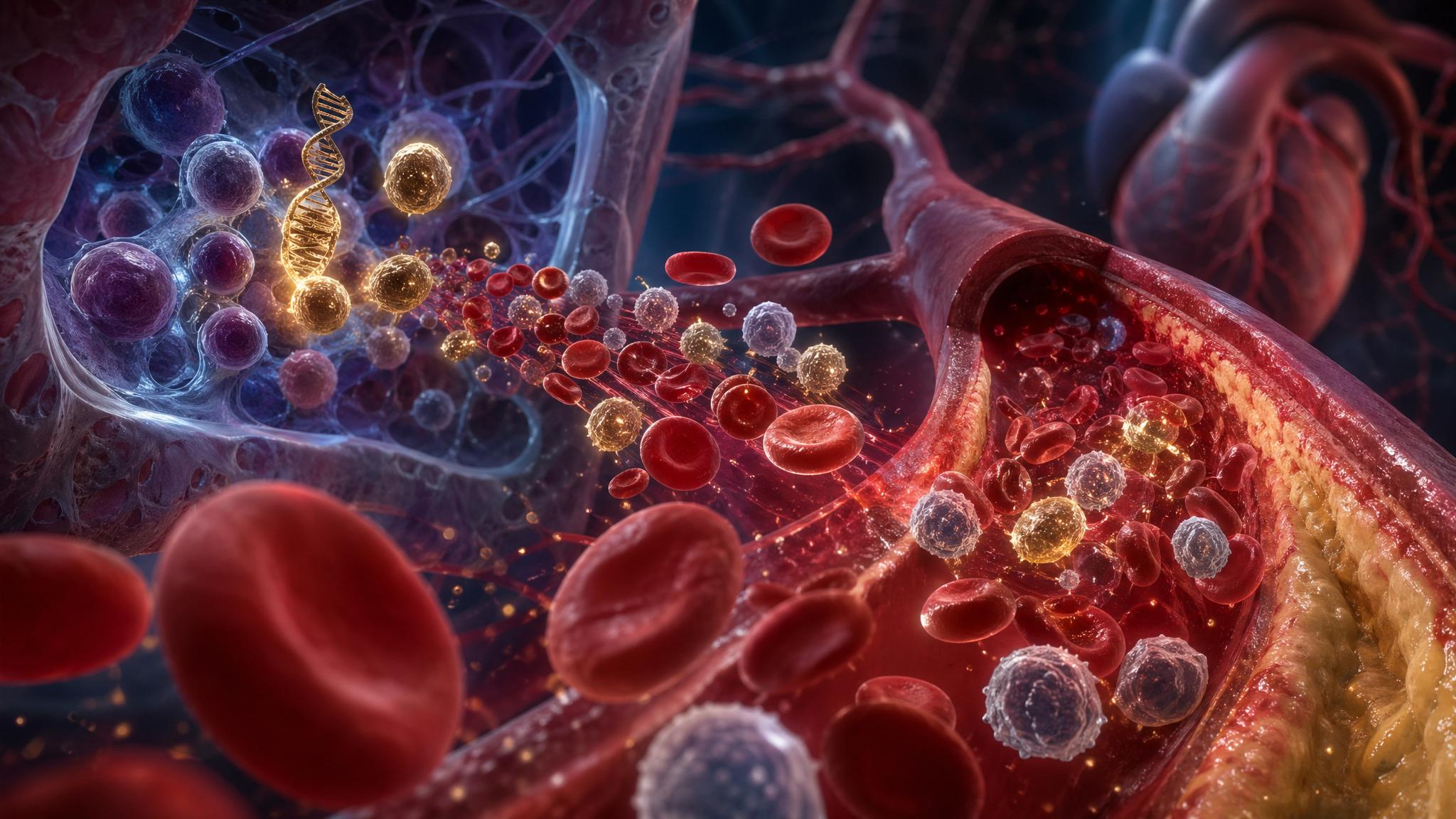
Clonal Hematopoiesis (CHIP): The Cardiovascular Risk Hidden in Your Blood
By age seventy, somewhere between ten and twenty percent of people carry a population of mutated blood stem cells that quietly double their risk of heart disease. The condition has a name, clonal hematopoiesis, and it is rapidly becoming one of the most consequential cardiovascular risk factors most people have never heard of.
Presented By Our Partners



For most of the last century, cardiovascular medicine has rested on a small number of powerful, measurable risk factors. Cholesterol. Blood pressure. Smoking. Diabetes. Family history. The famous Framingham score, which has guided risk assessment for sixty years, is built almost entirely from these. And the standard interventions, which have done extraordinary things to reduce heart attacks and strokes in the developed world, follow directly. Lower the LDL. Lower the systolic. Stop smoking. Manage the diabetes.
That model has saved millions of lives. It is also, we now know, missing a piece.
The piece is in the blood, but not in the lipid panel. It is in the bone marrow, slowly accumulating over decades. It carries no symptom, no warning sign, and no entry on a current standard physical. It roughly doubles a person’s risk of coronary heart disease independent of every classical risk factor, and roughly quadruples their risk of early-onset heart attack. By age seventy, somewhere between ten and twenty percent of people carry it. Most of them do not know.
It is called clonal hematopoiesis of indeterminate potential, or CHIP, and the story of how it became one of the most important cardiovascular risk factors of the last decade is a story about how somatic mutations, the slow accumulation of DNA changes inside our own cells, are rewriting the map of human disease.
The accidental discovery
The story begins, as so much modern genomic medicine does, with sequencing data piling up faster than anyone could fully analyze it.
By the early 2010s, large-scale exome sequencing studies were accumulating DNA reads from tens of thousands of people, often for unrelated reasons. As researchers looked at the patterns, they noticed something unexpected. A meaningful fraction of older adults were carrying acquired mutations in their blood cells in genes long associated with leukemia and other blood cancers. These were not inherited mutations. They had appeared during the person’s life, in single blood-forming stem cells in the bone marrow, and the descendants of those mutated cells had expanded into clones large enough to detect in a standard blood draw.
The genes involved had familiar names to hematologists: DNMT3A, TET2, ASXL1, JAK2. The first three are epigenetic regulators that control how DNA is read in dividing cells. The fourth is a signaling gene. Together they account for the majority of CHIP mutations, with DNMT3A and TET2 alone accounting for roughly half.
The first surprise was how common the phenomenon turned out to be. By the time the dust settled, the picture was clear: CHIP is rare in young adults, present in a few percent of people in their fifties, and present in over ten percent of people over seventy. Some studies, using more sensitive sequencing, suggest that low-level CHIP eventually develops in the great majority of older adults if you look hard enough.
The second surprise was what these CHIP carriers were dying of.
Because the mutations were the same ones associated with leukemia, researchers initially expected that the chief consequence of CHIP would be an increased risk of blood cancer. There is some elevated risk, on the order of half a percent to one percent per year, but it is small. What turned out to be much larger, and far more clinically consequential, was an elevated risk of cardiovascular disease.
In a landmark 2017 study published in the New England Journal of Medicine, Siddhartha Jaiswal and colleagues analyzed exome sequencing data from over eight thousand participants across multiple cohorts. CHIP carriers had a 1.9-fold higher risk of coronary heart disease than non-carriers. In studies of people with early-onset heart attacks, where the genetic signal is starkest, CHIP carriers had a 4.0-fold higher risk than non-carriers. Carriers of JAK2 mutations specifically had a stunning 12-fold increase. The associations held independently of cholesterol, blood pressure, smoking, diabetes, and every other classical risk factor.
A new cardiovascular risk factor had quietly entered the literature, and a small population of researchers began the long work of figuring out how it does what it does.
The mechanism: inflammation as the hidden engine
The story of how mutated blood stem cells in the bone marrow accelerate disease in the wall of an artery is, ultimately, a story about inflammation.
Most CHIP mutations are loss-of-function mutations in epigenetic regulators. TET2 and DNMT3A, in particular, normally help control how immune cells respond to inflammatory signals. When these brakes are weakened or disabled, the immune cells produced by the mutated bone marrow population, especially monocytes and macrophages, run hot. They produce more inflammatory cytokines, particularly interleukin-1β (IL-1β) and interleukin-6 (IL-6). They are quicker to infiltrate inflamed tissues. They are slower to disengage. The body, in other words, is being supplied with a steady stream of immune cells that are slightly more inflammatory than normal, day after day, year after year.
Featured Partner
Invest in the Infrastructure Behind Modern Medicine
As healthcare expands beyond hospital walls, the buildings and campuses supporting that shift are generating compelling returns for investors who move early. The Healthcare Real Estate Fund offers qualified investors direct access to a curated portfolio of medical office, outpatient, and specialty care facilities.
Learn More →
Atherosclerosis, the slow process by which fatty deposits accumulate in arterial walls and eventually rupture to cause heart attacks and strokes, has always been understood, since at least the late 1990s, as fundamentally an inflammatory disease. Cholesterol provides the fuel. Inflammation provides the fire. The CHIP discovery offered a new and unexpectedly elegant explanation for why some people with normal cholesterol still develop devastating heart disease, and why some people with high cholesterol never do. The inflammatory tone of the patient’s immune system, set in part by the mosaic of mutated and unmutated stem cells in their bone marrow, may be at least as important as the LDL number on their lipid panel.
Mouse experiments have made the case unusually clear. When researchers transplant Tet2-deficient bone marrow into mice prone to atherosclerosis, the animals develop arterial plaques that are sixty percent larger than mice with normal bone marrow, even on the same diet. The plaques are more inflamed, with more macrophage infiltration and more necrotic core formation. Disable the NLRP3 inflammasome, the molecular machine that produces IL-1β, and much of the effect goes away.
Different CHIP genes appear to drive inflammation through partially different pathways. TET2 loss runs primarily through the IL-1β / NLRP3 axis. DNMT3A loss runs more through type I interferon signaling and a different inflammatory profile. JAK2 mutations work through their own distinct mechanisms involving direct enhancement of cytokine signaling. The implication, increasingly validated in clinical data, is that not all CHIP is the same, and that the right intervention may depend on which gene is mutated.
The first targeted treatment, hidden in an old trial
One of the most striking findings in the CHIP cardiovascular story comes from a re-analysis of a trial that was originally designed to test something else.
The CANTOS trial, conducted between 2011 and 2017, randomized over ten thousand patients with prior heart attack and elevated inflammatory markers to receive either canakinumab, a monoclonal antibody that neutralizes IL-1β, or placebo. The headline result was significant: a 15% reduction in major cardiovascular events in the canakinumab group. The drug worked. It was the first time a pure anti-inflammatory therapy, with no effect on cholesterol or blood pressure, had been shown to reduce heart disease.
What CANTOS did not initially report, because the data were not yet available, was how the benefit broke down by CHIP status.
When researchers went back and sequenced the participants’ blood for CHIP mutations, the picture sharpened. Patients with TET2-driven CHIP showed a markedly stronger benefit from canakinumab than patients without CHIP. Patients with DNMT3A-driven CHIP, in contrast, showed less benefit. The implication was unmistakable. The drug was working most powerfully in exactly the patients whose biology suggested they should benefit most from IL-1β blockade. A single trial, retrospectively analyzed by genotype, had demonstrated something close to precision cardiology in its earliest form.
This is what the future of cardiovascular medicine begins to look like. Not statins for everyone with elevated LDL, but targeted anti-inflammatory therapy, increasingly guided by the somatic mutation profile of the patient’s blood. Anti-IL-1β drugs for TET2-CHIP carriers. Different anti-inflammatory mechanisms, perhaps interferon-targeted approaches, for DNMT3A-CHIP carriers. Conventional cholesterol management for everyone, layered with personalized inflammatory therapy on top.
What CHIP means beyond the heart
CHIP is increasingly understood as a systemic risk factor, not just a cardiovascular one. Recent research has linked CHIP to elevated risk of heart failure, stroke, atrial fibrillation, kidney disease, chronic obstructive pulmonary disease, and even all-cause mortality. The unifying mechanism, in nearly every case, is the chronic low-grade inflammation that mutated immune cells help to drive, a phenomenon often called inflammaging.
This connects directly to a thread we have been developing across our pillar piece on the Mosaic Body and our piece on mosaic aging. CHIP is, in some sense, the prototype somatic mutation disorder. It is the cleanest case we have of a population of mutated cells, expanding clonally over decades, slowly tilting the inflammatory tone of the entire body in directions that accelerate the aging of multiple organs at once. It is also strikingly similar in mechanism, though different in tissue, to the somatic mutation findings now emerging in autoimmune disease: clonal expansions of immune cells whose acquired mutations bend immune behavior in pathological directions.
The same biological process is showing up across multiple medical specialties at once. The pieces are converging.
What this means for your health
CHIP is not yet part of routine cardiovascular risk assessment in most countries, but it is moving in that direction. Specialty cardiology centers and longevity-focused clinics are beginning to offer CHIP testing, typically through targeted deep sequencing of a panel of forty to a hundred genes, looking for the mutational signatures that define clonal hematopoiesis. The cost has dropped substantially over the last few years. Within five to ten years, CHIP screening is likely to become common in any patient over fifty with elevated cardiovascular risk, and probably routine in geriatric care.
If you are tested and found to have CHIP, the immediate clinical implications today are limited. There are no FDA-approved therapies specifically for CHIP, though canakinumab is approved for other indications and has demonstrated benefit in CHIP carriers in trial subgroup analyses. What testing offers is sharper risk stratification: a CHIP-positive patient is essentially being told that their conventional risk factors understate their true cardiovascular risk, and that aggressive management of the modifiable factors is more important for them than for the average patient.
What everyone, with or without testing, can do is reduce the inflammatory tone of the body, which is plausibly both a brake on the clonal expansion of CHIP itself and a brake on its downstream consequences. The interventions are familiar.
Whole-food nutrition, particularly Mediterranean-style patterns rich in olive oil, fatty fish, vegetables, legumes, and nuts, has been shown across multiple studies to reduce systemic inflammatory markers including IL-6 and CRP. Regular movement, particularly the combination of aerobic conditioning and resistance training, reduces inflammation independently of weight loss. Adequate sleep, somewhere in the seven to nine hour range, is one of the most underrated anti-inflammatory interventions available. Stress regulation, whether through breathwork, meditation, time in nature, or strong social connection, lowers cortisol and the inflammatory cytokines that travel with it. Avoiding tobacco entirely and maintaining metabolic health are direct and powerful contributors. None of this is news. What is new is the mechanistic understanding of why these interventions matter so much, and why their effects are visible at the level of cellular evolution itself.
The big-picture lesson of CHIP is that the cardiovascular system does not exist in isolation from the immune system, the bone marrow, or the slow somatic biography of the cells that line our blood. The Framingham model has carried us a long way. It will continue to. But the next generation of cardiovascular medicine is going to fold in the somatic mutation status of the patient’s blood as a fundamental input. That generation is closer than most patients realize.
Heart disease, in the new picture, is partly written in cholesterol and partly written in mutations. Both are modifiable, in different ways. Both will matter.
Frequently asked questions
What is clonal hematopoiesis (CHIP)?
Clonal hematopoiesis of indeterminate potential is an age-related condition in which a single blood-forming stem cell in the bone marrow acquires a mutation that gives it a competitive advantage. The descendants of that mutated stem cell expand to make up a meaningful portion of the body’s circulating blood cells. By age seventy, somewhere between ten and twenty percent of people have detectable CHIP, and the great majority have at least low-level clonal expansion.
How does CHIP increase cardiovascular risk?
The mutations most commonly involved in CHIP, particularly in genes such as TET2, DNMT3A, ASXL1, and JAK2, weaken the brakes on inflammatory signaling in immune cells. The result is a population of monocytes and macrophages that produce excess inflammatory cytokines including IL-1β and IL-6, accelerating the inflammatory process in arterial walls that drives atherosclerosis. CHIP carriers have roughly twice the risk of coronary heart disease and four times the risk of early-onset heart attack compared to non-carriers, independent of cholesterol, blood pressure, and other classical risk factors.
Should I get tested for CHIP?
CHIP testing is not yet standard of care, but it is becoming more available through specialty cardiology and longevity clinics. Testing makes the most sense for people over fifty with elevated cardiovascular risk, a strong family history of early heart disease, or unexplained cardiovascular events. Testing in younger or low-risk people is unlikely to change clinical management at this time. Discuss with a physician familiar with the current state of the evidence.
If I have CHIP, can it be treated?
There are no FDA-approved therapies specifically for CHIP today. The anti-IL-1β antibody canakinumab, approved for other indications, has shown strong cardiovascular benefit in CHIP carriers (particularly TET2-CHIP) in subgroup analyses of the CANTOS trial. Several precision anti-inflammatory therapies for CHIP are in development. For now, the main clinical implication of a positive CHIP test is sharper risk stratification, which supports more aggressive management of modifiable cardiovascular risk factors.
Can lifestyle reduce CHIP-related cardiovascular risk?
Yes. The same anti-inflammatory lifestyle interventions that reduce general cardiovascular risk, including a Mediterranean-style diet, regular aerobic and resistance exercise, adequate sleep, stress regulation, and tobacco avoidance, all directly target the inflammatory pathways through which CHIP appears to drive disease. Some emerging evidence suggests these interventions may also slow the clonal expansion of CHIP itself, though this is an active area of research.
Is CHIP related to cancer risk?
Yes, but the absolute risk is small. CHIP carriers have an elevated risk of developing blood cancers such as leukemia and myelodysplastic syndrome, on the order of half a percent to one percent per year. The cardiovascular risk associated with CHIP is far larger in absolute terms than the cancer risk, which is why CHIP is increasingly thought of as primarily a cardiovascular and inflammatory condition rather than a pre-cancerous one.
This piece is part of an ongoing series on the Mosaic Body, the emerging view of human biology in which acquired somatic mutations shape health, disease, and aging. See also our pillar essay on why your cells are quietly mutating, and why it’s rewriting medicine, our piece on somatic mutations and autoimmune disease, and the framework of mosaic aging.
Key references: Jaiswal, S., et al. (2017). Clonal Hematopoiesis and Risk of Atherosclerotic Cardiovascular Disease. New England Journal of Medicine. DOI: 10.1056/NEJMoa1701719. Svensson, E. C., et al. (2022). TET2-Driven Clonal Hematopoiesis and Response to Canakinumab: An Exploratory Analysis of the CANTOS Randomized Clinical Trial. JAMA Cardiology. Frontiers in Cardiovascular Medicine (2026). Clonal hematopoiesis of indeterminate potential and cardiovascular disease: mechanistic insights, clinical implications, and the dawn of precision cardio-hematology. DOI: 10.3389/fcvm.2026.1796328.


Similar Posts

Your Gut Microbiome Is Talking to Your Brain, Heart, and Kidneys: Five 2026 Studies Reveal the Body’s Hidden Communication Network
A Stanford Nature study shows gut bacteria drive age-related memory loss through vagus nerve inflammation, while new research in Nature Communications, npj Biofilms and Microbiomes, and Microbiology Spectrum reveals that…

Beyond Weight Loss: The Mounting Evidence That GLP-1 Drugs May Be the First True Longevity Medications
A convergence of preclinical and clinical evidence — from a landmark Cell Metabolism mouse study to the first human epigenetic clock trial — is building the case that GLP-1 receptor…

Oura Ring Gen 4: Readiness Scoring, HRV Tracking, and Recovery Intelligence
Recovery does not announce itself with a sensation. It reveals itself in data: the subtle shift of autonomic balance that determines whether today is a day to push or a…
Color Health Genetic Testing: Clinical-Grade Hereditary Cancer Screening With Genetic Counseling Included
Unlike consumer genetics services that test a handful of variants, Color screens the full coding regions of genes linked to hereditary cancer and heart disease, with genetic counseling included in…

AI Case Finding: The Healthcare Delivery Use Case That Finds Patients Medicine Keeps Missing
AI case finding may be one of the most important healthcare delivery use cases of 2026: finding patients who already qualify for proven care but remain invisible to the system.

The Zone 2 Reckoning: What the 2025 Evidence Really Says About Slow Cardio and Longevity
For three years Zone 2 has been sold as the optimal longevity cardio. A July 2025 Sports Medicine review pushed back. Inside what the evidence actually shows about slow cardio,…
