
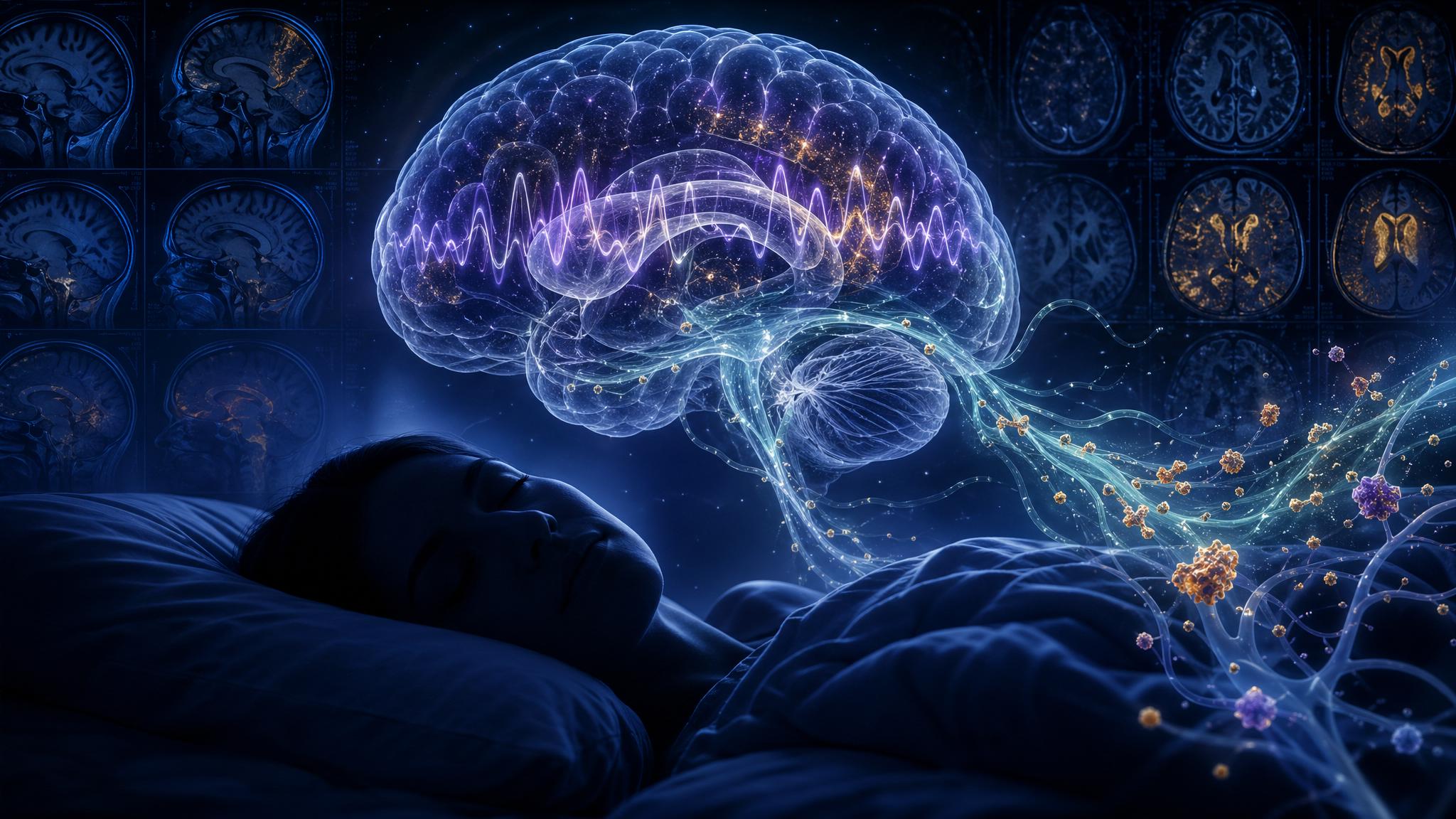
Adult Neurogenesis Confirmed: How 2026 Evidence Resolves the Hippocampus Debate and What It Means for Cognitive Longevity
For most of the twentieth century, neuroscience operated under what Santiago Ramón y Cajal, the Spanish pathologist who won the Nobel Prize in 1906 for his foundational work on the structure of the nervous system, called the "harsh decree" of the adult brain. Once development was finished, he wrote, the connections between neurons were fixed, immutable, and final. Nothing could regrow. Nothing new could form. The brain you carried into adulthood was the brain you would die with, minus whatever cells disease, injury, and time stole along the way.
Presented By Our Partners



That dogma began to crack in 1998, when Peter Eriksson, a Swedish neurologist, and Fred Gage of the Salk Institute published a landmark paper in Nature Medicine showing that the adult human hippocampus produces new neurons throughout life. Working with cancer patients who had received the labeling compound bromodeoxyuridine to track tumor cell division, Eriksson and Gage identified newly born neurons in the dentate gyrus of donors as old as seventy two. The implication was startling. The most important memory structure in the human brain was not a static archive. It was a tissue under continuous renovation.
For twenty years after that paper, the field expanded. Animal studies in mice, rats, and nonhuman primates showed that adult hippocampal neurogenesis was not only real but functionally critical, contributing to learning, mood regulation, pattern separation, and resilience to stress. Then in 2018, the field hit a wall. A team led by Shawn Sorrells and Arturo Alvarez-Buylla at the University of California San Francisco published a paper in Nature reporting that they could find essentially no evidence of newly born neurons in the human hippocampus past adolescence. The study was rigorous, the methodology careful, and the conclusion deflating. Headlines around the world declared adult neurogenesis dead.
Six years later, the science has turned again. A series of 2024 and 2026 studies, using sharper tools and tighter methods, has resolved most of the technical conflict and converged on a clear answer. The adult human brain does build new neurons. It does so in the hippocampus, in the dentate gyrus specifically, and the rate of production is shaped by exercise, sleep, diet, stress, and the broader hygiene of cognitive longevity. What had seemed like a crisis in the field is now better understood as a calibration. The signal was always there. The instruments simply needed to catch up.
This deep dive walks through how the adult neurogenesis debate was resolved, what the 2026 evidence actually shows, the mechanisms behind why some brains build more new neurons than others, and the practical interventions that have been shown to move the needle.
The Eriksson Discovery and the Twenty Year Buildup
The 1998 Eriksson and Gage paper rested on a clever piece of clinical opportunism. Patients with metastatic cancer were sometimes given bromodeoxyuridine, a thymidine analog that incorporates into the DNA of any cell that divides. The compound was used to estimate tumor proliferation rates. When those patients later donated their brains for research, neuroscientists could look for cells in the hippocampus that had taken up the label, marking them as having divided after the injection. Eriksson and Gage found exactly that. Newly born neurons, decorated with bromodeoxyuridine and stained for the mature neuronal marker NeuN, sat quietly in the dentate gyrus of every adult donor they examined.
In the years that followed, the picture deepened. Maura Boldrini at Columbia University published a 2018 study in Cell Stem Cell using a different methodology, postmortem tissue from healthy donors aged fourteen to seventy nine, and reported that thousands of immature neurons could be identified in the dentate gyrus across the entire lifespan. María Llorens-Martín at the Severo Ochoa Molecular Biology Center in Madrid, working with Alberto Rábano and Ana Moreno-Jiménez, published a 2019 paper in Nature Medicine identifying immature neurons in donors up to ninety years old, with sharp declines in patients with Alzheimer’s disease.
What unified these studies was the use of careful tissue preservation protocols. Brain tissue collected and fixed too long after death loses the molecular fingerprints of immature neurons. The Llorens-Martín group showed that the window for capturing those signals was on the order of hours, not days. Tissue handled less carefully would systematically underestimate neurogenesis.
Jonas Frisén at the Karolinska Institute had taken a different route to the same answer. In a now classic 2013 paper in Cell, his group exploited the carbon 14 left in the atmosphere by midcentury nuclear weapons testing. The bomb pulse, as it is called, created a sharp spike of radioactive carbon that was absorbed into the DNA of every cell born during a given year. By measuring the carbon 14 signature in neurons isolated from postmortem hippocampi, Frisén could calculate when those cells had been born. The answer was that roughly seven hundred new neurons were added each day to the adult human dentate gyrus, a turnover rate of about 1.75 percent per year, persisting into the eighth decade of life.
The 2018 Crisis and the Methodological Reckoning
Against this growing body of evidence, the 2018 Sorrells paper landed like a thunderclap. Using a series of immunohistochemical markers including doublecortin, polysialylated neural cell adhesion molecule, and TBR1, the UCSF team scanned dentate gyrus tissue from fifty nine donors and reported that the markers of immature neurons fell sharply during the first year of life and were essentially absent in adult brains. Their interpretation was that adult hippocampal neurogenesis in humans was either nonexistent or so rare as to be functionally irrelevant.
The Sorrells paper triggered a methodological reckoning that ultimately strengthened the field. Several issues emerged on closer scrutiny. The donor tissue used in the UCSF study had longer postmortem intervals than the Boldrini and Llorens-Martín work, and the antibodies used to detect immature neurons were sensitive to those delays. The fixation protocols differed. The selection of tissue blocks and the way they were sampled differed. None of this meant that Sorrells and colleagues had been wrong to ask the question. Their paper forced the field to standardize its methods, validate its antibodies, and grow up.
By 2024, a new generation of studies had returned a clearer picture. A team led by Henriette van Praag, now at Florida Atlantic University and previously at the National Institute on Aging, published a comprehensive review in Nature Reviews Neuroscience reconciling the literature and concluding that adult hippocampal neurogenesis in humans is real, measurable, and biologically meaningful. Single nucleus RNA sequencing studies from groups including Steven McCarroll at Harvard provided independent transcriptomic evidence of neural progenitor cell populations in adult human dentate gyrus, exactly where they would be expected if neurogenesis was ongoing.
By 2026, the question is no longer whether adult human neurogenesis happens. It is how much, in whom, and what shapes it.
Featured Partner
Invest in the Infrastructure Behind Modern Medicine
As healthcare expands beyond hospital walls, the buildings and campuses supporting that shift are generating compelling returns for investors who move early. The Healthcare Real Estate Fund offers qualified investors direct access to a curated portfolio of medical office, outpatient, and specialty care facilities.
Learn More →
What the 2026 Evidence Shows
A series of 2026 papers has begun to quantify the variability across individuals. A study published in Cell Stem Cell from the Llorens-Martín group expanded the Madrid cohort to more than three hundred postmortem brains and reported that the density of immature neurons in the dentate gyrus declined by roughly thirty percent across the adult lifespan but remained measurable in donors past one hundred years old. Notably, the rate of decline was not uniform. Donors with documented histories of regular aerobic exercise had immature neuron densities that were on average two and a half times higher than sedentary peers of the same age. Donors with major depressive disorder, in contrast, had densities significantly lower than controls, consistent with the longstanding hypothesis that depression and impaired neurogenesis are linked.
A second 2026 paper, published in Nature Neuroscience by a Karolinska team led by Marta Paterlini and Frisén, used the carbon 14 method to refine the lifetime production curve. Their updated estimate puts adult hippocampal neurogenesis at roughly six hundred to seven hundred neurons per day in healthy young adults, declining to perhaps two hundred per day by the eighth decade. Cumulatively, that means a typical adult brain may add between five and seven million new dentate gyrus neurons across the adult lifespan. It is not a torrent. But it is enough to matter.
What those new neurons do has been clarified by behavioral and physiological work. Adult born dentate gyrus neurons have unusual electrophysiological properties for the first several weeks of their life, including heightened excitability and broader plasticity. They appear to specialize in pattern separation, the cognitive operation that lets you recognize that today’s parking spot is different from yesterday’s, or that the new face in the office is not the colleague you confused them with. Loss of pattern separation is a hallmark of early Alzheimer’s disease and a contributor to age related memory complaints.
The Levers That Move Adult Neurogenesis
The most important practical question is what changes neurogenesis rates in living humans. Animal work has identified the levers in detail. A 2026 review in Trends in Neurosciences by Henriette van Praag and Gerd Kempermann at the German Center for Neurodegenerative Diseases summarized the evidence in five categories.
The first and best supported lever is aerobic exercise. Running in mice and rats roughly doubles the rate of new neuron production in the dentate gyrus. The mechanism runs through brain derived neurotrophic factor, or BDNF, a growth factor that supports both neurogenesis and the maturation of new neurons. In humans, exercise interventions have been shown to increase circulating BDNF, expand hippocampal volume on MRI, and improve performance on memory tasks that depend on the dentate gyrus. A 2024 randomized trial led by Kirk Erickson at AdventHealth Research Institute followed older adults assigned to a year of moderate aerobic exercise versus stretching controls and found a two percent increase in hippocampal volume in the exercise group, compared to a one to two percent annual atrophy rate that is typical of sedentary aging. The exercise group performed better on memory tests, and those gains correlated with serum BDNF.
The second lever is sleep, particularly slow wave sleep. Animal studies by Robert Stickgold at Harvard and others have shown that sleep deprivation suppresses adult neurogenesis and that the survival of newly born neurons depends on adequate slow wave activity in the days after they are produced. Human work on sleep regularity, including the 2024 Lyall studies in Nature Communications, supports the broader picture that disrupted sleep accelerates brain aging through multiple pathways, with neurogenesis suppression a plausible contributor.
The third lever is diet. Caloric restriction has been shown in rodents to enhance neurogenesis. Specific dietary components, including omega 3 fatty acids, polyphenols from blueberries, walnuts, dark chocolate, and green tea, and the polyamine spermidine, all show neurogenesis enhancing effects in animal models. Mark Mattson at Johns Hopkins, formerly at the National Institute on Aging, has done foundational work showing that intermittent fasting protocols enhance hippocampal neurogenesis in mice, with mechanisms running through ketone body signaling and BDNF induction.
The fourth lever is cognitive engagement and environmental enrichment. Mice housed in enriched cages with running wheels, novel toys, and social companions show two to threefold higher neurogenesis rates than mice in standard housing. Translation to humans is harder to measure, but cognitive training trials, social engagement studies, and education effects on dementia risk all point in the same direction.
The fifth lever is the avoidance of chronic stress. Sustained elevations in glucocorticoids, the body’s stress hormones, suppress adult neurogenesis in animal models. Chronic stress in humans is associated with hippocampal atrophy and increased risk of depression, both consistent with neurogenesis suppression. Interventions that reduce stress, including meditation, social connection, and treatment of underlying anxiety or depressive disorders, plausibly support neurogenesis through this pathway.
The Pharmacology of New Neurons
Beyond lifestyle, a small pharmacology of neurogenesis is starting to emerge. The selective serotonin reuptake inhibitors, including fluoxetine, sertraline, and escitalopram, all enhance adult hippocampal neurogenesis in animal models. The seminal 2003 paper by René Hen at Columbia University in Science showed that the antidepressant effects of fluoxetine in mice required intact neurogenesis. If the dentate gyrus was selectively irradiated to block new neuron production, fluoxetine lost its mood elevating effect.
GLP-1 receptor agonists, including semaglutide, have shown neurogenic effects in animal models, an observation that is now being followed up in the context of 2026 reports linking GLP-1 use to reduced depression and dementia risk. Lithium, ketamine, and psilocybin have all shown effects on hippocampal plasticity and, in some cases, neurogenesis in animal models. The clinical translation is incomplete, but the converging evidence suggests that the same systems that govern mood regulation are deeply intertwined with the rate at which the brain renews itself.
The Alzheimer’s Connection
Adult hippocampal neurogenesis is significantly reduced in Alzheimer’s disease, and the reduction begins early. The 2019 Llorens-Martín paper in Nature Medicine reported sharp declines in immature neurons in the dentate gyrus of patients with mild Alzheimer’s, with progressive loss as the disease advanced. The implication is that impaired neurogenesis may not just be a consequence of Alzheimer’s but a contributor to early symptoms, particularly the failures of pattern separation and recent memory that mark the disease.
This has therapeutic implications. If neurogenesis can be supported through exercise, sleep, diet, and stress management, then the modifiable risk factor profile for cognitive decline may overlap substantially with the lifestyle profile that protects new neuron production. The 2020 and 2024 Lancet Commission reports on dementia prevention, led by Gill Livingston at University College London, identified twelve and then fourteen modifiable risk factors that together account for an estimated forty to forty five percent of dementia cases worldwide. Many of those factors, including physical inactivity, social isolation, depression, and sleep disturbance, map directly onto the levers that are known to suppress neurogenesis in animal models.
The Caveats and the Honest Uncertainty
It is worth being clear about what is still unknown. The absolute number of new neurons produced in the adult human hippocampus per day is still debated, with estimates ranging across roughly an order of magnitude depending on methodology. Whether the magnitude of neurogenesis in healthy adults is sufficient to explain measured changes in memory or mood, or whether it is more of a permissive substrate that interacts with broader plasticity mechanisms, remains an open question. The translation from rodent studies, where neurogenesis can be readily manipulated and measured, to humans, where direct measurement requires postmortem tissue or indirect MRI proxies, is imperfect.
What is clearer is that the question is no longer whether the adult brain can build new neurons. It can. The question is how much each of us shapes that process, and the evidence for meaningful behavioral influence keeps accumulating.
What This Means For You
You do not need to understand the molecular biology of doublecortin to act on this evidence. The interventions that the science points to are the same interventions that protect cardiovascular health, metabolic health, and overall healthspan. That convergence is itself a clue. The brain was never separate from the body, and the maintenance routines that keep one tissue young are usually the same maintenance routines that keep the others young.
Move daily and move aerobically. The strongest evidence for human neurogenesis enhancement runs through aerobic exercise. Brisk walking, easy cycling, swimming, and Zone 2 conditioning all qualify. Aim for at least one hundred fifty minutes of moderate aerobic activity per week, and consider adding a structured weekly bout that pushes into vigorous intensity. The Erickson hippocampal volume work was done with three forty minute walking sessions per week. That is a low bar that most adults can clear.
Sleep enough and sleep regularly. Adult neurogenesis depends on adequate slow wave sleep and on the consolidation that follows it. Most adults need seven to nine hours, with consistent timing within an hour of the same window each night. Chronic short sleep and irregular schedules both suppress neurogenesis in animal models and accelerate brain aging in humans.
Eat in a way that supports the brain. There is no single neurogenic diet, but the components that show up across the literature are familiar. Omega 3 fatty acids from fatty fish, walnuts, and flaxseed. Polyphenols from blueberries, dark chocolate, green tea, and coffee. Adequate protein for the leucine and BDNF related pathways that support neuronal maturation. Lower intake of ultraprocessed foods, which are associated with worse cognitive outcomes in large cohort studies. Some form of intermittent caloric restriction or time restricted eating, supported by Mattson’s work on the metabolic switching that promotes BDNF and neurogenesis.
Engage your mind. Novelty, learning, and cognitive challenge support hippocampal plasticity. New languages, new instruments, new skills, new social connections all qualify. The point is not to grind through brain training apps. It is to keep introducing the dentate gyrus to information it has never seen before, which is exactly what pattern separation requires it to do.
Manage stress, treat depression. Chronic stress and depression both suppress neurogenesis. If either is present in your life, treating them is not just emotional hygiene. It is brain biology. Therapy, medication when indicated, exercise, social connection, and mindfulness practices all show effects on the same systems that govern hippocampal neurogenesis.
Take seriously the lifestyle profile that protects against dementia. The Lancet Commission framework is not a list of hopeful suggestions. It is a quantitative estimate of how much dementia risk is shaped by modifiable behavior. Hearing protection and the use of hearing aids when needed, blood pressure control, social engagement, alcohol moderation, smoking cessation, and the entire constellation of cardiovascular health practices all converge on the same outcome. A brain that keeps building new neurons into the eighth and ninth decades is a brain that has been treated like the renewable tissue it actually is.
The Cajal era taught us that the adult brain was finished. The 2026 evidence suggests it is not. Each healthy day, your hippocampus builds something it did not have yesterday. The science of how to make that process work in your favor is no longer abstract.


Similar Posts

Clair: Stanford-Developed Continuous Hormone Monitoring Wearable with 10 Biosensors
A wrist-worn wearable from a Stanford spinout that uses 10 biosensors and AI to estimate estrogen, progesterone, LH, and FSH levels in real time without blood draws, achieving 94.1% cycle…

The Daily Rounds: Longevity & Health Care Brief | April 24, 2026
🧬 SuperAgers Grow Twice as Many New Neurons — Adults over 80 with 50-year-old-level memory generate up to 2.5 times more new neurons than peers, redefining what is biologically possible for the aging brain. 🤖 AI Drug Discovery Reaches Scale — Novo Nordisk joins OpenAI while NVIDIA commits $1 billion alongside Lilly, as 173-plus AI-discovered drug programs advance through clinical trials simultaneously. ⌚ Wearables Achieve Clinical-Grade Metabolic Prediction — The WEAR-ME study confirms consumer wearables predict insulin resistance with 80% accuracy, enabling population-scale metabolic screening without lab visits. 🌙 Circadian-Aligned Eating Extends Lifespan by 35% — A Science study shows that timing meals within the optimal circadian window delivers lifespan gains far beyond caloric restriction alone. 💪 Muscle Mass Is Metabolic Medicine — Every 10% gain in muscle mass reduces insulin resistance by 11%, with men who skip strength training 2.4 times more likely to develop metabolic disease.
Biological Aging Reversal in 2026: Gut Bacteria, NAD+ Balance, and Epigenetic Clocks Point the Way
Three landmark studies in late 2025 and early 2026 reveal that gut bacteria, cellular NAD+ balance, and epigenetic clock acceleration are key drivers of biological aging and, in animal models,…

Microplastics in the Human Body: What 2026 Cardiovascular and Brain Evidence Reveals About the Synthetic Particles Now Inside Us
A 257 patient New England Journal of Medicine study found microplastics in 58 percent of carotid plaques, with a 4.5 fold higher rate of heart attack, stroke, and death. A…

The U.S. Government Just Made Its Biggest Bet on Healthy Aging: Inside ARPA-H’s $144 Million PROSPR Program
ARPA-H’s $144 million PROSPR program is testing rapamycin, semaglutide, and dapagliflozin in 726 healthy older adults, funding a first-in-humans trial of a retrotransposon-silencing HIV drug, and building a validated biological…
What Are Somatic Mutations? A Plain-English Guide to the DNA Changes Happening Inside You Right Now
Somatic mutations are DNA changes that happen in your body’s cells throughout life, not at conception. A plain-English guide to what they are, how they arise, why most of them…
