

The Glymphatic System: How Sleep Cleanses the Aging Brain and What 12 Years of Neuroscience Reveal About Dementia Prevention
In October 2013, a paper in Science changed how neuroscientists think about the aging brain. Maiken Nedergaard and her team at the University of Rochester Medical Center had found something anatomy textbooks had missed for more than a century. The brain, long believed to lack a lymphatic system, possesses a sophisticated waste clearance network that operates almost exclusively during sleep. They called it the glymphatic system, a portmanteau of glia, the support cells that drive it, and lymphatic, the body’s broader waste plumbing.
Presented By Our Partners



Twelve years later, the implications of that discovery are reshaping cognitive aging research. The glymphatic system has emerged as a likely mechanistic bridge between poor sleep and Alzheimer’s disease, between mid-life hypertension and dementia risk, between exercise habits and brain volume preservation. A 2025 imaging study in Brain identified a 27 percent decline in glymphatic clearance between healthy 25 year olds and healthy 70 year olds. The same study found that within any age decade, individuals with the lowest glymphatic flow had the highest cortical amyloid burden on PET scans.
This is the story of how a single discovery rewrote sleep medicine, dementia research, and the longevity playbook.
The Discovery That Closed a Century Old Gap
For more than a hundred years, neurology textbooks taught that the brain was unique among organs. Every other tissue in the body has lymphatic vessels, the slow drainage system that carries metabolic waste, immune cells, and excess fluid back to circulation. The brain, weighing only two percent of body mass but consuming twenty percent of resting energy, somehow disposed of its waste without one.
The accepted explanation was diffusion. Proteins and metabolic byproducts were thought to drift across cell membranes into the cerebrospinal fluid (CSF) and out through the arachnoid villi at a leisurely pace. This had always been suspicious. The brain produces beta amyloid, tau, alpha synuclein, and other proteins prone to aggregation. Without active clearance, accumulation should be the rule, not the exception.
In 2012, Jeffrey Iliff and Maiken Nedergaard at Rochester used two photon microscopy in live mice to track fluorescent tracers injected into CSF. What they saw was not diffusion. CSF moved rapidly along the outside of penetrating arteries, driven by arterial pulsation, then crossed into brain tissue through aquaporin 4 (AQP4) channels on astrocyte endfeet. The fluid swept through the brain parenchyma, picked up metabolic waste, and returned along venous routes. They published the findings in Science Translational Medicine, naming the network the glymphatic system.
The 2013 follow up in Science added the critical piece. Lulu Xie, Hongyi Kang, and colleagues showed that the system runs primarily during sleep. In sleeping mice, the interstitial space between brain cells expanded by 60 percent, and glymphatic clearance of injected radiolabeled beta amyloid more than doubled compared to wakefulness. Sleep was not just rest. It was a scheduled cleaning cycle.
The Plumbing in Detail
The current model of glymphatic flow involves four coordinated steps. CSF enters the brain along periarterial spaces, channels between the artery wall and surrounding glial sheath. The pumping of each cardiac cycle drives the fluid forward, an action amplified during slow wave sleep by large oscillations in cerebral blood volume.
Once at the cortex, CSF crosses into the brain extracellular space through AQP4 water channels concentrated on astrocyte endfeet. The astrocytes act as the system’s distributors, bulk routing fluid into and through tissue. The CSF mixes with the interstitial fluid that bathes neurons, taking up soluble waste and pushing the bulk toward perivenous spaces.
From there the fluid drains along venous channels and exits the brain through recently identified meningeal lymphatic vessels, the focus of a separate 2015 discovery by Jonathan Kipnis at the University of Virginia. The Kipnis finding was as surprising as the glymphatic system itself. The dural sinuses, the venous drainage channels in the membranes covering the brain, carry true lymphatic vessels that connect the central nervous system to deep cervical lymph nodes.
Together, the glymphatic system inside the brain and the meningeal lymphatics outside it form a continuous clearance pipeline. The 2018 work of Antoine Louveau in Kipnis’s lab, published in Nature, showed that disrupting meningeal lymphatic drainage in aged mice impaired spatial learning and worsened amyloid deposition. The pipeline matters end to end.
Why Sleep Is the Switch
The 2013 Science paper raised the most consequential question. Why does the system only run during sleep?
Part of the answer is structural. In waking states, neurons are firing, releasing potassium, and the brain’s extracellular space is compressed. During slow wave sleep, neurons hyperpolarize, potassium re-enters cells, and the extracellular volume expands. More space means more flow.
Part of the answer is hemodynamic. A 2019 Science paper from Laura Lewis’s lab at Boston University used coupled functional MRI and EEG to show that during NREM sleep, cerebral blood volume undergoes large slow oscillations, and these oscillations are tightly phase locked to waves of CSF flowing into the brain. Every roughly twenty seconds, blood vessels constrict slightly, CSF surges in to fill the displaced space, then reverses as vessels redilate. This rhythmic pumping is mostly absent during waking and during REM sleep. It is a feature of N3 slow wave sleep, the deepest stage.
The Lewis result reframed the conversation about sleep architecture. Total sleep time matters less than time spent in slow wave sleep, because that is when the pump is engaged. People who sleep eight hours of fragmented stage 1 and 2 sleep do not get the same glymphatic benefit as people who sleep six hours containing two healthy slow wave bouts.
Featured Partner
Invest in the Infrastructure Behind Modern Medicine
As healthcare expands beyond hospital walls, the buildings and campuses supporting that shift are generating compelling returns for investors who move early. The Healthcare Real Estate Fund offers qualified investors direct access to a curated portfolio of medical office, outpatient, and specialty care facilities.
Learn More →
This finding aligns with what cohort studies have been quietly showing for years. The Adam Spira group at Johns Hopkins, in a 2013 JAMA Neurology paper following older adults in the Baltimore Longitudinal Study of Aging, found that shorter sleep and lower sleep quality were both associated with greater cortical amyloid deposition. A 2017 follow up extended the association to longitudinal change.
The Aging Decline
If the glymphatic system clears amyloid and tau, and if aging is the dominant risk factor for Alzheimer’s disease, then a critical question is whether glymphatic function itself declines with age.
The answer is yes, and the decline starts earlier than expected. The seminal aging study came from Benjamin Kress and Maiken Nedergaard in a 2014 Annals of Neurology paper. They found that glymphatic clearance was reduced by roughly 40 percent in old mice compared to young mice, with the loss concentrated at the astrocyte endfeet, where AQP4 channels were depolarized and mislocalized.
In humans, MRI based imaging of glymphatic flow has matured rapidly. Helene Benveniste at Yale pioneered contrast enhanced MRI methods that allow tracer kinetics to be measured non invasively. Per Kristian Eide and Geir Ringstad in Norway developed an intrathecal gadolinium approach that allows direct visualization of CSF tracer transit through the human brain over twenty four hours. Their 2024 and 2025 papers in Brain and Acta Neuropathologica Communications consistently show that older adults clear tracer more slowly than younger ones, that patients with idiopathic normal pressure hydrocephalus have profoundly impaired clearance, and that AQP4 polymorphisms predict the rate of decline.
A May 2026 study in Nature Aging from a multinational consortium led by Lior Greenberg and Aviv Mezer at the Hebrew University of Jerusalem used non contrast diffusion MRI to map glymphatic flow in 1,247 adults across the lifespan. They found that perivascular space size and flow velocity both decline from age 30 onward, with an inflection point near age 55 where the rate of decline doubles. Apolipoprotein E4 carriers showed steeper declines than non carriers, providing a possible mechanistic explanation for one of the strongest genetic risk factors in late onset Alzheimer’s disease.
The Alzheimer’s Question
The most provocative line of work asks whether glymphatic dysfunction is part of how Alzheimer’s begins, not just a consequence of it.
Several pieces of evidence support a causal role. First, beta amyloid is one of the molecules cleared most efficiently by glymphatic flow. Tracking studies in mice show that suppressing AQP4 reduces amyloid clearance by 55 to 65 percent, and AQP4 knockout mice develop accelerated amyloid pathology when crossed onto Alzheimer’s susceptible backgrounds. Second, the Eide and Ringstad human studies show that patients with mild cognitive impairment have measurably slower glymphatic transit before clinical diagnosis. Third, the strongest non genetic risk factors for late onset Alzheimer’s, including poor sleep, mid-life hypertension, obstructive sleep apnea, traumatic brain injury, and excessive alcohol intake, all impair glymphatic function in independent experiments.
A 2024 paper in Cell from Erik Musiek’s lab at Washington University in St. Louis added a circadian dimension. The team showed that the master clock protein BMAL1, when deleted from astrocytes, disrupted the diurnal cycling of AQP4 polarization and impaired clearance even in animals with normal sleep duration. Their interpretation was that the glymphatic system depends on a circadian rhythm in astrocyte function, and that circadian disruption, common in older adults and shift workers, may impair clearance independent of total sleep time.
This is the emerging integrated picture. The glymphatic system is a circadian, sleep gated, blood pressure dependent waste pipeline that becomes vulnerable in middle age. Several Alzheimer’s risk factors converge on it. Some of the most promising drug targets in early Alzheimer’s research now aim at restoring AQP4 polarization or enhancing perivascular flow.
What Changes Glymphatic Function in Humans
The lifestyle modulators are where this research connects to daily decision making. The peer reviewed evidence so far supports a small but meaningful list.
Sleep duration and architecture come first. Adults who consistently achieve seven to eight hours of sleep with intact slow wave bouts show better tracer clearance on MRI than those who do not. Insomnia, obstructive sleep apnea, and chronic short sleep all impair glymphatic flow. Treating sleep apnea with CPAP partially restores it.
Sleep position matters. A 2015 Journal of Neuroscience paper from Hedok Lee, Lulu Xie, and Maiken Nedergaard found that lateral position glymphatic clearance was roughly 25 percent more efficient than supine, and supine was more efficient than prone. The mechanism may involve drainage geometry and the orientation of meningeal lymphatic outflow. Most adults adopt lateral sleeping spontaneously.
Aerobic exercise enhances glymphatic flow in rodent models. A 2020 study in Nature Communications from the Mestre and Nedergaard groups showed that voluntary wheel running in mice approximately doubled glymphatic clearance, with the effect tied to improved arterial pulsatility and reduced perivascular fibrosis. Human imaging trials are ongoing, but the cardiovascular effects of exercise on the driving force of perivascular flow provide a plausible mechanism.
Alcohol is a clear negative. A 2018 paper from Iben Lundgaard and Maiken Nedergaard in Scientific Reports found that chronic moderate alcohol intake reduced glymphatic clearance by approximately 40 percent in mice, with the effect tied to astrocyte inflammation and AQP4 mislocalization. Higher doses produced more severe impairment, while acute very low doses produced a transient mild increase. The net effect of sustained drinking is unambiguously negative.
Hypertension is another negative. Stiff arteries pulse less efficiently, and human imaging studies consistently show reduced glymphatic flow in patients with untreated hypertension. The same is true for arterial stiffness from any cause, which is one reason mid-life blood pressure control associates so strongly with later dementia risk. The SPRINT MIND trial, which showed that intensive blood pressure control reduced mild cognitive impairment incidence by 19 percent, may have produced part of its benefit through preserved glymphatic flow.
Omega 3 fatty acids and certain dietary patterns appear to support glymphatic function, though the human evidence remains preliminary. Animal data suggest that high DHA diets preserve AQP4 polarization through middle age, and a 2023 paper from the Karolinska Institute reported that Mediterranean diet adherence correlated with MRI markers of perivascular space integrity in adults over 60.
What This Means For You
The science is still maturing, but the practical translation is clearer than most longevity recommendations.
First, prioritize sleep quality over sleep duration alone. Aim for seven to eight hours, but pay attention to how much slow wave sleep you actually get. Consumer wearables now estimate this with reasonable accuracy. If your deep sleep is consistently below ninety minutes per night, treat that as a measurable longevity signal worth addressing. Sleep hygiene, consistent timing, cool dark rooms, alcohol moderation, and treatment of sleep apnea all increase slow wave sleep.
Second, treat hypertension early and aggressively. The mid-life blood pressure decade between 40 and 60 may be the most consequential period for protecting glymphatic flow. Blood pressure control is one of the few interventions with consistent long term cognitive benefit in randomized trials, and the glymphatic mechanism helps explain why.
Third, build aerobic capacity. Regular Zone 2 aerobic work and high intensity intervals both improve arterial pulsatility and reduce stiffness. Improved arterial pulsation is the engine of perivascular flow, which is the engine of glymphatic clearance.
Fourth, sleep on your side when comfortable. The effect size is modest, but the cost is zero.
Fifth, moderate alcohol. The longevity literature has shifted clearly away from any protective alcohol narrative, and the glymphatic data adds another reason to keep intake low.
Sixth, take circadian rhythm seriously. Get bright morning light, keep a consistent sleep window, and avoid chronic shift work where possible. Astrocyte circadian biology appears to govern when the cleaning system runs, and disrupted clocks blunt clearance even when total sleep looks normal.
For those interested in measurement, the field is moving toward non contrast MRI tools that may eventually allow clinical assessment of glymphatic function in routine longevity workups. As those tools mature, glymphatic flow may become a new longevity biomarker alongside VO2 max, the Omega 3 Index, and biological age clocks.
The deeper lesson is that the brain’s waste clearance system is not a metaphor. It is a measurable, modifiable, age sensitive piece of plumbing, and twelve years of neuroscience suggest that protecting it may be one of the most important things a person can do for cognitive longevity. The good news is that the things that protect it, deep sleep, controlled blood pressure, aerobic fitness, moderated alcohol, and a steady circadian rhythm, are the same things that protect the rest of the body. Healthspan, in the end, may be one project, not many.


Similar Posts

The Walking Cure: What a Decade of Step Count Research Reveals About the Most Underrated Longevity Tool in Modern Medicine
A 226,889 person meta-analysis, a 78,500 person UK Biobank study, and a decade of cohort work have transformed walking from a soft wellness recommendation into one of the most rigorously…

Clearlight Sanctuary Y Sauna Review: Low EMF Infrared Therapy for Longevity and Cardiovascular Health
Clearlight’s flagship personal sauna combines True Wave far infrared heaters with full spectrum capability and industry leading EMF shielding. Presented By Our Partners Heat stress is not new to human…

The Daily Rounds: Longevity & Health Care Brief | June 1, 2026
🧠 Alzheimer's Inflammation Switch Identified — Scripps Research maps the exact cysteine 148 site on the STING protein where S-nitrosylation triggers neuroinflammation, revealing a concrete small-molecule drug target. 🧠 Nasal Spray Reverses Brain Aging — Texas A&M's neural stem cell-derived particles reduce neuroinflammation and restore memory in aged mice for months after just two doses. ❤️ Ozempic Works Powerfully in Adults Over 65 — A new analysis confirms 15 percent-plus body weight loss and strong cardiovascular gains in older adults, reshaping GLP-1 prescribing for elderly patients. 🦠 Gut Bacteria Inject Proteins Into Human Immune Cells — Common gut microbes use type III secretion systems to directly modulate host immunity, overturning a foundational assumption in microbiome science. 😴 Sleep Regularity Trumps Sleep Duration — Actigraphy data spanning 6.8 years links irregular sleep timing to over 20 percent of the risk burden for 92 distinct diseases.
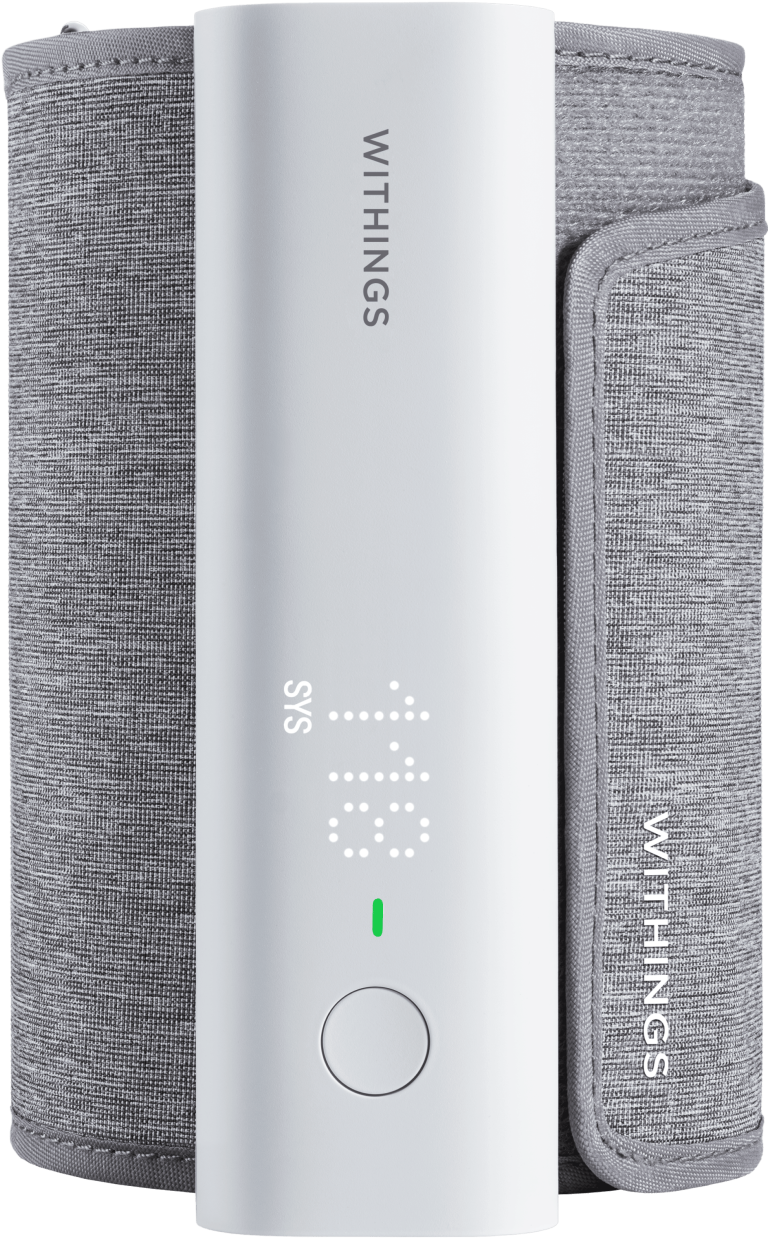
Withings BPM Connect: The Connected Blood Pressure Monitor That Syncs Automatically
An FDA cleared upper arm blood pressure monitor with Wi-Fi and Bluetooth sync that eliminates the compliance gap between home monitoring and clinical follow up. Presented By Our Partners Hypertension…

Four Weeks to a Younger Body: New Research Shows Diet Can Reverse Biological Age in Adults Over 65
A University of Sydney trial published in Aging Cell found that just four weeks of eating differently produced measurable reductions in biological age among adults between 65 and 75. The…
GlycanAge: Measuring Biological Age Through Your Immune System’s Sugar Coating
While most biological age tests measure DNA methylation, GlycanAge uses a fundamentally different biomarker: the sugar molecules coating your antibodies. This glycan-based approach reveals immune system aging in a way…
