
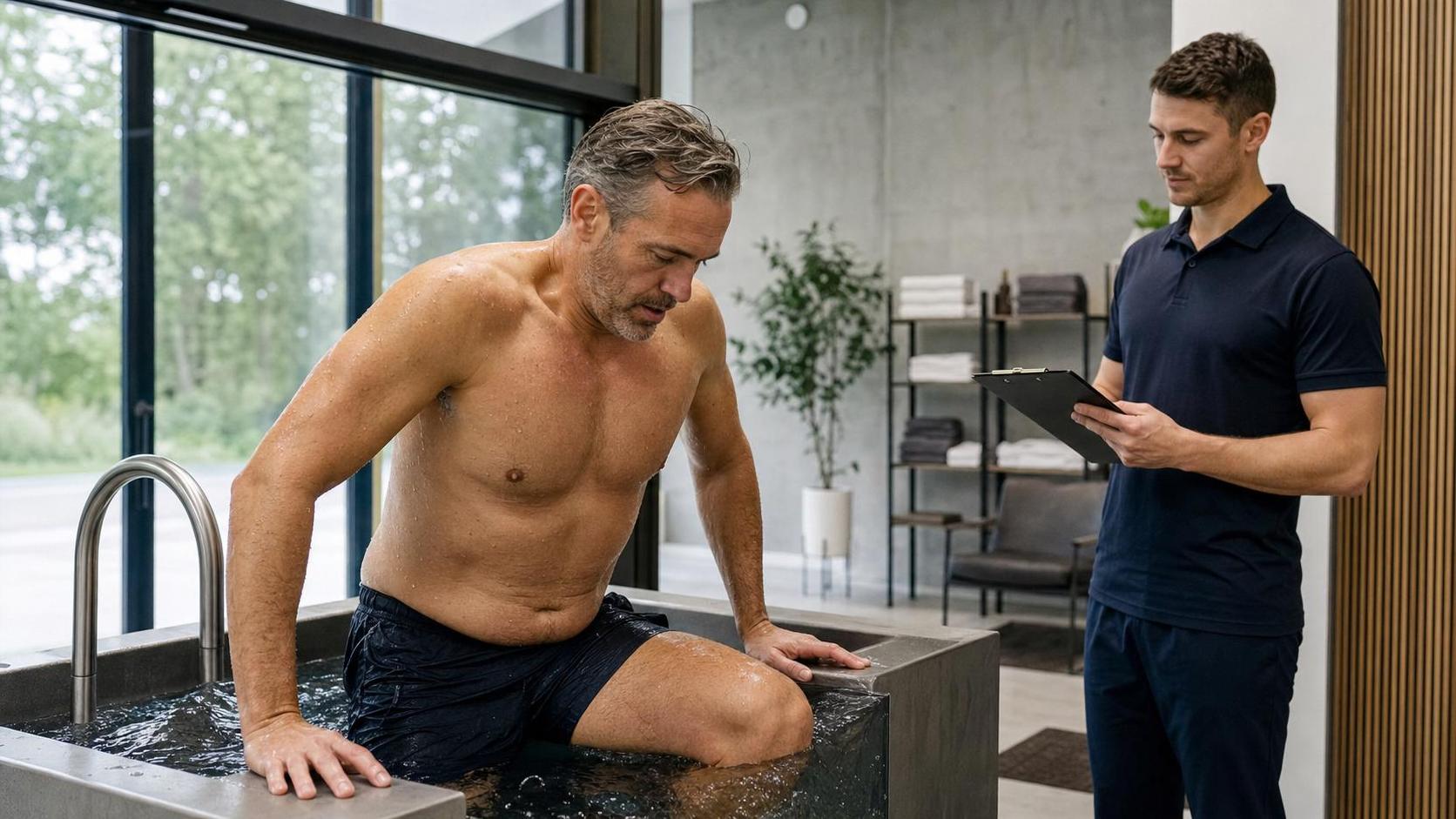
The 12-Hour Calm: What the 2025 Cold Water Immersion Evidence Really Says About Stress, Sleep, and Recovery
Few wellness rituals have traveled from the fringe to the mainstream as fast as the cold plunge. A decade ago, deliberately lowering yourself into ice water was the domain of elite athletes and a handful of extreme cold enthusiasts. Today there is a plunge tub in the corner of seemingly every boutique gym, a cold shower challenge in every productivity podcast, and a recovery pod in every longevity clinic. The promises have grown just as fast: less stress, sharper focus, deeper sleep, faster recovery, a metabolism that burns brighter. The question worth asking, now that the science has started to catch up, is which of those promises actually hold.
Presented By Our Partners



In January 2025, researchers gave us the most careful answer yet. A systematic review and meta-analysis published in PLOS One pooled the available randomized evidence on cold water immersion in healthy adults and reached a conclusion that is more interesting than either the hype or the backlash. Cold water does something real to stress, sleep, and recovery. It just does it on a clock, and the clock matters more than most people exposing themselves to the cold have been told.
What the 2025 Evidence Actually Found
The review, led by Tara Cain and colleagues at the University of South Australia, looked specifically at randomized controlled trials in adults aged 18 and over who immersed themselves in water at or below 15 degrees Celsius for at least 30 seconds. That included cold showers, ice baths, and outdoor cold plunges. The team screened the literature and analyzed the studies that met their criteria, covering more than three thousand participants in total, then tracked outcomes across stress, sleep, immunity, inflammation, mood, energy, and quality of life.
The headline finding was about stress. Cold water immersion was associated with a meaningful reduction in stress, but the effect was time-limited. Participants showed lower stress roughly 12 hours after immersion, not immediately and not permanently. This is the detail that reframes the entire conversation. The plunge is not a magic switch that resets your nervous system for days. It is more like a dose of a short-acting intervention, with a window of benefit that opens hours later and then closes.
Sleep and quality of life also moved in the right direction. The review reported improvements in self-rated sleep quality and overall wellbeing among regular cold water users, along with a reduction in sickness-related absences from work. None of these were dramatic, civilization-altering effects. They were the kind of modest, repeatable nudges that, layered on top of a sound foundation, can add up over months.
Then there is inflammation, where the data complicate the simple story most cold plunge marketing tells. Immediately after immersion, and again about an hour later, markers of inflammation actually rose. This sounds alarming until you understand the mechanism. The acute spike is the body treating cold as a stressor and mounting an adaptive response, the same broad principle that governs why a hard workout briefly damages muscle tissue before that tissue rebuilds stronger. Cold is a hormetic stress, a small, controlled dose of adversity that prompts the body to adapt. The transient inflammatory rise is part of that signal, not a side effect to be feared.
Why Cold Water Changes How You Feel
To understand why a brief, uncomfortable plunge can shift your stress levels twelve hours later, it helps to look at what the cold does to your chemistry in the moment. The most striking evidence here is not new. In a frequently cited study published in the European Journal of Applied Physiology in 2000, Petr Sramek and colleagues immersed volunteers up to the neck in water at 14 degrees Celsius and measured what happened to their stress hormones and neurotransmitters. The results were dramatic. Noradrenaline, the catecholamine that drives alertness and mood, rose by more than 500 percent. Dopamine, central to motivation and focus, climbed roughly 250 percent.
That surge is the felt experience of the cold. The gasp, the racing heart, the sudden, total presence of mind when the water hits. It is also the likely substrate for the mood and focus benefits people describe. A large, sustained release of noradrenaline and dopamine does not just feel good in the moment. It appears to leave a residue, a recalibration of the stress response that may explain why the measurable calming effect shows up hours after you have toweled off and warmed up.
The metabolic story has a similar mechanistic logic. Work by Susanna Soberg and others on experienced winter swimmers has shown that repeated cold exposure is associated with more active brown adipose tissue, the metabolically expensive fat that generates heat by burning energy rather than storing it. Cold triggers shivering and noradrenaline release into fat tissue, which over time can increase the body’s capacity for cold-induced thermogenesis. The realistic framing here is important. This is a meaningful adaptation, but it is not a weight loss shortcut. The calorie expenditure involved is modest, and the metabolic benefit is best understood as one more small input rather than a reason to expect the scale to move.
Featured Partner
Invest in the Infrastructure Behind Modern Medicine
As healthcare expands beyond hospital walls, the buildings and campuses supporting that shift are generating compelling returns for investors who move early. The Healthcare Real Estate Fund offers qualified investors direct access to a curated portfolio of medical office, outpatient, and specialty care facilities.
Learn More →
The Recovery Question Athletes Keep Arguing About
Cold water immersion has its deepest research base in sport, and that is also where the nuance gets sharpest. A 2025 network meta-analysis in Frontiers in Physiology pulled together 55 randomized controlled trials examining how different cold water immersion protocols affect recovery from exercise-induced muscle damage. It looked at delayed onset muscle soreness, jump performance, and creatine kinase, a blood marker of muscle breakdown. The verdict was that cold water immersion does help with the felt experience of recovery, reducing soreness and helping perceived readiness, with the dose of temperature and duration shaping the size of the effect.
But there is a well-documented tension. The same anti-inflammatory blunting that makes you feel less sore after a hard session can interfere with the muscle-building adaptations you are training for in the first place. Several studies have found that plunging immediately after resistance training can dampen the long-term gains in strength and muscle size, because the inflammatory signaling you are suppressing is part of how the muscle decides to grow. The practical implication is about timing and intent. If your goal on a given day is to build muscle, the cold plunge right after lifting may work against you. If your goal is to recover quickly for another performance soon, or simply to feel better, the cold can earn its place.
This is the recurring theme across the cold water literature. The intervention is not good or bad in the abstract. Its value depends on what you are trying to accomplish, and when you apply it relative to everything else you are doing.
The Sickness Absence Signal
One of the more intriguing real-world findings predates the 2025 review and helped inspire it. In 2016, Geert Buijze and colleagues published a large randomized controlled trial in PLOS One involving more than three thousand Dutch adults. Participants were assigned to end their normal warm shower with a blast of cold water for 30, 60, or 90 seconds every day for a month, or to a control group that showered as usual. The cold shower groups recorded 29 percent fewer sickness absences from work over the study period.
The finding comes with an honest caveat that the researchers themselves emphasized. The cold shower groups did not report fewer actual sick days when they were ill. They simply took less time off. That could reflect a genuine immune or resilience benefit, a psychological toughening that made people more willing to push through minor illness, or some combination. It is a reminder that even a striking, well-powered result can be open to more than one interpretation, and that cold exposure may work partly through the mind as much as the body. Notably, the duration of the cold blast made little difference. Thirty seconds produced much the same benefit as ninety, which is a useful piece of news for anyone dreading a long ordeal.
Reading the Evidence Honestly
Step back and the picture that emerges is neither the miracle cure of the wellness influencer nor the placebo dismissed by the skeptic. Cold water immersion produces real but modest, often short-lived effects on stress, sleep, and recovery, layered on top of a transient inflammatory response that is part of how the adaptation works. The studies are still relatively small and heterogeneous, the protocols vary widely, and many outcomes rely on self-report. The authors of the 2025 review were careful to call for larger, longer, better-controlled trials before anyone declares cold water a settled prescription.
What makes cold exposure worth taking seriously is not that it is powerful. It is that it is a low-cost, accessible stressor that the body appears to translate into a small dividend of resilience, the same logic that underlies the value of exercise, heat exposure, and even certain forms of dietary stress. It belongs in the category of fundamentals not because it will transform your health on its own, but because it is one more lever, and the people who do best tend to be the ones pulling several gentle levers consistently rather than searching for a single dramatic one.
It is also worth being clear about safety. The cold shock response is a genuine cardiovascular event. The gasp reflex and the surge in heart rate and blood pressure can be dangerous for people with significant heart disease, uncontrolled high blood pressure, or certain other conditions. Cold water also carries a real drowning risk if you lose breath control in open water. None of the benefits discussed here are worth taking on alone in deep cold water or pushing past what your body is signaling.
What This Means For Your Practice
The research points toward a handful of concrete, low-risk actions you can start applying tonight, with the caveat that anyone with heart disease, high blood pressure, or other cardiovascular concerns should talk to their doctor before beginning.
Start absurdly small. The Buijze trial showed that 30 seconds of cold at the end of a normal shower delivered most of the benefit, and that longer was not meaningfully better. End your next shower by turning the water cold for 30 seconds. That single habit is enough to begin.
Time it for stress, not just for soreness. Because the calming effect appears to peak around 12 hours after immersion, a morning cold exposure may help set up a steadier afternoon and evening. If your aim is a better night of sleep and lower stress, an earlier-in-the-day plunge or cold shower is a reasonable bet, and it sidesteps the alertness spike that a late-night plunge can cause right before bed.
Respect the timing around training. If your priority is building strength or muscle, avoid an ice bath in the hour or two right after lifting, since the inflammation you would be suppressing is part of the growth signal. Save the cold for non-lifting days, for cardio recovery, or for several hours after your strength session. If your priority is feeling fresh for a competition or a second session soon, the post-exercise plunge makes more sense.
Keep the temperature honest and the dose modest. The studied range sits at or below 15 degrees Celsius, which is genuinely cold but does not require a chest freezer full of ice. A cold tap, a cool bath, or an outdoor body of water in the right season can all qualify. Aim for brief and repeatable rather than long and heroic.
Prioritize breath control and never go alone in open water. The first 30 seconds bring the cold shock response, and the single most important skill is to slow your breathing and stay calm until it passes. In any open water setting, have a buddy and an easy exit, and never combine cold water with alcohol.
Treat it as a supplement to the fundamentals, not a substitute. A cold plunge will not rescue chronic short sleep, a poor diet, or a sedentary week. Used on top of consistent sleep, movement, and real food, it is a small, pleasant stressor that may sharpen your mood, steady your stress, and help you feel recovered. Used as a replacement for those foundations, it is theater. The science is clearest on this last point: cold water is a finishing touch, and the foundation has to be built first.


Similar Posts

ZOE Program: Can Your Gut Microbiome Predict How You Should Eat?
A deep dive into the science, clinical evidence, and practical realities of ZOE’s at-home gut microbiome analysis and personalized nutrition platform Presented By Our Partners In 2020, a team of…

Healthcare Venture Capital in 2026: Where Capital Is Moving as Medicine Accelerates
Healthcare venture capital is concentrating around AI infrastructure, programmable biology, intelligent medical devices, evidence-driven care delivery, and companies that can translate innovation into adoption and measurable outcomes.

Airofit PRO Respiratory Trainer Review: App Guided Breathing Muscle Training for Athletes and Respiratory Health
The Airofit PRO combines adjustable respiratory resistance with real time Bluetooth biofeedback to strengthen the muscles that power every breath you take. Presented By Our Partners The diaphragm is the…

Every Baby a Genome: How Newborn Sequencing Is Reinventing Precision Medicine
GUARDIAN, BEACONS, BabySeq2, BeginNGS, and the NHS Generation Study are running in parallel in 2026. Inside the 12-fold detection signal from Columbia, the $14.4 million NIH multi-state pilot, and what…

The Hidden Inflammation Trigger: How Harvard’s Morganella morganii Discovery Is Rewriting the Biology of Depression
A landmark Harvard Medical School study in the Journal of the American Chemical Society identifies an unusual bacterial phospholipid that activates the immune system and drives interleukin 6, the cytokine…
NeoRhythm PEMF Headband: Pulsed Electromagnetic Field Stimulation for Focus, Sleep, and Recovery
A wearable headband that delivers pulsed electromagnetic fields to the brain, targeting specific brainwave frequencies to support focus, relaxation, sleep, and pain management without electrical current, chemicals, or conscious effort….
