
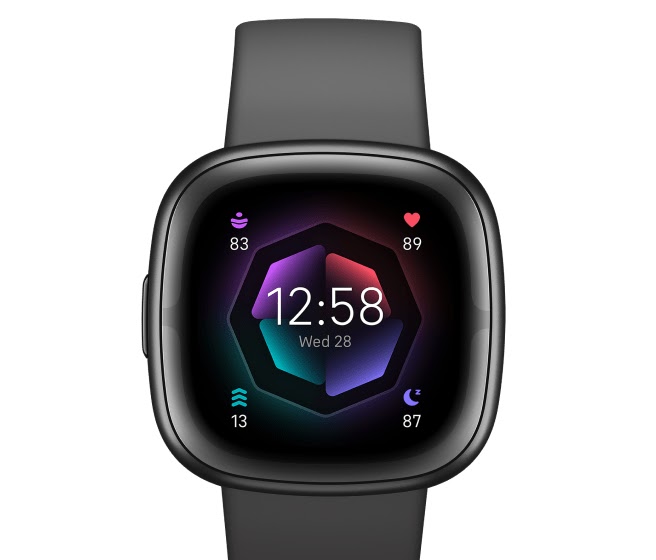
Fitbit Sense 2 Sleep Tracking: Sleep Score, Snore Detection, and Smart Wake Alarm
An accessible smartwatch that pairs sleep staging with SpO2, skin temperature, snore detection, and a smart wake alarm, building one of the most complete consumer sleep monitoring suites at a sub-$250 price point.
Presented By Our Partners



Product status update, August 2026. This device is discontinued. Google has wound down the Fitbit smartwatch line in favour of the Pixel Watch range.
Most people have no idea how they actually sleep. They know when they went to bed, roughly when they woke up, and whether they feel rested. But the architecture of the night, how many minutes of deep restorative sleep occurred, whether breathing was interrupted, whether body temperature drifted abnormally, remains invisible without measurement. A 2017 dose-response meta-analysis published in the Journal of the American Heart Association by Yin et al. found that deviating from approximately seven hours of sleep per night increases all-cause mortality risk: 6% per hour below seven (RR 1.06, 95% CI: 1.04 to 1.07) and 13% per hour above seven (RR 1.13, 95% CI: 1.11 to 1.15) (DOI). The Fitbit Sense 2, priced under $250, puts the tools to measure what actually happens during sleep into the mainstream consumer market.
What Is Fitbit Sense 2 Sleep Tracking?
The Fitbit Sense 2 is a health-focused smartwatch from Google that includes comprehensive sleep monitoring: sleep stage tracking (Light, Deep, REM, Awake), SpO2 monitoring, skin temperature variation, a nightly Sleep Score, breathing rate, and, through the Fitbit Premium subscription, snore and noise detection and a detailed Sleep Profile that categorizes your sleep patterns into animal archetypes (bear, dolphin, giraffe, hedgehog, parrot, tortoise) based on long-term trends.
The Smart Wake alarm is a notable feature that wakes users during a light sleep phase within a configurable window before their set alarm time, reducing the grogginess (sleep inertia) that occurs when an alarm interrupts deep sleep or REM. The watch vibrates gently when it detects a natural transition to lighter sleep, creating a more physiologically appropriate wake experience.
The Fitbit app presents sleep data in a clear, color-coded hypnogram showing the progression of sleep stages throughout the night, alongside a composite Sleep Score (0 to 100) that accounts for duration, depth, restoration (based on HRV), and timing. Trend analysis over weeks and months reveals patterns that single-night data cannot capture.
The Science Behind Sleep Quality Assessment
Sleep quality is multidimensional. Duration alone does not determine whether sleep was restorative. Two people sleeping seven hours can have radically different sleep architecture: one with 90 minutes of deep sleep and 120 minutes of REM, the other with only 40 minutes of deep sleep and 75 minutes of REM. The latter sleeps the same duration but receives less of the restorative phases that drive physical recovery and cognitive processing.
According to PubMed, Yin et al. (2017) established through their meta-analysis that the relationship between sleep and mortality follows a U-shaped curve across multiple cardiovascular and all-cause endpoints. For stroke specifically, each hour of sleep below seven hours increased risk by 5% (RR 1.05, 95% CI: 1.01 to 1.09), while each hour above seven increased risk by 18% (RR 1.18, 95% CI: 1.14 to 1.21) (DOI: 10.1161/JAHA.117.005947). This asymmetry, where long sleep carries even higher stroke risk than short sleep, highlights why sleep monitoring should capture more than just duration.
Skin temperature during sleep provides additional physiological context. Core body temperature follows a circadian rhythm, dropping during sleep initiation and reaching its nadir in the early morning hours. Deviations from an individual’s baseline skin temperature pattern can signal illness onset, hormonal changes (particularly around ovulation), circadian disruption from jet lag or shift work, or environmental disturbances. The Fitbit Sense 2 measures wrist skin temperature nightly and reports deviations from the user’s personal baseline.
Snoring detection addresses a frequently overlooked dimension of sleep quality. Habitual snoring affects approximately 45% of adults occasionally and 25% regularly. While not all snoring indicates sleep apnea, loud, frequent snoring combined with witnessed breathing pauses is one of the strongest clinical predictors of obstructive sleep apnea. The Fitbit Sense 2’s microphone-based snore detection (Premium feature) provides data that most wrist-based trackers cannot capture.
Sleep is one of the Five Pillars in Healthcare Discovery‘s longevity framework, and poor sleep quality drives dysfunction across the other four pillars and contributes to all Four Villains.
That is the science. Here is how the Fitbit Sense 2 applies it.
What Fitbit Sense 2 Sleep Tracking Does Well
The Fitbit Sense 2 offers one of the most complete sleep monitoring suites at its price point. Sleep staging, SpO2, skin temperature, breathing rate, and snore detection in a sub-$250 device covers more dimensions of sleep health than many devices costing twice as much. The Sleep Score provides a single motivating number; the underlying data provides depth for users who want to dig deeper.
Fitbit’s sleep tracking heritage is a genuine advantage. Fitbit has been collecting and analyzing sleep data for over a decade, and the algorithms have been refined across hundreds of millions of nights of data. The company has published validation studies and has one of the largest sleep datasets in consumer health technology, which informs the accuracy of stage classification and the calibration of the Sleep Score algorithm.
The Smart Wake alarm addresses a practical problem that most sleep trackers ignore. Being woken from deep sleep produces more grogginess and cognitive impairment than being woken from light sleep. The Smart Wake feature turns this science into a practical benefit, using real-time sleep stage detection to time the alarm for a lighter sleep phase. Users consistently report feeling more alert when using Smart Wake compared to a fixed-time alarm.
Featured Partner
Invest in the Infrastructure Behind Modern Medicine
As healthcare expands beyond hospital walls, the buildings and campuses supporting that shift are generating compelling returns for investors who move early. The Healthcare Real Estate Fund offers qualified investors direct access to a curated portfolio of medical office, outpatient, and specialty care facilities.
Learn More →
The Sleep Profile feature (Premium) provides longitudinal analysis that single-night scores miss. By analyzing patterns over a month, the Sleep Profile identifies whether a user tends toward consistently short sleep, disrupted sleep, or adequate duration with poor depth, providing targeted recommendations for the specific sleep challenges each user faces.
Pricing, Access, and Practical Realities
The Fitbit Sense 2 retails for $249.95. Fitbit Premium, which unlocks snore detection, Sleep Profile, advanced health metrics, and guided programs, costs $9.99 per month or $79.99 per year. The first-year total cost of ownership with Premium is approximately $330; without Premium, it is $249.95.
This makes the Fitbit Sense 2 the most affordable comprehensive sleep monitoring smartwatch when purchased without Premium. With Premium, the cost approaches but does not exceed the Apple Watch or Garmin Venu 3 price points, while offering sleep-specific features (snore detection, Sleep Profile) that neither competitor includes.
The Fitbit Sense 2 is a general wellness device and is not FDA cleared for sleep apnea detection or any other diagnostic purpose. SpO2 and snore detection data are wellness signals, not clinical diagnoses. Users with suspected sleep apnea should pursue clinical evaluation.
Battery life is approximately six days, which is significantly longer than the Apple Watch but shorter than the Garmin Venu 3. Six days is generally sufficient for consistent sleep tracking without daily charging anxiety.
Who Fitbit Sense 2 Sleep Tracking Is Best For
The Fitbit Sense 2 is ideal for budget-conscious consumers who want comprehensive sleep monitoring without a $400+ investment. It suits people who want snore detection (one of the few wrist-based devices offering this feature), users who respond well to gamified health tracking (the Sleep Score and Sleep Profile create engaging feedback loops), and anyone who wants a complete health smartwatch with sleep as a primary focus rather than an afterthought.
The platform is particularly appealing to people new to sleep tracking who want guidance rather than raw data. Fitbit’s app presents information in accessible language with actionable recommendations, making it one of the most user-friendly sleep monitoring experiences available.
People who should look elsewhere include those who object to subscription models for core health features (snore detection and Sleep Profile require Premium), power users who want raw data export and advanced analytics (Garmin Connect and Oura provide more data granularity), and Apple ecosystem users who would lose integration benefits by switching to Fitbit.
How Fitbit Sense 2 Sleep Compares
Against the Apple Watch Series 9 ($399 to $499, no subscription), the Fitbit Sense 2 is $150+ cheaper, offers snore detection that Apple does not, and has longer battery life (6 days vs. 1 to 1.5 days). The Apple Watch counters with the broader app ecosystem, cellular connectivity, and FDA-cleared sleep apnea notifications (Series 10). For sleep-focused value, the Fitbit wins on price and features; for smartwatch versatility, Apple wins.
Against the Garmin Venu 3 ($449.99, no subscription), the Fitbit is $200 cheaper but requires a subscription for premium sleep features. Garmin offers nap detection and 14-day battery life that Fitbit cannot match. For subscription-free ownership and the longest battery life, Garmin is superior. For the most affordable entry into comprehensive sleep monitoring, Fitbit is the better value.
Against the Oura Ring Gen 3 ($299 to $499 plus $5.99/month), the Fitbit Sense 2 provides a full smartwatch experience alongside sleep tracking, while the Oura Ring is a dedicated health tracker without notification or app capabilities. The Oura Ring offers arguably deeper sleep-specific analytics and a more comfortable overnight form factor, but the Fitbit provides broader daily utility.
Limitations and Open Questions
The Premium paywall is the Fitbit Sense 2’s most significant limitation for sleep tracking. Snore detection, Sleep Profile, and detailed health metrics are locked behind a $9.99/month subscription. Users who purchase the device expecting full sleep analytics out of the box may be disappointed to discover that several headline features require ongoing payment.
Wrist-based sleep staging accuracy follows the same limitations as all consumer wearables: approximately 70% to 85% agreement with polysomnography. The Fitbit Sense 2 is reliable for total sleep time and general sleep quality trends but should not be used for clinical sleep disorder diagnosis.
Snore detection uses the device’s microphone and can be affected by environmental noise (a partner’s snoring, pets, street noise). The feature works best in quiet sleeping environments and when the device is worn properly. It detects snoring sounds but cannot distinguish between the user’s snoring and ambient noise sources with perfect reliability.
Google’s acquisition of Fitbit has raised questions about long-term product direction, data privacy, and platform continuity. While Fitbit devices continue to receive updates, users should be aware that the product roadmap is now determined by Google’s broader health strategy rather than Fitbit’s independent vision.
What This Means for Your Health
The Fitbit Sense 2 makes comprehensive sleep monitoring financially accessible. At $249.95, it brings sleep staging, SpO2, skin temperature, and snore detection to a price point where more people can afford to track what happens during the third of their life they spend unconscious. Within HealthcareDiscovery.ai’s longevity framework, this accessibility matters because sleep is the most democratically improvable health pillar: you do not need expensive equipment, a gym membership, or specialized food to sleep better. You need data about how you currently sleep and guidance on what to change.
The snore detection feature, while imperfect, addresses a specific gap in consumer health technology. Snoring is one of the most common early indicators of obstructive sleep apnea, a condition that affects nearly a billion people worldwide and remains undiagnosed in approximately 80% of moderate to severe cases. A $250 device that makes users aware of their snoring patterns and prompts clinical evaluation for sleep apnea could prevent years of undiagnosed cardiovascular damage.
The broader message is that you do not need the most expensive wearable to start understanding your sleep. The Fitbit Sense 2 provides the data foundation for sleep optimization at a price that removes the financial excuse for ignorance. Whether you eventually upgrade to a more specialized tracker depends on how seriously you engage with the data, but the starting point should not cost more than it needs to.

Explore the full wearable guide
See how the Fitbit Sense 2 compares with smart rings, watches, ECG devices, and other connected health hardware across the full Healthcare Discovery wearables guide.
Frequently Asked Questions
Does the Fitbit Sense 2 detect snoring?
Yes, but snore detection requires a Fitbit Premium subscription ($9.99/month or $79.99/year). The feature uses the device’s built-in microphone to detect snoring sounds during sleep and reports snoring duration and frequency in the morning. It works best in quiet environments and cannot perfectly distinguish between the user’s snoring and ambient noise from a sleep partner, pets, or environmental sources.
What is the Fitbit Sleep Score?
The Fitbit Sleep Score is a 0 to 100 composite score that accounts for sleep duration, deep and REM sleep proportions, restoration (based on heart rate and HRV patterns during sleep), and sleep timing. Scores above 80 generally indicate good sleep quality; scores below 60 suggest significant room for improvement. The score is calculated nightly and can be tracked over time to identify patterns.
Does Fitbit Sense 2 require a subscription for sleep tracking?
Basic sleep tracking (sleep stages, Sleep Score, SpO2, skin temperature, breathing rate, and Smart Wake alarm) is included without a subscription. Advanced features including snore detection, Sleep Profile animal archetypes, detailed health metrics, and guided sleep programs require Fitbit Premium at $9.99/month or $79.99/year.
How long does the Fitbit Sense 2 battery last?
The Fitbit Sense 2 battery lasts approximately six days with normal use, including sleep tracking. This is significantly longer than the Apple Watch (1 to 1.5 days) but shorter than the Garmin Venu 3 (up to 14 days). Six days is generally sufficient for consistent sleep tracking without daily charging concerns.
What is the Smart Wake alarm?
The Smart Wake alarm wakes you during a light sleep phase within a configurable window (up to 30 minutes) before your set alarm time. Instead of interrupting deep sleep or REM, which causes grogginess (sleep inertia), the alarm waits for a natural transition to lighter sleep and vibrates gently at that point. Users consistently report feeling more alert and less groggy compared to a fixed-time alarm.
Is the Fitbit Sense 2 good for detecting sleep apnea?
The Fitbit Sense 2 monitors SpO2 during sleep and offers snore detection (Premium), both of which can provide signals consistent with obstructive sleep apnea. However, the device is not FDA cleared for sleep apnea detection and cannot diagnose the condition. If SpO2 data shows frequent desaturations or snore detection reveals heavy, persistent snoring, users should consult a sleep medicine specialist for clinical evaluation and a formal sleep study.
Fitbit Sense 2 at a glance
- Hardware price
- $249.95
- Subscription
- $119.88 per year
- First year total
- $369.83
- Form factor
- Smartwatch (wrist)
- FDA status
- Has FDA clearance
- HSA/FSA
- Possibly, with a letter of medical necessity
Measures cEDA, ECG, HR, HRV, Skin temp, Sleep stages, SpO2, VO2max estimate
Pricing verified August 5, 2026. Maintained in the Healthcare Discovery device database and updated automatically.


Similar Posts

Garmin Index S2: WiFi Smart Scale Built for the Garmin Fitness Ecosystem
Your watch tracks every mile, every rep, every heartbeat. Without a scale that speaks the same language, half the story stays untold. Presented By Our Partners Fitness wearables have created…

Longevity Claims, Decoded: What GLP-1s and Peptides Actually Prove
A scientific claim decoder for separating human outcomes from biomarkers, animal evidence, mechanisms, and marketing around GLP-1s, peptides, and longevity therapies.

Senolytics in 2026: Inside the Clinical Trials Targeting Zombie Cells to Extend Healthy Lifespan
More than 30 senolytic and senomorphic clinical trials are now active, spanning diabetic macular edema, pulmonary fibrosis, osteoarthritis, and frailty. Inside the science of zombie cells, the first-generation compounds from…

Jamie Justice and the Longevity Revolution’s Most Unpopular Truth
# Jamie Justice and the Longevity Revolution’s Most Unpopular Truth There is a strange tension at the heart of the modern longevity movement. On one side are billionaires, biotech founders,…
Alice 6 LDx PSG System: The Definitive Polysomnography Platform for Sleep Laboratories
Every night, roughly 70 million Americans struggle with a sleep disorder, yet the diagnostic gold standard for unraveling what happens in their brains after lights out has remained fundamentally the…

Ivonescimab Beats Immunotherapy in Lung Cancer: Inside the HARMONi-6 Trial That Rewrote the Standard of Care
A bispecific antibody that simultaneously targets PD-1 and VEGF just beat the standard immunotherapy regimen head-to-head in overall survival. It is the first time any drug has achieved this milestone…
