
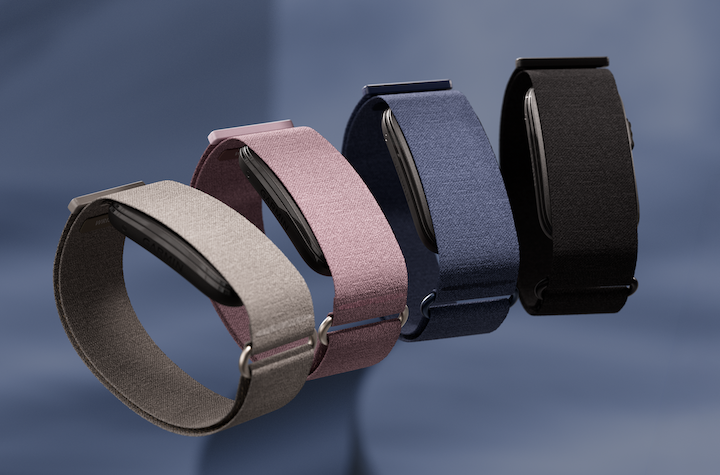
Garmin CIRQA Smart Band: Pricing, Features, and Accuracy
The short verdict
Garmin CIRQA is a $199.99 screen-free health and fitness band built for people who want Garmin’s sleep, recovery, and training data without wearing another display. Its strongest argument is economic: the core Garmin Connect experience does not require a subscription, so CIRQA can cost less over time than membership-based competitors even though its purchase price is not the lowest in the category.
Presented By Our Partners



The tradeoffs are equally clear. CIRQA has no built-in GPS, no ECG, no smartwatch display, and no medical-device status. Garmin’s broad health and training toolkit is impressive, but early independent reviews are not the same as clinical validation. CIRQA is best understood as a wellness and fitness tracker—not a diagnostic monitor.
Garmin CIRQA at a glance
- Product: Garmin CIRQA Smart Band
- U.S. launch: July 21, 2026
- Price: $199.99 suggested retail price
- Required subscription: None
- Optional subscription: Garmin Connect+ adds selected coaching, AI, and nutrition features; pricing and included features can change
- Battery: Up to 10 days
- Water rating: 5 ATM
- Wear locations: Wrist or upper arm with the appropriate band
- Core sensors and metrics: Wrist heart rate, HRV, Pulse Ox, skin temperature, respiration, stress, sleep, and activity
- GPS: Connected GPS through a compatible phone; no built-in GPS
- Activities: More than 80 supported activity profiles
- Compatibility: Garmin Connect on compatible iPhone and Android phones
- Regulatory status: Consumer wellness and fitness device; not intended to diagnose or monitor a medical condition
- HDAI hands-on status: Not tested by HealthcareDiscovery.ai
What is Garmin CIRQA?
CIRQA is Garmin’s first screen-free smart band. The idea is simple: collect health and workout data around the clock, then look at it in Garmin Connect when you choose. There are no notifications demanding attention, no glowing screen beside the bed, and no temptation to keep checking pace or recovery scores from the wrist.
That puts CIRQA in the same emerging category as WHOOP, Polar Loop, and Fitbit Air. These products compete less on watch faces and apps than on comfort, battery life, recovery interpretation, and the long-term cost of turning raw sensor signals into useful guidance.
CIRQA’s advantage is the mature Garmin ecosystem behind it. The band feeds data into Garmin Connect and can contribute to familiar features such as Body Battery, sleep score, HRV status, training readiness, training status, VO2 max, workout benefit, and recovery time. It also automatically detects activities and learns from corrections made in the app.
Pricing: $199.99 without a required subscription
Garmin lists CIRQA at $199.99 in the United States. The standard device experience does not require a paid membership. Heart rate, sleep, stress, activity, recovery, and training data remain available through the free Garmin Connect app.
This matters because purchase price alone can make screen-free bands look more similar than they are. A device that costs less upfront but requires an annual membership may become substantially more expensive after two or three years. CIRQA’s $199.99 price is therefore best evaluated as a one-time hardware cost, not the first payment in a continuing access fee.
Garmin does offer an optional Garmin Connect+ subscription. Depending on region and current plan terms, it may add features such as Active Intelligence, additional coaching, or nutrition tools. Those extras should not be confused with the basic operation of CIRQA. The band does not stop tracking core health and fitness data if a buyer declines Connect+.
There is one separate subscription boundary worth knowing: syncing overnight temperature data with the FDA-cleared Natural Cycles birth-control app requires a Natural Cycles subscription. That is a third-party service, not a fee required to use CIRQA itself.
What CIRQA measures
Garmin says CIRQA can track wrist-based heart rate, heart-rate variability, Pulse Ox, respiration, stress, skin temperature, steps, calories, sleep, naps, and activity. The app turns those inputs into Garmin’s higher-level summaries.
Body Battery estimates available energy using signals such as HRV, stress, sleep, and activity. Training readiness combines recent sleep, recovery time, training load, HRV status, and stress to suggest how prepared the body may be for harder exercise. Sleep tracking includes stages, a sleep score, suggested sleep duration, respiration, HRV, and nap detection.
These scores can be useful for noticing patterns. They are still algorithmic interpretations rather than direct measurements of energy, recovery, or sleep architecture. A low readiness score is not a diagnosis, and a high score is not proof that injury or illness risk is absent.
Fitness tracking and the connected-GPS compromise
CIRQA supports more than 80 activity profiles. Activities can be started through the app or assigned to the band’s single side button, while common workouts may be detected automatically. Garmin says the detection model can improve as users confirm or correct recorded activities.
The band does not contain its own GPS receiver. Outdoor route, distance, and pace mapping relies on connected GPS from a paired smartphone. Anyone who already carries a phone during a run or ride may barely notice the difference. Anyone who wants to leave the phone at home should consider a Garmin watch with built-in GPS instead.
CIRQA also supports LiveTrack when used with a compatible phone and Garmin Connect, allowing selected contacts to follow a session. That feature depends on the phone’s connectivity; the band is not a standalone cellular safety device.
Battery, comfort, and water resistance
Garmin rates CIRQA for up to 10 days of battery life. An early two-week review by Trusted Reviews found the battery claim plausible under normal use, although real results will vary with Pulse Ox settings, activity recording, phone connection, temperature, and device age.
Featured Partner
Invest in the Infrastructure Behind Modern Medicine
As healthcare expands beyond hospital walls, the buildings and campuses supporting that shift are generating compelling returns for investors who move early. The Healthcare Real Estate Fund offers qualified investors direct access to a curated portfolio of medical office, outpatient, and specialty care facilities.
Learn More →
The sensor sits beneath a fabric band and can be worn at the wrist or upper arm. Upper-arm wear may appeal during certain workouts or sleep, while wrist wear is the default for everyday tracking. Garmin offers multiple colors and two size ranges, but early reviewers have described the sensor module as bulkier than competing screen-free bands.
The official 5 ATM rating means the device is designed to withstand pressure equivalent to 50 meters under Garmin’s test conditions. That generally supports swimming and showering, but it should not be interpreted as permission for every high-speed or deep-water activity.
How accurate is Garmin CIRQA?
Garmin does not market CIRQA as a medical device. Pulse Ox, skin temperature, sleep stages, stress, and recovery scores are consumer wellness features and are not intended to diagnose or monitor disease.
Early independent testing offers a useful first signal, not a final verdict. Trusted Reviews wore the band for more than two weeks and reported generally reliable automatic activity detection, heart-rate and HRV values that aligned reasonably with a comparison wearable, and battery life consistent with Garmin’s claim. The reviewer also observed occasional activity and route errors and differences in sleep timing and stages.
Those observations cannot establish population-wide accuracy. Optical heart-rate performance can change with motion, fit, skin contact, perfusion, exercise type, and wear location. Consumer sleep staging is an estimate derived from movement and cardiovascular signals, not a substitute for polysomnography. Pulse Ox readings can also be affected by fit, movement, circulation, and environmental conditions.
The useful way to interpret CIRQA is longitudinally: look for repeated changes within your own data, consider the context, and confirm consequential findings through appropriate medical evaluation rather than treating one wearable score as a clinical result.
What CIRQA does not do
- It does not have a screen, notifications, mobile payments, maps, or on-wrist workout dashboards.
- It does not include built-in GPS.
- It does not offer ECG.
- It does not measure blood pressure or blood glucose.
- It does not replace medical sleep testing, a pulse oximeter, or clinician-directed monitoring.
The absence of these features is partly the point. CIRQA is for passive tracking with fewer interruptions. Buyers wanting a small smartwatch should look elsewhere; buyers wanting a quieter Garmin may see the omissions as advantages.
CIRQA versus WHOOP, Polar Loop, and Fitbit Air
WHOOP remains the best-known screen-free recovery platform and offers a deeply developed strain-and-recovery experience, but access is built around a membership. CIRQA makes more sense for someone who prefers a one-time hardware purchase and already trusts Garmin Connect.
Polar Loop is CIRQA’s closest price-level rival: another $199.99 screen-free band with no required subscription. Polar emphasizes training, sleep, and recovery inside Polar Flow, while Garmin offers a broader consumer-health ecosystem and features such as Body Battery. The better choice may come down to which platform already holds a person’s training history.
Fitbit Air targets a lower price tier and a simpler passive-tracking experience. CIRQA costs more, but Garmin’s training-readiness, recovery-time, and activity ecosystem may justify the difference for more serious exercisers.
The broader competitive landscape is covered in HealthcareDiscovery.ai’s complete guide to wearable health technology.
Who should consider Garmin CIRQA?
CIRQA is most compelling for people who:
- want health, sleep, and training trends without a screen;
- already use Garmin Connect or another Garmin device;
- prefer no mandatory subscription;
- value multi-day battery life and overnight wear;
- usually carry a phone during GPS-tracked outdoor activities;
- understand that wellness metrics are not medical measurements.
It is less compelling for people who want maps or pace on the wrist, standalone GPS, ECG, smartwatch notifications, a medical monitor, or the cheapest possible screen-free tracker.
Final verdict
Garmin CIRQA is not revolutionary because it discovers a new health signal. Its importance is that Garmin has packaged a large portion of its established health and training system into a quiet band with a straightforward $199.99 price and no required subscription.
That combination makes CIRQA one of the strongest new alternatives to membership-based recovery wearables. The mature app, ten-day battery claim, wrist-or-arm flexibility, and breadth of fitness features are meaningful strengths. The missing built-in GPS, bulky module, optional paid extras, and lack of clinical validation keep the verdict grounded.
For an existing Garmin user who wants to track sleep or wear a screen-free device between workouts, CIRQA is an unusually logical extension of the ecosystem. For everyone else, its value depends on whether Garmin’s software depth is worth paying more upfront than a simpler band—and whether screen-free tracking is genuinely preferable to a watch.
Frequently asked questions
How much does Garmin CIRQA cost?
Garmin lists CIRQA at $199.99 in the United States.
Does Garmin CIRQA require a subscription?
No. Core tracking and Garmin Connect features do not require a paid subscription. Garmin Connect+ is optional and adds selected features. Natural Cycles requires its own subscription if that third-party integration is used.
Does Garmin CIRQA have GPS?
It has connected GPS, not built-in GPS. Route, distance, and pace mapping require a compatible paired smartphone.
Can Garmin CIRQA be worn on the upper arm?
Yes. Garmin offers wrist and upper-arm wear options with the appropriate band and settings.
How long does the battery last?
Garmin advertises up to 10 days. Actual battery life varies with enabled features, activity recording, connection behavior, and use conditions.
Is Garmin CIRQA waterproof?
Garmin rates it to 5 ATM, meaning it is tested to withstand pressure equivalent to 50 meters. Follow Garmin’s water-rating guidance for specific activities.
Does Garmin CIRQA measure blood pressure or glucose?
No. CIRQA does not measure blood pressure or blood glucose.
Is Garmin CIRQA FDA cleared?
No. CIRQA is a consumer health and fitness device, not an FDA-cleared medical monitor. Garmin states that Pulse Ox and other wellness features are not intended to diagnose or monitor a medical condition.
Can CIRQA replace a Garmin watch?
It can replace a watch for passive health, sleep, recovery, and activity tracking if you do not need a display, standalone GPS, maps, payments, or notifications. It is not a full smartwatch replacement.
Sources
- Garmin: CIRQA launch announcement and U.S. pricing
- Garmin: CIRQA product page
- Garmin: CIRQA specifications and water rating
- Trusted Reviews: two-week CIRQA review
Product details and pricing were checked August 5, 2026 and may change. HealthcareDiscovery.ai has not tested this device. This article is educational and does not provide medical advice.


Similar Posts
Withings BPM Core: Blood Pressure, ECG, and Digital Stethoscope in One Device
The most comprehensive home cardiac monitor available combines blood pressure measurement, a single lead ECG, and a digital stethoscope for valvular heart disease screening in a single arm cuff. Presented…

The Daily Rounds: Longevity & Health Care Brief | April 3, 2026
🧬 - Epigenetic reprogramming enters human trials for the first time, with Life Biosciences' ER-100 receiving FDA clearance for a phase 1 study in optic nerve degeneration, marking the dawn of cellular rejuvenation medicine. 🫁 - An AI-designed molecule for idiopathic pulmonary fibrosis shows clinical promise in a phase 2a trial, proving that algorithmically discovered drugs can survive contact with human biology. 🦠 - Gut bacteria can inject proteins directly into human cells, a newly described mechanism now linked to Crohn's disease inflammation and poised to reshape microbiome therapeutics. 🧠 - Disrupted circadian rhythms are associated with 2.5 times the risk of dementia, reinforcing that sleep timing and biological clock integrity are modifiable targets for brain aging. 💊 - With more than 173 AI-discovered drug programs now in clinical trials and Eli Lilly committing $2.75 billion to AI drug development, the algorithmic era of medicine is no longer theoretical.

Myokines and the Muscle-Brain Axis: How Strength Training Rewires Your Brain for Longevity
A growing body of research from Bente Pedersen’s Copenhagen lab, Henriette van Praag at Florida Atlantic, and the 2024 to 2026 wave of muscle-brain studies is reframing skeletal muscle as…
The First Human Reprogramming Trial Is an Eye Study—Not Proof of Age Reversal
ER-100 has entered an 18-person Phase 1 eye trial. Here is what partial epigenetic reprogramming has—and has not—shown in humans.
The Daily Rounds: Longevity & Health Care Brief | April 30, 2026
🧬 SuperAgers Reveal the Biology of Exceptional Brain Longevity — Adults over 80 with 50-year-old memory function produce twice as many new hippocampal neurons as peers, with resistance and resilience to Alzheimer's pathology both playing a role in cognitive fate. 🤖 Novo Nordisk and Insilico Advance the AI Drug Discovery Era — Novo's sweeping OpenAI partnership and Insilico's new TargetPro-TargetBench framework signal that AI is moving from research novelty to core pharmaceutical operational infrastructure. ☕ Coffee Rewires the Gut Microbiome and Modifies Brain Function — A Nature Communications human trial confirms habitual coffee intake shifts microbial communities and alters cognition and mood through gut-brain axis pathways distinct from caffeine's direct neurological effects. 🔬 Immature Neuron Behavior, Not Quantity, Determines Alzheimer's Resilience — Netherlands researchers found that the 30% of Alzheimer's patients who never develop dementia have immature neurons that activate protective programs, opening a new class of therapeutic targets beyond amyloid clearance. 🧬 Geroscience Proposes Preventing Multiple Diseases by Targeting Aging Itself — ACS Pharmacology researchers argue that senolytic, mTOR-inhibition, and NAD+ interventions targeting biological aging upstream could delay several chronic conditions simultaneously, calling for regulatory reform to support multimorbidity prevention.
The Daily Rounds: Longevity & Health Care Brief | May 3, 2026
🧠 Alzheimer's "Death Switch" Identified — Scientists found a toxic protein pair that triggers neuron destruction, with a compound that breaks it apart slowing disease progression in laboratory models. ❤️ Gene Silencing Cuts LDL 50% Without Statins — DNA-based PPRH molecules silence the PCSK9 gene, offering a new cardiovascular treatment pathway for the millions who cannot tolerate statins. ⚠️ Rapamycin Caution for Exercising Adults — The RAPA-EX-01 randomized trial found weekly rapamycin supplementation blunted functional fitness gains in older adults, raising important questions for longevity enthusiasts combining the drug with exercise. 🦠 Gut Bacteria Drive Inflammatory Depression Pathway — Harvard researchers traced a hidden mechanism in which a gut bacterium interacting with a common environmental pollutant produces a molecule that triggers cytokine-driven inflammation linked to major depressive disorder. 🐕 Immune Bloodhounds Hunt Solid Tumors — Stanford engineered NK cells with metabolite-sensing receptors that navigate to and infiltrate solid tumors, addressing a longstanding barrier to immunotherapy for solid cancers.
