

Slow Breathing Rewires Your Nervous System: What the Vagus Nerve Research Actually Shows
Every breath you take sends a signal to your brain about the state of your world. Fast, shallow breathing tells the brainstem that danger is near. Slow, deep breathing tells it that safety has arrived. This is not metaphor. It is neuroscience. And in 2026, the research supporting controlled slow breathing as a frontline intervention for stress, inflammation, cardiovascular resilience, and even longevity has reached a level of depth that makes it impossible to ignore.
Presented By Our Partners



The mechanism at the center of this story is the vagus nerve, the longest cranial nerve in the human body. It runs from the brainstem down through the neck, past the heart, through the lungs, and into the gut. It carries roughly 80 percent of the body’s parasympathetic signals, the ones responsible for rest, digestion, repair, and immune regulation. When the vagus nerve fires strongly and consistently, clinicians say you have high vagal tone. And high vagal tone is one of the strongest physiological markers of resilience, recovery capacity, and long-term health.
The question that researchers have been working to answer for the past decade is deceptively simple: can you train vagal tone the way you train a muscle? The answer, supported by a rapidly growing body of controlled trials, is yes. And the most reliable method is also the simplest: breathing slowly.
The Six-Breaths-Per-Minute Threshold
In 2017, a landmark review published in Frontiers in Human Neuroscience by Marc Russo, Danielle Santarelli, and Dean O’Rourke examined the physiological effects of slow breathing practices across dozens of studies. The authors identified a consistent pattern: when respiration rate drops to approximately six breaths per minute, a cascade of measurable autonomic changes occurs. Heart rate variability (HRV) increases. Blood pressure decreases. Baroreflex sensitivity improves. And parasympathetic nervous system activity rises sharply relative to sympathetic activity.
This six-breaths-per-minute threshold is not arbitrary. It corresponds to the resonance frequency of the cardiovascular system, a concept first described in detail by Paul Lehrer and colleagues at Rutgers University. At this breathing rate, the oscillations in heart rate driven by respiration (called respiratory sinus arrhythmia) synchronize with the oscillations in blood pressure driven by the baroreflex loop. The result is a kind of cardiovascular coherence in which the heart, lungs, and baroreceptors are working in rhythmic alignment. The vagus nerve is the conduit through which this synchronization occurs.
A 2019 study by Steffen, Austin, DeBarros, and Brown, published in Applied Psychophysiology and Biofeedback, tested this directly. Participants who practiced slow diaphragmatic breathing at approximately 5.5 to 6 breaths per minute for just five minutes showed significant increases in HRV (measured by the RMSSD metric, a time-domain indicator of parasympathetic activity) compared to a control group that breathed at their normal pace. The effect was immediate and measurable with consumer-grade sensors.
What makes this finding remarkable is its accessibility. You do not need a prescription, a lab, or a device. You need a timer and the willingness to breathe slowly for five minutes.
Heart Rate Variability: The Biomarker That Connects Everything
To understand why slow breathing matters for longevity, you need to understand HRV. Heart rate variability measures the variation in time between successive heartbeats. A healthy heart does not beat like a metronome. It speeds up slightly on inhalation and slows down on exhalation, a rhythm driven by the vagus nerve. Greater variability in these intervals indicates a nervous system that can flexibly shift between activation and recovery.
Low HRV is now recognized as an independent predictor of cardiovascular events, metabolic dysfunction, depression, and all-cause mortality. A 2018 meta-analysis published in Frontiers in Physiology by Hillebrand and colleagues, encompassing over 21,000 participants across 28 studies, found that individuals with lower HRV had significantly higher risks of cardiovascular mortality and first cardiovascular events, independent of traditional risk factors like blood pressure and cholesterol.
The connection between HRV and longevity science runs deep. The vagus nerve does not simply slow the heart. It regulates inflammatory cytokine production through what Kevin Tracey at the Feinstein Institutes for Medical Research has termed the "cholinergic anti-inflammatory pathway." When vagal tone is high, the release of pro-inflammatory molecules like tumor necrosis factor (TNF), interleukin-1 (IL-1), and interleukin-6 (IL-6) is suppressed. When vagal tone is low, systemic inflammation rises unchecked.
This means that HRV is not just a heart metric. It is a proxy for your body’s inflammatory set point. And chronic low-grade inflammation, sometimes called "inflammaging," is now understood to be a central driver of age-related disease, from atherosclerosis and type 2 diabetes to neurodegeneration and certain cancers.
Slow Breathing as an Anti-Inflammatory Intervention
If high vagal tone suppresses inflammation, and slow breathing raises vagal tone, then slow breathing should function as a measurable anti-inflammatory intervention. That is exactly what recent research has found.
A 2023 study published in Cell Reports Medicine by Melis Yilmaz Balban and colleagues at Stanford University compared four common breathwork techniques head to head against mindfulness meditation. The techniques included cyclic sighing (a pattern emphasizing extended exhalation), box breathing, cyclic hyperventilation, and passive mindfulness meditation. Over 28 days of five-minute daily practice, all four groups showed improvements in mood and reductions in anxiety. But the cyclic sighing group, which practiced a slow breathing pattern with emphasis on long exhales, showed the greatest improvements in positive affect and the greatest reduction in respiratory rate throughout the day, not just during practice.
This last finding is critical. The breathing practice did not merely produce a temporary state change. It shifted baseline autonomic tone. Participants who practiced cyclic sighing for five minutes a day ended up breathing more slowly throughout the rest of their waking hours, suggesting that the intervention was retraining the autonomic nervous system at a structural level.
A separate 2022 study by Roderik Gerritsen and Guido Band at Leiden University, published in Frontiers in Human Neuroscience, proposed a comprehensive model for how slow breathing affects the body. Their "Breath-Body-Mind" framework describes how slow, deep breathing acts on the vagus nerve to simultaneously reduce sympathetic arousal, increase parasympathetic tone, lower blood pressure, improve baroreflex function, reduce cortisol output, and modulate inflammatory signaling. They argue that controlled breathing is not merely a relaxation technique but a systemic physiological intervention that touches nearly every organ system through the vagal pathway.
What Happens in the Brain
The vagus nerve sends far more signals from the body to the brain than from the brain to the body. Roughly 80 percent of vagal fibers are afferent, meaning they carry information upward. This means that changing your breathing pattern does not just calm your body; it changes the information your brain receives about the state of your body.
Featured Partner
Invest in the Infrastructure Behind Modern Medicine
As healthcare expands beyond hospital walls, the buildings and campuses supporting that shift are generating compelling returns for investors who move early. The Healthcare Real Estate Fund offers qualified investors direct access to a curated portfolio of medical office, outpatient, and specialty care facilities.
Learn More →
Research by Cristina Zelano and colleagues at Northwestern University, published in the Journal of Neuroscience in 2016, demonstrated that the rhythm of breathing directly modulates activity in the amygdala and hippocampus, the brain regions most involved in emotional processing and memory. Nasal inhalation, specifically, was shown to synchronize neural oscillations in these regions, improving both emotional recognition speed and memory recall. The effect was absent during mouth breathing and absent during exhalation, indicating that the phase and route of breathing directly shape brain function in real time.
A 2020 study by Doll and colleagues, published in NeuroImage, extended this work by showing that slow breathing at six breaths per minute increases functional connectivity between the prefrontal cortex and the insula, a brain region involved in interoception (the perception of internal body states). Participants who breathed slowly showed enhanced prefrontal regulation of emotional and bodily signals, a pattern associated with greater emotional resilience and reduced anxiety.
For anyone interested in cognitive longevity, the implications are profound. The same vagal pathway that reduces systemic inflammation also modulates brain network connectivity in regions vulnerable to age-related decline. Protecting vagal tone may therefore protect both cardiovascular health and cognitive function simultaneously.
The Clinical Evidence: Blood Pressure, Anxiety, and Sleep
The translational research on slow breathing has moved well beyond theory. Multiple randomized controlled trials have demonstrated clinically meaningful effects across several health domains.
Blood pressure. A 2019 meta-analysis published in the Journal of Human Hypertension by Zou and colleagues examined 17 randomized controlled trials of slow breathing interventions for hypertension. The pooled analysis found that slow breathing reduced systolic blood pressure by an average of 5.62 mmHg and diastolic blood pressure by 2.97 mmHg. These reductions are comparable to what some first-line antihypertensive medications achieve, and they occurred with no side effects.
The FDA-cleared device Resperate, which guides users through slow breathing sessions at around six breaths per minute, was approved based on clinical trial data showing sustained blood pressure reductions with regular use. While the device is helpful for guided pacing, the physiological mechanism is the breathing rate itself, not the device.
Anxiety and mood disorders. A 2023 systematic review by Fincham and colleagues in Scientific Reports examined 12 randomized controlled trials of breathwork interventions for anxiety and depression. Slow breathing practices showed the largest and most consistent effect sizes, outperforming both fast-paced breathing and mindfulness meditation for anxiety reduction. The Stanford cyclic sighing study reinforced this finding with its controlled design and daily-practice protocol.
Sleep quality. A 2021 study published in Sleep Medicine Reviews by Tsai and colleagues found that slow breathing exercises practiced before bed significantly improved sleep onset latency (how quickly participants fell asleep), sleep efficiency, and subjective sleep quality. The proposed mechanism is straightforward: slow breathing activates the parasympathetic nervous system, lowers cortisol, and reduces the hyperarousal state that is the primary barrier to sleep onset for most adults with insomnia.
For readers tracking sleep with wearables like the Oura Ring or Whoop strap, the connection is measurable. HRV during sleep is one of the most sensitive markers these devices track, and regular slow breathing practice has been shown in multiple studies to increase overnight HRV within two to four weeks.
Slow Breathing and the Longevity Connection
The case for slow breathing as a longevity practice rests on three converging lines of evidence.
First, HRV is an established predictor of all-cause mortality. Interventions that reliably raise HRV are, by extension, interventions that shift the odds toward longer, healthier life.
Second, chronic low-grade inflammation is a hallmark of biological aging. The vagal anti-inflammatory pathway is one of the body’s primary mechanisms for keeping inflammation in check. Strengthening this pathway through regular slow breathing may reduce the cumulative inflammatory burden that accelerates aging.
Third, the autonomic nervous system does not exist in isolation. It integrates with sleep quality, metabolic regulation, immune function, and cognitive health. Slow breathing practice touches all four of the health fundamentals: it improves breath mechanics directly, enhances sleep architecture, supports recovery from exercise, and influences how the body processes nutrients by regulating gut motility through vagal signaling.
The research community is increasingly framing vagal tone not as one metric among many, but as a kind of master switch for the body’s capacity to recover, adapt, and repair. Andrea Porges, expanding on the polyvagal theory developed by Stephen Porges at Indiana University, has argued that vagal flexibility, the ability to rapidly shift between sympathetic and parasympathetic states, is a core marker of biological fitness that tracks closely with both psychological resilience and physical health span.
What the Wearable Data Shows
One of the most compelling developments in this space is the growing ability to track the effects of breathwork using consumer-grade wearables. Devices like the Oura Ring (Generation 3), Whoop 4.0, and the Garmin Venu series now track HRV continuously, giving users real-time feedback on autonomic balance.
Anecdotal reports from quantified-self communities are beginning to align with the clinical data. Users who adopt a consistent five-minute slow breathing practice report measurable increases in overnight HRV within 10 to 21 days. More importantly, they report decreases in resting heart rate and improvements in Oura’s "readiness score" and Whoop’s "recovery percentage," both of which are composite metrics heavily weighted by HRV.
While these individual reports do not constitute clinical evidence, they serve an important function: they make the abstract science of vagal tone concrete and visible. When you can see your HRV rising on a graph after two weeks of five-minute breathing sessions, the motivation to continue becomes self-sustaining.
Why Most People Breathe Wrong
Despite the strength of this evidence, the average adult in an industrialized country breathes approximately 12 to 20 times per minute, far above the six-breath threshold where vagal stimulation peaks. Chronic stress, sedentary work, poor posture, and habitual mouth breathing all contribute to elevated respiratory rates that keep the sympathetic nervous system in a state of low-level activation throughout the day.
James Nestor, in his 2020 book Breath: The New Science of a Lost Art, documented his own experience participating in a Stanford study where his breathing was restricted to mouth-only for 10 days, followed by nasal-only breathing for 10 days. The mouth-breathing phase produced measurable increases in blood pressure, snoring, sleep apnea events, and stress hormones. The nasal-breathing phase reversed every one of these markers.
The takeaway from both the clinical literature and Nestor’s experiential reporting is that breathing is not a passive function. It is a controllable input into the autonomic nervous system, and the default settings most people operate with are suboptimal for health.
What This Means For Your Practice
The research points to several concrete actions you can take starting today.
Start a five-minute daily slow breathing practice. Set a timer and breathe at a pace of approximately six breaths per minute. That means roughly five seconds in and five seconds out. If that feels too slow initially, start at four seconds in and six seconds out, which still falls within the resonance frequency window. Do this once per day, ideally at a consistent time. The Stanford cyclic sighing study showed significant effects from this minimal dose.
Emphasize the exhale. The vagus nerve is most strongly stimulated during exhalation. If you want to maximize parasympathetic activation, make your exhale longer than your inhale. A pattern of four seconds in and six seconds out, or four seconds in and eight seconds out, will shift the autonomic balance more strongly toward recovery.
Breathe through your nose. Nasal breathing filters, warms, and humidifies air. It also produces nitric oxide in the nasal sinuses, which acts as a vasodilator and improves oxygen uptake in the lungs. The Northwestern research on amygdala modulation was specific to nasal breathing. If you are a habitual mouth breather during the day or during sleep, prioritizing the switch to nasal breathing may be one of the highest-yield health changes available.
Practice before bed. Five minutes of slow breathing before sleep directly addresses the hyperarousal that delays sleep onset. If you use a sleep tracker, you can measure the impact on your overnight HRV and sleep efficiency within a week or two.
Track your HRV. If you wear an Oura Ring, Whoop, Apple Watch, or Garmin device, use the HRV trend as a feedback signal. Look at the seven-day moving average rather than any single-night reading. An upward trend over two to four weeks of consistent practice is the physiological signature that your vagal tone is improving.
Pair with other fundamentals. Slow breathing before a strength training session can improve performance by shifting the nervous system into a state of calm readiness. Slow breathing after a meal supports digestion by activating the vagal pathways that govern gut motility. And slow breathing combined with time outdoors in natural light supports circadian regulation, connecting breath to both movement and sleep.
The science of slow breathing is not new. Yogic traditions have practiced pranayama for thousands of years, and contemplative traditions across cultures have independently discovered that controlling the breath controls the mind. What is new is the mechanistic understanding of why it works, the clinical trial evidence showing how much it works, and the wearable technology that lets you verify it is working in your own body.
Six breaths per minute. Five minutes per day. The vagus nerve does the rest.


Similar Posts

WatchPAT One: The Most Comfortable FDA-Cleared Home Sleep Apnea Test
An estimated 80% of moderate to severe obstructive sleep apnea cases remain undiagnosed. A wrist-worn device that requires no nasal cannula is changing the diagnostic calculus. Presented By Our Partners…

What Are Somatic Mutations? A Plain-English Guide to the DNA Changes Happening Inside You Right Now
Somatic mutations are DNA changes that happen in your body’s cells throughout life, not at conception. A plain-English guide to what they are, how they arise, why most of them…

Clonal Hematopoiesis (CHIP): The Cardiovascular Risk Hidden in Your Blood
By age seventy, somewhere between ten and twenty percent of people carry a population of mutated blood stem cells that quietly double their risk of heart disease. The condition has…
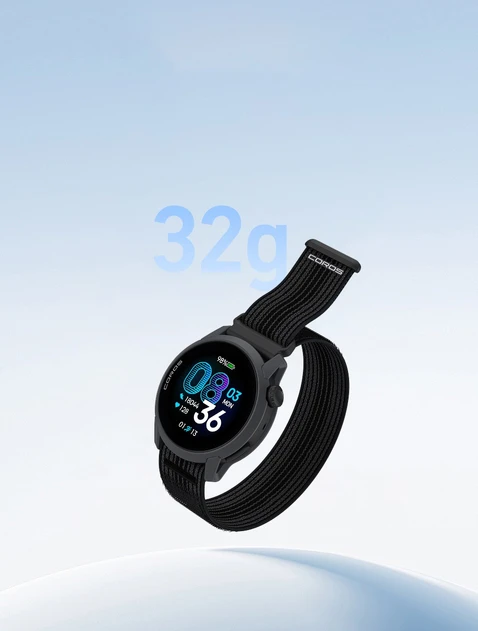
COROS PACE 4: Ultralight AMOLED Running Watch With Long Battery and Training Analytics at $249
COROS’s lightest GPS watch combines an AMOLED display, 38 hour GPS battery, and comprehensive training analytics in a 37 gram package that redefines what runners can expect at $249 with…

Generative Biology: The New Healthcare Venture Capital Stack
Generative biology connects foundation models, proprietary experimental data, automated laboratories, therapeutic assets, manufacturing, and clinical translation into a new healthcare venture-capital stack.
IQAir AirVisual Pro: Indoor and Outdoor Air Quality Intelligence Platform
The air outside your window and the air inside your home tell different stories about your health. Most monitors can only read one of them. Presented By Our Partners In…
