
Oura Ring 5 Price and Blood Pressure Signals: What $399 Actually Buys You
Oura’s fifth generation ring is smaller, more expensive than the model it replaces, and arrives with a blood pressure feature that exists because a federal rule quietly changed in January.
Presented By Our Partners



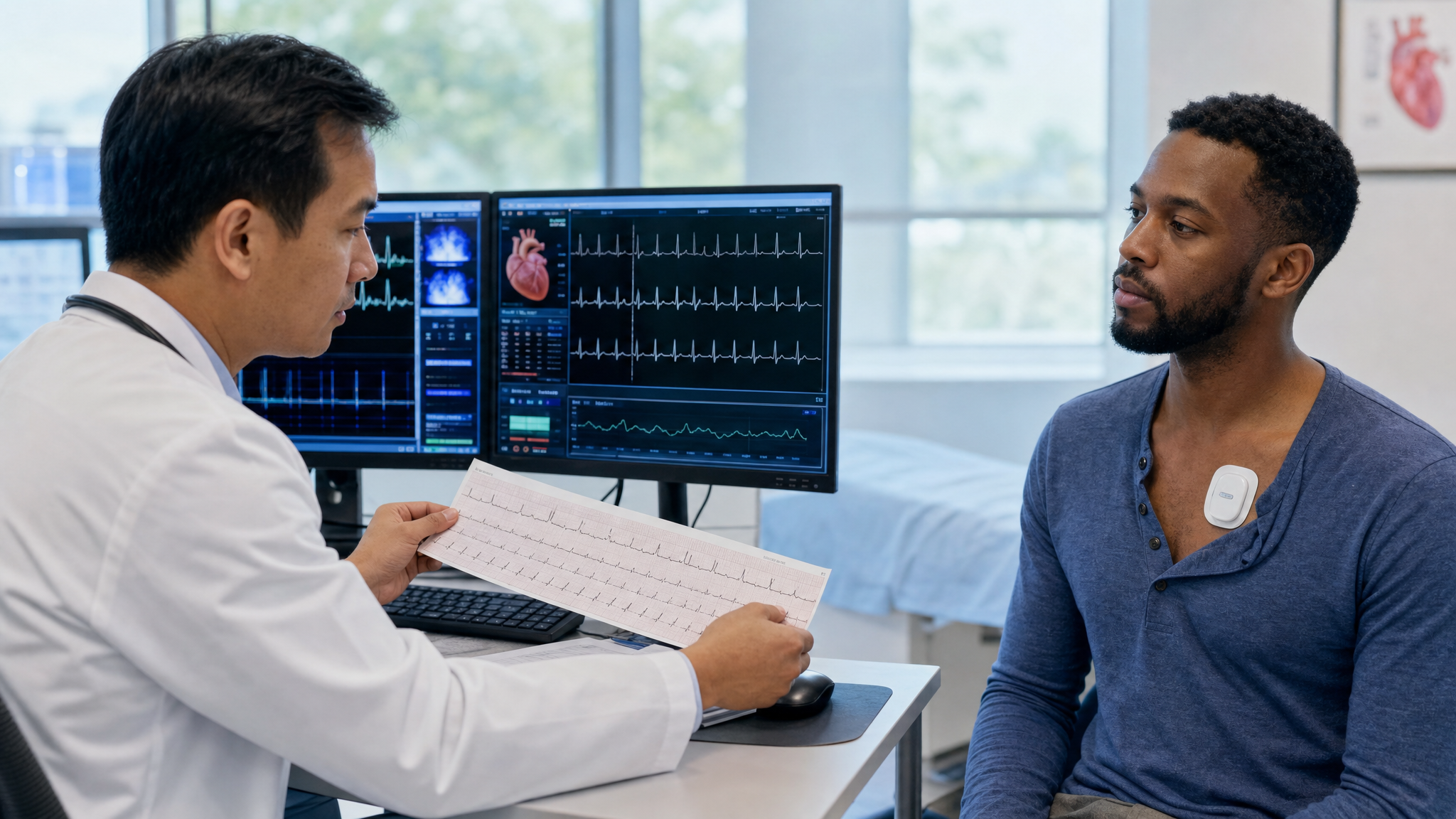
Here is the sentence you will see in most coverage of the Oura Ring 5: the ring now tracks your blood pressure. It does not. It never displays a systolic or diastolic number, it is not cleared by the Food and Drug Administration to measure blood pressure, and Oura itself is careful to call the feature “signals” rather than readings.
That distinction is not marketing hairsplitting. It is the entire story of what shipped in June 2026, and it points at a regulatory shift that will shape every wearable released for the rest of the decade.
What Does the Oura Ring 5 Cost?
The Ring 5 starts at $399 for the Black and Silver finishes. Gold, Deep Rose, Brushed Silver, and the matte Stealth colorway cost $499. Oura also sells a portable charging case separately for $99.
The hardware price is not the full price. Oura’s membership runs $5.99 per month, which is $71.88 per year, and without it most of the ring’s analysis is locked. Over three years of ownership the membership alone adds roughly $216 to a $399 purchase. Keep a ring for five years and the subscription costs about as much as the hardware did.
Two things changed with this generation. The entry price rose, since the Ring 4 launched at $349. And the previous generation got cheaper, as it usually does: Ring 4 and Ring 4 Ceramic were discounted heavily in the weeks after the Ring 5 announcement. If you want the cheapest route into the Oura ecosystem, a launch of a new generation is reliably the moment the old one becomes affordable.
What Is New in the Hardware?
The headline change is size. Oura reduced thickness from 3.5mm to 2.8mm and width from 7.9mm to 6mm, which the company describes as 40 percent smaller overall. The shell remains nonallergenic titanium. Battery life now reaches a full week on a charge.
Underneath, the sensing architecture was rebuilt. Oura increased LED power and expanded to twelve signal pathways, which matters more than it sounds: photoplethysmography accuracy varies considerably across finger shapes and skin tones, and more pathways give the algorithm more chances to find a clean signal.
How Do Blood Pressure Signals Actually Work?
The feature sits inside a package Oura calls Health Radar. It uses photoplethysmography, the same optical technique that produces heart rate, to analyze the shape of your pulse waveform overnight. From waveform shape and pulse wave velocity, algorithms estimate arterial stiffness, which correlates with blood pressure changes over time.
What you get is a trend. You see whether your overnight pattern is shifting, and how that shift tracks against sleep, stress, and training load. What you do not get is a number you could bring to a cardiologist. Oura’s own product language frames the output as patterns rather than clinical measurements.
Alongside it, a new Lab Uploads tool lets members photograph or import blood panels so that cholesterol, glucose, and inflammatory markers sit next to ring data in the same app. That is arguably the more interesting feature, and almost nobody covered it.
Featured Partner
Invest in the Infrastructure Behind Modern Medicine
As healthcare expands beyond hospital walls, the buildings and campuses supporting that shift are generating compelling returns for investors who move early. The Healthcare Real Estate Fund offers qualified investors direct access to a curated portfolio of medical office, outpatient, and specialty care facilities.
Learn More →
Why Is This Allowed Without FDA Clearance?
On January 6, 2026, the FDA revised its General Wellness guidance. The revision allows sensors to estimate or infer blood pressure for wellness purposes without premarket review, provided the manufacturer makes no diagnostic claim about a condition such as hypertension.
Oura and Samsung both shipped under that carve-out. Samsung reached the US market first, rolling blood pressure features out to Galaxy Watch users on March 31, 2026, also classified as wellness rather than medical. Oura followed at the end of May.
This is the part worth sitting with. The capability did not become more accurate in January. The regulatory threshold moved. A feature that would have required clearance in December shipped without it in June, and the burden of understanding that distinction shifted onto the person wearing the ring.
What Do Clinicians Say About Cuffless Estimates?
Cautious things. As of mid 2026, no smart ring has FDA clearance for blood pressure measurement of any kind. There is no finalized international validation protocol for cuffless estimation, which means there is no agreed standard against which these algorithms can be independently tested.
The FDA maintains a standing safety communication warning consumers against using unauthorized devices to measure blood pressure. That communication has not been withdrawn. It now coexists with a wellness carve-out that permits exactly this category of device, which is an uncomfortable pairing that the agency has not fully reconciled.
Oura is also running a Blood Pressure Profile Study through Oura Labs, launched in December 2025 for US members aged 22 and older. The study is still active. No accuracy metrics have been published. A future hypertension risk detection feature would require clearance, and Oura has not announced one.
Should You Buy It for the Blood Pressure Feature?
If you have hypertension, no. Use a validated upper arm cuff, and follow your physician’s guidance. Nothing in the Ring 5 replaces that, and treating a trend line as a substitute for a measurement is the failure mode this entire category invites.
If you are healthy and curious whether your overnight cardiovascular pattern responds to how you sleep, drink, and train, the feature is genuinely interesting. It is a lifestyle feedback loop, not a diagnostic. Held to that standard, it does something no cuff does: it observes you every night for months without you thinking about it.
What This Means for You
Cardiovascular disease remains the leading cause of death in the United States, and blood pressure is its most modifiable input. A wearable that makes you curious about your overnight patterns is useful precisely because it points back at the fundamentals rather than replacing them.
The levers that actually move blood pressure are unglamorous and well established. Sleep regularity and duration. Aerobic conditioning and resistance training. Sodium, potassium, and alcohol intake. Stress regulation through breathwork and recovery. A ring can show you whether those levers are working. It cannot pull them for you, and it cannot tell you whether you have hypertension.
The practical move: if your ring shows a pattern you do not like, that is a reason to get a validated cuff reading and talk to your doctor. Treat the wearable as the thing that prompts the question, not the thing that answers it.
Frequently Asked Questions
How much does the Oura Ring 5 cost?
The Oura Ring 5 costs $399 for Black and Silver finishes and $499 for Gold, Deep Rose, Brushed Silver, and Stealth. A portable charging case is $99 extra, and the Oura membership is $5.99 per month.
Does the Oura Ring 5 measure blood pressure?
Not in the clinical sense. It analyzes overnight pulse waveform patterns and reports trends. It does not display systolic or diastolic numbers and is not a replacement for a blood pressure cuff.
Is the Oura Ring 5 FDA cleared for blood pressure?
No. It ships under a January 2026 revision to the FDA’s General Wellness guidance that permits sensors to estimate blood pressure for wellness purposes without premarket review, provided no diagnostic claims are made.
When did the Oura Ring 5 come out?
Oura announced the Ring 5 on May 28, 2026, and began shipping it on June 4, 2026.
Do you need a subscription for the Oura Ring 5?
Yes, for full functionality. The Oura membership costs $5.99 per month, or $71.88 per year, and most analysis features are unavailable without it.
Is the Oura Ring 5 worth upgrading from the Ring 4?
The main hardware gains are a 40 percent smaller profile, a full week of battery, and a rebuilt sensor array. Several new software features, including blood pressure signals, also roll out to Ring 3 and Ring 4, so the upgrade case rests mostly on comfort and battery.
Which smart rings have FDA cleared blood pressure monitoring?
As of mid 2026, none. Every smart ring blood pressure feature currently on the market is classified as a wellness feature rather than a cleared medical measurement.
For more on where cuffless blood pressure technology actually stands, see our reviews of the Hilo Core blood pressure wearable, the Signal Ring, and the Omron HeartGuide, the first FDA cleared wrist blood pressure watch. The Oura Ring Gen 4 remains a strong value at its post launch price, and our complete guide to wearable health technology covers the full device landscape.


Similar Posts

Somatic vs Germline Mutations: The Difference That Changes Everything
Germline mutations are inherited from your parents and present in every cell. Somatic mutations arise during life and live in only some cells. The distinction shapes how cancer is treated,…

Muscle Span: Why Grip Strength Now Predicts How Long You Live, and the Protein and Strength Playbook to Build It Tonight
A February 2026 JAMA Network Open study of more than 5,000 women found that a firm hand grip predicted survival even in those who fell short of exercise guidelines or…

myDNAge Epigenetic Clock: The Original Horvath Clock Made Consumer-Accessible
Built by the epigenetics company behind the gold-standard research reagents, myDNAge brings Steve Horvath’s original epigenetic clock directly to consumers, with the unique option of testing from a urine sample….
Tonal Smart Gym: Electromagnetic Resistance Training for Strength and Longevity
A wall-mounted cable system that replaces an entire weight room with digital resistance, AI coaching, and real-time form feedback. Does the science of strength training support this approach to building…
Labcorp OnDemand: Clinical-Grade Blood Testing at Consumer Prices
The laboratory that processes tests for half of America’s hospitals now lets anyone order blood work directly, no prescription required. Presented By Our Partners Somewhere in the United States right…

AI Is Making Body Scans Cheaper. Medicine Still Has to Decide What They’re For.
AI may make full-body MRI faster and cheaper, but lower scan prices do not automatically create better healthcare. The real test is evidence, follow-up, affordability, and whether discovery becomes useful…
