
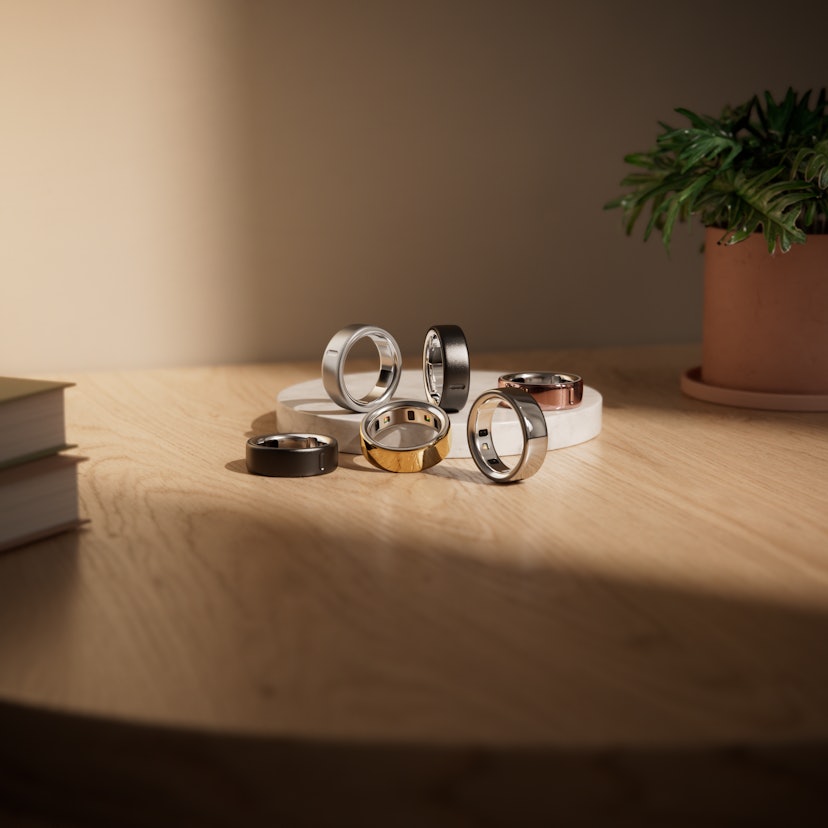
Oura Ring Gen 4 Women’s Health Features: Cycle Tracking, Pregnancy, and Perimenopause
A ring that already tracked sleep, heart rate, and body temperature added cycle prediction, pregnancy insights, and perimenopause features, turning a general health wearable into something more specific: a continuous reproductive health monitor you never have to think about.
Presented By Our Partners



Product status update, August 2026. This is now the previous generation. The Oura Ring 5 launched in June 2026 at $399 to $499.
The menstrual cycle is not a standalone system. It is a reflection of systemic health, driven by the hypothalamic-pituitary-ovarian axis and influenced by sleep quality, stress, metabolic health, and physical activity. The physiological signals that shift across the menstrual cycle, skin temperature, heart rate, heart rate variability, and respiratory rate, are the same signals that general health wearables already track for sleep and recovery analysis. The Oura Ring Gen 4 capitalizes on this overlap. By applying cycle-specific algorithms to the continuous physiological data it already collects during sleep, Oura has transformed a comprehensive health tracker into a reproductive health platform, offering cycle phase identification, period prediction, fertile window estimation, pregnancy-specific heart rate insights, and emerging perimenopause detection features. A 2019 prospective study by Goodale et al. published in the Journal of Medical Internet Research demonstrated that wearable sensors tracking multiple physiological parameters during sleep could detect the fertile window with 90% accuracy, validating the foundational premise that Oura’s approach is built upon.
What Is Oura Ring Gen 4 for Women’s Health?
The Oura Ring Gen 4 is a titanium smart ring worn on the finger that continuously monitors skin temperature, heart rate, heart rate variability (HRV), blood oxygen saturation (SpO2), respiratory rate, and activity. For women’s health specifically, the ring’s Cycle Insights feature analyzes nighttime skin temperature data to identify menstrual cycle phases, predict upcoming periods, and estimate the fertile window based on temperature deviation patterns.
The ring tracks temperature as a deviation from the user’s personal baseline rather than reporting absolute body temperature. This relative approach highlights the thermogenic shift that occurs after ovulation when progesterone raises the body’s temperature set point. The Oura app displays these temperature trends alongside cycle phase information, readiness scores, and sleep data, providing an integrated view of how the menstrual cycle affects overall health and recovery.
Oura has introduced pregnancy-specific features, including adjusted heart rate zone analysis that accounts for the cardiovascular changes of pregnancy (increased blood volume, elevated resting heart rate, and altered HRV patterns). Perimenopause insights, which identify the temperature pattern irregularities and cycle length changes characteristic of the menopausal transition, are an emerging feature category.
The ring costs $349 to $499 depending on finish, with a required subscription of $5.99/month or $69.99/year for full data access including Cycle Insights. The ring is classified as a general wellness device and is not FDA cleared for fertility prediction, contraception, or any medical reproductive health claim. It is HSA eligible.
The Science Behind Wearable Cycle Monitoring
The physiological basis for wearable menstrual cycle tracking rests on the well-established hormonal influence on thermoregulation and cardiovascular parameters across the cycle. Progesterone, produced by the corpus luteum after ovulation, acts on the hypothalamic thermoregulatory center to raise the basal body temperature set point by approximately 0.2 to 0.5 degrees Celsius during the luteal phase. This temperature shift is the same signal that traditional BBT charting has measured for nearly a century.
What continuous wearable monitoring adds is the ability to capture this shift passively, without behavioral compliance requirements, and to contextualize it within a broader physiological signature. A 2022 study by Yu et al. published in Reproductive Biology and Endocrinology found that combining BBT with heart rate data improved fertile window prediction accuracy to 87.46% among regular menstruators (AUC 0.8993) in a study of 89 women across 305 confirmed ovulatory cycles. The study used cross-classified mixed-effects models to demonstrate statistically significant phase-based shifts in both temperature and heart rate.
The 2019 Goodale et al. study in the Journal of Medical Internet Research further demonstrated that tracking five physiological parameters simultaneously (skin temperature, heart rate, respiratory rate, HRV, and skin perfusion) during sleep enabled 90% fertile window detection accuracy in 237 women. While this study used a wrist-worn device, the physiological principle applies to any wearable that captures the same parameters during sleep, including finger-worn sensors.
Oura’s specific approach uses relative temperature deviation rather than absolute BBT. This methodology has both advantages and limitations. The advantage is that relative temperature is less affected by environmental conditions and measurement variability. The limitation is that traditional fertility awareness methods are calibrated to absolute temperature thresholds, and relative deviation data is less directly interpretable by users trained in sympto-thermal charting.
For pregnancy monitoring, the cardiovascular changes are well documented: resting heart rate increases by approximately 10 to 20 bpm across pregnancy, cardiac output rises by 30 to 50%, and HRV patterns shift as the autonomic nervous system adapts to pregnancy’s hemodynamic demands. Tracking these changes through a wearable provides continuous longitudinal data that periodic prenatal visits cannot capture.
That is the science. Here is how Oura Ring Gen 4 applies it to women’s health.
What Oura Ring Gen 4 Does Well for Women’s Health
Oura’s primary advantage for women’s health is seamless, passive integration of cycle data into a comprehensive health dashboard. Unlike dedicated fertility devices that serve a single purpose, Oura places cycle insights alongside sleep stages, readiness scores, activity tracking, and cardiovascular metrics. This integration allows women to see how their cycle phase affects sleep quality, recovery capacity, exercise performance, and stress levels, connections that dedicated fertility devices do not contextualize.
The ring form factor is a significant differentiator. Many women resist wrist-worn wearables for aesthetic, professional, or comfort reasons, particularly during sleep. The Oura Ring is visually indistinguishable from a fashion ring, eliminating the social signaling associated with health trackers. This discretion extends to workplace settings where visible fertility devices might invite unwanted questions.
Featured Partner
Invest in the Infrastructure Behind Modern Medicine
As healthcare expands beyond hospital walls, the buildings and campuses supporting that shift are generating compelling returns for investors who move early. The Healthcare Real Estate Fund offers qualified investors direct access to a curated portfolio of medical office, outpatient, and specialty care facilities.
Learn More →
The temperature deviation methodology provides clean, interpretable cycle visualizations without the daily compliance burden of oral BBT measurement. The ring collects data automatically during sleep; the user simply wears it and checks the app. There are no morning measurement rituals, no timed readings, and no missed-day penalties.
Pregnancy features represent a forward-looking investment. As Oura accumulates data from pregnant users, its algorithms for detecting pregnancy-associated cardiovascular changes, identifying potential complications through abnormal HRV patterns, and tracking recovery postpartum will improve. The transition from pre-conception cycle tracking through pregnancy monitoring to postpartum recovery tracking, all on a single device, is a unique proposition in the wearable space.
Pricing, Access, and Practical Realities
Oura Ring Gen 4 retails at $349 to $499 depending on material finish (silver, black, gold, rose gold, stealth). The required Oura Membership subscription costs $5.99/month or $69.99/year. Without the subscription, the ring provides only basic metrics; Cycle Insights, sleep staging, and detailed trend analysis require the membership.
Total first-year cost of ownership: $419 to $569 (ring plus annual subscription). Subsequent years cost $69.99 for the subscription alone. Over three years, total cost reaches $559 to $709. This makes Oura one of the more expensive options for cycle tracking specifically, though the comprehensive health tracking features justify the investment for users who value the full ecosystem.
Oura Ring is classified as a general wellness device. It is not FDA cleared for fertility prediction, ovulation detection, contraception, or any medical reproductive health claim. The Cycle Insights feature provides informational estimates, not clinically actionable fertility predictions. Women using Oura data for conception timing or natural family planning do so outside any regulatory framework. The ring is HSA eligible.
Ring sizing is critical. Oura provides a free sizing kit before purchase, and the ring must be worn on a specific finger (index or middle finger recommended for optimal sensor contact). Temperature and heart rate accuracy depend on proper fit, and rings that are too loose produce unreliable data.
Who Oura Ring Gen 4 Is Best For (Women’s Health)
Oura Ring is ideal for women who want cycle awareness as part of a comprehensive health monitoring strategy rather than as a standalone fertility focus. Women who are curious about how their cycle affects sleep, recovery, and exercise performance, and who want that data integrated into a single platform, will find Oura’s approach uniquely valuable.
The ring suits women who prefer a discreet, always-on wearable that requires zero daily effort. Professionals, athletes, and anyone who would not wear a wrist-based health tracker for aesthetic reasons find the ring format compelling. Women entering perimenopause who want to track cycle length changes and temperature pattern irregularities will appreciate the long-term trend analysis as Oura’s perimenopause features mature.
Women who are actively trying to conceive and want the most validated fertility-specific device should consider dedicated fertility wearables like Ava (FDA cleared for fertility tracking with published 90% accuracy) or biochemical approaches like the Clearblue Advanced OPK. Oura’s cycle features are informational, not clinically validated for fertile window prediction. Women seeking a contraceptive tool should use Natural Cycles, the only FDA-cleared digital contraceptive. Budget-conscious users who want cycle tracking without a subscription may prefer Tempdrop ($149 to $199, no subscription) for dedicated BBT monitoring.
How Oura Ring Gen 4 Compares (Women’s Health)
The Ava Fertility Bracelet ($299, no subscription) is a purpose-built fertility device with FDA clearance for fertility tracking and a published clinical validation demonstrating 90% fertile window accuracy. Ava tracks five physiological parameters but serves only as a nighttime fertility monitor. Oura offers broader health tracking (daytime activity, sleep staging, readiness, SpO2) but lacks FDA-cleared fertility claims and published fertility-specific clinical validation. For women whose primary goal is conception optimization, Ava is more specifically validated. For women who want integrated health intelligence with cycle awareness, Oura provides a richer ecosystem.
The Apple Watch Ultra 2 provides cycle tracking through the Apple Health app, using wrist temperature data from overnight measurements. Apple’s approach shares Oura’s relative temperature methodology but is delivered through a larger wrist-worn format. Apple’s cycle tracking is FDA cleared for retrospective ovulation estimation (a narrower claim than Ava’s fertile window prediction). The Apple Watch offers a much broader ecosystem of apps and integrations but lacks the sleep-optimized form factor and battery life of the ring.
Tempdrop 2.0 ($149 to $199, no subscription) provides continuous overnight BBT via an armband with absolute temperature output compatible with traditional FAM charting methods. Tempdrop is purpose-built for fertility awareness users who practice sympto-thermal methods. It offers no health tracking beyond temperature but provides data in the format that trained FAM users expect, at a lower total cost with no ongoing subscription.
Limitations and Open Questions
Oura’s Cycle Insights have not been validated in a published clinical trial for fertile window detection accuracy. Unlike Ava (90% published accuracy) or Natural Cycles (FDA-cleared contraceptive effectiveness data), Oura’s cycle predictions are based on general physiological principles applied through proprietary algorithms without independently published accuracy metrics. Users should treat Oura’s fertile window estimates as informational, not as clinically validated predictions.
The relative temperature deviation approach, while useful for trend visualization, is not directly compatible with traditional fertility awareness charting methods that require absolute BBT readings. Women who practice sympto-thermal methods cannot use Oura data as a drop-in replacement for their BBT thermometer readings.
The $5.99/month subscription is required for Cycle Insights access. Unlike Tempdrop and Ava, which include full functionality with the hardware purchase, Oura gates its cycle features behind an ongoing subscription. This recurring cost adds up over a multi-year reproductive health journey.
Pregnancy and perimenopause features are still maturing. While the physiological basis for these features is sound, the algorithms are newer and have less accumulated user data for validation compared to Oura’s established sleep and readiness features. Users should expect iterative improvements rather than fully mature capabilities at launch.
What This Means for Your Health
The menstrual cycle is a vital sign. Increasingly, reproductive endocrinologists and integrative health practitioners recognize that cycle regularity, length, and associated physiological patterns provide a window into systemic health that extends far beyond fertility. Irregular cycles can signal thyroid dysfunction, PCOS, hypothalamic amenorrhea, chronic stress, or energy deficit from under-eating or overtraining. The hormonal fluctuations across the cycle directly influence cardiovascular function, sleep architecture, cognitive performance, and emotional regulation.
Oura Ring Gen 4 positions cycle data within this broader health context. Seeing that your HRV drops during the late luteal phase, that your sleep quality shifts predictably with cycle phase, or that your readiness score follows a cyclical pattern provides a more nuanced understanding of your body than any single-parameter fertility tracker can offer. This integrated perspective aligns with Healthcare Discovery‘s Five Pillars framework: the cycle intersects with sleep (luteal phase temperature elevation affects sleep depth), movement (exercise tolerance varies by cycle phase), nutrition (metabolic rate increases during the luteal phase), and mindset (understanding cycle-driven mood and energy shifts reduces uncertainty).
The Four Shadows, cardiovascular disease, cancer, neurodegenerative disease, and metabolic dysfunction, are all influenced by reproductive hormone health. Estrogen is cardioprotective; its decline during menopause increases cardiovascular risk. Progesterone influences neuroinflammation. The menopausal transition accelerates metabolic changes that drive insulin resistance. Monitoring the cycle, and eventually the menopausal transition, through continuous wearable data provides longitudinal health intelligence that supports proactive risk management across decades.
Oura Ring Gen 4 is not a fertility device. It is a health intelligence platform that includes increasingly sophisticated reproductive health features. For women who want to understand their cycle as one dimension of a comprehensive health picture, it offers something no dedicated fertility device provides: the full context of how your reproductive health connects to everything else.

Explore the full wearable guide
See how the Oura Ring compares with smart rings, watches, ECG devices, and other connected health hardware across the full Healthcare Discovery wearables guide.
Frequently Asked Questions
Is Oura Ring Gen 4 FDA cleared for fertility tracking?
No. Oura Ring is classified as a general wellness device and is not FDA cleared for fertility prediction, ovulation detection, or contraception. The Cycle Insights feature provides informational estimates based on skin temperature deviation data. Women seeking FDA-cleared fertility devices should consider Ava (fertility tracking) or Natural Cycles (contraception).
How does Oura track the menstrual cycle?
Oura uses continuous overnight skin temperature data from the ring’s sensor to detect the thermogenic shift caused by postovulatory progesterone production. The app displays temperature as a deviation from personal baseline, identifies cycle phases, predicts upcoming periods, and estimates the fertile window. Heart rate, HRV, and sleep data provide additional context for understanding cycle-related health patterns.
Does Oura Ring require a subscription for cycle tracking?
Yes. Cycle Insights require the Oura Membership ($5.99/month or $69.99/year). Without the subscription, the ring provides only basic metrics. The membership also unlocks sleep staging, detailed trend analysis, and other premium features. Total first-year cost including the ring ($349 to $499) and annual subscription ($69.99) ranges from $419 to $569.
Can Oura Ring detect pregnancy?
Oura has introduced pregnancy-specific features that track the cardiovascular changes associated with pregnancy, including elevated resting heart rate and altered HRV patterns. The ring does not diagnose pregnancy but can identify physiological shifts consistent with early pregnancy, such as a sustained temperature elevation beyond the typical luteal phase duration. These features are informational, not diagnostic.
How does Oura’s cycle tracking compare to dedicated fertility devices?
Oura provides cycle awareness within a comprehensive health ecosystem but lacks the clinical validation of dedicated fertility devices. The Ava Fertility Bracelet has published 90% fertile window accuracy data from a 237-woman clinical study. Natural Cycles has FDA contraceptive clearance with Pearl Index data from 15,000+ women. Oura has not published comparable fertility-specific clinical validation. Its strength is integrated health intelligence; its limitation is fertility-specific precision.
Oura Ring Gen 4 (Women's Health) at a glance
- Hardware price
- $349 to $499
- Subscription
- $71.88 per year
- First year total
- $420.88
- Form factor
- Smart ring (finger)
- FDA status
- Wellness device, no clearance
- HSA/FSA
- Eligible
- Generation
- 4
Measures Cycle insights, HR, HRV, Pregnancy heart rate zones, Readiness, Skin temp, Sleep
Pricing verified August 5, 2026. Maintained in the Healthcare Discovery device database and updated automatically.


Similar Posts

AI Case Finding: The Healthcare Delivery Use Case That Finds Patients Medicine Keeps Missing
AI case finding may be one of the most important healthcare delivery use cases of 2026: finding patients who already qualify for proven care but remain invisible to the system.

Dario Health Platform: Integrated Digital Health for Diabetes and Chronic Disease Management
Managing diabetes has always required more than a glucose number. The challenge is integrating blood sugar data with the behavioral, nutritional, and emotional factors that determine long-term outcomes. Presented By…
The Mosaic Body and Longevity: What Mutation Tracking Means for Healthspan
A capstone essay closing our series on the Mosaic Body. The new science of somatic mutation, clonal expansion, and mosaic aging is more than an interesting development in molecular biology….
Withings ScanWatch: FDA Cleared ECG and SpO2 in a Classic Watch Design
An FDA cleared electrocardiogram and pulse oximeter built into a watch that actually looks like a watch, not a miniature computer strapped to your wrist. Presented By Our Partners Product…

Wim Hof Method App: What the Science Actually Says About Breathwork and Cold Exposure
Separating the peer-reviewed evidence from the hype around controlled breathing, cold immersion, and voluntary immune system influence Presented By Our Partners In 2014, a study published in Proceedings of the…

Move More, Sit Smarter, Sleep Better: How Three Lifestyle Shifts Can Cut Your Dementia Risk by 25%
Two landmark studies published in April 2026, drawing on data from millions of adults, have converged on a striking finding: the daily decisions you make about moving, sitting, and sleeping…
