

Polar Vantage V2 Review: Multisport VO2 Max and Training Load Analysis Without a Subscription
Polar’s flagship multisport watch combines decades of heart rate science with running power from the wrist and comprehensive training load management, all without a recurring fee.
Presented By Our Partners



Product status update, August 2026. This model has been superseded by the Polar Vantage V3, now the Polar flagship.
Polar Electro invented the wireless heart rate monitor in 1977. That is not a marketing claim; it is a historical fact. For nearly five decades, Polar has been at the intersection of heart rate science and athletic performance, accumulating more data on the relationship between cardiac output and exercise physiology than perhaps any other company. The Vantage V2 represents the culmination of that legacy: a multisport GPS watch that estimates VO2 max, tracks training load across multiple dimensions, calculates running power from wrist dynamics, and provides recovery guidance, all grounded in Polar’s proprietary algorithms developed through partnerships with sports science institutions worldwide.
The relevance of cardiorespiratory fitness tracking to longevity is now beyond dispute. The 2018 Mandsager et al. study of 122,007 patients in JAMA Network Open established VO2 max as the single strongest predictor of all cause mortality, with a five fold risk difference between the lowest and highest fitness quintiles. A 2022 meta analysis by Imboden et al. in the British Journal of Sports Medicine, analyzing 199,265 participants, confirmed that each one MET improvement in fitness was associated with a 7 to 17 percent reduction in mortality risk. Tracking this metric over time is not a luxury for competitive athletes; it is a fundamental longevity practice.
What Is the Polar Vantage V2?
The Polar Vantage V2 is a premium multisport GPS watch designed for athletes who train across multiple disciplines. The watch features Polar’s Precision Prime optical heart rate sensor, which combines LED optical measurement with skin contact sensing to improve accuracy during dynamic movement. VO2 max is estimated through Polar’s Running Performance Test and through ongoing analysis of heart rate and pace during training sessions.
The watch tracks over 130 sport profiles and provides comprehensive training analytics including Training Load Pro (a multi dimensional assessment of cardiovascular, muscular, and perceived training stress), Recovery Pro (which uses HRV measured upon waking to assess autonomic recovery status), and running power calculated from wrist motion without requiring an external power meter or foot pod.
Additional features include hill splitter (automatic detection and analysis of uphill and downhill segments), route navigation, music controls (though no onboard music storage), and a lightweight design at 52 grams. The Vantage V2 retails at $499.95 with no subscription fee. All analytics, training plans, and data features are included through Polar Flow, the free companion platform.
The Science Behind Training Load Management and VO2 Max Tracking
Effective training for cardiorespiratory fitness improvement requires more than simply exercising hard. The exercise science literature consistently shows that the optimal approach involves periodized training: systematic variation of volume, intensity, and recovery across weeks and months. Overtraining produces diminishing returns and increases injury risk, while undertraining fails to provide the progressive overload necessary for adaptation. The challenge is quantifying where you stand on this spectrum at any given time.
Polar’s Training Load Pro addresses this by decomposing training stress into three components. Cardiovascular load reflects the strain on the heart and aerobic energy systems, derived from heart rate data during training. Muscular load estimates the mechanical stress on musculoskeletal structures, calculated from activity intensity, duration, and sport type. Perceived load captures the subjective experience of training difficulty through a post session rating. This three dimensional model prevents the common error of relying solely on heart rate based load estimates, which miss the muscular stress of strength training and the psychological burden of high pressure competition.
Recovery Pro uses morning HRV measurements to assess autonomic nervous system recovery. A depressed HRV upon waking suggests incomplete recovery from prior training stress, while a normal or elevated HRV indicates readiness for high intensity work. A 2019 systematic review published in Sports Medicine by Plews et al. confirmed that HRV guided training (adjusting daily intensity based on morning HRV) produced superior endurance performance outcomes compared to predetermined training plans in multiple randomized controlled trials.
The VO2 max estimation algorithm uses the submaximal relationship between heart rate and running speed to estimate maximal aerobic capacity. While less validated in published literature than Garmin’s Firstbeat algorithm, Polar’s estimation draws on the company’s extensive heart rate science database and has been refined across multiple product generations.
The longevity relevance extends beyond VO2 max itself. Training load management prevents the overtraining and injury cycles that derail long term exercise consistency. Consistency, not peak performance, is the variable that determines whether exercise contributes to longevity over decades. A training tool that helps you train enough to improve but not so much that you get injured or burned out is directly relevant to healthspan extension.
What the Vantage V2 Does Well
The Precision Prime optical heart rate sensor is among the best wrist based sensors on the market. By combining multiple LED wavelengths with skin contact sensing, it achieves accuracy closer to a chest strap than most competing wrist sensors, particularly during steady state aerobic exercise. This matters because the accuracy of every derived metric (VO2 max, training load, recovery status) depends on the quality of the underlying heart rate data.
Running power from the wrist, without requiring an external sensor, provides a training metric that complements pace and heart rate. Power is unaffected by terrain, wind, and fatigue in the way that pace is, making it a more consistent measure of effort during hilly or variable conditions. For trail runners and ultramarathon athletes, wrist based power is a meaningful addition.
Featured Partner
Invest in the Infrastructure Behind Modern Medicine
As healthcare expands beyond hospital walls, the buildings and campuses supporting that shift are generating compelling returns for investors who move early. The Healthcare Real Estate Fund offers qualified investors direct access to a curated portfolio of medical office, outpatient, and specialty care facilities.
Learn More →
The three dimensional Training Load Pro system provides genuinely actionable guidance. The visual display showing cardiovascular, muscular, and perceived load balance over the past 28 days makes it immediately obvious whether training is skewing too heavily toward one dimension. An endurance athlete who sees high cardiovascular load but low muscular load receives a clear signal to incorporate more strength work, which aligns with current sports science recommendations for injury prevention and performance optimization.
The no subscription model deserves emphasis. Every analytic feature, including Running Performance Tests, Training Load Pro, Recovery Pro, and all future software updates, is included in the purchase price. In a market where Whoop charges $30 per month, Oura charges $5.99 per month, and even Fitbit gates features behind a premium subscription, Polar’s approach respects the buyer’s initial investment.
Pricing, Access, and Practical Realities
The Vantage V2 retails at $499.95 with no subscription. Polar Flow, the companion app and web platform, is free. Total cost of ownership equals the purchase price. Over three years, this compares to approximately $1,580 for a WHOOP membership or $616 for Oura (ring plus subscription), making the Vantage V2 among the most cost effective premium training tools when long term ownership costs are considered.
The device is classified as a general wellness product with no FDA clearance for clinical use. VO2 max estimates, training load values, and recovery assessments are intended for fitness and athletic training guidance, not medical diagnosis.
Battery life is approximately 40 hours in training mode with GPS and heart rate, or up to 100 hours in power saving mode. In daily use without continuous GPS, the battery lasts approximately 7 days. This multi day battery life is a significant practical advantage for athletes who train multiple times per day or prefer not to charge daily.
The watch pairs with Polar’s H10 chest strap heart rate monitor (widely considered the gold standard consumer chest strap) for maximum accuracy during high intensity training and HRV measurement. While the wrist sensor is adequate for most training, the H10 pairing produces the most reliable data for VO2 max estimation and Recovery Pro assessments.
Who the Vantage V2 Is Best For
The Vantage V2 is ideal for multisport athletes (triathletes, duathletes, adventure racers) who need comprehensive training load management across diverse activities. Runners who want wrist based power without an external foot pod will find it particularly appealing. Athletes who train with heart rate zones and periodized programs will get the most value from Training Load Pro and Recovery Pro. Coaches and self coached athletes who use training platforms like Training Peaks or Strava will find Polar Flow’s data export thorough and compatible.
Budget conscious serious athletes who reject the subscription model will appreciate that every feature is included in the purchase price. Swimmers benefit from the watch’s water resistance and swimming metrics with wrist based heart rate during pool sessions.
Those who may want to look elsewhere include users who want a full featured smartwatch with app ecosystem, notifications, and music storage (the Vantage V2 is sport focused with limited smartwatch features). Users who prioritize display quality may find the Vantage V2’s MIP display less vibrant than the AMOLED screens on the Garmin Forerunner 965 or Apple Watch. Athletes who want onboard maps and navigation should note that the Vantage V2 offers route guidance but not full topographic mapping.
How the Vantage V2 Compares
Against the Garmin Forerunner 965 ($599.99), the Vantage V2 is $100 less and offers comparable training analytics depth. Garmin has the advantage in display quality (AMOLED versus MIP), internal storage (32 GB versus limited), map navigation, and the breadth of daily smartwatch features. Polar’s Precision Prime sensor may have a slight edge in wrist based heart rate accuracy. Both provide VO2 max estimation and training load management without subscriptions. The choice typically favors Garmin for display, maps, and ecosystem breadth, and Polar for heart rate accuracy, running power, and value.
Against the COROS VERTIX 2 ($599.99), the Vantage V2 offers superior heart rate sensor technology and more established training load analytics, while COROS provides exceptional battery life (up to 140 hours GPS), onboard maps, and a newer chip architecture. COROS has gained significant market share among ultramarathon athletes for its battery performance.
Against the Garmin Forerunner 265 ($449.99), the Vantage V2 offers a similar price point with running power from the wrist (which the 265 does not include) and the Precision Prime sensor. The Forerunner 265 counters with an AMOLED display, broader smartwatch features, and the Firstbeat analytics suite.
Limitations and Open Questions
Polar has not published peer reviewed, independently replicated validation data for its VO2 max estimation algorithm with the specificity that Garmin’s Firstbeat partnership provides. While Polar’s decades of heart rate science lend credibility to its algorithms, the absence of published correlation coefficients and mean absolute error data makes objective accuracy comparison with competitors difficult.
The MIP (Memory in Pixel) display, while excellent in outdoor sunlight, lacks the vibrancy and readability of AMOLED screens in indoor or low light conditions. For athletes who train primarily outdoors, this is not a limitation. For users who wear the watch all day as a general purpose device, the display feels dated compared to current competitors.
Limited onboard storage means no music playback from the watch and no full topographic maps. Athletes who want to leave their phone at home for phone free runs with music must look elsewhere. The omission of onboard maps limits the Vantage V2’s utility for trail exploration and navigation intensive activities.
The Polar ecosystem, while capable, has a smaller third party integration footprint than Garmin Connect. Fewer apps, watch faces, and community features are available compared to the Garmin IQ store.
What This Means for Your Health
The Polar Vantage V2 represents a philosophy of training that aligns directly with longevity science: consistent, structured, periodized exercise that builds cardiorespiratory fitness while avoiding the overtraining and injury that derail long term practice. The three dimensional training load model and HRV based recovery guidance are not just performance tools; they are injury prevention tools. And injury prevention, over a 30 to 50 year training horizon, is what separates people who maintain elite fitness into their 70s from people who stopped exercising after a series of preventable setbacks in their 40s.
Within Healthcare Discovery‘s Five Pillars, the Vantage V2 serves primarily the Movement pillar through comprehensive training guidance and the Sleep pillar through Nightly Recharge (which combines HRV analysis with sleep quality assessment to provide a morning readiness score). The Breathwork pillar benefits from the Serene guided breathing feature, which provides real time biofeedback during controlled breathing exercises. These features create an integrated view of how training, recovery, and stress management interact.
The mortality data on cardiorespiratory fitness is compelling enough to warrant tracking this metric regardless of athletic ambition. Whether you are a competitive triathlete or a 55 year old starting a walking program, knowing your VO2 max trend and managing your training load to improve it is one of the highest leverage health practices available. The Polar Vantage V2 provides the tools to do this with precision, without a subscription, built on nearly 50 years of heart rate science.

Explore the full wearable guide
See how the Polar Vantage V2 compares with smart rings, watches, ECG devices, and other connected health hardware across the full Healthcare Discovery wearables guide.
Frequently Asked Questions
Does the Polar Vantage V2 require a subscription?
No. All training analytics, VO2 max estimation, Training Load Pro, Recovery Pro, running power, sleep tracking, and software updates are included with the $499.95 purchase price. Polar Flow, the companion app and web platform, is completely free. This subscription free model is a significant cost advantage over competitors: WHOOP costs approximately $360 per year in subscription fees, and Oura charges $5.99 per month ($71.88/year). Over three years of ownership, the Vantage V2’s total cost is $499.95 compared to $1,080+ for subscription based alternatives.
How does Polar estimate VO2 max?
Polar estimates VO2 max through two methods. The Running Performance Test is a structured guided test where you run at progressively increasing intensities while the watch measures heart rate response. The algorithm also estimates VO2 max passively from regular training sessions by analyzing the submaximal relationship between heart rate and running pace. Both methods use Polar’s proprietary algorithms developed through decades of heart rate research and sports science partnerships. For the most accurate results, Polar recommends pairing with the H10 chest strap heart rate monitor and running on flat terrain in consistent conditions.
What is Training Load Pro on the Polar Vantage V2?
Training Load Pro is Polar’s three dimensional training load management system that tracks cardiovascular load (strain on the heart and aerobic systems from heart rate data), muscular load (mechanical stress on muscles and joints from activity intensity and type), and perceived load (subjective training difficulty from post session ratings). The 28 day trend view shows whether your training is balanced across all three dimensions. This multi dimensional approach prevents common training errors like accumulating high cardiovascular load while neglecting muscular development, or training at high perceived effort without proportional cardiovascular benefit.
How accurate is the Polar Vantage V2 heart rate sensor?
The Vantage V2 uses Polar’s Precision Prime sensor technology, which combines multiple LED wavelengths (green, red, and infrared) with electrode skin contact sensing. This multi technology approach is generally considered among the most accurate wrist based heart rate systems available. During steady state aerobic exercise, the sensor performs comparably to chest strap monitors. During high intensity intervals with significant arm movement, all wrist sensors lose some accuracy, and pairing with Polar’s H10 chest strap (widely regarded as the gold standard consumer chest strap) is recommended for maximum precision in these conditions.
Is the Polar Vantage V2 good for triathlon training?
Yes. The Vantage V2 is one of the best watches for triathlon training. It supports multisport mode for seamless transitions between swim, bike, and run segments. The Precision Prime sensor tracks heart rate during pool swimming (many wrist sensors cannot). Running power is calculated from the wrist without external sensors. Training Load Pro tracks load across all three disciplines in a unified view. The 40 hour GPS battery life covers even the longest Ironman races. The watch tracks over 130 sport profiles and exports data to Training Peaks and other triathlon training platforms. The primary limitation for triathletes is the absence of onboard maps for open water navigation, though route guidance is available.
Polar Vantage V2 at a glance
- Hardware price
- $499.95
- Subscription
- None required
- First year total
- $499.95
- Form factor
- Multisport GPS watch
- FDA status
- Wellness device, no clearance
- HSA/FSA
- Not confirmed
Measures GPS, HR, HRV, Recovery, Running power, Sleep stages, Training load, VO2max
Pricing verified August 5, 2026. Maintained in the Healthcare Discovery device database and updated automatically.


Similar Posts

Nebula Genomics: Whole Genome Sequencing, Data Ownership, and the Case for Reading Every Base Pair
While most consumer genetic tests read a fraction of your genome, Nebula sequences all 3.2 billion base pairs and lets you keep the data. Is whole genome sequencing ready for…

VO2 Max and the Longevity Prescription: What 2026 Research Reveals About Cardiorespiratory Fitness
In 2026, cardiorespiratory fitness is the most validated longevity marker in medicine. From Cleveland Clinic mortality data to Ulrik Wisløff’s 4 by 4 intervals and Iñigo San Millán’s zone 2…

Your Genes Determine Half Your Lifespan: The Weizmann Study That Rewrites Longevity Science
A landmark Science study from Israel’s Weizmann Institute reveals that genetics accounts for roughly 50% of variation in human lifespan, more than double previous estimates, upending decades of thinking about…
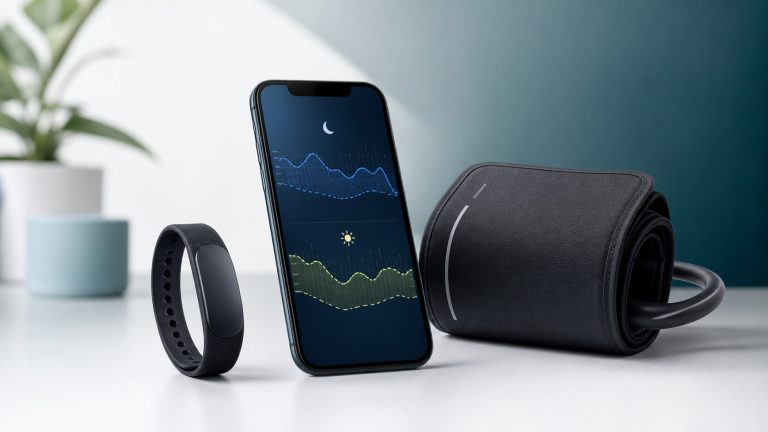
Hilo Core Blood Pressure Wearable: What the U.S. System Actually Does
Hilo Core brings Aktiia’s optical blood-pressure technology to the United States in a $239.98 first-year system. The wristband is a wellness trend tool, while exact reference readings come from the…

The Daily Rounds: Longevity & Health Care Brief | April 3, 2026
🧬 - Epigenetic reprogramming enters human trials for the first time, with Life Biosciences' ER-100 receiving FDA clearance for a phase 1 study in optic nerve degeneration, marking the dawn of cellular rejuvenation medicine. 🫁 - An AI-designed molecule for idiopathic pulmonary fibrosis shows clinical promise in a phase 2a trial, proving that algorithmically discovered drugs can survive contact with human biology. 🦠 - Gut bacteria can inject proteins directly into human cells, a newly described mechanism now linked to Crohn's disease inflammation and poised to reshape microbiome therapeutics. 🧠 - Disrupted circadian rhythms are associated with 2.5 times the risk of dementia, reinforcing that sleep timing and biological clock integrity are modifiable targets for brain aging. 💊 - With more than 173 AI-discovered drug programs now in clinical trials and Eli Lilly committing $2.75 billion to AI drug development, the algorithmic era of medicine is no longer theoretical.
Eight Sleep Pod 3 Cover: Active Thermal Sleep Optimization and Biometric Tracking
Your body temperature drops by nearly two degrees Fahrenheit as you fall asleep. What happens when technology learns to manage that drop for you? Presented By Our Partners Thermoregulation is…
