
Can the Shingles Vaccine Delay Dementia? What the Natural Experiments Show, and Why Critics Say the Numbers Are Too Big
Most people get the shingles shot to avoid a burning, blistering rash and the nerve pain that can linger for months afterward. Over the past two years, a growing body of research has raised a second possibility: that the same injection might also push back the arrival of dementia. The strongest of that evidence comes from Stanford epidemiologist Pascal Geldsetzer and colleagues, who used quirks of vaccine eligibility rules in Wales to show that people who were vaccinated had fewer new dementia diagnoses over seven years (Eyting et al., Nature, 2025).
Presented By Our Partners


That finding has since been echoed in Canada, extended to mild cognitive impairment, and paired with large health record analyses of the newer recombinant vaccine, Shingrix. It has also drawn a sharp challenge. In September 2026, a team led by Mika Kivimäki at University College London argued that the size of the effect implied by these natural experiments is, in some cases, mathematically impossible (Kivimäki et al., Brain, Behavior, and Immunity, 2026). This deep dive walks through what each line of evidence actually shows, where the critics have a point, and what it means for anyone deciding whether to roll up a sleeve.
Why a Virus From Childhood Might Matter for the Aging Brain
Almost every adult over 50 carries varicella zoster virus, the agent behind chickenpox. After the childhood infection clears, the virus retreats into sensory nerve clusters near the spinal cord and skull and stays there for life. When immune surveillance weakens with age, illness or immunosuppressive medication, it can reactivate and travel down the nerve to the skin, producing shingles. Roughly one in three people will have an episode in their lifetime.
The link to dementia rests on several overlapping ideas. Varicella zoster is neurotropic, meaning it lives in and can damage nervous tissue. Reactivation can inflame blood vessels, including those that supply the brain, a process called VZV vasculopathy that is associated with stroke. Repeated reactivations, some of them silent, may add up to a chronic inflammatory burden. Emory infectious disease specialist Nadine Rouphael has laid out three non-exclusive pathways worth testing: less cumulative viral reactivation, vaccine-driven changes in how the aging immune system behaves, and reduced neurovascular and neuroinflammatory injury (Rouphael, Clinical Infectious Diseases, 2026).
Support for the reactivation idea comes from one of the largest analyses to date, which followed health records from more than 100 million people in the United States and adjusted for nearly 400 measured characteristics. People with recurrent shingles had a higher dementia risk than those with a single episode, and the protective association of the older live vaccine faded over time in step with its fading protection against shingles itself (Polisky et al., Nature Medicine, 2025 (doi: 10.1038/s41591-025-03972-5)). That parallel waning is the kind of dose response pattern epidemiologists look for when they suspect a real causal link. Most authors on that paper are employees of GSK, which makes Shingrix.
The Wales Natural Experiment: A Birthday Cutoff as a Coin Toss
The central problem with vaccine and dementia research is that people who choose to get vaccinated differ from those who do not. They tend to see doctors more often, exercise more, smoke less and have higher incomes, all of which independently lower dementia risk. Statisticians call this healthy vaccinee bias, and no amount of adjustment in an ordinary observational analysis fully removes it.
Geldsetzer’s team found a way around it. When Wales launched its shingles vaccination program on September 1, 2013, eligibility depended on exact date of birth. Anyone born before September 2, 1933 was ineligible for life. Anyone born on or after that date could receive the live attenuated vaccine, then sold as Zostavax, for at least a year. Among people who were one week too old, vaccination was essentially zero, at 0.01 percent. Among those one week younger, it was 47.2 percent (Eyting et al., Nature, 2025 (doi: 10.1038/s41586-025-08800-x)).
People born a week apart should not differ in diet, education, wealth or health habits. They differ only in whether a rule allowed them to get the shot. That makes the comparison resemble a randomized trial, a design known as regression discontinuity. Using it, the researchers estimated that receiving the vaccine lowered the probability of a new dementia diagnosis over seven years by 3.5 percentage points, a 20 percent relative reduction (95% confidence interval 6.5 to 33.4 percent). The effect was stronger in women than in men, and it held up when the team switched to a different outcome, deaths with dementia listed as the primary cause, across England and Wales combined (Eyting et al., Nature, 2025 (doi: 10.1038/s41586-025-08800-x)).
Replication in Canada and a Look Across the Disease Course
A single natural experiment can be a fluke, so the Stanford group went looking for others. In Ontario, eligibility for the publicly funded shingles vaccine was tied to birth year, with cutoffs on January 1, 1945 and January 1, 1946. Using primary care records for more than 232,000 Ontario patients, Michael Pomirchy, Geldsetzer and colleagues found that being born just on the eligible side of the 1946 threshold lowered new dementia diagnoses by 2.0 percentage points over about five and a half years. The 1945 threshold produced the same 2.0 point reduction. A separate comparison showed that after the program began, dementia diagnoses in eligible Ontario birth cohorts fell relative to the same cohorts in provinces without a program (Pomirchy et al., The Lancet Neurology, 2026 (doi: 10.1016/S1474-4422(25)00455-7)).
The team then returned to Wales to ask a different question: does the vaccine act only before dementia begins, or later too? Using the same eligibility cutoff, Min Xie and colleagues reported that vaccination also reduced diagnoses of mild cognitive impairment, the stage that often precedes dementia, and reduced deaths from dementia among people already living with it. Exploratory analyses did not point to one specific dementia type (Xie et al., Cell, 2025 (doi: 10.1016/j.cell.2025.11.007)). If that holds, the vaccine would be doing something more interesting than simply delaying a diagnosis on paper.
What About Shingrix, the Vaccine People Actually Get Today?
Every natural experiment above examined the live attenuated vaccine, which has been discontinued in the United States and many other countries. Today almost everyone receives the recombinant vaccine, Shingrix, a two dose series that pairs a single viral protein with a powerful adjuvant called AS01B. Its protection against shingles is far higher and longer lasting. A 2026 Nordic meta-analysis put its efficacy in randomized trials at roughly 95 percent in adults 50 and older, with protection lasting at least 11 years (Heen et al., Reviews in Medical Virology, 2026 (doi: 10.1002/rmv.70203)).
No natural experiment exists for Shingrix, but Oxford psychiatrists Maxime Taquet and Paul Harrison found a clever substitute. When the United States switched from the live to the recombinant vaccine in late 2017, people vaccinated just after the switch got Shingrix while otherwise similar people vaccinated just before got Zostavax. Comparing the two groups, the recombinant vaccine was associated with 17 percent more time lived without a dementia diagnosis over six years, about 164 extra diagnosis-free days among those who went on to develop dementia. It also outperformed flu and tetanus vaccines as comparisons (Taquet et al., Nature Medicine, 2024 (doi: 10.1038/s41591-024-03201-5)).
Featured Partner
Invest in the Infrastructure Behind Modern Medicine
As healthcare expands beyond hospital walls, the buildings and campuses supporting that shift are generating compelling returns for investors who move early. The Healthcare Real Estate Fund offers qualified investors direct access to a curated portfolio of medical office, outpatient, and specialty care facilities.
Learn More →
Larger cohort analyses point the same way, with bigger numbers. In a Kaiser Permanente Southern California cohort of 65,800 people who completed both Shingrix doses and 263,200 matched unvaccinated members, vaccination was associated with a 51 percent lower dementia risk. Against a tougher comparison group, people who received a Tdap shot, the reduction shrank to 27 percent (Rayens et al., Nature Communications, 2026 (doi: 10.1038/s41467-026-69289-0)).
A Medicare analysis of more than half a million vaccinated beneficiaries reported hazard ratios of about 0.67 for any dementia in the first three years and 0.74 afterward, with similar patterns for Alzheimer’s disease and vascular dementia (Dos Reis et al., Alzheimer’s & Dementia, 2026 (doi: 10.1002/alz.71407)). Both this analysis and the Kaiser cohort included GSK scientists among the authors.
The shrinkage from 51 percent to 27 percent when the comparison group changed is the single most useful number in this section. It shows how much of a raw cohort estimate can be healthy vaccinee bias, and it suggests the true effect, if there is one, is considerably smaller than the headline figures.
The Critique: When the Math Does Not Add Up
The natural experiments report the effect of being eligible, not the effect of being vaccinated. Because only about half of eligible people in Wales got the shot, and some ineligible people found ways to get one, researchers have to scale the eligibility effect up to estimate what the vaccine itself does. Kivimäki, Philipp Frank, Gill Livingston and Pyry Sipilä performed that scaling for every published natural experiment (Kivimäki et al., Brain, Behavior, and Immunity, 2026 (doi: 10.1016/j.bbi.2026.107021)).
For Wales, the implied reduction in dementia among people who were vaccinated came to 18 percent, with a confidence interval that touched zero. For a published Australian natural experiment, the implied reduction was 177 percent. For the two Canadian analyses, it was 84 percent and 111 percent. A vaccine cannot prevent more than 100 percent of cases, so two of those estimates are impossible on their face, and the third non-Welsh figure is far larger than anything biologically plausible for a vaccine against a virus that accounts for only a fraction of dementia risk (Kivimäki et al., 2026 (doi: 10.1016/j.bbi.2026.107021)).
The UCL team added a second test. If shingles vaccination truly cut dementia by the amounts implied, national dementia incidence should have dipped after vaccination programs rolled out in the UK, Australia and Canada. They found no such decline in national data. Their conclusion was blunt: these natural experiments cannot yet be treated as strong evidence of a clinically meaningful effect, and independent replication is needed (Kivimäki et al., 2026 (doi: 10.1016/j.bbi.2026.107021)). Livingston is one of the best known figures in dementia prevention research, so this is not criticism from outside the field.
There are reasonable responses. Uptake in the Australian and Canadian analyses was measured indirectly, so the scaling may exaggerate the implied effect. Diagnosis-based outcomes are noisy. And a population-level decline could be masked by rising diagnosis rates from greater awareness and new blood tests. But the critique lands on a real weakness: the further a result sits from what is biologically possible, the more likely something other than the vaccine is contributing.
Where the Weight of Evidence Sits in Late 2026
Two independent syntheses published this year help set the temperature of the debate. A PRISMA systematic review covering 25 primary investigations found that natural experiments consistently report about an 8.5 percent reduction in incident dementia on an eligibility basis, roughly 20 percent when scaled to people who were actually vaccinated, while ordinary cohort analyses report larger and more variable reductions of 24 to 51 percent. The authors graded every dementia outcome as very low certainty and concluded the evidence does not support a dementia prevention indication (Zhang et al., Vaccines, 2026 (doi: 10.3390/vaccines14110979)).
The Nordic meta-analysis reached a similar verdict for Shingrix specifically: it may be associated with lower dementia risk, but at low certainty, with similar associations seen for other vaccines and a real possibility of confounding by healthy vaccinee bias (Heen et al., Reviews in Medical Virology, 2026 (doi: 10.1002/rmv.70203)).
Put plainly, the direction of the evidence is consistent and the biology is plausible. The size of the effect is uncertain, and the possibility that much of it reflects who gets vaccinated rather than what the vaccine does has not been ruled out. No randomized controlled trial has yet tested shingles vaccination with dementia as a primary outcome, and that is what the field now needs (Zhang et al., Vaccines, 2026 (doi: 10.3390/vaccines14110979)).
The Mechanism Question: Virus Suppression or Immune Training?
If the effect is real, two explanations compete. The first is straightforward: fewer reactivations mean less nerve and blood vessel damage, and less of whatever inflammatory signal varicella zoster sends toward the brain. The waning pattern in the 100 million person analysis, where dementia protection faded alongside shingles protection, fits this explanation well (Polisky et al., Nature Medicine, 2025 (doi: 10.1038/s41591-025-03972-5)).
The second explanation centers on the AS01B adjuvant in Shingrix. Adjuvants are ingredients that amplify the immune response, and AS01B has been linked to lasting reprogramming of monocytes, a type of innate immune cell, in a pattern called trained immunity. A 2026 scoping review of Shingrix off-target effects found associations not only with lower dementia risk but also with fewer major cardiovascular events, and proposed that both virus suppression and adjuvant-driven immune remodeling may contribute. The same review noted rare reports of immune-mediated adverse events such as Guillain-Barré syndrome, without sufficient evidence that the vaccine causes them, and concluded that post-marketing surveillance continues to support a favorable safety profile (Tang et al., Vaccines, 2026 (doi: 10.3390/vaccines14100879)).
The two explanations predict different things. If virus suppression is the main driver, people at higher shingles risk should benefit most and other vaccines should do little. If immune training matters, other adjuvanted or high-dose vaccines might show similar signals. Separating those predictions is one of the clearest tasks for the next round of research.
Why This Research Matters Beyond Shingles
More than 55 million people worldwide live with dementia, and no treatment halts its progression. Even the newest anti-amyloid antibodies slow decline modestly in early disease and require infusions, brain scans and monitoring for brain swelling. A cheap, widely available vaccine that shaved even a few percentage points off dementia risk would, at population scale, prevent more cases than many drugs in development.
The research also reshapes how scientists think about dementia itself. For decades the field focused almost entirely on amyloid and tau proteins. The shingles findings, along with work linking herpes simplex virus and other infections to cognitive decline, push the infectious and immune contributions back onto the agenda. Pomirchy and colleagues made this point directly, arguing that mechanistic research into the vaccine effect could reveal how neuroimmune health is maintained in old age (Pomirchy et al., The Lancet Neurology, 2026 (doi: 10.1016/S1474-4422(25)00455-7)).
For readers interested in other dementia prevention evidence with long follow-up, our analysis of 20 years of data on computer-based speed training and dementia examines a different kind of intervention with a similarly careful eye on what the data can and cannot show.
What This Means For You
Get the shingles vaccine for the reason it was approved. In the United States, the CDC recommends two doses of Shingrix for adults 50 and older, and for adults 19 and older with weakened immune systems. Its protection against shingles and long-lasting nerve pain is well established and does not depend on the dementia question. If you were vaccinated with the older Zostavax, ask your clinician about receiving Shingrix, since current guidance recommends it for people who had the live vaccine.
Treat any brain benefit as a possible bonus, not a promise. The best evidence suggests a modest reduction in dementia diagnoses, perhaps on the order of 20 percent among vaccinated people in the strongest natural experiment, and some serious scientists think even that may be overstated (Kivimäki et al., Brain, Behavior, and Immunity, 2026 (doi: 10.1016/j.bbi.2026.107021)). No randomized trial has confirmed it. The vaccine is not a substitute for the dementia risk factors that have stronger evidence behind them.
Keep working on the proven risk factors. Controlling blood pressure in midlife, treating hearing loss, staying physically active, not smoking, limiting alcohol, managing diabetes and staying socially engaged all appear in the major dementia prevention frameworks. These do more in combination than any single intervention is likely to do on its own.
Expect side effects, and plan for them. Shingrix commonly causes a sore arm, fatigue, muscle aches or a low fever for a day or two, especially after the second dose. Scheduling the shot before a quiet day helps. People with a history of Guillain-Barré syndrome or a prior severe reaction should discuss it with their clinician first.
If you have had shingles, do not wait. A prior episode does not protect you from another, and recurrent shingles is the scenario most strongly associated with higher dementia risk in the large record analyses (Polisky et al., Nature Medicine, 2025 (doi: 10.1038/s41591-025-03972-5)). Vaccination is recommended even after an episode, once the rash has healed.
Watch for the evidence that settles it. The question will only be answered by a randomized controlled trial with cognitive outcomes, or by a natural experiment built around Shingrix rather than the discontinued live vaccine. Until then, the honest summary is that shingles vaccination is a good idea for its own sake, with a brain benefit that is plausible, consistent in direction and still unproven in size.
References
- Eyting M, Xie M, Michalik F, et al. A natural experiment on the effect of herpes zoster vaccination on dementia. Nature, 2025. PubMed ID 40175543
- Pomirchy M, Chung S, Bommer C, et al. Herpes zoster vaccination and incident dementia in Canada: an analysis of natural experiments. Lancet Neurol, 2026. PubMed ID 41579903
- Xie M, Eyting M, Bommer C, et al. The effect of shingles vaccination at different stages of the dementia disease course. Cell, 2025. PubMed ID 41338191
- Taquet M, Dercon Q, Todd JA, et al. The recombinant shingles vaccine is associated with lower risk of dementia. Nat Med, 2024. PubMed ID 39053634
- Polisky V, Littmann M, Triastcyn A, et al. Varicella-zoster virus reactivation and the risk of dementia. Nat Med, 2025. PubMed ID 41053450
- Rayens E, Sy LS, Qian L, et al. Recombinant zoster vaccine is associated with a reduced risk of dementia. Nat Commun, 2026. PubMed ID 41663414
- Dos Reis S, Tran P, Mohanty K, et al. Reduced risk of dementia with recombinant zoster vaccine in US adults age 65 or older. Alzheimers Dement, 2026. PubMed ID 42050365
- Kivimäki M, Frank P, Livingston G, et al. Natural experiments of herpes zoster vaccination: Quantifying the implied vaccine effectiveness against dementia. Brain Behav Immun, 2026. PubMed ID 42754179
- Zhang H, He L, Zhang Z, et al. Herpes Zoster Vaccination and Dementia Risk: A Systematic Review of Natural Experiments and Cohort Evidence. Vaccines (Basel), 2026. PubMed ID 43083809
- Heen E, Øverbø J, Tveteraas IH, et al. Efficacy and Effectiveness of the Recombinant Zoster Vaccine Against Herpes Zoster, Herpes Zoster Ophthalmicus, Postherpetic Neuralgia and Dementia: A Systematic Review and Meta-Analysis. Rev Med Virol, 2026. PubMed ID 42748460
- Rouphael N. Zoster Vaccination and Dementia: Interpreting the Signal and Testing the Mechanisms. Clin Infect Dis, 2026. PubMed ID 42253010
- Tang J, Balaji S, Oon HH. Off-Target Effects of Recombinant Zoster Vaccine: Clinical Benefits, AS01B Adjuvant Immunobiology, and Observational Evidence. Vaccines (Basel), 2026. PubMed ID 42931408


Similar Posts

Medical AI Has a New Test: Did the Patient Get Better Care?
A new Nature Medicine collection makes the case that medical AI should be judged by what happens after the prediction: contact, follow-up, completed care, outcomes, and harms.
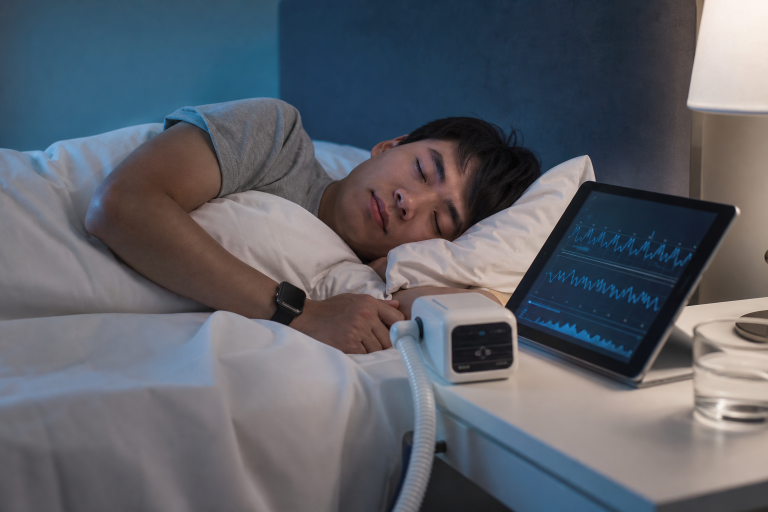
FDA AI in Sleep, Respiratory, and Anesthesia: Medical AI Moves Into Breathing and the Bedroom
The FDA’s anesthesiology category shows how medical AI is moving into sleep apnea detection, respiratory sound analysis, PAP therapy comfort, bedside monitoring, and the continuous physiology of everyday life.
The Daily Rounds: Longevity & Health Care Brief | April 19, 2026
💪 ACSM Rewrites Resistance Training Guidelines: New evidence confirms that any amount of resistance training builds strength and muscle, even bodyweight exercises at home, with consistency mattering far more than complexity. ❤️ CRISPR Infusion Cuts Cholesterol by 50%: A single gene editing infusion safely halved LDL cholesterol in 15 adults, bringing one-time cardiovascular interventions closer to the clinic. 🦠 Housemates Shape Your Gut Microbiome: New research shows that daily physical interactions with the people you live with drive microbial exchange, regardless of shared diet. 🔬 First Epigenetic Reprogramming Therapy Enters Human Trials: The FDA cleared ER-100, the first partial reprogramming therapy to reach clinical testing, targeting optic neuropathies with cellular rejuvenation. 🧠 FTL1 Protein Drives Brain Aging: Scientists identified a specific protein whose reduction in older mice restored synaptic function and improved memory, opening a new therapeutic avenue for cognitive preservation.
Withings Body Comp: Mid-Range Smart Scale with Vascular Age and Visceral Fat Tracking
The number on your scale tells you almost nothing about your health. The fat wrapped around your organs, invisible and unmeasured, may be telling a very different story. Presented By…

The GLP-1 Trust Test: What an Online Provider Should Be Willing to Show You
Eight source-backed questions for checking an online GLP-1 provider’s clinical accountability, medication category, pharmacy, follow-up, claims, price, and commercial influence.
Mirror by Lululemon: Interactive Fitness Display and the Science of Visual Coaching
A full-length interactive mirror that streams live and on-demand fitness classes while reflecting your form back to you. Does seeing yourself train change outcomes, or is this just a screen…