
The Daily Rounds: Longevity & Health Care Brief | April 6, 2026
Your daily briefing on the science of living longer, better. Covering the past 24 to 48 hours in longevity, medicine, and healthspan research.
Presented By Our Partners



🧠 NEUROLOGY & COGNITIVE HEALTH
🧠 Higher Meat Intake Linked to Slower Cognitive Decline in High-Risk Older Adults
A surprising April 2026 study found that older adults carrying high-risk APOE gene variants who consumed more meat actually experienced slower cognitive decline and lower dementia risk than those who avoided it. The findings challenge prevailing dietary assumptions for genetically at-risk populations and suggest protein source may matter more than previously thought.
📌 Read more → ScienceDaily
🧠 Weak Circadian Rhythms More Than Double Dementia Risk
New research confirms that people with weaker, more fragmented internal body clocks face more than double the risk of developing dementia. The findings bolster the case for treating circadian disruption as a modifiable risk factor alongside diet, exercise, and sleep quality.
📌 Read more → U.S. News Health
🧠 IDOL Enzyme Deletion Slashes Amyloid Plaques in Neurons
Indiana University researchers found that removing the IDOL enzyme from neurons dramatically reduced both amyloid plaque burden and levels of APOE4, the strongest known genetic risk factor for late-onset Alzheimer’s disease. The discovery opens a new therapeutic pathway targeting lipid metabolism in the brain.
📌 Read more → Indiana University Medicine
❤️ CARDIOVASCULAR HEALTH
❤️ 60% of U.S. Women Projected to Have Cardiovascular Disease by 2050
A new scientific statement published in Circulation projects that nearly 6 in 10 American women will be living with some form of cardiovascular disease within 25 years, driven by rising obesity rates starting in childhood. The American Heart Association is calling for more aggressive early intervention strategies targeting women specifically.
📌 Read more → ScienceDaily
❤️ Type 2 Diabetes Actively Rewires Heart Muscle at the Molecular Level
Researchers at the University of Sydney have shown that type 2 diabetes does not merely accompany heart disease — it physically changes the structure of heart muscle and disrupts how cells produce energy, directly accelerating heart failure. The study reveals specific molecular targets that could be addressed before cardiac symptoms emerge.
📌 Read more → ScienceDaily
🫁 PULMONARY HEALTH & VO2 MAX
🫁 Each MET Increment in Fitness Cuts All-Cause Mortality by 11.6%
A major 2026 scoping review of 617 aerobic exercise studies confirms that cardiorespiratory fitness improvements deliver compounding mortality benefits, with each MET increase linked to an 11.6% reduction in all-cause death, 16.1% in cardiovascular death, and 14.0% in cancer mortality. Critically, no upper fitness ceiling was found: elite athletes still gain a 23% mortality advantage over those merely classified as “high fit.”
📌 Read more → PMC / Aerobic Exercise Training Review
🫁 Sleep Apnea’s Circadian Disruption May Explain Nighttime Heart Attack Risk
New OHSU research shows that in people with obstructive sleep apnea, the circadian system disrupts blood vessel function during overnight hours, potentially explaining why this population faces elevated risk of heart attacks specifically during sleep. The findings point toward targeted, time-based interventions for sleep apnea management.
📌 Read more → OHSU News
💪 MUSCLE MASS, STRENGTH & METABOLIC HEALTH
💪 Strength Training Wins for High-Quality Weight Loss in Both Sexes
A February 2026 study confirmed that resistance training outperforms other exercise modes for “high-quality” weight loss, meaning fat reduction while preserving or increasing muscle mass. Maintaining muscle is critical not only for metabolic rate but for long-term weight management and healthy aging.
📌 Read more → Medical Xpress
Featured Partner
Invest in the Infrastructure Behind Modern Medicine
As healthcare expands beyond hospital walls, the buildings and campuses supporting that shift are generating compelling returns for investors who move early. The Healthcare Real Estate Fund offers qualified investors direct access to a curated portfolio of medical office, outpatient, and specialty care facilities.
Learn More →
💪 New ACSM 2026 Guidelines Cement Resistance Training as a Longevity Cornerstone
The American College of Sports Medicine’s updated 2026 position stand, based on 137 systematic reviews covering more than 30,000 participants, reinforces resistance training as one of the most evidence-backed strategies for preserving muscle mass and strength across the lifespan. Muscle loss remains a major, underappreciated driver of metabolic decline in older adults.
📌 Read more → Move Your Bones PT / ACSM Guidelines
🦠 GUT MICROBIOME & IMMUNE HEALTH
🦠 Gut Bacteria Can Inject Proteins Directly Into Human Cells
Scientists discovered that many common, non-harmful gut bacteria carry type III secretion systems — syringe-like structures that allow them to inject proteins directly into human cells, influencing immune responses and metabolic pathways. These interactions may drive inflammatory diseases like Crohn’s and open entirely new targets for microbiome-based therapies.
📌 Read more → ScienceDaily
🦠 Stanford: Gut-Brain Axis Stimulation Restores Memory in Aging Mice
Stanford researchers reversed cognitive decline in aging mice by stimulating vagus nerve activity, restoring memory and maze performance to levels seen in young animals. The team traced the mechanism to aging-related microbiome changes that trigger gut immune inflammation, blunting the vagus nerve’s ability to signal the hippocampus.
📌 Read more → Stanford Medicine
🦠 MIT Discovers Gut Protein That Traps and Kills Dangerous Bacteria
MIT scientists identified intelectin-2, a protein that plays a dual defensive role in the gut: reinforcing the mucus barrier and physically trapping harmful bacteria for elimination. The discovery could lead to new treatments for gastrointestinal infections and inflammatory bowel conditions.
📌 Read more → ScienceDaily
🔬 CELLULAR HEALTH, SENOLYTICS & EPIGENETICS
🔬 FDA Clears First Human Epigenetic Reprogramming Trial to Reverse Vision Loss
Life Biosciences, co-founded by Harvard’s David Sinclair, received FDA clearance for the first partial de-aging human trial, targeting vision restoration in patients with glaucoma and optic neuropathy using a proprietary OSK reprogramming cocktail. If successful, the trial could validate systemic epigenetic rejuvenation as a real therapeutic strategy and reshape the longevity medicine landscape.
📌 Read more → Longevity Technology
🔬 Longevity Science Pivots from “Fixing Aging” to Restoring Biological Coordination
At the 2026 World Congress on Targeting Longevity in Berlin, researchers announced a conceptual pivot: aging may not be a defect to fix, but a progressive loss of coordination between biological systems, including mitochondrial signaling, microbiota-brain interactions, and metabolic regulation. The next breakthrough, experts suggest, may be a new framework rather than a single molecule.
📌 Read more → EurekAlert
🤖 AI IN MEDICINE & DRUG DISCOVERY
🤖 NVIDIA and Eli Lilly Launch $1B AI Co-Innovation Lab for Drug Discovery
NVIDIA and Eli Lilly unveiled a first-of-its-kind $1 billion AI co-innovation lab in South San Francisco, co-locating biologists and AI engineers to build large-scale models using the BioNeMo platform and Vera Rubin architecture. The partnership aims to compress drug discovery timelines by applying physical AI and robotics across research, clinical development, and manufacturing.
📌 Read more → NVIDIA Newsroom
🤖 FDA Raises the Bar: AI Devices Must Now Solve Problems Doctors Simply Cannot
A new Stat News analysis reveals that the FDA is evolving its definition of AI “breakthrough” device status, moving away from tools that merely augment physician capabilities toward AI that solves unmet clinical problems physicians cannot address at all. With more than 1,200 AI devices already cleared under breakthrough status, the agency is becoming far more selective.
📌 Read more → Stat News
🤖 AI Drug Discovery Enters the “Builder Phase” with 173 Candidates in Clinical Trials
As of early 2026, more than 173 AI-discovered drug programs are in active clinical development, with 15 to 20 expected to enter pivotal trials this year, and AI-designed compounds showing 80 to 90% Phase I success rates. Industry leaders say the field is shifting from proof-of-concept excitement to a rigorous “builder phase” focused on data infrastructure and organizational integration.
📌 Read more → MedCity News
⌚ WEARABLES, BIOMARKERS & PRECISION HEALTH
⌚ Multiplexed Wearables Now Track Glucose, Lactate, and Hydration Simultaneously
Next-generation wearable biosensors are moving beyond single-metric tracking to simultaneously monitor multiple metabolic biomarkers including glucose, lactate, and electrolytes in real time, opening the door to continuous metabolic health management outside clinical settings. These devices are already being integrated into clinical trials to generate richer longitudinal data with reduced patient burden.
📌 Read more → JMIR mHealth and uHealth
🥗 NUTRITION & METABOLIC HEALTH
🥗 Fasting Mimicking Diet Triggers Autophagy in First Human Trial
The first human trial of the Fasting Mimicking Diet confirmed that five days of caloric restriction not only improved metabolic markers like weight and blood sugar, but also measurably activated autophagy — the body’s cellular recycling process long linked to longevity. The results validate in humans what animal studies have shown for years about fasting’s regenerative potential.
📌 Read more → Longevity Technology
🥗 Sustained Shift to a Healthy Diet Could Add Nearly 9 Years of Life
Modeling studies published in the American Journal of Clinical Nutrition show that a sustained shift to a longevity-associated dietary pattern is associated with up to 10.8 years of life expectancy gain for 40-year-olds, with the biggest returns coming from more whole grains, nuts, and fruits and fewer sugar-sweetened beverages and processed meats.
📌 Read more → American Journal of Clinical Nutrition
😴 SLEEP & CIRCADIAN HEALTH
😴 Personalized Wearable-Based Sleep Interventions Reduce Daytime Sleepiness
Computational modeling combined with wearable sleep-wake tracking is enabling highly personalized sleep interventions that improve alertness and reduce daytime sleepiness, even for shift workers and people with highly irregular routines. Researchers say this approach moves sleep medicine from population-level advice toward genuine individual precision.
📌 Read more → npj Biological Timing and Sleep
📌 TODAY’S TOP TAKEAWAYS
- 🔬 Epigenetic Reprogramming Enters Human Trials — The FDA cleared the first partial de-aging trial using OSK reprogramming factors, targeting vision restoration in glaucoma patients.
- 🧠 Diet and APOE Genetics Collide — Higher meat intake correlated with slower cognitive decline in older adults carrying Alzheimer’s risk genes, upending common dietary assumptions.
- 🤖 NVIDIA and Lilly Bet $1 Billion on AI Drug Discovery — A landmark co-innovation lab in San Francisco will embed AI engineers alongside biologists to redesign how medicines are discovered.
- 🦠 Gut Bacteria Act Like Syringes — Common gut microbes can inject proteins directly into human cells, reshaping how researchers understand microbiome-immune crosstalk.
- 😴 Circadian Fragmentation Doubles Dementia Risk — Weak internal body clocks are now confirmed as a significant, and potentially modifiable, risk factor for dementia.
Sources compiled from ScienceDaily, Nature, EurekAlert, Stanford Medicine, Indiana University Medicine, OHSU, NVIDIA Newsroom, Stat News, MedCity News, Longevity Technology, American Journal of Clinical Nutrition, npj journals, JMIR, and Medical Xpress. Published: April 6, 2026.


Similar Posts
The Daily Rounds: Longevity & Health Care Brief | May 27, 2026
🧠 Nasal Spray Reverses Brain Aging — Texas A&M's neural stem cell-derived nasal spray reversed chronic brain inflammation and restored memory in aged mice with benefits persisting months after just two doses, and a U.S. patent has been filed for clinical translation. 🔬 Four-Week Diet Reduces Biological Age — University of Sydney research published in Aging Cell found dietary shifts toward reduced fat or plant-forward eating produced measurable biological age improvements in adults aged 65 to 75 in just four weeks. 🤖 OpenBind Opens AI Drug Discovery to the World — Oxford's OpenBind initiative released the first open AI model and atomic-resolution protein-drug binding dataset, generating 800 measurements in seven months and democratizing global drug discovery infrastructure. 🦠 Gut Microbiome Directly Controls Interferon Immune Signaling — A multi-omic study of 110 healthy adults found gut microbial composition is a primary regulator of interferon signaling, one of the immune system's most powerful inflammatory response systems. ❤️ Irregular Bedtimes Double Heart Attack Risk — People with widely variable sleep schedules face approximately twice the cardiac event risk of consistent sleepers, establishing sleep schedule regularity as a newly quantified modifiable cardiovascular risk factor.
The Daily Rounds: Longevity & Health Care Brief | March 31, 2026
🧠 - Heidelberg scientists have identified a protein pairing that acts as a molecular "death switch" in Alzheimer's disease, and a new compound can break it apart, protecting neurons even as it reduces amyloid. 🧬 - The first-ever human trial of partial epigenetic reprogramming is now enrolling, with Life Biosciences testing ER-100 in patients with retinal degeneration in a trial that could redefine what it means to treat aging at the cellular level. 💊 - GLP-1 receptor agonists do not cause disproportionate muscle loss, and new data shows they actually increase mitochondrial proteins in skeletal muscle, suggesting metabolic benefits that go well beyond weight reduction. 🦠 - Gut bacteria are actively injecting proteins into human intestinal cells via molecular syringes, and this mechanism appears more prevalent in people with Crohn's disease, pointing to a new pathway for understanding and treating chronic gut inflammation. ⌚ - ARPA-H's new Delphi program is funding wearable biosensors that can continuously track cytokines and hormones in real time, a potential leap from tracking symptoms to detecting the earliest biological signals of disease and aging.
The Daily Rounds: Longevity & Health Care Brief | June 9, 2026
🤖 Pancreatic Cancer Gets Its Biggest Breakthrough in a Decade: Daraxonrasib nearly doubles median survival versus chemotherapy, earning a standing ovation at ASCO 2026 and advancing toward FDA submission. 🦠 Gut Bacteria Talk to Your Immune System in a Newly Discovered Molecular Language: A Helmholtz Munich team maps over 1,000 direct protein interactions between common gut bacteria and human cells, fundamentally reframing how the microbiome shapes immunity. ❤️ Night Owl Cardiac Risk Is Mostly Behavioral, Not Biological: AHA research shows the elevated heart disease risk for evening types is largely explained by modifiable lifestyle factors, making it genuinely actionable. 💪 Grip Strength Is a Mortality Predictor for Older Women, Period: The largest study of its kind confirms muscle strength protects women over 60 from early death regardless of how much aerobic exercise they do. 🥗 GLP-1 Success Depends on What You Keep, Not Just What You Lose: A new clinical framework urges practitioners to prioritize muscle preservation alongside weight loss in GLP-1 therapy to protect long-term function and metabolic health.
The Daily Rounds: Longevity & Health Care Brief | June 5, 2026
🤖 Daraxonrasib Nearly Doubles Pancreatic Cancer Survival — A pivotal Phase 3 NEJM trial showed the first RAS inhibitor extending median survival from 6.7 to 13.2 months, cutting death risk by 60% in a cancer with historically grim odds. 🦠 Colon Cancer Immunotherapy Achieves 33-Month Remission — NEOPRISM-CRC showed pre-surgery pembrolizumab kept 59% of MMR-deficient patients cancer-free at nearly three years, with zero recurrences among responders. 🔬 4-Week Diet Shift Reduces Biological Age Markers in Older Adults — A low-fat, plant-forward diet reduced biological age estimates across 20 biomarkers in adults aged 65 to 75 after just four weeks. 🥗 GLP-1 Drugs Trigger Nutritional Deficiencies Within 12 Months — Major health organizations now recommend structured dietary monitoring for all GLP-1 patients to prevent protein, vitamin D, and mineral deficits that may offset weight-loss benefits. 😴 Circadian Amplitude Is the New Sleep Treatment Target — Updated guidelines shift focus from sleep duration alone to strengthening biological clock signal strength through light exposure, meal timing, and new pharmacological tools.
The Daily Rounds: Longevity & Health Care Brief | April 29, 2026
🧫 Harvard Links Gut Bacteria to Depression via Inflammation: Morganella morganii produces a modified phospholipid that activates IL-6-driven immune inflammation, establishing a direct molecular pathway from gut bacteria to depression and creating new immune-targeted treatment targets. 🏥 FDA Launches Real-Time Clinical Trial Pilot: AstraZeneca and Amgen are feeding live trial data directly into FDA review systems in a landmark program that could compress cancer drug approval timelines by months and reshape how all clinical trials are conducted. 🌙 Fragmented Circadian Rhythms Accelerate Brain Shrinkage: Johns Hopkins researchers found that weaker daily rest-activity patterns in adults over 50 are directly tied to faster loss of memory-critical brain volume, making circadian health a modifiable and measurable neurodegeneration target. 😴 Chronic Insomnia Raises Dementia Risk by 40%: A six-year study of more than 2,700 adults links persistent insomnia to significantly greater amyloid buildup and white matter damage, reinforcing sleep quality as a primary dementia prevention strategy. 💰 Eli Lilly Bets $2.75 Billion on AI Drug Discovery: The massive Insilico Medicine commitment signals that major pharmaceutical companies now treat AI-designed drug candidates as legitimate pipeline assets, accelerating capital flow into the AI biotech sector ahead of critical Phase II readouts.
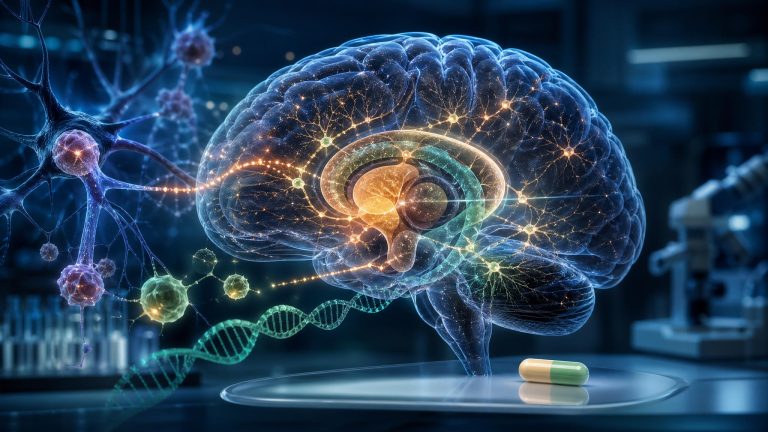
The Race to Replace Lost Neurons: How Stem Cell Therapies, Genetic Targeting, and a New Class of Oral Drugs Are Rewriting the Parkinson’s Playbook
For the first time in Parkinson’s disease history, three distinct therapeutic frontiers are advancing simultaneously through late-stage clinical trials. Stem cell grafts are surviving in human brains and restoring dopamine…
