
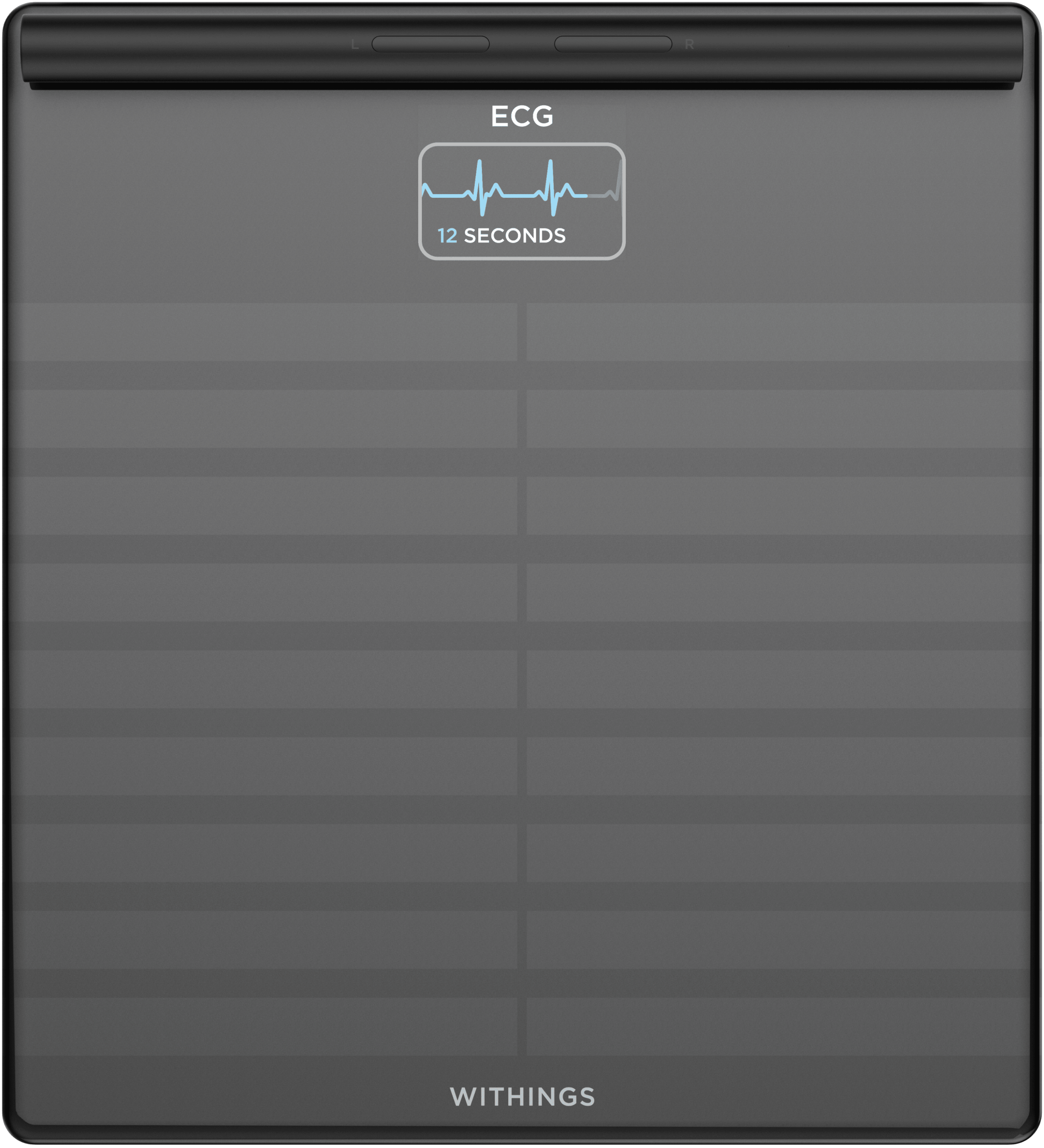
Withings Body Scan 2: 60+ Biomarker Smart Scale with ECG and Longevity Assessment
What if a 90-second daily ritual on your bathroom scale could tell you more about your biological trajectory than most annual physicals?
Presented By Our Partners



Body composition is not a vanity metric. It is one of the strongest independent predictors of all-cause mortality. A 2022 meta-analysis published in the British Journal of Sports Medicine by Tian et al. examining 44 prospective studies and over 280,000 participants found that low skeletal muscle mass was associated with a 41% increase in all-cause mortality risk, independent of age, sex, and body mass index. Visceral fat, the metabolically active fat surrounding internal organs, has been shown to drive insulin resistance, chronic inflammation, and cardiovascular disease progression in ways that subcutaneous fat does not. Yet the tools most people use to assess body composition, a bathroom scale showing total weight and perhaps a BMI calculation, capture almost none of this clinically relevant information.
The Withings Body Scan 2, announced at CES 2026 with a Q2 2026 release, represents the most ambitious attempt to date at bringing clinical-grade body composition analysis, cardiovascular screening, and longevity assessment into a device that lives on your bathroom floor.
What Is the Withings Body Scan 2?
The Withings Body Scan 2 is a connected smart scale with an integrated retractable handle that the user holds during measurement. In approximately 90 seconds, the device captures over 60 biomarkers spanning body composition, cardiovascular health, nerve function, and vascular age. The handle contains additional electrodes that enable segmental body composition analysis (measuring fat and muscle distribution across arms, legs, and torso separately) and a 6-lead electrocardiogram (ECG) recording.
Key measurements include weight, body fat percentage, segmental lean mass, visceral fat, water percentage, bone mass, vascular age estimate, pulse wave velocity (a measure of arterial stiffness), nerve activity assessment, and a proprietary “longevity assessment” score that integrates multiple biomarkers into a single health trajectory indicator. The device syncs via WiFi to the Withings Health Mate app, which consolidates data from the Body Scan 2 alongside other Withings devices (blood pressure monitors, smartwatches, sleep sensors) into a unified longitudinal health dashboard.
Withings, a French digital health company founded in 2008, has built a reputation for designing consumer health devices that bridge the gap between wellness gadgets and clinical instruments. The original Withings Body Scan (released in 2022) was the first consumer scale to offer segmental body composition with ECG. The Body Scan 2 expands on that foundation with additional biomarkers, a longevity scoring framework, and pending FDA clearance for certain features.
The Science Behind It: Body Composition, Vascular Age, and Mortality Risk
The relationship between body composition and long-term health extends far beyond weight management. Sarcopenia, the progressive loss of skeletal muscle mass and function that accelerates after age 50, is now recognized as a geriatric syndrome with direct mortality implications. A 2014 study published in the American Journal of Medicine by Srikanthan and Karlamangla analyzed data from the National Health and Nutrition Examination Survey (NHANES III) covering 3,659 participants aged 55 and older. They found that individuals with low muscle mass had significantly higher all-cause mortality than those with normal or high muscle mass, and crucially, that muscle mass was a better predictor of mortality than body mass index in this population.
Visceral adipose tissue (VAT) operates through distinct pathological mechanisms. Unlike subcutaneous fat, visceral fat is metabolically active, secreting inflammatory cytokines (IL-6, TNF-alpha), adipokines, and free fatty acids that promote insulin resistance, atherosclerosis, and chronic systemic inflammation. A 2018 study published in JAMA Cardiology by Neeland et al. followed 1,106 participants from the Dallas Heart Study over a median of 7 years and found that visceral fat, but not subcutaneous fat, was independently associated with cardiovascular events, even after adjusting for traditional risk factors and BMI.
Pulse wave velocity (PWV), the speed at which the arterial pressure wave travels through the vasculature, has been validated as an independent predictor of cardiovascular events and all-cause mortality. The European Society of Cardiology has recognized PWV as the gold standard measure of arterial stiffness. Higher PWV indicates stiffer arteries, which reflects accumulated vascular damage from hypertension, diabetes, smoking, and aging. A 2010 meta-analysis published in the European Heart Journal by Vlachopoulos et al. analyzing 17,635 participants found that each 1 m/s increase in aortic PWV was associated with a 14% increase in cardiovascular events and a 15% increase in cardiovascular mortality.
The convergence of body composition, vascular health, and metabolic function is precisely the domain of The Four Villains: cardiovascular disease, cancer, neurodegenerative disease, and metabolic dysfunction all share overlapping risk factors that body composition metrics can detect early.
That is the science. Here is how the Withings Body Scan 2 applies it.
What the Withings Body Scan 2 Does Well
The Body Scan 2’s primary strength is measurement density. No other consumer scale comes close to capturing 60+ biomarkers in a single 90-second session. The combination of segmental bioelectrical impedance analysis (BIA) via the handle electrodes, pulse wave velocity via the foot electrodes, and 6-lead ECG via the hand-to-foot circuit creates a multi-system health assessment that would traditionally require separate devices and clinic visits.
The segmental body composition analysis is clinically meaningful. Traditional foot-to-foot BIA scales send current only through the lower body, which biases readings toward leg composition and provides limited information about trunk and arm fat and muscle. The Body Scan 2’s handle enables a full segmental circuit that measures each limb and the torso independently, providing a more complete and accurate body composition picture. This approach is closer to what clinical InBody devices use in hospitals and research facilities.
The longevity assessment feature, while proprietary, represents an attempt to synthesize multiple biomarkers into an actionable trajectory indicator. Rather than presenting 60 individual numbers that most consumers cannot contextualize, the longevity score distills the data into a single question: based on your current measurements, is your health trajectory improving, stable, or declining? This framing aligns with the broader shift in precision medicine from disease detection to trajectory monitoring.
Featured Partner
Invest in the Infrastructure Behind Modern Medicine
As healthcare expands beyond hospital walls, the buildings and campuses supporting that shift are generating compelling returns for investors who move early. The Healthcare Real Estate Fund offers qualified investors direct access to a curated portfolio of medical office, outpatient, and specialty care facilities.
Learn More →
The Withings ecosystem integration creates compounding value. A user who owns the Body Scan 2, a ScanWatch (continuous heart rate, SpO2, ECG), a BPM Connect (blood pressure), and a Sleep Analyzer has a remarkably comprehensive home health monitoring system, all unified in a single app with longitudinal trending and physician-shareable reports.
Pricing, Access, and Practical Realities
The Withings Body Scan 2 is priced at $599.95 with no subscription required. All 60+ biomarkers, longitudinal trends, longevity assessment, and Health Mate app features are included with the purchase. This represents a significant premium over other smart scales but reflects the substantially expanded measurement capabilities.
First-year and ongoing costs are $599.95 total, with no recurring fees. Compared to the cost of a single clinical body composition assessment (DEXA scan: $49 to $200 per visit), the Body Scan 2 pays for itself within a few measurements for users who would otherwise seek periodic clinical body composition testing.
Some features, including the ECG and certain advanced biomarkers, have FDA clearance pending as of the CES 2026 announcement, with clearance expected around the Q2 2026 launch date. The pulse wave velocity measurement on the original Body Scan has received FDA clearance, and the Body Scan 2 builds on that regulatory foundation. Users should verify current regulatory status at the time of purchase.
The device requires WiFi for data syncing and supports up to 8 user profiles. It uses standard rechargeable batteries with a rated lifespan of approximately 12 months between charges. The retractable handle mechanism adds a small footprint increase compared to a standard flat scale. HSA/FSA eligibility has not been confirmed for the Body Scan 2 at the time of writing.
Who the Withings Body Scan 2 Is Best For
The Body Scan 2 is ideal for longevity-focused individuals who want a daily, comprehensive health checkpoint without multiple devices or clinic visits. People managing cardiometabolic risk factors (hypertension, prediabetes, elevated cholesterol, family history of cardiovascular disease) will benefit from the combination of body composition, vascular age, and ECG monitoring in a single device. Biohackers and quantified-self practitioners who track multiple health metrics will appreciate the data density and ecosystem integration.
Adults over 50 who are concerned about sarcopenia (age-related muscle loss) can use the segmental muscle mass tracking to monitor whether their resistance training program is effectively preserving or building lean mass. Athletes tracking body composition changes during training seasons will find the segmental analysis more informative than total body readings alone.
Those who may want to skip it include budget-conscious consumers: at $599.95, the Body Scan 2 costs three to twelve times more than other smart scales that provide basic body composition metrics. Users who only want weight and body fat percentage will find more affordable options that serve those needs adequately. People who are not interested in cardiovascular metrics (PWV, ECG) or longevity scoring are paying for capabilities they will not use.
How the Withings Body Scan 2 Compares
Against the Withings Body Comp ($199.95), the Body Scan 2 adds segmental body composition, 6-lead ECG, nerve activity assessment, the longevity assessment score, and the handle-based multi-frequency BIA circuit. The Body Comp provides vascular age proxy and basic body composition at one-third the price. For users who want advanced cardiovascular and segmental data, the Body Scan 2 justifies the premium. For general body composition monitoring, the Body Comp is sufficient.
Compared to the InBody H20N ($199.99), the Body Scan 2 offers significantly more biomarkers (60+ vs. approximately 10), ECG capability, and pulse wave velocity that the InBody consumer device does not provide. The InBody brand carries strong credibility in body composition measurement from its professional and clinical device lines, but the consumer H20N does not include the handle-based segmental analysis that the Body Scan 2 provides.
Against clinical body composition services (BodySpec DEXA at $49 to $99 per scan), the Body Scan 2 trades the gold-standard accuracy of DEXA for daily accessibility. DEXA is more accurate for absolute body fat percentage, but the Body Scan 2 provides trend data that periodic DEXA scans cannot match. Many clinicians recommend using a high-quality BIA device for trend monitoring between annual or quarterly DEXA benchmarks.
Limitations and Open Questions
Bioelectrical impedance analysis, regardless of how sophisticated the electrode configuration, is inherently less accurate than DEXA, hydrostatic weighing, or air displacement plethysmography for absolute body fat measurement. BIA readings are affected by hydration status, recent meals, exercise timing, and skin temperature. The Body Scan 2’s measurements are best interpreted as trend data (is my body composition improving over time?) rather than as clinical-grade absolute values.
The 60+ biomarker count, while impressive, includes some metrics that are derived calculations rather than direct measurements. The longevity assessment score, vascular age estimate, and nerve activity assessment are algorithmic outputs whose validation data has not been fully published in peer-reviewed literature as of this writing. Users should be cautious about treating these proprietary scores as equivalent to clinically validated measurements.
FDA clearance for certain features remains pending at the time of announcement. The regulatory timeline could shift, potentially delaying or modifying some of the advertised capabilities. Users should verify the clearance status of specific features before making purchasing decisions based on them.
The $599.95 price point represents a significant investment for a bathroom scale, even one with expanded capabilities. The value proposition depends heavily on the user’s engagement with the data: someone who steps on the scale daily and reviews trends in the Health Mate app extracts substantially more value than someone who uses it occasionally.
What This Means for Your Health
Body composition is the intersection point of multiple pillars of foundational health. Nutrition drives fat mass and visceral fat levels. Movement, particularly resistance training, determines skeletal muscle mass and bone density. Sleep quality affects cortisol-mediated fat storage and growth-hormone-driven muscle recovery. Even breathwork and stress management influence visceral fat accumulation through cortisol pathways. A device that measures body composition comprehensively, daily, with no friction beyond stepping on a scale, creates a feedback loop that connects behavioral choices to measurable physiological outcomes.
The Withings Body Scan 2 represents the most ambitious vision yet for what a bathroom scale can be: not just a weight measurement tool, but a daily health checkpoint that spans cardiovascular, metabolic, muscular, and nervous system function. Whether it achieves that vision will depend on the accuracy and clinical validation of its expanded biomarker set, which is still being established through regulatory review and independent study.
For individuals pursuing longevity, the device’s core value lies in trajectory tracking. The question is not “What is my body fat percentage today?” but “Is my body composition moving in the right direction this month, this quarter, this year?” In the context of The Four Villains, the metabolic dysfunction and cardiovascular disease pillars are both directly measurable through body composition and vascular metrics. A device that makes those measurements frictionless and daily has the potential to detect unfavorable trends months or years before they would surface in traditional annual health screenings.
Explore the full wearable guide
See how the Withings Body Scan compares with smart rings, watches, ECG devices, and other connected health hardware across the full Healthcare Discovery wearables guide.
Frequently Asked Questions
What makes the Withings Body Scan 2 different from other smart scales?
The Body Scan 2 captures over 60 biomarkers in a 90-second session, including segmental body composition (arms, legs, torso measured independently), 6-lead ECG, pulse wave velocity (arterial stiffness), nerve activity assessment, and a proprietary longevity assessment score. No other consumer scale offers this combination. The retractable handle enables a multi-frequency bioelectrical impedance circuit that provides significantly more data than foot-to-foot BIA scales.
How accurate is the Withings Body Scan 2 for body fat measurement?
The Body Scan 2 uses segmental multi-frequency bioelectrical impedance analysis (BIA), which is more accurate than single-frequency foot-to-foot BIA but less accurate than clinical DEXA scanning. BIA readings are affected by hydration, recent meals, and exercise timing. The device is best used for tracking trends over time rather than for absolute body fat measurement. Many clinicians recommend using a quality BIA device for daily monitoring between periodic DEXA benchmarks.
Does the Withings Body Scan 2 require a subscription?
No. The Body Scan 2 costs $599.95 with no subscription required. All 60+ biomarkers, longitudinal trends, longevity assessment, ECG recording, and Health Mate app features are included. The device also integrates with other Withings products (ScanWatch, BPM Connect, Sleep Analyzer) in the same no-subscription Health Mate ecosystem.
Is the Withings Body Scan 2 FDA cleared?
At the time of the CES 2026 announcement, FDA clearance is pending for certain features, with approval expected around the Q2 2026 launch. The original Withings Body Scan received FDA clearance for its pulse wave velocity measurement. The Body Scan 2 builds on that regulatory foundation. Check the current regulatory status at the time of purchase, as some features may be initially available in “wellness only” mode pending final clearance.
How does the Withings Body Scan 2 longevity assessment work?
The longevity assessment is a proprietary score that synthesizes multiple biomarkers including body composition, vascular age, muscle mass distribution, visceral fat, and cardiovascular metrics into a single trajectory indicator. It is designed to answer the question: based on your current measurements, is your health trajectory improving, stable, or declining? The specific algorithm and its clinical validation have not been fully published in peer-reviewed literature as of this writing. It should be treated as an informational wellness metric, not a clinical assessment.
Withings Body Scan 2 at a glance
- Hardware price
- $599.95
- Subscription
- None required
- First year total
- $599.95
- Form factor
- Smart scale + handle
- FDA status
- Wellness device, no clearance
- HSA/FSA
- Not confirmed
Measures 60+ biomarkers: weight, 6-lead ECG, arterial health, hypertension risk, longevity assessment, nerve activity, segmental body comp, vascular age
Maintained in the Healthcare Discovery device database and updated automatically.


Similar Posts
The Breather Respiratory Trainer: FDA Cleared Inspiratory and Expiratory Muscle Training
An FDA cleared device that trains both sides of the breath, offering combined inspiratory and expiratory resistance for pulmonary rehabilitation, athletic performance, and daily respiratory health. Presented By Our Partners…
Elysium Index: An Accessible Entry Point to Epigenetic Age Testing
Backed by Nobel Prize-winning science and priced at $299, the Elysium Index measures biological age through DNA methylation. Is this the most accessible on-ramp to epigenetic health tracking? Presented By…
What Continuous Glucose Monitors Are Revealing About Metabolic Health in People Without Diabetes
New research from three landmark 2026 studies reveals that continuous glucose monitors can detect hidden metabolic dysfunction, predict cardiovascular risk, and personalize nutrition in people without diabetes. The science is…
Withings Body Comp: Mid-Range Smart Scale with Vascular Age and Visceral Fat Tracking
The number on your scale tells you almost nothing about your health. The fat wrapped around your organs, invisible and unmeasured, may be telling a very different story. Presented By…
Owlet Dream Sock: FDA Cleared Infant SpO2 and Heart Rate Monitor for Home Use
The first FDA cleared consumer pulse oximetry monitor designed specifically for infants, offering continuous SpO2 and heart rate tracking from a soft fabric sock worn during sleep. Presented By Our…
Clearblue Advanced Digital Ovulation Predictor Kit: Hormone-Based Fertile Window Detection
The biological window for conception is remarkably narrow, roughly six days per month, and most women cannot reliably identify when it opens. A urinary hormone test that detects both estrogen…
