
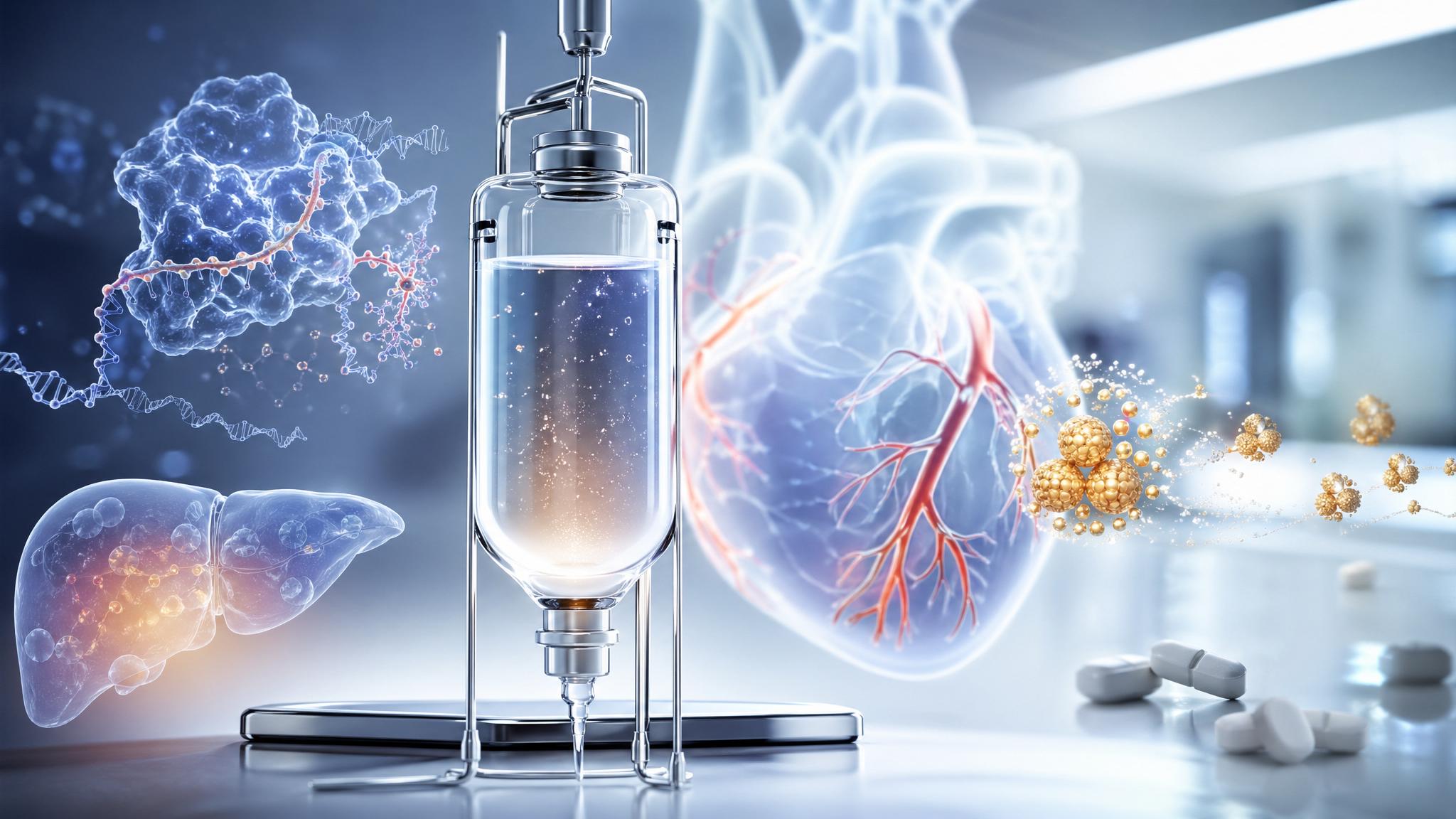
One Shot to Silence Heart Disease: How CRISPR Gene Editing Is Making Daily Cholesterol Pills Obsolete
Heart disease remains the world’s leading cause of death. Every year, roughly 18 million people die from cardiovascular conditions, with elevated cholesterol and triglycerides serving as two of the most stubborn, modifiable risk factors. For decades, the best tools medicine has offered are daily pills: statins, ezetimibe, PCSK9 inhibitors delivered by injection every two to four weeks. These drugs work, but they demand a lifetime of adherence. Many patients skip doses, stop refilling prescriptions, or never reach their target lipid levels.
Presented By Our Partners



Now, a fundamentally different approach is emerging from clinical trials around the world. Scientists are using CRISPR gene editing to permanently switch off the genes in the liver that drive cholesterol and triglyceride production, not with a daily pill, but with a single intravenous infusion. The early results, published in the New England Journal of Medicine and presented at the American Heart Association Scientific Sessions, are striking enough to force a re-evaluation of how we will treat and prevent cardiovascular disease for the rest of this century.
The Problem With Pills
To understand why gene editing for cholesterol matters, you first need to understand the scale of the adherence problem.
Statins are among the most prescribed medications on earth. The American Heart Association estimates that nearly 40 million Americans take a statin daily. Yet studies consistently show that roughly half of patients prescribed a statin stop taking it within a year. Among those who continue, many do not take it consistently enough to reach their target LDL levels.
The consequences are enormous. A 2023 analysis in the European Heart Journal estimated that statin non-adherence contributes to more than 100,000 preventable cardiovascular events annually in Europe alone. In the United States, poor medication adherence for cardiovascular drugs costs the healthcare system between $100 billion and $300 billion per year.
The problem is not ignorance. Patients know cholesterol matters. The problem is that human beings are not well designed for taking a pill every single day for 30 or 40 years. Forgetting, side effects (real or perceived), cost, and "feeling fine" all erode adherence over time.
What if you could replace that decades-long burden with a single treatment that permanently rewrites the genetic instructions your liver uses to manufacture excess cholesterol?
That is the promise now being tested in human beings.
CTX310: The First CRISPR Trial to Silence ANGPTL3
In November 2025, researchers at the Cleveland Clinic and CRISPR Therapeutics published the results of the first-in-human trial of CTX310 in the New England Journal of Medicine. The study, conducted across six clinical sites in Australia, New Zealand, and the United Kingdom between June 2024 and August 2025, enrolled 15 adults aged 31 to 68 with severe, treatment-resistant lipid disorders.
CTX310 is a CRISPR-Cas9 therapy delivered as a one-time intravenous infusion. It carries lipid nanoparticles loaded with the CRISPR editing machinery into the liver, where the molecular scissors cut and disable a gene called ANGPTL3.
Why ANGPTL3?
ANGPTL3, or angiopoietin-like 3, is a protein produced almost exclusively by the liver. Its normal function is to inhibit enzymes that break down triglycerides and cholesterol in the bloodstream. When ANGPTL3 is active, lipid levels stay elevated. When it is absent, lipid levels plummet.
Scientists know this because a small number of people carry natural loss-of-function mutations in ANGPTL3. These individuals walk around with extraordinarily low LDL cholesterol and triglycerides, and they appear to be protected from coronary artery disease without any obvious health penalty. A landmark study of 34,000 participants published in the New England Journal of Medicine in 2017 confirmed that people with complete loss of ANGPTL3 function had a 34 percent lower risk of coronary artery disease.
CTX310 is designed to mimic what nature already does in those rare individuals, but in anyone who receives the infusion.
Trial Results
The Phase 1 results were dose-dependent and dramatic:
At the highest dose tested (0.8 mg/kg), circulating ANGPTL3 protein dropped by a mean of 73 percent from baseline, with a maximum individual reduction of 89 percent. LDL cholesterol fell by a mean of 49 percent, with a maximum reduction of 87 percent. Triglycerides dropped by a mean of 55 percent, with one patient achieving an 84 percent reduction. These reductions appeared within two weeks of infusion and remained stable through at least 60 days of follow-up.
Safety
No dose-limiting toxicities related to CTX310 were observed. Three participants (20 percent) experienced mild infusion-related reactions such as back pain and nausea, which resolved with standard treatment. One participant with elevated liver enzymes at baseline had a transient further rise that returned to normal within 14 days without intervention.
There was one serious adverse event: a participant who received the lowest dose (0.1 mg/kg) died suddenly 179 days after treatment. The investigators and an independent data safety monitoring board concluded this event was unrelated to CTX310, but it underscores that safety monitoring in gene editing trials must be rigorous and long-term.
Phase 2 studies are planned for 2026, with expanded enrollment across broader patient populations and longer follow-up periods.
VERVE-102: Base Editing Targets PCSK9
While CRISPR Therapeutics pursued ANGPTL3, a Cambridge, Massachusetts-based company called Verve Therapeutics took aim at a different target: PCSK9.
Featured Partner
Invest in the Infrastructure Behind Modern Medicine
As healthcare expands beyond hospital walls, the buildings and campuses supporting that shift are generating compelling returns for investors who move early. The Healthcare Real Estate Fund offers qualified investors direct access to a curated portfolio of medical office, outpatient, and specialty care facilities.
Learn More →
PCSK9 is arguably the most validated cholesterol-lowering target in cardiovascular medicine. It was the gene behind the blockbuster injectable drugs evolocumab (Repatha) and alirocumab (Praluent), which lower LDL by 50 to 60 percent but require injections every two to four weeks at a cost of thousands of dollars per year.
Verve’s approach uses a newer, more precise form of gene editing called base editing. Unlike CRISPR-Cas9, which cuts both strands of DNA, base editing chemically converts a single letter of the genetic code without making a double-strand break. Think of it as a molecular pencil eraser and rewriter rather than molecular scissors. The theoretical advantage is greater precision and a lower risk of unintended edits.
VERVE-102 and the Heart-2 Trial
VERVE-102 uses a base editor delivered inside a GalNAc-conjugated lipid nanoparticle (GalNAc-LNP), which homes specifically to liver cells. Once inside, the editor converts a single adenine base to a guanine at a specific location in the PCSK9 gene, introducing a premature stop signal that permanently halts PCSK9 protein production.
The Heart-2 Phase 1b clinical trial enrolled patients with heterozygous familial hypercholesterolemia (HeFH) and premature coronary artery disease. Initial data announced in 2025 showed that a single infusion of VERVE-102 at the 0.6 mg/kg dose produced a mean LDL cholesterol reduction of 53 percent, with a maximum individual reduction of 69 percent. No treatment-related serious adverse events or clinically significant laboratory abnormalities were observed across 14 participants at three dose levels.
Verve has partnered with Eli Lilly and Company, which holds an option to co-develop the program. A Phase 2 clinical trial began dosing patients in the second half of 2025, with results expected to read out in 2026.
PCSK9 vs. ANGPTL3: Different Targets, Complementary Effects
PCSK9 and ANGPTL3 regulate lipid metabolism through different pathways. PCSK9 primarily affects LDL cholesterol by controlling the recycling of LDL receptors on liver cells. ANGPTL3 affects both triglycerides and LDL through its inhibition of lipoprotein lipase and endothelial lipase.
In theory, editing both genes in the same patient could produce a combined effect more powerful than either alone. Several research groups are already exploring dual-target strategies in preclinical models.
The Third Contender: Epigenetic Silencing
A third company, Scribe Therapeutics, is developing STX-1150, which takes yet another approach to silencing PCSK9. Rather than permanently altering the DNA sequence, STX-1150 uses an epigenetic editor to add chemical modifications (methyl groups) to the PCSK9 gene’s promoter region. This effectively locks the gene in a "silent" state without changing a single letter of the underlying code.
The potential advantage is reversibility. If an unforeseen problem emerges years after treatment, the epigenetic marks could theoretically be removed, and PCSK9 production could resume. A CRISPR-based Phase 1 human trial for this approach is expected to begin enrolling in 2026.
The Bigger Picture: One-Time Treatments for Chronic Disease
These three programs represent the first wave of a much larger shift in medicine: the replacement of chronic daily medications with one-time genetic treatments.
The economic implications alone are staggering. Americans currently spend more than $20 billion annually on cholesterol-lowering medications. A single gene editing infusion, even at a high upfront cost, could be cost-effective over a lifetime compared to 30 or 40 years of daily medication, clinic visits, and lab monitoring.
But the transformation goes beyond economics. Consider the public health impact of eliminating adherence as a variable in cardiovascular prevention. If every patient with familial hypercholesterolemia received a single treatment that permanently normalized their LDL, the downstream reduction in heart attacks, strokes, heart failure hospitalizations, and premature death could be measured in hundreds of thousands of lives saved per decade.
What Still Needs to Happen
The field is early. Phase 1 and Phase 1b trials involve small numbers of patients and short follow-up periods. Before gene editing for cholesterol becomes standard of care, several critical questions must be answered.
Durability. The edits appear permanent in animal models, but we need years of human follow-up to confirm that LDL and triglyceride reductions persist without fading.
Off-target effects. CRISPR-Cas9 can occasionally cut DNA at unintended sites. Base editors are more precise but not perfect. Long-term genomic surveillance will be essential.
Liver safety. The liver is the target organ, and transient elevations in liver enzymes have been observed. Larger trials must confirm that these are benign and self-limiting.
Access and cost. Other gene therapies have launched at prices exceeding $2 million per treatment. If CRISPR cholesterol therapies are priced similarly, they will remain inaccessible to the vast majority of patients who need them. The clinical and economic case for broad insurance coverage will need to be ironclad.
Equity. Familial hypercholesterolemia disproportionately affects certain populations, and clinical trial enrollment must reflect the diversity of patients who stand to benefit.
How Gene Editing Compares to Current Therapies
To put these results in context, here is how the gene editing programs stack up against the current standard of care:
Statins (atorvastatin, rosuvastatin): Reduce LDL by 30 to 50 percent. Taken daily, indefinitely. Cost: generic versions are inexpensive, but adherence is poor.
PCSK9 inhibitors (evolocumab, alirocumab): Reduce LDL by 50 to 60 percent. Injected every two to four weeks. Cost: $5,000 to $14,000 per year.
Inclisiran (Leqvio): A small interfering RNA (siRNA) that silences PCSK9 production. Reduces LDL by roughly 50 percent. Injected twice per year after initial loading doses. Cost: approximately $6,500 per year.
CTX310 (CRISPR-Cas9, ANGPTL3): Reduced LDL by up to 87 percent and triglycerides by up to 84 percent. One-time infusion. Phase 1 completed.
VERVE-102 (base editing, PCSK9): Reduced LDL by up to 69 percent. One-time infusion. Phase 1b/Phase 2 ongoing.
The trajectory is clear. Each generation of therapy has moved closer to the goal of a single, permanent solution.
The Scientists Behind the Breakthrough
The CTX310 trial was led by Dr. Kiran Musunuru, a cardiologist and geneticist at the University of Pennsylvania who has spent more than a decade studying ANGPTL3 biology and developing gene editing approaches for cardiovascular disease. The principal investigator for the clinical trial was Dr. Gilles Lemieux at the Cleveland Clinic.
Verve Therapeutics was founded by Dr. Sekar Kathiresan, a cardiologist and human geneticist formerly at the Broad Institute of MIT and Harvard, whose population genetics research identified the natural PCSK9 loss-of-function variants that inspired the therapeutic strategy.
Both researchers have emphasized that the goal is not merely to treat people who are already sick, but to prevent cardiovascular disease before it starts, turning gene editing into a form of precision prevention.
What This Means for You
If you are currently taking a statin or other cholesterol-lowering medication, these gene editing therapies are not yet available outside of clinical trials. The most important thing you can do right now is continue your current treatment and maintain the lifestyle factors that support cardiovascular health: regular physical activity, a diet rich in whole foods and fiber, adequate sleep, and stress management.
However, the landscape is changing rapidly. If you have familial hypercholesterolemia or a severe lipid disorder that has not responded adequately to existing medications, ask your cardiologist whether you might be eligible for one of the ongoing clinical trials. ClinicalTrials.gov lists active studies for both CTX310 and VERVE-102.
For everyone else, the broader message is one of profound optimism. The same gene editing technology that cured sickle cell disease in 2023 is now being aimed at the world’s number one killer. The early data suggest it works. The remaining questions are about safety, durability, access, and equity, not about whether the biology is sound.
We are witnessing the early chapters of a transformation in cardiovascular medicine that may ultimately make the daily cholesterol pill as obsolete as the iron lung. The science is moving faster than most people realize, and the first generation of patients to receive a permanent genetic fix for heart disease risk may already be walking among us.
This article is for informational purposes only and does not constitute medical advice. Always consult your physician before making changes to your treatment plan.
References:
- Phase 1 Trial of CRISPR-Cas9 Gene Editing Targeting ANGPTL3. New England Journal of Medicine, 2025.
- Cleveland Clinic Newsroom: First-In-Human Trial of CRISPR Gene-Editing Therapy, November 2025.
- Verve Therapeutics: Positive Initial Data from Heart-2 Phase 1b Clinical Trial of VERVE-102, 2025.
- American Heart Association Scientific Sessions, November 2025.
- American College of Cardiology: First-in-Human Trial Suggests CRISPR-Cas9 Therapy Targeting ANGPTL3 is Safe, 2025.
- Dewey, F.E. et al. Genetic and Pharmacologic Inactivation of ANGPTL3 and Cardiovascular Disease. New England Journal of Medicine, 2017.


Similar Posts

Omron HeartGuide: The First FDA Cleared Wrist Blood Pressure Watch
The first and only FDA cleared oscillometric blood pressure monitor built into a wristwatch, turning discreet on demand blood pressure readings into a daily habit rather than a clinical chore….

Viome Gut Intelligence Test: What Metatranscriptomics Actually Tells You About Longevity
An evidence-based analysis of gut microbiome testing, centenarian science, and whether RNA-based activity analysis delivers on its promise. Presented By Our Partners In 2023, researchers published findings from one of…

The Science of Breath: How Vagus Nerve Research Is Rewriting Stress, Recovery, and HRV in 2026
A new wave of 2026 research from Stanford, Harvard, and the Karolinska Institutet is rewriting what the vagus nerve does and how simple breathing practices can tune it. Here is…

Naked Labs 3D Body Scanner: Full-Body 3D Scanning and Visual Body Composition at Home
A number on a scale cannot show you where your body is changing. A 3D scan can show you exactly where you are gaining muscle and losing fat, down to…

Klotho: The Anti-Aging Protein That Took 30 Years to Reach Human Trials
First documented by Makoto Kuro-o in a 1997 Nature paper, the Klotho hormone has spent thirty years quietly accumulating one of the deepest evidence bases in aging biology. With Phase…
