
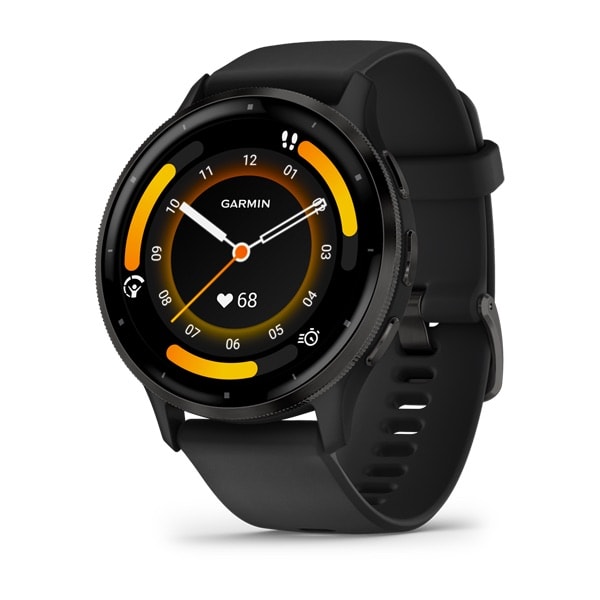
Garmin Venu 3 Sleep Tracking: Nap Detection, Sleep Coaching, and 14-Day Battery
The only mainstream smartwatch that detects naps automatically, coaches you on sleep debt, and tracks sleep for two weeks on a single charge, eliminating the battery anxiety that undermines overnight monitoring on most smartwatches.
Presented By Our Partners



The most accurate sleep tracker in the world is worthless if it dies at 2 AM. Battery life is not a specification; it is a prerequisite. For sleep monitoring to work, the device must be on your body, powered on, and collecting data for every hour of every night. A 2017 systematic review and dose-response meta-analysis published in the Journal of the American Heart Association by Yin et al. established that approximately seven hours of sleep per night represents the lowest mortality risk, with each hour of deviation increasing all-cause mortality by 6% to 13% depending on direction (DOI). Capturing that data consistently requires a device you never need to remove at bedtime. The Garmin Venu 3, with up to 14 days of battery life in smartwatch mode, is the first mainstream health smartwatch where battery anxiety simply does not apply to sleep tracking.
What Is Garmin Venu 3 Sleep Tracking?
The Garmin Venu 3 is a GPS health smartwatch that includes one of the most comprehensive sleep monitoring suites available in a consumer wearable. The sleep system tracks sleep stages (Light, Deep, REM, and Awake), heart rate variability during sleep, SpO2 (blood oxygen saturation), respiratory rate, movement, and assigns a nightly Sleep Score on a 0 to 100 scale. The Venu 3 also calculates Body Battery, a proprietary energy metric that reflects how well your sleep restored your physiological reserves.
The standout feature is nap detection. The Garmin Venu 3 is one of the only smartwatches that automatically detects and logs daytime naps without requiring the user to initiate a sleep session manually. For polyphasic sleepers, shift workers, and anyone who supplements nighttime sleep with afternoon rest, this automatic nap logging captures sleep data that most competing devices miss entirely.
Sleep coaching provides personalized recommendations based on your recent sleep patterns, suggesting optimal bedtimes, wake times, and nap windows based on your individual circadian rhythm and accumulated sleep debt. The coaching adapts over time as the algorithm learns your patterns.
All sleep data syncs to the Garmin Connect app, which provides detailed trend analysis, long-term history, and exportable data. No subscription is required for any sleep feature; all analytics are included with the device.
The Science Behind Sleep Monitoring and Recovery
Sleep architecture, the pattern of sleep stages throughout the night, is not random. The body cycles through light sleep, deep sleep, and REM sleep in approximately 90-minute cycles, with the proportion of each stage shifting across the night. Deep sleep dominates the first half of the night, driving growth hormone release, tissue repair, and immune function. REM sleep dominates the second half, supporting memory consolidation, emotional regulation, and cognitive processing. Disruption of either phase has measurable health consequences.
According to PubMed, Yin et al. (2017) conducted a comprehensive dose-response meta-analysis of prospective cohort studies examining sleep duration and health outcomes. They found U-shaped associations between sleep duration and all-cause mortality, cardiovascular disease, coronary heart disease, and stroke, with the lowest risk consistently observed at approximately seven hours per night. For coronary heart disease specifically, each hour below seven hours increased risk by 7% (RR 1.07, 95% CI: 1.03 to 1.12), and each hour above seven increased risk by 5% (RR 1.05, 95% CI: 1.00 to 1.10) (DOI: 10.1161/JAHA.117.005947).
Heart rate variability (HRV) during sleep is particularly informative because sleep removes the confounding effects of physical activity, caffeine, and psychological stress. Nighttime HRV reflects the body’s parasympathetic recovery state and has been shown to correlate with training readiness, illness onset, and overall autonomic health. The Garmin Venu 3 measures HRV throughout sleep and incorporates it into both the Sleep Score and Body Battery calculations.
SpO2 monitoring during sleep provides screening value for obstructive sleep apnea, which causes repeated oxygen desaturations throughout the night. While consumer SpO2 sensors are not diagnostic, persistent low or highly variable nighttime SpO2 readings can prompt users to seek clinical evaluation.
Sleep is one of the Five Pillars in Healthcare Discovery‘s longevity framework. Poor sleep connects to all four of the Four Villains: cardiovascular disease through blood pressure elevation and vascular inflammation, metabolic dysfunction through impaired glucose tolerance and insulin sensitivity, neurodegenerative disease through disrupted glymphatic clearance of beta-amyloid, and cancer through immune surveillance impairment.
That is the science. Here is how the Garmin Venu 3 applies it.
What Garmin Venu 3 Sleep Tracking Does Well
Battery life is the Garmin Venu 3’s decisive advantage for sleep tracking. At up to 14 days in smartwatch mode, users can track sleep for nearly two weeks without charging. This eliminates the daily charging ritual that undermines sleep tracking on devices like the Apple Watch (18 to 36 hours) and makes consistent, gap-free sleep data collection practical for the first time in a full-featured smartwatch.
Automatic nap detection is a genuinely unique feature. Most wearables either ignore daytime sleep entirely or require users to manually start a sleep session. The Venu 3 detects naps automatically, logs their duration and stages, and incorporates them into the overall sleep and recovery picture. For shift workers whose “night” sleep may occur during the day, and for anyone who naps regularly, this captures data that other devices discard.
The Body Battery metric provides an intuitive translation of complex physiological data. Rather than requiring users to interpret raw HRV numbers, sleep scores, and stress levels independently, Body Battery synthesizes these inputs into a single 0 to 100 energy score. Waking with a Body Battery of 90 means your sleep was restorative; waking at 30 means recovery was insufficient. This simplification makes the data actionable for users who do not want to become sleep scientists.
Featured Partner
Invest in the Infrastructure Behind Modern Medicine
As healthcare expands beyond hospital walls, the buildings and campuses supporting that shift are generating compelling returns for investors who move early. The Healthcare Real Estate Fund offers qualified investors direct access to a curated portfolio of medical office, outpatient, and specialty care facilities.
Learn More →
No subscription requirement is a significant advantage. All sleep tracking features, analytics, trend data, sleep coaching, and Body Battery calculations are included with the device. There is no premium tier, no paywall behind advanced features, and no ongoing cost beyond the initial purchase.
Pricing, Access, and Practical Realities
The Garmin Venu 3 retails for $449.99. There is no subscription fee for any feature. The first-year total cost of ownership is $449.99, with no additional costs in subsequent years assuming the hardware continues to function.
This positions the Garmin Venu 3 at a similar price point to the Apple Watch Series 9 ($399 to $499) but without the ongoing subscription costs that some competitors require (Oura Ring at $5.99/month, Fitbit Premium at $9.99/month). Over a three-year ownership period, the Garmin’s subscription-free model creates meaningful savings compared to subscription-dependent devices.
The device is classified as a general wellness product and is not FDA cleared for sleep apnea detection or any other diagnostic purpose. SpO2 readings during sleep are wellness data, not clinical diagnoses. Users concerned about sleep apnea should use the data as a screening signal and pursue clinical evaluation if patterns are concerning.
The Garmin Venu 3 is HSA/FSA eligible with a letter of medical necessity. Given the absence of subscription costs, the full device price can potentially be covered with pre-tax health savings dollars.
Who Garmin Venu 3 Sleep Tracking Is Best For
The Garmin Venu 3 is ideal for people who want multi-week battery life so sleep tracking never gets interrupted by charging. It suits shift workers and nappers who need automatic nap detection, fitness enthusiasts who want sleep data integrated with training load and recovery analytics, and anyone who prefers a subscription-free ownership model where all features are available from day one.
The Venu 3 is particularly strong for users who already use Garmin devices for exercise tracking. Sleep data flows into the same Garmin Connect ecosystem as running, cycling, swimming, and strength training data, enabling holistic analysis of how sleep quality affects training performance and recovery.
People who should look elsewhere include those who prioritize the smallest possible form factor for overnight wear (the Oura Ring is lighter and less intrusive), users who want FDA-cleared sleep apnea detection (Apple Watch Series 10 and Samsung Galaxy Watch 7 offer this), and those deeply embedded in the Apple ecosystem who would find switching away from Apple Health disruptive.
How Garmin Venu 3 Sleep Compares
Against the Oura Ring Gen 3 ($299 to $499 plus $5.99/month), the Garmin Venu 3 offers comparable sleep staging accuracy plus nap detection, Body Battery, and full smartwatch functionality that the Oura Ring cannot provide. The Oura Ring counters with a lighter form factor, longer battery life per charge (up to 7 days), and sleep-specific analytics like sleep latency and sleep efficiency that the Garmin does not emphasize. For pure sleep tracking, the Oura Ring is often considered more focused; for an all-in-one device, the Garmin is more versatile.
Against the Apple Watch Series 9 ($399 to $499), the Garmin Venu 3’s 14-day battery life is the decisive differentiator for sleep tracking. The Apple Watch must be charged daily, creating gaps in overnight data. The Garmin also includes nap detection and Body Battery, which the Apple Watch lacks. The Apple Watch counters with the broader app ecosystem, cellular connectivity, and tighter iPhone integration.
Against the Fitbit Sense 2 ($249.95 plus $9.99/month for Premium), the Garmin offers more advanced sleep coaching, nap detection, and no subscription requirement. Fitbit locks several sleep features (snore detection, sleep profile) behind its Premium paywall. The Garmin’s subscription-free model makes it the better long-term value despite the higher upfront price.
Limitations and Open Questions
Wrist-based sleep staging on the Garmin Venu 3 shares the same fundamental limitation as all consumer wearables: it infers sleep stages from motion and heart rate rather than measuring brain activity directly. The accuracy for distinguishing deep sleep from light sleep is lower than for detecting REM or total sleep time. Users should treat stage-specific data as approximate rather than clinical.
The Venu 3’s sleep coaching, while personalized, is algorithmic rather than clinical. It cannot account for individual medical conditions, medications, or sleep disorders that a sleep medicine specialist would evaluate. The coaching is best understood as an optimization tool for generally healthy sleepers, not a treatment pathway for clinical sleep disorders.
SpO2 monitoring during sleep can produce inaccurate readings if the watch shifts position during the night or if the sensor seal against the wrist is compromised. Green-light optical sensors used for SpO2 are also affected by skin pigmentation, with lower accuracy in darker skin tones documented across multiple consumer wearable brands.
While 14-day battery life is exceptional, actual battery duration depends on usage patterns. GPS-intensive activities, always-on display, and frequent SpO2 sampling reduce battery life significantly. Users who track GPS workouts daily may see closer to 5 to 7 days of battery life.
What This Means for Your Health
Consistent sleep monitoring requires a device that stays on your wrist and stays powered. The Garmin Venu 3 is the first mainstream health smartwatch that fully solves the battery problem for sleep tracking, making it possible to capture two continuous weeks of nighttime data without interruption. For the longevity framework, that consistency matters more than any single night’s staging accuracy.
Within the Five Pillars, the Garmin Venu 3 connects sleep to movement through its training load and recovery integration. The Body Battery metric creates a direct, visible link between last night’s sleep and today’s exercise capacity, reinforcing the feedback loop between rest and activity that foundational health requires. Nap detection extends this awareness to daytime recovery, capturing a dimension of rest that most wearables ignore entirely.
The subscription-free model deserves emphasis. In a market where competitors increasingly lock core features behind monthly fees, Garmin’s approach means the investment in sleep monitoring is a one-time decision, not an ongoing financial commitment. Over three years, a Garmin Venu 3 at $449.99 with no subscription costs less than an Oura Ring at $299 plus $5.99/month ($515 over three years) or a Fitbit Sense 2 at $249.95 plus $9.99/month ($609.59 over three years). The economics of consistent, long-term sleep monitoring favor the subscription-free model.

Explore the full wearable guide
Garmin Venu 3 is one piece of a much larger wearable health landscape. For a broader comparison of smartwatches, rings, glucose monitors, sleep trackers, recovery tools, and clinical-grade devices, see the full HealthcareDiscovery.ai guide to wearable health technology.
Frequently Asked Questions
Does the Garmin Venu 3 automatically detect naps?
Yes. The Garmin Venu 3 is one of the only mainstream smartwatches that automatically detects and logs daytime naps without requiring the user to start a sleep session manually. Nap data is incorporated into the overall sleep summary and Body Battery recovery calculations. This feature is particularly valuable for shift workers, polyphasic sleepers, and anyone who supplements nighttime sleep with daytime rest.
How long does the Garmin Venu 3 battery last?
The Garmin Venu 3 offers up to 14 days of battery life in smartwatch mode. Actual duration depends on usage: GPS tracking, always-on display, and frequent SpO2 monitoring reduce battery life. For sleep tracking alone (without daily GPS workouts), most users can expect 10 to 14 days between charges, making it the longest-lasting mainstream health smartwatch for overnight monitoring.
Does the Garmin Venu 3 require a subscription for sleep features?
No. All sleep tracking features, including sleep stages, Sleep Score, Body Battery, nap detection, HRV tracking, SpO2 monitoring, and sleep coaching, are included with the device at no additional cost. There is no premium tier or paywall for any Garmin Connect feature. The $449.99 purchase price is the total cost of ownership.
How accurate is Garmin Venu 3 sleep tracking compared to a sleep study?
Consumer wrist-based sleep trackers including the Garmin Venu 3 typically show 70% to 85% agreement with polysomnography (clinical sleep study) for sleep staging. Total sleep time detection is the most accurate metric; REM detection is reasonably reliable; deep sleep versus light sleep distinction is less precise. The Garmin provides useful wellness-level data for tracking trends, not clinical-grade diagnostics for sleep disorder management.
What is Body Battery and how does it relate to sleep?
Body Battery is Garmin’s proprietary energy metric scored from 0 to 100. It synthesizes sleep quality, HRV, stress levels, and physical activity to estimate your available energy reserves. Sleep is the primary charging mechanism: a good night’s sleep can restore Body Battery from 5 to 95, while a poor night may only restore it to 40 or 50. Checking your Body Battery each morning provides a quick, intuitive answer to whether your sleep was restorative enough for the day ahead.
How does Garmin Venu 3 compare to Oura Ring for sleep tracking?
Both devices provide sleep staging, HRV, SpO2, and temperature-related data. The Oura Ring ($299 to $499 plus $5.99/month) is lighter and less intrusive for overnight wear, with deeper sleep-specific analytics. The Garmin Venu 3 ($449.99, no subscription) adds nap detection, Body Battery, full smartwatch functionality, and 14-day battery life. The Oura is better as a dedicated sleep tracker; the Garmin is better as an all-in-one health and fitness device.
Garmin Venu 3 (Sleep) at a glance
- Hardware price
- $449.99
- Subscription
- None required
- First year total
- $449.99
- Form factor
- Smartwatch (wrist)
- FDA status
- Wellness device, no clearance
- HSA/FSA
- Possibly, with a letter of medical necessity
Measures Body Battery, HRV, Nap detection, Respiration, Sleep coaching, Sleep score, Sleep stages, SpO2
Maintained in the Healthcare Discovery device database and updated automatically.


Similar Posts

Gatorade Gx Sweat Patch: Affordable Sweat Sodium Profiling for Athletes
Professional sports teams have spent thousands testing athletes’ sweat composition in labs. A $25 patch and your phone camera now approximate the same insight. Presented By Our Partners For decades,…

Eko Duo: The Digital Stethoscope With Built In ECG for Dual Cardiac Screening
The most advanced digital stethoscope available, combining AI powered heart sound analysis with a single lead ECG to screen for murmurs, AFib, and structural heart disease simultaneously during routine examination….

The Wearable That Rewires Walking: How Cionic’s Neural Sleeve 2 Is Redefining Neurological Mobility
A former Apple and Jawbone engineer built the first FDA-cleared wearable that simultaneously activates muscles and relaxes spasms, giving millions with MS, stroke, cerebral palsy, and spinal cord injuries the…
AliveCor KardiaMobile: The Most Affordable FDA Cleared Personal ECG
A credit card sized, $99 device that records a medical grade single lead ECG in 30 seconds, detects six arrhythmia types, and lets you email the results to your cardiologist…

Lipoprotein(a): The Hidden Genetic Heart Risk Finally Becoming Treatable in 2026
Lp(a) affects one in five adults worldwide yet has had no targeted therapy for sixty years. In 2026, four Phase 3 trials including HORIZON, OCEAN(a)-Outcomes, ACCLAIM-Lp(a), and a new oral…

Blood Tests Are Rewriting Alzheimer’s Detection: How P-Tau217, Finger Prick Diagnostics, and Lithium Science Are Transforming Cognitive Aging
A convergence of 2026 studies in Nature Medicine and Nature Aging is transforming Alzheimer’s detection. The p-tau217 blood test clock predicts symptom onset within three to four years, a finger…
