

The Four Villains of Health and Longevity
Four diseases will kill almost everyone you love. They are not random, not inevitable, not unbeatable. They are coming. This is the field guide for the fight.
Presented By Our Partners



Statistically, you will die from one of four diseases. So will the people who depend on you. Cardiovascular disease, cancer, neurodegenerative disease, and metabolic dysfunction account for roughly four out of every five deaths in the developed world, and the proportion is climbing as the global population ages. The data is unambiguous. What is less commonly discussed is the implication.
You are not living a normal life that ends with a normal death. You are living a life that is being actively pursued by four adversaries. They have been gaining ground for decades. They are patient. They strike at different ages, through different mechanisms, with different signatures, but they share one feature: by the time most people recognize the fight, the fight is already mostly lost.
This is not a metaphor for motivation. It is the most accurate description of the situation. The framing of modern healthcare as aging, or chronic disease management, or wellness is a comfortable language that obscures what is actually happening. There is a war on, and you are in it whether you have decided to fight or not.
At Healthcare Discovery, we call these four adversaries the Four Villains of Health and Longevity, sometimes the Fearsome Foursome. The names matter because the right name changes what you do next. A shadow you can ignore. A villain you must answer.
The Battle You Did Not Know You Were In
For most of human history, the things that killed people were communicable. Plague, smallpox, tuberculosis, dysentery, infant mortality. Public health victories of the twentieth century, clean water, antibiotics, vaccines, sanitation, removed those threats from most populations and revealed a different landscape underneath. People who survived to middle age and beyond did not die of nothing. They died of four things, in steadily escalating numbers, and the four things are still winning.
The Global Burden of Disease 2023 study, published in JACC in September 2025, attributes 19.2 million deaths globally each year to cardiovascular disease, roughly one in three of all human deaths. The same year saw 10.4 million cancer deaths and an estimated 18.5 million new cancer diagnoses (Lancet, GBD 2023 Cancer Collaborators, 2025). Alzheimer’s and related dementias affect 7.2 million Americans aged 65 and older today, projected to reach 13.8 million by 2060 (Alzheimer’s and Dementia, 2025). And underneath all of this sits the most consequential statistic of the four: only 6.8 percent of American adults have optimal cardiometabolic health, according to a 2022 analysis of NHANES data published in the Journal of the American College of Cardiology by researchers at Tufts. More than nine out of ten American adults are walking around with one or more components of metabolic dysfunction already active.
These are not background statistics. They are the demographic profile of the war.
The reason it does not feel like a war is that the four villains do not arrive with sirens. They do not announce themselves. They work in tissue, in arteries, in cellular replication errors, in protein misfolding, in insulin signaling. Their assault begins decades before the first symptom. By the time you feel the chest pain, the lump, the lapse in memory, the diagnosis of pre-diabetes, the villains have already been at work for twenty years or more. The first cough of cardiovascular disease is, very often, a fatal heart attack. The first sign of Alzheimer’s is plaque that has been accumulating since your forties. This is what makes the fight unusual. Most of the work has to happen before the enemy is visible.
The other thing that obscures the war is the language we have inherited. Modern medicine was built around the model of treating diseases that already exist. Insurance pays for procedures, not prevention. Doctors are trained to diagnose, not to defend. The entire system is reactive, optimized for the moment after the villains have already breached the gate. None of this is wrong, exactly, but it is incomplete. It treats the casualties. It does not stop the war.
That work is yours.
Meet the Fearsome Foursome
Twenty-five centuries ago, the Chinese general Sun Tzu wrote in The Art of War: “If you know the enemy and know yourself, you need not fear the result of a hundred battles. If you know yourself but not the enemy, for every victory gained you will also suffer a defeat. If you know neither the enemy nor yourself, you will succumb in every battle.” (The Art of War, Chapter III, Verse 18, Giles translation.)
Most people are fighting the third battle. They do not know themselves, their biomarkers, their family history, their actual risk profile, and they do not know the enemy. So they succumb. Knowing your enemy is the first move in any fight worth winning. Each of the four villains has a personality, a method, and a weakness. Underestimating any of them ends the same way. What follows is the field intelligence on all four, drawn from peer-reviewed evidence and the most current global burden data available.
Villain One: Cardiovascular Disease, the Silent Assassin
Cardiovascular disease is the single most prolific killer in human history measured by current toll. The Centers for Disease Control reported 919,032 cardiovascular deaths in the United States in 2023, which works out to one person dying every 34 seconds. Globally, the figure is 19.2 million deaths per year, projected to climb to 35.6 million by 2050 as populations age (Chong et al., European Heart Journal, 2024). Cardiovascular disease is the leading cause of death for men, women, and most racial and ethnic groups in the United States.
The reason CVD earns the Silent Assassin designation is that it does the majority of its damage invisibly. Atherosclerotic plaque begins forming in arteries during childhood. The Pathobiological Determinants of Atherosclerosis in Youth study examined the arteries of 2,876 young Americans aged 15 to 34 who died of unrelated causes and found that fatty streaks were present in nearly all of them, with raised lesions in many. By middle age, the assassin has been at work for thirty or forty years. Hypertension, dyslipidemia, and endothelial dysfunction can progress for decades without symptoms. Then, in many cases, the first sign is also the last: sudden cardiac death, a stroke that takes language or motor function in an instant, a heart attack that ends the story without preamble.
This is the villain that takes fathers from young children, that creates widows in their fifties, that turns active retirees into stroke survivors learning to use a fork again. It is the most preventable of the four through measurable, well-validated interventions, which is what makes its annual death toll so painful. The American Heart Association’s Life’s Essential 8 framework, updated in their 2025 statistical report, identifies eight modifiable factors: nutrition, physical activity, nicotine exposure, sleep health, body weight, blood lipids, blood glucose, and blood pressure. Adherence to most or all of them dramatically reduces cardiovascular mortality. Most American adults score poorly on most of them.
The Silent Assassin’s weakness is measurement. What you can see, you can fight. Apolipoprotein B (ApoB), high-sensitivity C-reactive protein, coronary artery calcium scoring, ambulatory blood pressure monitoring, and continuous heart rate variability tracking turn the invisible into the visible. The villain hates daylight.
Villain Two: Cancer, the Rogue Hijacker
Cancer is not a single disease. It is more than two hundred related conditions sharing a common malfunction: cells that were following the rules suddenly aren’t. They go rogue. They lose the cooperative discipline of multicellular life, abandon the rules that govern when they grow, divide, and die, and then they hijack everything around them, the cellular machinery, the blood supply, the immune system’s tolerance signals. The American Cancer Society’s Cancer Statistics 2025 report, published in CA: A Cancer Journal for Clinicians, places the lifetime probability of an invasive cancer diagnosis at 39.9 percent for American men and 39.0 percent for American women. Roughly two in five people reading this sentence will hear the words from a doctor at some point.
What makes cancer a rogue hijacker is that it does not arrive as a foreign invader. It arrives as your own cells, slightly altered, no longer playing for your team. The immune system fails to recognize it precisely because it isn’t recognizable as a threat. The hijacker hides in plain sight. It mutates faster than it can be tracked. It builds blood supply through angiogenesis, recruiting your own vasculature to feed its growth. It learns to evade the immune cells that should be killing it. By the time many cancers are detectable, they have been adapting for years.
The 2023 Global Burden of Disease analysis published in The Lancet in September 2025 estimated 18.5 million new cancer cases globally in 2023 and 10.4 million deaths. Lung, colorectal, stomach, breast, and esophageal cancers led the mortality list. Most consequentially, the analysis attributed 41.7 percent of cancer deaths to known modifiable risk factors. Almost half of cancer mortality, in other words, traces back to behaviors and exposures that could in principle be addressed. Tobacco remains the largest single risk factor. Alcohol, ultra-processed food, physical inactivity, obesity, ultraviolet exposure, and certain infections (HPV, hepatitis B and C, H. pylori) make up the rest of the modifiable share.
The Rogue Hijacker’s weakness is early detection. Stage I cancer is, for most cancer types, a very different conversation than Stage IV cancer. The five-year survival rate for breast cancer caught at the localized stage is 99 percent; at the distant stage, it falls to 31 percent (American Cancer Society, 2024). Similar gradients exist for colorectal, prostate, melanoma, and many other cancers. The recently expanded landscape of multi-cancer early detection blood tests, advanced screening protocols, and at-home genetic risk panels is, for the first time in human history, narrowing the asymmetry between the villain and the hunter.
Villain Three: Neurodegenerative Disease, the Mind Thief
Of the four villains, neurodegenerative disease may be the most feared. It is the only one that takes the self before it takes the body. Cardiovascular disease ends a life. Cancer ends a life. Metabolic dysfunction shortens and degrades a life. Neurodegenerative disease, in the form of Alzheimer’s and other dementias, methodically removes the person before the person dies. The body lingers. The relationships do not.
The 2025 Alzheimer’s Disease Facts and Figures report estimates 7.2 million Americans aged 65 and older currently live with Alzheimer’s dementia. By 2060, that figure is projected to reach 13.8 million. Globally, the count is expected to hit 152 million people with dementia by 2050 (Frontiers in Public Health, 2025). The disease’s pathology, abnormal beta-amyloid deposition and tau protein phosphorylation, begins approximately 20 years before clinical diagnosis. The preclinical phase is long and silent, which is also the prevention window.
Featured Partner
Invest in the Infrastructure Behind Modern Medicine
As healthcare expands beyond hospital walls, the buildings and campuses supporting that shift are generating compelling returns for investors who move early. The Healthcare Real Estate Fund offers qualified investors direct access to a curated portfolio of medical office, outpatient, and specialty care facilities.
Learn More →
The most consequential development in dementia science in the past decade was the 2024 update to the Lancet standing Commission on dementia prevention. Published in The Lancet in July 2024, the Commission concluded that approximately 45 percent of dementia cases globally are potentially preventable by addressing 14 modifiable risk factors across the life course. The factors include less education in early life, hearing loss, hypertension, smoking, obesity, depression, physical inactivity, diabetes, excessive alcohol consumption, traumatic brain injury, social isolation, air pollution, and the two newest additions, untreated vision loss and elevated low-density lipoprotein cholesterol. Each of these factors is something a person can act on. None require pharmaceutical intervention to address.
What is striking about the dementia risk profile is how much overlap it has with the cardiovascular and metabolic risk profiles. Hypertension, diabetes, obesity, and elevated LDL show up on all three lists. The brain is, in a real sense, a vascular organ. Diseases of the cardiovascular system are diseases of the brain in slow motion. The Mind Thief and the Silent Assassin work in coordination, and the protocols that defend against one defend against the other.
There is also recent and underdiscussed evidence on the brain’s own cleanup mechanisms. The glymphatic system, the brain’s waste clearance pathway discovered in 2012 and characterized in additional detail through the 2020s, becomes active primarily during deep sleep. Recent imaging research has identified previously unknown lymphatic drainage hubs in the human brain, including a discovery announced in 2025 by researchers at the Medical University of South Carolina. Sleep is not optional in the fight against the Mind Thief. It is the active defense system, running every night, clearing the metabolic debris that, left unchecked, becomes the plaque.
Villain Four: Metabolic Dysfunction, the Energy Arsonist
Villain Four does not appear on most lists of leading causes of death. It does not need to. The Energy Arsonist sets the fires that the other three villains feed on. Insulin resistance, abdominal obesity, dyslipidemia, fatty liver disease, the constellation of metabolic syndrome, this is the villain that softens every defense and accelerates every other attack. Cardiovascular disease burns hotter in a metabolically compromised body. Cancer grows faster in the presence of hyperinsulinemia and chronic inflammation. Alzheimer’s accelerates so reliably alongside insulin resistance that some researchers now refer to it as Type 3 Diabetes. Defeat the Energy Arsonist and you partially defeat the other three villains. Ignore the Energy Arsonist and you guarantee the other three battles will be harder, longer, and more often lost.
The Tufts University analysis of NHANES 1999 to 2018 data, published in JACC in 2022 by Friedman School of Nutrition Science researchers, examined five components of cardiometabolic health (body fat, blood glucose, blood cholesterol, blood pressure, and clinical cardiovascular disease) and found that only 6.8 percent of American adults met optimal levels for all five. Less than one in fourteen American adults are metabolically healthy by the most rigorous available criteria. Earlier work using NHANES 2009 to 2016 data, published in Metabolic Syndrome and Related Disorders by University of North Carolina researchers, found 12.2 percent at optimal metabolic health using slightly different criteria. The two estimates bracket the same conclusion: metabolic dysfunction is not an edge case, it is the modal state.
The reason the Energy Arsonist deserves the name is biological. Mitochondrial dysfunction is, literally, an energy production failure at the cellular level. Insulin resistance is the cell refusing to accept fuel. Type 2 diabetes is fuel piling up in the bloodstream because it cannot enter the furnace. The chronic low-grade inflammation that follows is the smoke from those metabolic fires, and that smoke damages arteries (the Silent Assassin’s territory), promotes tumor growth (the Rogue Hijacker’s territory), and accelerates neurodegeneration (the Mind Thief’s territory). One villain, four fronts of damage.
The Energy Arsonist’s weakness, fortunately, is the most actionable of all four. Continuous glucose monitoring, which until 2019 required a prescription and is now available over the counter, gives near real-time feedback on how individual foods, sleep, exercise, and stress affect blood sugar. Body composition tracking through bioelectrical impedance, DEXA, or 3D scanning replaces the bathroom scale’s blunt verdict with a meaningful picture of muscle versus fat. Comprehensive blood panels including fasting insulin, hemoglobin A1c, ApoB, hsCRP, and triglyceride to HDL ratio give a quantitative read on whether the foundation is cracked or holding. None of this requires a doctor’s permission anymore. All of it requires the decision to look.
The Hero’s Journey You Are In
The story of how a person responds to the four villains is, when you look at it sideways, an old story. Joseph Campbell described the structure across mythologies in 1949: a person living in an ordinary world receives a call to adventure, refuses it, eventually crosses a threshold, finds mentors and tools, faces ordeals, gains insight, returns transformed. The structure recurs because it describes something true about how human beings change. The adventure is not the optional layer on top of regular life. It is the layer where regular life becomes meaningful.
Most people are currently somewhere in the early stages of this journey, whether they know it or not. The ordinary world is the modern environment: convenient food engineered for overconsumption, sedentary defaults, fragmented sleep, ambient stress, cultural messaging that confuses health with appearance. The call to adventure arrives in a thousand different forms. A parent’s diagnosis. A friend’s heart attack at 52. A blood panel that comes back wrong. A year that feels harder than the last. A grandparent who no longer remembers names. The call is rarely subtle, but the reflexive response is almost always the same.
The refusal of the call. I will start Monday. I do not have time. I am too far gone. I am fine, my numbers are normal, my doctor would have said something. There is too much conflicting advice. I cannot afford the testing. My family did not have these problems. I am only 45. The refusal phase is where most lives stay. It is comfortable. It costs nothing in the moment. It costs everything in aggregate.
The crossing of the threshold is the moment the villains become real. Sometimes it happens through grief. More often it happens through study. A person reads enough peer-reviewed evidence, looks at enough longitudinal data, talks to enough people whose lives have been altered, and the story shifts. The four villains stop being abstract risk factors. They become specific antagonists with specific methods and specific weaknesses. The fight stops being optional. The training begins.
Three things win this fight, and Healthcare Discovery exists to make all three accessible. The training. The weapons and armor. The wisdom.
Foundations First: The Training
Before any technology, any device, any biomarker, any protocol, there are five practices that human beings have done for as long as human beings have existed and that the most current research keeps validating. We call them the Five Pillars of foundational health, and they are, collectively, your training. They are the ancestral intelligence that keeps the human body within tolerances designed across hundreds of thousands of years. They cannot be replaced, only supplemented.
Nutrition. Whole foods, mostly plants and quality proteins, eaten in patterns that maintain stable blood sugar. The Mediterranean and DASH dietary patterns have the deepest evidence base for cardiovascular and cognitive protection, with multiple large randomized trials and prospective cohorts showing reduced all-cause mortality, reduced cancer incidence, and reduced cognitive decline. The MIND diet, a hybrid optimized for brain health, was associated in the Rush Memory and Aging Project with a 53 percent reduction in Alzheimer’s risk in adherent participants.
Sleep. Seven to nine hours nightly, consistent timing, dark and cool environment. The glymphatic system, the brain’s metabolic waste removal pathway, runs primarily during deep sleep. The cardiovascular nightly recovery, the immune system’s surveillance and repair functions, the hormonal cascades that regulate appetite, mood, and metabolism all depend on sleep architecture. Chronic short sleep, defined as fewer than six hours, is independently associated with increased risk of all four villains in dose-response fashion.
Movement. Resistance training to maintain muscle mass and bone density. Cardiovascular training to maintain VO2 max, the single most powerful predictor of all-cause mortality in healthy adults (Mandsager et al., JAMA Network Open, 2018). Daily non-exercise movement to keep metabolism active and insulin sensitivity high. The body did not evolve to sit. The penalty for sitting is paid in every system.
Breath. Breath is the only autonomic function the body lets you consciously control, which makes it the bridge between the systems you cannot touch and the systems you can. It is also the most versatile pillar, activated three different ways: by cardiovascular exercise that drives the breath through metabolic demand, by conscious breathing practices that reset the autonomic nervous system through vagal pathways, and by sleep that restores breath to its unconscious rhythm. VO2 max, the most powerful predictor of all-cause mortality in healthy adults (Mandsager et al., JAMA Network Open, 2018), is in one sense a measurement of how well the breath system meets demand. The 2014 study published in Proceedings of the National Academy of Sciences by Kox et al. demonstrated that voluntary breathwork combined with cold exposure produced measurable changes in inflammatory markers and immune response, an effect long claimed in contemplative traditions and only recently characterized in mainstream physiology. Slow nasal breathing lowers blood pressure and improves heart rate variability. Sleep-disordered breathing accelerates every villain on this list. Three modes, one pillar, four villains weakened.
Mindfulness/Mindset. The fifth pillar is the one that ties the other four together. Mindfulness is the foundation: presence, attention, the ability to notice what is happening without immediately reacting. Mindset is the architecture built on top of it: cognitive resilience, emotional regulation, sense of purpose, social connection, and the daily decision to engage rather than avoid. The two are not separate practices, they are the inner and outer face of the same capacity. Mindset is the warrior’s heart. Mindfulness is the warrior’s eyes.
Both are under sustained assault. The same modern environment that engineers food for overconsumption and rewards sedentary defaults also engineers attention for capture. Notifications, infinite feeds, fragmented information, ambient anxiety. The Mind Thief does not begin with plaque in the brain. It begins with the slow erosion of the ability to focus, to be present, to hold a single thought without a device intervening. Attention is the first thing the villains take. Most people surrender it voluntarily, hours a day, before any pathology has begun.
The evidence for the cognitive-emotional pillar is among the strongest of any factor in longevity science. The Harvard Study of Adult Development, now in its ninth decade, identifies the quality of close relationships as the single strongest predictor of late-life health and happiness, more predictive than cholesterol levels, exercise, or genetics. Loneliness is roughly equivalent in mortality risk to smoking 15 cigarettes a day (Holt-Lunstad et al., PLOS Medicine, 2010). Mindfulness-based interventions have produced measurable effects on inflammation, cortisol regulation, and cognitive performance across hundreds of randomized trials. The mind is not separate from the body. It is the operating system the body runs on, and the operating system is under attack.
These five practices, done consistently, are the training. They are not optional add-ons to the protocol. They are the protocol. Anything else, every device, every supplement, every test, every protocol, is built on top of this foundation. Without it, the rest is decoration.
Weapons and Armor: The Tools of the Fight
If the Five Pillars are your training, healthtech is your equipment. The last decade has produced the most consequential expansion of consumer health tools in human history. What used to require a hospital, a prescription, or a research laboratory is now available on a wrist, in a ring, in a patch, in a $99 lab order. This is not a small development. It is a reordering of the asymmetry between the villains and the people they hunt.
It is useful to think of healthtech in two categories: armor and weapons.
Armor is defensive. It is the continuous monitoring that turns the invisible into the visible, that catches the villain’s first movement before it becomes a wound. A continuous glucose monitor reveals the metabolic effects of every meal in something close to real time. An overnight pulse oximeter detects the sleep apnea that has been silently driving cardiovascular and cognitive decline for years. A wearable ECG catches the atrial fibrillation that would otherwise reveal itself only as a stroke. A home blood pressure cuff with daily data reveals patterns no single in-office reading can show. A smart ring tracks heart rate variability, sleep stages, and overnight skin temperature, three signals that a system under siege gives up first.
Armor is the early warning system. It will not stop a villain by itself, but it sees the villain coming.
Weapons are offensive. They are the active interventions, the tools of training and recovery, the things that build capacity rather than just measure it. Resistance training equipment that quantifies progressive overload. VO2 max testing that calibrates your cardiovascular fitness against the most predictive longevity marker known. Sauna and cold exposure protocols with their accumulating evidence base for cardiovascular and inflammatory benefit. Red light therapy. Pneumatic compression. Breath-trained respiratory muscle conditioning. Brain training and neurofeedback platforms that build the cognitive resilience that resists the Mind Thief.
The Healthcare Discovery device library, organized by category and built around peer-reviewed evidence wherever it exists, is being assembled with this armor-and-weapons logic. Each device is a tool with a purpose against a specific villain, or against the metabolic foundation that determines whether the others succeed. We will not pretend every device has equal evidence. Some are well-studied. Some are early. We will tell you which is which. The goal is not to sell you on a gadget. The goal is to put the right tool in your hand for the fight you are actually in.
Wisdom: Why Knowledge Decides the Outcome
“Knowledge is power,” Francis Bacon wrote in 1597. The phrase has aged into a cliché, but the meaning underneath it is still active. The four villains have been studied with extraordinary intensity for the past century. Each year, tens of thousands of peer-reviewed papers add to the picture of what works, what does not, what is changing, and what is finally becoming actionable. The information is freely available. Almost no one reads it.
This is the asymmetry that gives Healthcare Discovery its purpose. The person who knows what the latest evidence says about ApoB versus LDL, about high-intensity interval training versus zone 2 cardio, about glucose variability versus fasting glucose, about Lecanemab versus lifestyle in early Alzheimer’s, has a strategic advantage that compounds. The person who waits for their primary care physician to bring it up will be waiting decades. The system is not built for that handoff.
The martial artist who studies the opponent wins. The investor who reads the filings beats the one who watches the ticker. The person who studies the science of their own body and the science of the diseases coming for it makes better decisions, earlier, with less effort, and with better outcomes. That is the wisdom layer. It is what we are doing every morning when we publish, every newsletter we send, every review we write. We are translating the most current evidence into a language a thoughtful person can act on, then organizing it so the right insight reaches you at the moment you need it.
Knowledge does not just give you better answers. It gives you better questions, which is the more durable advantage. A person who asks their doctor for a coronary artery calcium score is in a different conversation than a person who waits for their doctor to volunteer one. A person who understands that 41 percent of cancer deaths are attributable to modifiable risk factors makes different choices at the grocery store than a person who believes cancer is bad luck. The questions you ask are downstream of what you know. The life you live is downstream of the questions you ask.
What You Are Really Defending
It is tempting to read everything above as a manual for self-preservation. It is not. Self-preservation is a thin motivation that fades the moment a craving, a deadline, or a tired evening arrives. People do not consistently fight for themselves. The data on adherence to almost any health protocol confirms it.
People fight for the people they love.
The deepest reason to defend yourself against the Four Villains is not that you do not want to die. Death will come on its own schedule. The deepest reason is that you are the wall between the four villains and the people who depend on you. A spouse becoming a widow at 58 is not a statistical event. It is a specific person sleeping alone in a house that used to have two people in it. A child losing a parent to a preventable heart attack is not a risk factor. It is a particular kid who will spend the rest of their life with a chair at Thanksgiving that nobody sits in. A grandparent who cannot remember their grandchildren’s names is not a dementia statistic. It is a grandchild looking into eyes that no longer recognize them, and learning, far too early, that the strongest love is not always strong enough to hold a person’s mind in place.
If a villain announced themselves at the door of your house tonight, you would not optimize. You would not tell yourself you would deal with it Monday. You would not wait for someone else to handle it. You would defend the people inside that house with whatever you had. The Four Villains are at the door, and they have been there for years. They are inside the walls of most American homes already. The fight is not optional and it is not in the future. It is the actual situation.
This is the reframe Healthcare Discovery is built on. We are not in the wellness industry. Wellness is a marketing category. We are in the defense industry. Our work is to give you the training, the armor, the weapons, and the wisdom to defend the life you want to live and the people you want to live it with. The journey is long, the enemy is real, and the stakes are everything that matters.
Begin
The hero’s journey does not end at insight. It ends at return, when the protagonist comes back changed and brings the lesson home. That is the work in front of you. Train the foundations daily. Equip yourself with the armor and the weapons that fit your specific battle. Keep studying the enemy. Then bring others into the fight, because every person who joins this resistance reduces the toll across the people they touch.
You can start with one of the foundations and build out. You can start by understanding which villain is currently closest to your gates, through a comprehensive blood panel, a continuous glucose monitor, a coronary calcium score, an APOE-e4 genetic test. You can start by changing one meal, one sleep behavior, one walk a day. The path is long enough that the starting point matters less than the starting itself.
The Four Villains of Health and Longevity are coming. They are coming for you. They are coming for everyone you love. We do not pretend this is easy or that the outcome is certain. We do say that the fight is winnable, far more often than the current statistics suggest, and that the difference between the people who win and the people who lose is almost never genetics, money, or luck. It is the daily decision to train, to equip, to learn, and above all, to defend.
The Fearsome Foursome have been winning a war that most people did not know they were in. That is changing. Every reader who joins this fight is one more person the villains do not get a free shot at. Welcome to the resistance.
This is the master pillar of Healthcare Discovery’s editorial framework. The work that follows, our daily research briefs, our peer-reviewed device reviews, our coverage of the latest breakthroughs in cardiology, oncology, neurology, and metabolic science, is organized around the four villains and the three things that win this fight. If you are new here, the next step is to subscribe to the Daily Discovery Brief, where the most consequential new evidence reaches you each morning. The fight is daily. So is the field intelligence.


Similar Posts
Clearlight Sanctuary Y Sauna Review: Low EMF Infrared Therapy for Longevity and Cardiovascular Health
Clearlight’s flagship personal sauna combines True Wave far infrared heaters with full spectrum capability and industry leading EMF shielding. Presented By Our Partners Heat stress is not new to human…
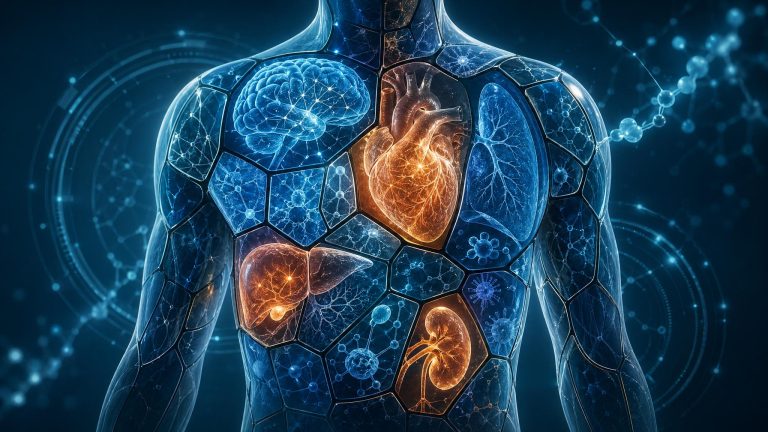
Mosaic Aging: Why Your Organs Age at Different Rates, and Why It Matters
A growing body of work argues that the body does not age all at once. It ages in tiles. The pace at which your fastest-aging organ breaks down, not the…

The NAD+ Decline: Inside the Cellular Energy Crisis of Aging and What the 2026 Trials Actually Show
NAD+, the coenzyme that powers every cell, falls steadily as we age. Inside the biology of the decline, the CD38 and mitochondrial mechanisms driving it, what the NMN and nicotinamide…

Ultra-Processed Food Is Rewiring Your Brain: What 385,000 People Reveal About Diet, Depression, and the Gut-Brain Axis
A meta-analysis of 385,541 people finds that high ultra-processed food consumption raises depression risk by 44 percent and anxiety risk by 48 percent. New research on the gut-brain axis, neuroinflammation,…
The Daily Rounds: Longevity & Health Care Brief | April 29, 2026
🧫 Harvard Links Gut Bacteria to Depression via Inflammation: Morganella morganii produces a modified phospholipid that activates IL-6-driven immune inflammation, establishing a direct molecular pathway from gut bacteria to depression and creating new immune-targeted treatment targets. 🏥 FDA Launches Real-Time Clinical Trial Pilot: AstraZeneca and Amgen are feeding live trial data directly into FDA review systems in a landmark program that could compress cancer drug approval timelines by months and reshape how all clinical trials are conducted. 🌙 Fragmented Circadian Rhythms Accelerate Brain Shrinkage: Johns Hopkins researchers found that weaker daily rest-activity patterns in adults over 50 are directly tied to faster loss of memory-critical brain volume, making circadian health a modifiable and measurable neurodegeneration target. 😴 Chronic Insomnia Raises Dementia Risk by 40%: A six-year study of more than 2,700 adults links persistent insomnia to significantly greater amyloid buildup and white matter damage, reinforcing sleep quality as a primary dementia prevention strategy. 💰 Eli Lilly Bets $2.75 Billion on AI Drug Discovery: The massive Insilico Medicine commitment signals that major pharmaceutical companies now treat AI-designed drug candidates as legitimate pipeline assets, accelerating capital flow into the AI biotech sector ahead of critical Phase II readouts.

The U.S. Government Just Made Its Biggest Bet on Healthy Aging: Inside ARPA-H’s $144 Million PROSPR Program
ARPA-H’s $144 million PROSPR program is testing rapamycin, semaglutide, and dapagliflozin in 726 healthy older adults, funding a first-in-humans trial of a retrotransposon-silencing HIV drug, and building a validated biological…
