
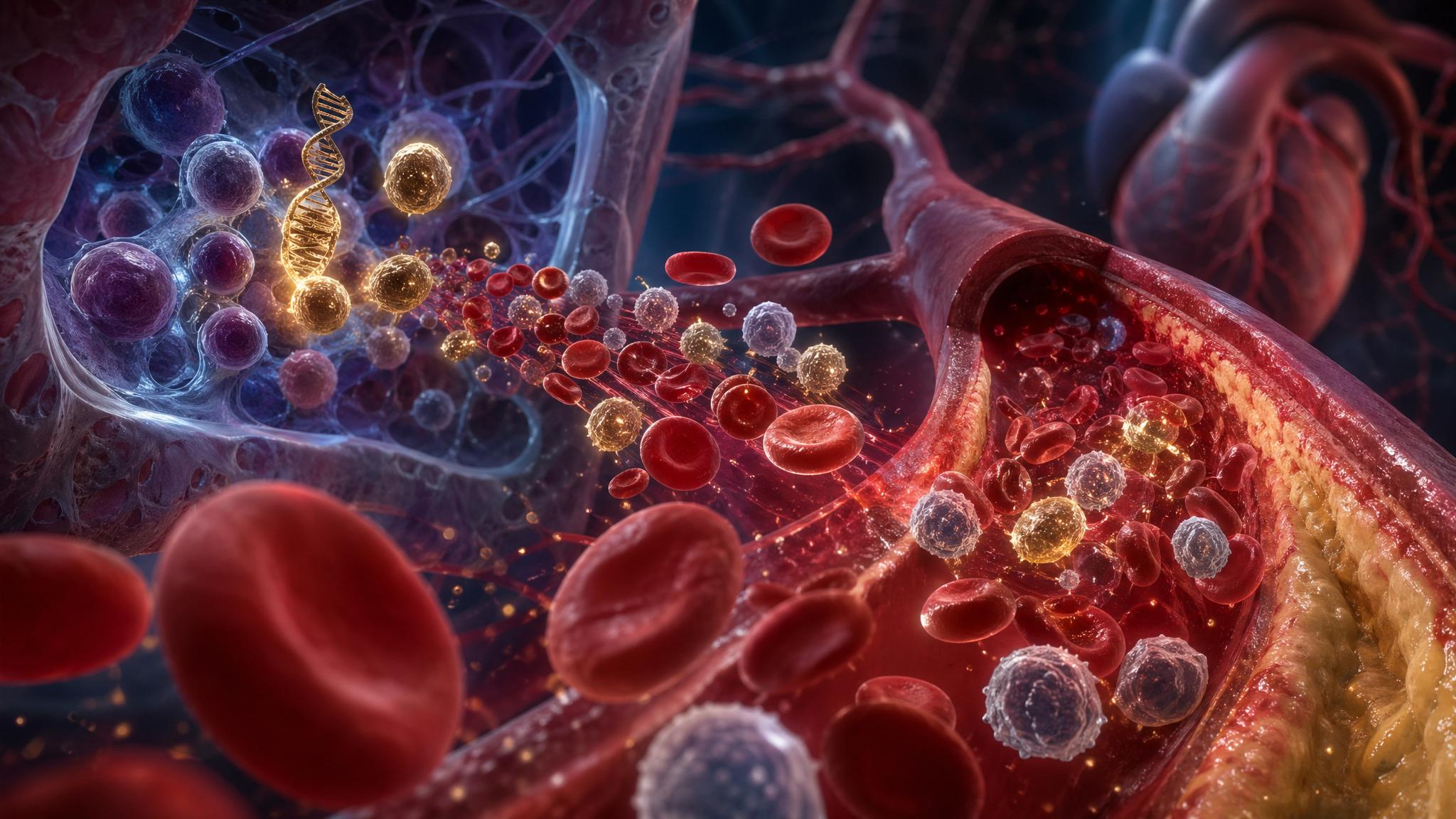
Microplastics in the Human Body: What 2026 Cardiovascular and Brain Evidence Reveals About the Synthetic Particles Now Inside Us
In March 2024, the New England Journal of Medicine published a study that quietly rewrote how cardiologists think about heart attacks. A team led by Raffaele Marfella at the University of Campania Luigi Vanvitelli in Naples examined the carotid artery plaques of 257 patients undergoing surgery for asymptomatic carotid disease. Using pyrolysis gas chromatography mass spectrometry, the researchers looked for an exposure no one had measured before in human atheroma. They were searching for plastic.
Presented By Our Partners



They found it in 58.4 percent of the plaques. Polyethylene, the same polymer used in shopping bags, milk jugs, and takeaway containers, was present in 150 of 257 patients. Fragments of polyvinyl chloride were found in a smaller subset. Electron microscopy showed jagged particles embedded in the plaque tissue, often in association with macrophages.
Then the team followed the patients for nearly three years. Compared with patients whose plaques were free of detectable microplastics, those whose plaques contained the particles had a 4.53 fold higher risk of suffering a nonfatal myocardial infarction, nonfatal stroke, or death from any cause. The hazard ratio survived adjustment for age, sex, smoking, blood pressure, lipid levels, and other established cardiovascular risk factors.
The paper, "Microplastics and Nanoplastics in Atheromas and Cardiovascular Events," landed with a thud rather than a splash. It contained no proven causal mechanism. It was a single observational cohort. But for the first time, a peer reviewed clinical study had connected the polymer pollution that defined the twentieth century to the cardiovascular disease that defines the twenty first.
Two years later, the science of microplastics in human tissue is no longer fringe. It is one of the most active and unsettling research frontiers in medicine. Particles of plastic too small to see have been documented in the blood, lungs, placenta, testes, breast milk, bone marrow, and brain. The 2024 Marfella paper was the first link to hard cardiovascular endpoints. It will not be the last.
This article reviews what the 2026 evidence actually shows, the labs and journals driving the field forward, the proposed mechanisms by which polymer particles might damage human physiology, and what reasonable people can do to limit exposure while the science matures.
What Microplastics Actually Are
The term microplastic was coined in 2004 by the British marine biologist Richard Thompson to describe plastic fragments smaller than five millimeters. Over the next two decades, the definition fragmented further. Today researchers distinguish between microplastics, particles between one micrometer and five millimeters, and nanoplastics, particles smaller than one micrometer. The latter are small enough to cross biological membranes that should keep them out, including the gut wall, the blood brain barrier, and the placenta.
Microplastics arrive in the environment from two sources. Primary microplastics are manufactured small, including microbeads in cosmetics (largely banned in many jurisdictions since 2018), pre production pellets called nurdles, and microfibers shed from synthetic textiles during washing. Secondary microplastics form when larger plastic objects, including bottles, packaging, fishing nets, and tires, fragment under sunlight, mechanical stress, and oxidation. Tire wear alone is estimated to release between one and two million tonnes of microplastics into the environment globally each year.
These particles do not biodegrade in any meaningful biological sense. They persist for decades, accumulating in oceans, soils, freshwater, the atmosphere, and increasingly in living organisms. A 2022 paper in Environment International by Heather Leslie and colleagues at the Vrije Universiteit Amsterdam was the first to confirm microplastics in human blood, finding particles in 17 of 22 healthy donors. The detected polymers included polyethylene terephthalate (PET, used in bottles and synthetic fabrics), polystyrene, and polyethylene.
The Marfella Study in Context
The 2024 NEJM paper did not appear in isolation. It built on more than a decade of toxicology in cells and animals, on environmental detection work, and on a smaller body of human tissue findings.
In 2021, Antonio Ragusa and a team at Fatebenefratelli Hospital in Rome published in Environment International the first detection of microplastics in human placentas, identifying particles in four of six placentas examined, including in the fetal side. In 2022, Laura Sadofsky and colleagues at the University of Hull, working with collaborators at Castle Hill Hospital, reported in Science of the Total Environment that microplastics had been recovered from the deep lung tissue of 11 of 13 living patients undergoing surgical procedures, including in the lower lobes where the airway diameter is smallest. In 2024, work published in Toxicological Sciences by researchers at the University of New Mexico documented microplastics in 23 of 23 human and 47 of 47 canine testicular tissue samples, with concentrations roughly three times higher in humans than dogs.
What the Marfella paper added was the link from presence to outcome. Until 2024, every human tissue paper showed only that the particles were there. The NEJM study was the first to show, in a clinical cohort, that their presence tracked with hard cardiovascular events.
The clinical signal was substantial. Over a median follow up of 33.7 months, the primary composite endpoint occurred in 30 of 150 patients with microplastic positive plaques (20.0 percent) versus eight of 107 patients with microplastic negative plaques (7.5 percent). The adjusted hazard ratio of 4.53 (95 percent confidence interval 2.00 to 10.27) puts microplastic detection in the same statistical neighborhood as severe established risk factors. Inflammatory markers including interleukin 6, interleukin 18, and tumor necrosis factor alpha were also higher in the microplastic positive plaques, supporting one of the leading proposed mechanisms.
The Brain Findings
The cardiovascular signal was followed in February 2025 by a publication that pushed the field further. Alexander Nihart, Matthew Campen, Marcus Garcia, and colleagues at the University of New Mexico reported in Nature Medicine on the analysis of human brain tissue collected at autopsy from 52 individuals who died in 2016 and 2024.
The brain samples contained higher concentrations of microplastics and nanoplastics by mass than any other organ the team had previously studied, including liver and kidney. The particles were overwhelmingly nanoscale, often smaller than 200 nanometers, and were dominated by polyethylene. Most striking, the median concentration in 2024 brains was roughly 50 percent higher than in 2016 brains, suggesting accumulation tracks the rising environmental load.
A subset of 12 brains came from patients with a documented antemortem diagnosis of dementia. Microplastic concentrations in those brains were three to five times higher than in age and sex matched controls without dementia. The authors were appropriately cautious about causality. A failing blood brain barrier in dementia might allow more particles in, or particles might contribute to disease, or a third factor might explain both. But the magnitude of the difference, combined with the upward trend across calendar years, made the paper one of the most discussed environmental health findings of the year.
Featured Partner
Invest in the Infrastructure Behind Modern Medicine
As healthcare expands beyond hospital walls, the buildings and campuses supporting that shift are generating compelling returns for investors who move early. The Healthcare Real Estate Fund offers qualified investors direct access to a curated portfolio of medical office, outpatient, and specialty care facilities.
Learn More →
The Proposed Mechanisms
How could a piece of plastic too small to see actually damage a coronary artery, a placenta, or a neuron? The 2026 mechanistic literature points to several converging pathways.
The first is oxidative stress. Polymer surfaces, particularly those weathered by ultraviolet light and biological fluids, generate reactive oxygen species in cell culture. Work from the Heinrich Heine University in Düsseldorf, the Norwegian Institute of Public Health, and others has shown that polystyrene and polyethylene nanoparticles disrupt mitochondrial function in human umbilical vein endothelial cells, the cell type that lines blood vessels.
The second is inflammation. Macrophages, the immune cells responsible for engulfing foreign material, internalize microplastic particles but cannot digest them. The accumulation drives a chronic inflammatory phenotype with sustained release of interleukin 6, tumor necrosis factor alpha, and other cytokines. This is the same inflammatory profile implicated in the propagation of atherosclerotic plaque, in cognitive decline through neuroinflammation, and in cardiovascular events. Marfella’s group reported exactly this signature in their NEJM cohort.
The third is the chemical payload. Plastics are not pure polymer. They contain plasticizers, flame retardants, antioxidants, ultraviolet stabilizers, and pigments, many of which have known endocrine activity. Bisphenol A and phthalates, two of the most studied plastic associated chemicals, are linked in epidemiology to cardiovascular events, metabolic dysfunction, and reproductive outcomes. The Marfella plaques contained measurable levels of these compounds in addition to the polymer particles themselves. A microplastic in tissue is also a slow release reservoir of low molecular weight bioactive compounds.
The fourth is the size effect. Particles smaller than 200 nanometers can cross the gut barrier through transcytosis and through M cells, can cross the blood brain barrier in animal studies, and have been detected on the fetal side of human placentas. The Campen brain findings suggest the brain may be a sink for the smallest particles, possibly because the blood brain barrier filters out larger ones but not the smallest, and because lipid rich brain tissue may sequester hydrophobic polymers preferentially.
Where the Particles Come From
A 2024 review in Environmental Health Perspectives synthesized evidence on human exposure routes. The dominant routes appear to be ingestion through food and water, inhalation of airborne particles indoors, and contact with personal care products and synthetic textiles.
Bottled water is among the most concentrated sources. A 2024 Columbia and Rutgers University paper in PNAS, using Raman scattering microscopy, found a median of about 240,000 plastic fragments per liter of bottled water, with roughly 90 percent in the nanoplastic range previously invisible to standard techniques. Tap water concentrations are much lower. Tea bags made of polypropylene mesh release billions of particles into a single hot brewed cup, according to a 2019 McGill University paper in Environmental Science and Technology.
Food packaging contributes. Reheating food in plastic containers, particularly with fatty foods, accelerates polymer migration. A 2023 paper in Environmental Science and Technology Letters from the University of Nebraska estimated that microwaving food in plastic containers can release millions of microplastics per square centimeter of contact area within minutes.
Indoor air is a less appreciated route. Synthetic carpets, upholstery, and clothing shed microfibers continuously. A 2022 paper in Environment International estimated that the average adult inhales tens of thousands of microfibers per year. The lung findings of Sadofsky and colleagues are consistent with this.
Tire wear contributes road dust that aerosolizes. Cosmetic and personal care products, despite microbead bans in many countries, still contain liquid polymers and intentionally added microplastics in formulations not covered by all regulations.
Why the Cardiology Field Took Notice
In November 2024, the European Society of Cardiology published a position paper acknowledging environmental pollutants, including microplastics, as emerging cardiovascular risk factors. The American Heart Association in 2024 included a discussion of plastic particle exposure in its scientific statement on environmental contaminants in cardiovascular disease.
Neither body went so far as to recommend testing or specific avoidance protocols. Both noted that the evidence base is largely observational, that quantification methods are still being standardized, and that randomized intervention data are essentially nonexistent because there is no obvious way to randomize humans to plastic exposure. But both bodies signaled that a research field once dominated by ecotoxicologists is now of clinical interest.
A 2026 Lancet Planetary Health perspective by environmental epidemiologists at Boston University and the Karolinska Institute argued that the strength of the Marfella signal, the consistency of mechanistic findings across cell, animal, and tissue studies, and the rising environmental load justify treating microplastic exposure as a modifiable cardiovascular risk factor pending further confirmation.
What Remains Unknown
The honest summary of the 2026 evidence is that microplastics are present in nearly every human tissue examined, that their concentrations in some tissues are rising over time, that one observational study has linked their presence to hard cardiovascular outcomes, and that proposed biological mechanisms are plausible. The honest summary also includes that no randomized trial has shown that reducing exposure improves any clinical outcome, that quantification methods vary across labs, and that confounding by other environmental and behavioral factors is difficult to fully exclude in observational work.
What is changing rapidly is the volume and quality of the evidence. The Marfella cohort is being expanded by other groups. The Campen lab is extending its brain analyses to additional cohorts. The European Union has funded the PlasticHeal and POLYRISK programs to characterize human microplastic body burdens at scale. The Plastic Health Council, an academic consortium, has published consensus statements on biomonitoring methods. The first prospective biomonitoring cohorts are now in early enrollment in Europe and North America.
If the cardiovascular signal replicates, the implication is significant. Cardiovascular disease remains the leading cause of death worldwide, accounting for roughly 18 million deaths per year. A modifiable environmental contributor of even modest population attributable fraction could reshape prevention.
What This Means For You
The 2026 evidence does not justify panic, but it does justify some practical attention to exposure routes that are easy to modify and that compound over a lifetime.
Drink filtered tap water in glass or stainless steel rather than bottled water in plastic. The Columbia PNAS data on nanoplastic counts in bottled water are striking, and tap water in most developed countries contains far less plastic and is rigorously monitored for microbiology.
Avoid heating food in plastic containers, particularly fatty foods. Use glass or ceramic for microwaving and storage. Discard plastic containers that show wear or scratching, since polymer degradation accelerates particle release.
Choose loose leaf tea over plastic mesh tea bags. The McGill data on plastic tea bag particle release is among the more dramatic single source numbers in the literature.
Wash synthetic clothing less frequently and use a microfiber filter or wash bag if your washing machine accepts one. A meaningful share of indoor and ocean microplastic burden originates from synthetic textile shedding.
Vacuum and dust regularly with a HEPA filter vacuum. Indoor microplastic concentrations in dust are often higher than outdoor air concentrations.
Pay attention to the biggest cardiovascular risk factors first. Microplastic exposure is one of many contributors to cardiovascular risk, and the established big three of blood pressure, ApoB containing lipoproteins, and insulin resistance still do most of the predictive work. The 2024 Marfella cohort, even with its 4.5 fold hazard ratio, was a population already enriched for atherosclerosis. The interaction between microplastic exposure and conventional risk factors is one of the open questions the field is now beginning to investigate.
For clinicians, the 2026 takeaway is to add environmental exposure history, including water source, food storage practices, and occupational plastic exposure, to the cardiovascular and cognitive workup of higher risk patients. There is no validated clinical biomarker test for microplastic body burden in routine practice, but a research grade methodology is rapidly maturing.
For policymakers, the science is approaching the point at which precautionary regulation of food contact plastics, particularly in pediatric and reproductive contexts, is increasingly defensible.
The story of microplastics in human tissue is not yet a story of certainty. It is the story of a class of synthetic material that took eighty years to spread into nearly every ecosystem on Earth, and that is now being detected in the organs that keep us alive. The 2024 Marfella paper was the first formal handshake between environmental science and cardiology. The 2025 Nihart and Campen brain findings extended that handshake to neurology. The cohorts now enrolling will tell us, over the next decade, whether the handshake becomes a long term clinical relationship.
That outcome is not yet decided. But the evidence is moving fast enough that ignoring it is no longer a tenable scientific position.


Similar Posts

Narcolepsy’s Second Brain Target: UCLA Researchers Discover a 25-Year Blind Spot That Could Transform Diagnosis and Treatment
A Nature Communications study from UCLA found that severe narcolepsy destroys neurons in a second brain region previously overlooked, overturning a foundational assumption held for nearly 25 years and opening…

Dexcom G7: The Gold Standard CGM for Glucose Monitoring and Metabolic Health
A landmark study reveals that 40% of people with “normal” fasting glucose would be reclassified as prediabetic under continuous monitoring. The implications for how we measure metabolic health are profound….
The Senolytic Revolution: New Science Shows Zombie Cells Hold the Key to Reversing Aging at Its Source
Two landmark studies published this month are rewriting the cellular biology of aging, revealing that the very cells once viewed as purely destructive may hold the most precise key yet…
Tempo Studio: 3D Motion Capture and Real Weights for AI-Coached Strength Training
The only smart home gym that combines real weight plates with 3D body scanning and AI form correction. Does adding a depth sensor to a barbell change the equation for…
Everlywell Women’s Health Test: Accessible Hormone Panels for Metabolic and Reproductive Insight
The most common endocrine disorders affecting women, thyroid dysfunction and hormonal imbalance, are also among the most treatable when caught early enough to intervene. Presented By Our Partners Subclinical hypothyroidism…
Aging Is a Communication Failure: The New Science Redefining Longevity Medicine
At the 2nd World Congress on Targeting Longevity in Berlin, researchers are proposing a paradigm shift: aging is not a collection of molecular defects to be fixed, but a progressive…
