
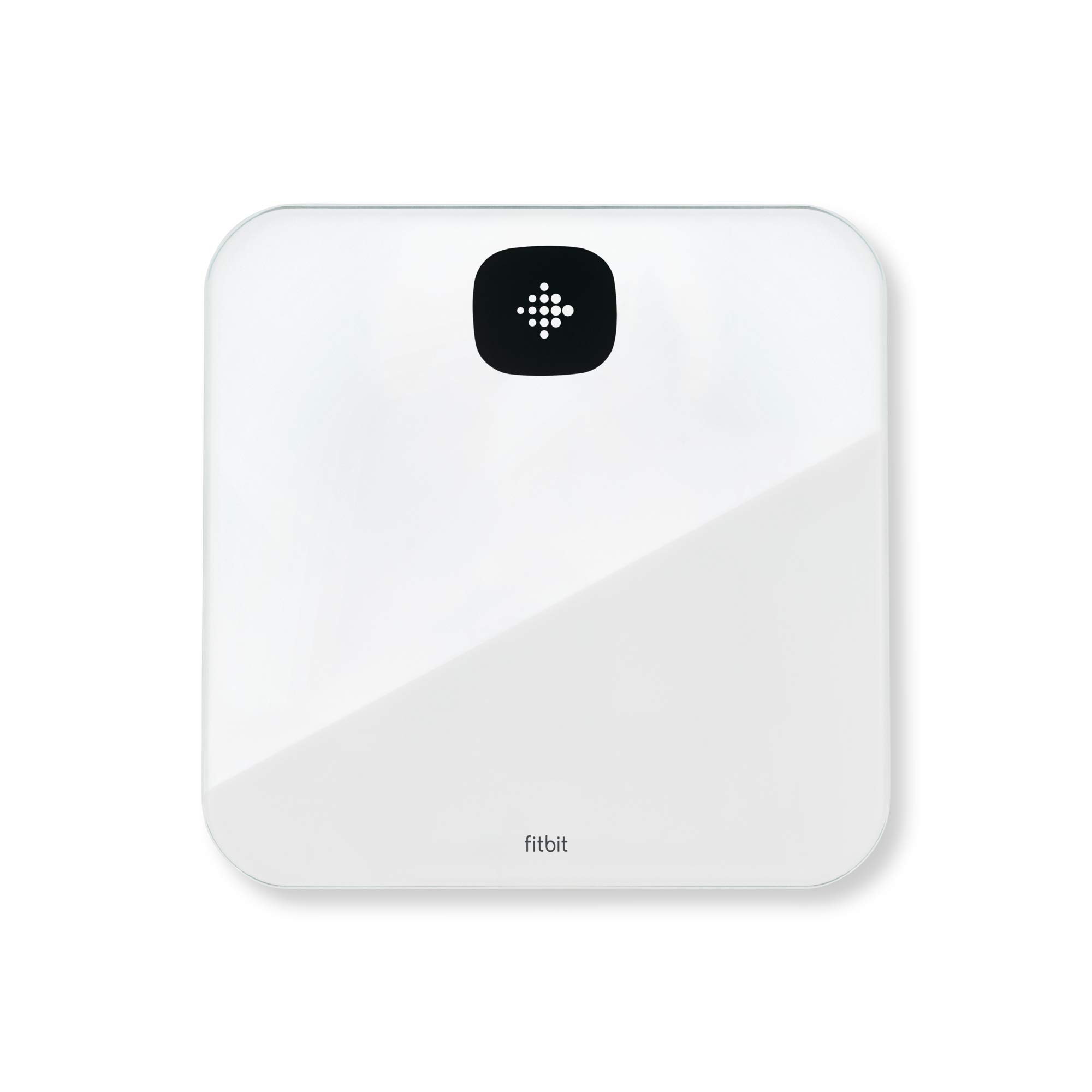
Fitbit Aria Air Review: What It Measures, Accuracy, and Value
A budget Bluetooth scale that logs your weight and BMI and nothing more: why that is less than this review once claimed, and why the one habit it automates has some of the better evidence in weight management.
Presented By Our Partners



In 2008, Mayo Clinic researchers checked medicine’s favorite obesity measure against body fat estimates for 13,601 American adults. Body mass index, weight divided by height squared, rarely raised a false alarm. But it missed most of the people who carried excess fat: a BMI of 30 or more caught only 36 percent of men and 49 percent of women whose body fat crossed the obesity threshold (International Journal of Obesity, 2008).
Weight and BMI are exactly what the Fitbit Aria Air reports. The Aria Air (model FB203) is a Bluetooth bathroom scale made by Fitbit, introduced in August 2019 as an affordable way into the Fitbit ecosystem, and it now syncs into Google Health, the brand Google has put over the Fitbit app. Walmart’s product listing calls it a body weight and BMI scale. An earlier version of this review said it also estimated body fat percentage. We found no evidence for that claim, and we have removed it.
So the scale measures less than this page once promised, and the one ratio it calculates is a blunt instrument. That would be the whole story, except for a second body of research that points the other way. Stepping on a scale every morning, and watching the number land in an app without writing anything down, is one of the better-supported habits in weight management. The Aria Air is a poor body composition tool. It may still be a useful habit machine.
The short answer: The Fitbit Aria Air (2019) is a basic Bluetooth bathroom scale from Fitbit, now part of Google, that records your weight and calculates BMI in Google Health. It does not measure body fat: its retail listing calls it a weight and BMI scale, and an earlier version of this review was wrong to say otherwise. Buy it only as a cheap way to automate daily weigh-ins.
- Best for: Fitbit and Google Health users who want daily weigh-ins logged automatically, and anyone using regular self-weighing to manage weight.
- Not for: anyone who wants body fat, muscle, or visceral fat estimates, or a scale that syncs on its own without a phone nearby.
- Price (October 2026): launched at about $50 in 2019; it still has Google Store product pages, but we could not confirm today’s US price or stock.
- Regulatory status: consumer wellness scale; none of the Fitbit, Google, or retailer sources we found claim FDA clearance for it.
- Evidence: Moderate for the habit it supports, since trials link connected-scale self-weighing to more frequent weighing and greater weight loss; Limited for the device itself, which has no published accuracy study.
What Is the Fitbit Aria Air?
The Fitbit Aria Air is a Bluetooth smart scale made by Fitbit, now owned by Google, that weighs you and reports your body mass index, calculated from that weight and the height in your profile. Readings travel to your phone and appear in Google Health alongside the activity and sleep data from Fitbit trackers.
Fitbit announced the Aria Air on August 28, 2019, billing it as an affordable smart scale; launch coverage put its preorder price at about $50 and pitched it as a scale like the Aria 2, only much cheaper. The Aria 2 is the scale researchers in a large European trial describe as Wi-Fi connected, and the original Aria is one another research team called a wireless body composition scale. The Air’s pitch was price, and retailers still list it under the model numbers FB203BK (black) and FB203WT (white).
What the Air gave up to hit that price matters for this review. The previous version of this page said the Aria Air estimated body fat percentage through electrodes in its glass top. We could not verify either claim. Walmart’s listing calls it a “Body Weight and BMI Smart Scale,” and nothing we found from Fitbit, Google, or retailers describes a body fat reading. We have rebuilt this review around what the scale verifiably does, and around the evidence for that.
The scale is also older than most products we review. As of October 2026, the Aria Air still has product pages on the Google Store in the United States and several other countries, and Google’s instructions for using Fitbit scales now sit in the Google Health Help Center, which reflects the Fitbit app’s move under the Google Health name. We could not confirm current US stock or price, so check the listing before you plan around it.
How Does the Fitbit Aria Air Work?
Like most digital bathroom scales, the Aria Air weighs you with load sensors under its platform and sends the reading over Bluetooth to your phone. BMI is then calculated by dividing your weight in kilograms by the square of your height in meters. Nothing in that process measures what your weight is made of.
Think of your body weight as a single bank balance that lumps several accounts together: fat, muscle, bone, organs, and water. Water is the largest and most restless of them. Fat-free tissue is roughly 73 percent water, an assumption that body composition equations lean on (Journal of Primary Care and Community Health, 2026). Water moves with a salty dinner, a long run, a hot day, or the glycogen your muscles store after a carbohydrate-heavy meal, because glycogen is stored with water. That is why the number on any scale can swing overnight for reasons that have nothing to do with fat, and why a single morning’s reading means very little.
Encouragingly, the day-to-day bounce seems to matter less than people fear. In the NoHoW trial, which gave 955 adults Fitbit Aria 2 scales and followed them for 12 months, how much weight fluctuated around its trend was not consistently associated with changes in cardiometabolic risk markers or body composition. The overall direction of weight was: losing weight consistently tracked with lower body fat and lower blood pressure (International Journal of Cardiology: Hypertension, 2020). The trend line, in other words, carries the signal. The daily wobble is mostly water.
A body fat scale adds a step the Aria Air skips. It passes a faint alternating current up one leg and down the other, measures how strongly the body resists it, and feeds that resistance into equations that estimate how much of you is water-rich lean tissue and how much is fat. Even that is only an estimate. In 929 adults, a foot-to-foot impedance scale missed DXA body fat by a root mean square error of 5.6 percentage points in men and 4.6 in women (Obesity Research and Clinical Practice, 2022). The Aria Air does not attempt the estimate at all. There is a kind of honesty in that: it reports the one number it can actually measure.
BMI is where the trouble starts. The formula was built for populations, not individuals, and it cannot tell a pound of muscle from a pound of fat. In the Mayo Clinic analysis, BMI tracked lean mass more closely than body fat in men; across the 25 to 29.9 range it failed to distinguish fat from lean mass in either sex; and its diagnostic accuracy fell as people aged (International Journal of Obesity, 2008). A muscular 35-year-old and a sedentary 65-year-old can share a BMI and almost nothing else about their metabolic risk.
What Does the Research Show About the Fitbit Aria Air?
We found no published study of the Aria Air’s weighing accuracy. The research that matters concerns the habit it automates: trials show that connected scales make people weigh themselves far more often, and that frequent self-weighing is linked to greater weight loss, mostly as one part of a broader program rather than on its own.
Daily weighing as an intervention. In a 2013 University of North Carolina trial funded by the National Institutes of Health, 91 overweight adults were randomized either to a six-month program built around daily weighing on a cellular-connected smart scale, with an online weight graph and weekly tailored emails, or to a delayed-start control group. The intervention group weighed in on 6.1 days a week on average, against 1.1 for controls, and lost 6.55 percent of their body weight versus 0.35 percent. Of the scale group, 42.6 percent reached a 5 percent loss, against 6.8 percent of controls, and by six months they were eating about 1,509 calories a day versus 1,856 (Obesity, 2013).
What automation adds. When Brown University researchers and Weight Watchers added a cellular smart scale and weekly feedback to an online weight-loss program for 92 adults, scale users recorded their weight on 44.7 percent of days, compared with 6.7 percent for people entering weights by hand. At three months, 52.2 percent of the scale group had lost at least 5 percent of their weight, versus 28.3 percent. By six months, the difference in average weight loss (5.3 versus 3.9 kilograms) was no longer statistically significant (Obesity Science and Practice, 2017). Several authors worked for Weight Watchers, and the sample was small. The clearest result is the logging gap: an automatic scale multiplied how often people actually weighed.
The bigger picture. A 2015 meta-analysis puts those trials in context. Only one trial had tested self-weighing on its own, and it found no meaningful effect (0.5 kilograms). Adding self-weighing to a multi-component behavioral program improved weight loss by 1.7 kilograms across four trials, and programs that included self-weighing beat minimal interventions by 3.4 kilograms across 15 trials. Daily and weekly weighing performed about the same, and trials that built in accountability produced more weight loss (International Journal of Behavioral Nutrition and Physical Activity, 2015). Two systematic reviews, of 17 studies and of 22 articles, found regular self-weighing associated with better weight outcomes and no negative psychological effects in adults seeking weight loss (Obesity, 2015; Obesity Research and Clinical Practice, 2016).
Featured Partner
Invest in the Infrastructure Behind Modern Medicine
As healthcare expands beyond hospital walls, the buildings and campuses supporting that shift are generating compelling returns for investors who move early. The Healthcare Real Estate Fund offers qualified investors direct access to a curated portfolio of medical office, outpatient, and specialty care facilities.
Learn More →
The Aria Air in a heart failure pilot. The Aria Air itself appears in a 2024 Irish pilot study of 19 people with heart failure, who used it with a Fitbit Charge 4 and a custom app for six months; the 17 who finished averaged 72 years old. Daily weight matters in heart failure because a quick gain can signal fluid building up. Participants weighed themselves on 73.7 percent of days on average, but individual adherence ranged from 4.9 percent to 100 percent. Trouble connecting the scale was a bigger burden than charging the tracker, because connection problems could produce incorrect readings and were hard to fix, and the whole system scored 58.8 on a standard usability scale, below the 68 usually considered acceptable (JMIR Formative Research, 2024).
How fast people drift away. In a 2022 pilot, 54 adults with overweight or obesity received an Aria scale, a Fitbit Zip, and an app for a six-month weight-loss program and were asked to weigh in daily. The median participant disengaged from weighing after just 4 weeks, against 19.5 weeks for activity tracking, a lower-burden task. Those who weighed consistently lost more weight (JMIR Formative Research, 2022). Wearing a tracker is passive. Stepping on a scale is a decision you have to make every morning.
A caution about Fitbit body composition data. The one study we found that compared a Fitbit scale’s body composition output with a reference method is not reassuring. Over two 14-day periods in 24 healthy adults, changes in stored body energy derived from Fitbit’s Aria body composition scale agreed only weakly with DXA, with correlations of 0.15 and 0.49 (Journal of Nutrition, 2022). That was a more capable Fitbit scale than the Air, and it still could not track short-term changes in body composition reliably.
Read together, the evidence says four things. There is no published data on the Aria Air’s accuracy. Connected scales reliably make weighing more frequent. Frequent weighing helps modestly, mainly inside a broader program with some accountability. And most people drift away from the habit within weeks. For a framework on weighing claims like these, see our explainer on what “clinically validated” actually means.
What the Fitbit Aria Air Gets Right
The Aria Air gets the most important thing right for a bathroom scale: it removes the friction from weighing. Readings land in Google Health with no notebook and no typing, and the trials above suggest that automatic logging is what turns occasional weighing into a habit you can actually see.
It automates the part with evidence. The gap between 44.7 percent and 6.7 percent of days logged, in the Weight Watchers trial, is the case for any connected scale. Most people do not fail at weighing because they lack data. They fail because writing a number down every morning is one more chore. The Aria Air does that chore for you.
It reports what it can measure. Weight is a real physical measurement. Body fat from a cheap foot-only scale is an estimate that, in one large study, missed DXA by about 5 percentage points. A scale that declines to guess is less exciting and, in a narrow sense, more trustworthy.
It joins your weight to everything else. In Google Health, weight sits next to steps, sleep, and heart rate from a tracker such as the Fitbit Charge 6. Participants in the Irish heart failure pilot said that, once the syncing problems were solved, the system became one place to see all of their information.
It was built to be cheap. At its launch price of about $50, it cost less than most connected scales. If the current price is similar, it remains a low-risk way to test whether daily weighing helps you.
Where the Fitbit Aria Air Falls Short
The Aria Air’s limits are built in. It cannot see body composition, BMI misjudges many individuals, syncing depends on Bluetooth and your phone, people abandon daily weighing quickly, and it is a 2019 product whose current price and long-term support under Google we could not confirm.
It cannot see what your weight is made of. This is the correction at the heart of this rewrite. If you want to know whether you are losing fat or muscle, the Aria Air cannot tell you, and the difference is not academic. Among 2,031 US users of connected devices, the 396 who started a GLP-1 weight-loss drug lost a median 9.8 percent of body weight, of which 7.5 percent was fat and 2.3 percent muscle, by the connected devices’ estimates (Mayo Clinic Proceedings: Digital Health, 2026). A weight-only scale sees the 9.8 and nothing beneath it.
BMI misleads individuals. A BMI that misses roughly half of adults with excess body fat, and does worse in men, older adults, and the 25 to 29.9 range, is a screening shortcut, not a personal verdict. If your BMI says “normal” but your waistline has been growing, believe the waistline.
Bluetooth means your phone is part of the scale. Readings travel through your phone, so connection hiccups can mean gaps. In the heart failure pilot, scale connection problems were a recurring burden, and some participants needed help from family or the study team to sort out syncing.
The habit is fragile. A median of 4 weeks before disengagement, in the 2022 pilot, is the real competitor to any smart scale. A cheaper scale does not solve that; a reason to keep weighing, and someone to share the trend with, often does.
No published accuracy data. We found no independent test of the Aria Air’s weighing accuracy or consistency. For tracking trends that is less critical than it sounds, because a consistent bias cancels out, but it means the scale’s precision is unknown.
An aging product in a changing ecosystem. The Aria Air is seven years old, Fitbit is now part of Google, and the app it was built for has become Google Health. Google still lists the scale and still publishes help for Fitbit scales, but we could not confirm current stock, price, or any long-term support commitment.
Fitbit Aria Air vs Withings Body Comp vs Renpho vs InBody H20N
The Aria Air is the only one of these four that does not estimate body composition at all. Renpho adds inexpensive foot-to-foot body fat estimates, the Withings Body Comp adds visceral fat and a nerve health reading, and the InBody H20N, with hand and foot electrodes, has the strongest published validation against DXA.
| Feature | Fitbit Aria Air | Withings Body Comp | Renpho smart scale | InBody H20N |
|---|---|---|---|---|
| What it reports | Weight; BMI calculated from it | Weight, body composition, visceral fat, nerve health | 13 listed metrics, including body fat | Body fat percentage, skeletal muscle mass, and more |
| Body composition method | None | Impedance through the feet | Impedance through the feet | Impedance through hands and feet (8 electrodes, 2 frequencies) |
| Connection | Bluetooth to your phone; Google Health | Withings app; Apple Health integration | Bluetooth app | Battery powered; check InBody for app details |
| Published validation found | None | No DXA comparison found | None found | 2026 DXA study: body fat agreement 0.93 |
| Price (October 2026) | Launched at about $50; current price unconfirmed | Not confirmed; check Withings | Budget, varies by model and retailer | About $350, per a 2026 study |
| Best for | Automatic weight logging in Google Health | Mid-range trends with a visceral fat estimate | The cheapest body fat estimate | The best-validated home body composition |
The InBody H20N is the one consumer scale here with a peer-reviewed DXA comparison. In 55 adults with obesity in a University of Alabama at Birmingham weight-loss program, its body fat percentage agreed with DXA with an intraclass correlation of 0.93, while its skeletal muscle estimates ran an average of 5.66 kilograms higher than DXA-derived values (Journal of Primary Care and Community Health, 2026). The Renpho smart scale is the budget route to a body fat number, with all the error that foot-only impedance carries. The Withings Body Comp adds visceral fat and nerve health, and the flagship Withings Body Scan 2 goes much further at a far higher price. To compare every scale and scanner we cover, browse our body composition device reviews.
How Much Does the Fitbit Aria Air Cost, and Is It HSA/FSA Eligible?
Fitbit launched the Aria Air in 2019 at about $50. As of October 2026 it still has Google Store product pages, but we could not confirm its current US price or whether it is in stock. We found no source listing it as HSA or FSA eligible, so ask your plan administrator before assuming it is.
Practically, as of October 2026: check the Google Store listing first, then compare the price with a Renpho, which adds a body fat estimate, or with a body composition scale if you care about fat and muscle. Insurance does not generally pay for consumer bathroom scales. Because the Fitbit app now operates under the Google Health name, check inside the app whether any scale features require a paid subscription before you pay for one; we could not confirm current terms.
Who Should Buy the Fitbit Aria Air, and Who Should Skip It?
The Aria Air suits people who already live in Google Health, want daily weight logged automatically, and plan to use self-weighing as part of a broader effort to manage weight. It is the wrong scale for anyone who wants to know what their weight is made of.
Good candidates:
- Fitbit tracker owners who want weight in the same app as their steps and sleep.
- People starting a structured weight-loss program, where daily or weekly weighing has the strongest evidence.
- People asked by a clinician to watch their weight daily, for example for fluid changes in heart failure, who want readings recorded automatically.
- Anyone who wants a low-cost test of whether daily weighing helps them before buying something more capable.
Better served by something else:
- Strength trainers, older adults worried about muscle loss, and people on weight-loss medication who want to see fat versus muscle: a body composition scale or an occasional mobile DEXA scan answers that.
- Households without a phone in the bathroom routine: a Wi-Fi scale removes that dependency.
- People with a history of disordered eating, for whom daily weighing should be a decision made with a clinician.
If you are monitoring weight for a medical reason, follow your care team’s instructions about when to call; the Healthcare Discovery doctor directory lists clinicians by state and specialty.
What This Means for You
Body weight touches two of the Four Villains of Health and Longevity directly: the Energy Arsonist, metabolic dysfunction, and the Silent Assassin, cardiovascular disease. But weight is a proxy, and where the fat sits matters more than how much the whole body weighs. Among 3,086 Framingham Heart Study participants scanned by CT, each standard deviation of visceral fat carried a 44 percent higher risk of cardiovascular disease and a 43 percent higher risk of cancer, the Rogue Hijacker, after adjusting for BMI (Journal of the American College of Cardiology, 2013). Muscle runs the other way: in a meta-analysis of 16 prospective studies and 81,358 adults, low skeletal muscle mass raised the risk of death from any cause by 57 percent (PLOS ONE, 2023).
A weight-only scale sees neither of those things, so pair it with the cheapest body composition tool there is: a tape measure. An international consensus statement argues that waist circumference adds information BMI cannot, and should be treated as a vital sign in clinical practice (Nature Reviews Endocrinology, 2020). A falling weight with a shrinking waist is good news. A stable weight with a growing waist is worth a conversation with your clinician.
Then use the number for what the evidence supports: feedback on the Five Pillars. Nutrition and Movement drive the long-term trend; Sleep and stress shape how much water your body holds from one morning to the next; and Mindset decides whether you read a bad day as noise or as a verdict. The trials are clear that weighing works best inside a plan, with someone to be accountable to, and that the habit fades within weeks unless it is anchored to something you care about. The Aria Air will not tell you what your body is made of. It will tell you, every morning, which way the needle is drifting, and that turned out to be the part most people were missing.
Frequently Asked Questions
Does the Fitbit Aria Air Measure Body Fat?
No. Walmart’s product listing describes the Fitbit Aria Air as a body weight and BMI scale, and we found no Fitbit, Google, or retailer source describing a body fat reading. An earlier version of this review wrongly said it estimated body fat percentage. If you want body fat or muscle estimates, choose a body composition scale such as a Renpho, Withings Body Comp, or InBody H20N instead.
Is the Fitbit Aria Air Still Sold?
As of October 2026, the Fitbit Aria Air still has product pages on the Google Store in the United States and several other countries, and major retailers still list it. We could not confirm current US stock or price, so check the listing before buying. Fitbit launched the scale in August 2019 at about $50, making it an older product than most smart scales on sale today.
Does the Fitbit Aria Air Work With Google Health?
Google now publishes its instructions for using Fitbit scales in the Google Health Help Center, which reflects the Fitbit app’s move under the Google Health name. The Aria Air connects over Bluetooth, so readings sync through your phone and then appear alongside data from Fitbit trackers. Check inside Google Health whether any scale features require a paid subscription, because we could not confirm current terms.
Fitbit Aria Air vs Renpho: Which Is Better?
It depends on what you want to measure. The Fitbit Aria Air logs weight and BMI into Google Health. A Renpho smart scale adds body fat and about a dozen other estimates from foot-to-foot impedance, usually at a budget price, though foot-only estimates like these can land several percentage points away from DXA for any one person. Choose the Aria Air for Google Health integration; choose Renpho for a cheap body fat trend.
Is BMI From a Smart Scale Accurate?
The math is exact, but BMI itself is a blunt measure. In a 2008 Mayo Clinic analysis of 13,601 adults, a BMI of 30 or more missed more than half of those with excess body fat, and BMI could not distinguish fat from muscle in the 25 to 29.9 range. Use BMI as a rough screen, and add a waist measurement or a body composition test for a clearer picture.
Is the Fitbit Aria Air Worth It?
It is worth it if you use Google Health and want daily weigh-ins logged automatically, because trials show connected scales make people weigh far more often and that frequent weighing helps inside a broader weight-loss plan. It is not worth it if you want body fat or muscle data, which it does not measure. Confirm the current price first, since we could not verify it for October 2026.
Sources
- Romero-Corral A, et al. Accuracy of body mass index in diagnosing obesity in the adult general population. International Journal of Obesity, 2008. DOI
- Steinberg DM, et al. The efficacy of a daily self-weighing weight loss intervention using smart scales and e-mail. Obesity, 2013. DOI
- Thomas JG, et al. Weight loss and frequency of body-weight self-monitoring in an online commercial weight management program with and without a cellular-connected “smart” scale: a randomized pilot study. Obesity Science and Practice, 2017. DOI
- Madigan CD, et al. Is self-weighing an effective tool for weight loss: a systematic literature review and meta-analysis. International Journal of Behavioral Nutrition and Physical Activity, 2015. DOI
- Zheng Y, et al. Self-weighing in weight management: a systematic literature review. Obesity, 2015. DOI
- Shieh C, et al. Self-weighing in weight management interventions: a systematic review of literature. Obesity Research and Clinical Practice, 2016. DOI
- Keogh A, et al. Six-month pilot testing of a digital health tool to support effective self-care in people with heart failure: mixed methods study. JMIR Formative Research, 2024. DOI
- Carpenter CA, et al. Consistency with and disengagement from self-monitoring of weight, dietary intake, and physical activity in a technology-based weight loss program: exploratory study. JMIR Formative Research, 2022. DOI
- Shook RP, et al. Commercial devices provide estimates of energy balance with varying degrees of validity in free-living adults. Journal of Nutrition, 2022. DOI
- Turicchi J, et al. Body weight variability is not associated with changes in risk factors for cardiometabolic disease. International Journal of Cardiology: Hypertension, 2020. DOI
- Nana A, et al. Agreement of anthropometric and body composition measures predicted from 2D smartphone images and body impedance scales with criterion methods. Obesity Research and Clinical Practice, 2022. DOI
- Ellison KM, et al. Assessing body composition for resource-limited settings: agreement of a scalable BIA device compared to DXA and clinical BIA in adults with obesity. Journal of Primary Care and Community Health, 2026. DOI
- Chabassier M, et al. Real-world body composition and blood pressure changes following glucagon-like peptide 1 receptor agonist initiation: a causal inference study of connected device data. Mayo Clinic Proceedings: Digital Health, 2026. DOI
- Britton KA, et al. Body fat distribution, incident cardiovascular disease, cancer, and all-cause mortality. Journal of the American College of Cardiology, 2013. DOI
- Wang Y, et al. Low skeletal muscle mass index and all-cause mortality risk in adults: a systematic review and meta-analysis of prospective cohort studies. PLOS ONE, 2023. DOI
- Ross R, et al. Waist circumference as a vital sign in clinical practice: a Consensus Statement from the IAS and ICCR Working Group on Visceral Obesity. Nature Reviews Endocrinology, 2020. DOI
- Fitbit. Fitbit introduces Aria Air, an affordable smart scale (press release), August 28, 2019. Press release
- Google Store. Fitbit Aria Air Smart Scales (US product page). Google Store
- Google Health Help Center. How do I use my Fitbit scale? Google support
- Walmart. Fitbit Aria Air Bluetooth Digital Body Weight and BMI Smart Scale (product listing). Walmart
Fitbit Aria Air at a glance
- Subscription
- None required
- Form factor
- BIA smart scale
- FDA status
- Wellness device, no clearance
- HSA/FSA
- Not confirmed
Measures BMI, Body fat%, Weight
Pricing verified October 20, 2026. Maintained in the Healthcare Discovery device database and updated automatically.


Similar Posts

Eight Sleep Pod 3 Cover: Active Thermal Sleep Optimization and Biometric Tracking
Your body temperature drops by nearly two degrees Fahrenheit as you fall asleep. What happens when technology learns to manage that drop for you? Presented By Our Partners Newer model,…

A Simple Blood Test Can Now Detect Alzheimer’s Years Before Symptoms: How the P-Tau217 Revolution Is Rewriting Diagnosis
A wave of FDA-cleared blood tests measuring phosphorylated tau 217 is transforming Alzheimer’s diagnosis from expensive brain scans and spinal taps into a routine blood draw at your doctor’s office….

The Omega 3 Index: What 20 Years of Research Reveal About the Blood Marker Modern Medicine Still Underuses
A 2004 Harris and von Schacky proposal in Preventive Medicine turned omega 3 status into a measurable, modifiable blood marker. Two decades of cohort and trial evidence, from VITAL to…
Ultrahuman Ring Pro Review 2026: $479 Price, 15-Day Battery, No Subscription, HSA/FSA Status
Ultrahuman Ring Pro first look: $479 with no subscription and a 15-day battery, what ring studies show about its sleep, HRV and AFib check, the Oura lawsuit, and HSA/FSA status.
Function Health Membership: 100+ Biomarker Testing for Comprehensive Health Monitoring
The most expansive consumer blood testing platform available, measuring over 100 biomarkers twice per year with physician oversight, designed for people who want the closest thing to a clinical research…
Withings BPM Core: Blood Pressure, ECG, and Digital Stethoscope in One Device
The most comprehensive home cardiac monitor available combines blood pressure measurement, a single lead ECG, and a digital stethoscope for valvular heart disease screening in a single arm cuff. Presented…
