
AI Drug Discovery Is Not One Thing
The phrase sounds clean, almost surgical: AI drug discovery. But beneath it is not a single machine inventing medicines. It is a crowded workshop of models, datasets, experiments, predictions, and human judgment, all trying to make one of medicine’s hardest searches less blind.
Presented By Our Partners



The public story often begins too late. A company announces that an artificial intelligence system has designed a molecule, identified a target, or pushed a candidate into clinical testing. The announcement sounds like a finished act of invention. A machine looked at biology, produced an answer, and the future arrived.
Drug discovery does not work that way. It is not a vending machine where data go in and medicines come out. It is closer to building a bridge in fog. Engineers can model the span, calculate stresses, test materials, and simulate wind. None of that removes the need to cross the river. It only makes the crossing less reckless.
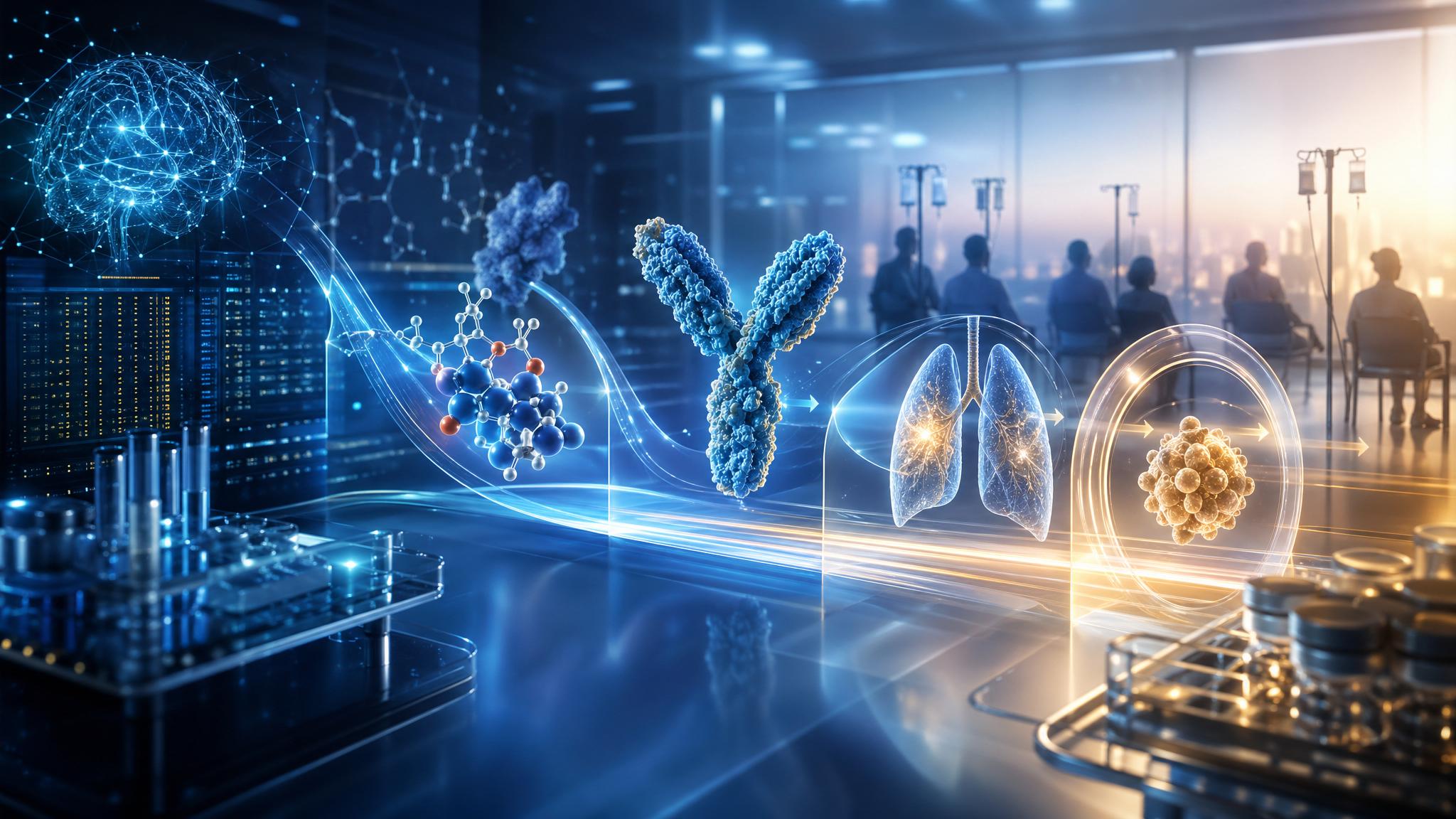
That is the right way to understand AI’s role in drug discovery. The technology is not one breakthrough. It is a set of tools that appear at different points in the long journey from biological suspicion to clinical proof. Some tools help scientists choose what to study. Some help design what to test. Some help predict what may fail. Some help find the right patients. Some help notice whether an old drug might have a second life.
Collapsing all of that into “AI drug discovery” makes the field sound more magical than it is. It also makes it harder to judge.
The first question: what is the disease really doing?
Before a drug can be discovered, a disease has to be understood well enough to attack. That sounds obvious until you look closely at modern biology.
A disease is rarely a single broken switch. Cancer can be a population of evolving cells. Alzheimer’s disease may begin years before symptoms appear. Autoimmune diseases can involve mistaken identity across immune pathways. Metabolic disease sits at the intersection of organs, hormones, inflammation, behavior, sleep, food, time, and environment.
Traditional drug discovery often begins by selecting a target: a protein, receptor, enzyme, gene, or pathway believed to matter. If the target is wrong, everything downstream can look productive while moving in the wrong direction. A team can screen compounds, optimize molecules, run assays, raise capital, and still be climbing the wrong mountain.
This is one of the first places AI enters the story. Machine-learning systems can examine genomic, transcriptomic, proteomic, imaging, clinical, and real-world datasets to look for patterns that may point toward disease mechanisms. They can help nominate targets, identify patient subgroups, and connect signals scattered across scientific literature and experimental data.
The analogy is not a genius scientist having a revelation. It is more like a searchlight sweeping over a landscape too large for any one scientist to inspect by hand.
But a searchlight is not a verdict. Target discovery is still hypothesis generation. AI can suggest that a biological pathway deserves attention. It cannot, by itself, prove that changing that pathway will help patients. The first failure mode of AI drug discovery is forgetting that a better hypothesis is still a hypothesis.
The second question: what could bind, block, mimic, or repair?
Once a target looks plausible, the next problem is chemistry. The drug-like universe is enormous. A medicine must do more than interact with a biological target. It has to reach the right tissue, persist long enough to matter, avoid dangerous off-target effects, behave predictably in the body, and be manufacturable at scale.
This is where much of the public fascination with AI drug discovery lives. Generative models can propose molecules. Screening models can rank compounds. Structure-aware systems can help predict how molecules might interact with proteins. Optimization models can suggest chemical modifications that may improve potency, selectivity, solubility, or safety.
Protein science made a visible leap when Demis Hassabis and John Jumper of Google DeepMind were awarded half of the 2024 Nobel Prize in Chemistry for protein structure prediction, while David Baker received the other half for computational protein design. The Nobel committee described protein structures as decisive for protein function and recognized both the prediction of complex structures and the construction of new proteins as discoveries with enormous potential.
That matters for drug discovery because structure is one of biology’s great forms of instruction. A protein’s shape can reveal pockets, surfaces, vulnerabilities, and interactions. If biology is partly written in three-dimensional folds, better prediction gives scientists a clearer way to read the page.
Featured Partner
Invest in the Infrastructure Behind Modern Medicine
As healthcare expands beyond hospital walls, the buildings and campuses supporting that shift are generating compelling returns for investors who move early. The Healthcare Real Estate Fund offers qualified investors direct access to a curated portfolio of medical office, outpatient, and specialty care facilities.
Learn More →
Still, a model that suggests a molecule has not created a medicine. It has created a candidate for interrogation. The molecule must be synthesized or otherwise produced, tested in assays, challenged in cells, examined for toxicity, and judged against alternatives. In the best case, AI makes chemistry less like wandering a desert and more like following a set of promising trails. The walk still has to happen.
The third question: what will fail before humans are exposed?
The least glamorous part of drug discovery may be the most important: killing bad ideas early.
A compound can look powerful in one assay and fail because it is toxic. It can bind beautifully to a target and be useless because the body clears it too quickly. It can work in a simplified model and collapse in a living system. It can appear safe until it interacts with the wrong channel, enzyme, tissue, or patient population.
AI can help predict absorption, distribution, metabolism, excretion, toxicity, and off-target behavior. It can also help prioritize experiments by estimating which risks are most worth testing first. In a field where late failure is brutally expensive, earlier failure can be a form of progress.
This is where the factory analogy breaks down. Drug development is not mainly a production problem; it is an uncertainty problem. The goal is not to keep every candidate alive. The goal is to learn quickly enough to stop fooling yourself.
Good AI should make that easier. Bad AI can make it harder by giving false confidence a scientific costume.
The fourth question: who should be in the trial?
Even after a drug candidate survives early development, it enters the hardest arena: people.
Clinical trials do not test drugs in the abstract. They test drugs in selected humans, under specific conditions, using defined endpoints, over limited time. A trial can fail because the drug is weak. It can also fail because the wrong patients were enrolled, the endpoint was too crude, the disease was too heterogeneous, the dose was wrong, or the signal was drowned by noise.
AI can help here too. It can support trial design, patient stratification, recruitment, endpoint selection, safety monitoring, and analysis of real-world data. The FDA’s Center for Drug Evaluation and Research has noted that submissions using AI components now span nonclinical, clinical, postmarketing, and manufacturing phases. The agency has also said it is developing a risk-based regulatory framework for AI use in drug development, with attention to safety, effectiveness, and quality.
That regulatory attention is a sign of maturity. AI is no longer only a discovery story outside the walls of evidence. It is becoming part of the machinery that may support regulatory decision-making. That means the questions become sharper: What was the model trained on? What decision did it influence? How was it validated? What happens if the model is wrong? Can the result be reproduced? Is the model’s role advisory, operational, or decisive?
In healthcare AI, the difference between retrospective success and prospective truth is often the difference between a promising chart and a useful tool. Drug discovery is no exception. A model that performs well on historical data must still survive contact with changing protocols, messy patients, missing data, and clinical stakes.
The fifth question: what already exists?
Not every discovery requires a new molecule. Sometimes the overlooked opportunity is an old drug, a shelved compound, or a medicine approved for one condition that may matter in another.
Drug repurposing is one of AI’s most practical frontiers because it begins with assets that may already have known safety profiles, manufacturing history, or clinical data. The challenge is finding plausible new uses inside a massive tangle of disease mechanisms, patient records, molecular pathways, adverse-event signals, and published studies.
Here the analogy is archaeology. The treasure is not newly forged; it is buried. AI can help search the site more intelligently, but the object still has to be cleaned, dated, authenticated, and understood in context.
This matters especially for neglected diseases and smaller patient populations. The economics of drug development often favor large markets. If AI can help identify repurposing opportunities with credible biological rationale, it may create paths that traditional commercial incentives missed. That does not make the path easy. It makes the starting point less empty.
Why the stack matters
Understanding the stack matters because every layer carries a different standard of proof.
A target-discovery model should be judged by whether it nominates biologically meaningful targets that hold up experimentally. A molecule-generation model should be judged by whether it produces candidates with useful properties, not merely chemical novelty. A toxicity model should be judged by whether it catches risks earlier or reduces failure. A trial-matching model should be judged by whether it improves enrollment, stratification, or signal detection. A repurposing model should be judged by whether its suggestions survive mechanistic and clinical scrutiny.
The lazy question is whether a company “uses AI.” Nearly every serious company will use AI somewhere. The better question is where the system sits in the chain of decisions, how much weight it carries, and whether the evidence matches the claim.
There is a difference between software that helps scientists work faster and software that changes the probability of producing a successful drug. There is a difference between a model that improves an internal workflow and a platform that produces clinical-stage assets. There is a difference between a beautiful prediction and a better medicine.
The most useful AI may become boring
Technologies often begin as spectacle and end as infrastructure.
At first, electricity was a marvel. Later, it became the assumption behind every modern room. The internet was once a place one went; now it is the air through which business, medicine, education, and daily life move. In drug discovery, the most successful AI may follow the same path. It may become less visible as it becomes more useful.
The mature version of the field will not need every press release to sound like a machine discovered life’s secret code. It will be embedded in target selection, experiment planning, molecule optimization, safety prediction, trial design, manufacturing, and postmarket surveillance. Scientists will still argue. Experiments will still fail. Regulators will still ask hard questions. Patients will still need real outcomes.
That is not a disappointment. It is the point.
AI drug discovery is powerful precisely because drug discovery is not one problem. It is a sequence of fragile decisions under uncertainty. At each step, the wrong kind of confidence can be expensive. At each step, better information can matter.
The future of the field will not be decided by whether artificial intelligence can generate impressive possibilities. It already can. The future will be decided by whether those possibilities become sturdier hypotheses, cleaner experiments, better trials, and medicines that help people.
The machine does not have to replace the scientist. It has to help the scientist get lost less often.
Sources include FDA CDER materials on artificial intelligence in drug development and the Nobel Prize in Chemistry 2024 press release on protein structure prediction and computational protein design.


Similar Posts

Omada Health: The Most Evidence-Based Digital Diabetes Prevention Program
Before diabetes arrives, there is a window. The CDC estimates 96 million American adults have pre-diabetes, and most of them do not know it. A digital program with more clinical…
Thorne Health Tests: Blood Biomarker Panels for Longevity Optimization
Understanding your metabolic health through blood science Presented By Our Partners The Hidden Language of Your Blood Your blood tells a story that standard doctor’s visits often miss. While annual…
Quest Diagnostics Direct: Affordable Blood Testing Without a Prescription
How the nation’s largest clinical laboratory network is putting preventive blood testing directly in consumers’ hands, no doctor’s visit required. Presented By Our Partners Every year, millions of Americans skip…
Ava Fertility Bracelet: FDA-Cleared Wearable for Fertile Window Detection
A clinical study of 237 women found that a wearable bracelet tracking five physiological signals could detect the fertile window with 90% accuracy. That bracelet became a commercial product, and…
Tempo Studio: 3D Motion Capture and Real Weights for AI-Coached Strength Training
The only smart home gym that combines real weight plates with 3D body scanning and AI form correction. Does adding a depth sensor to a barbell change the equation for…
