
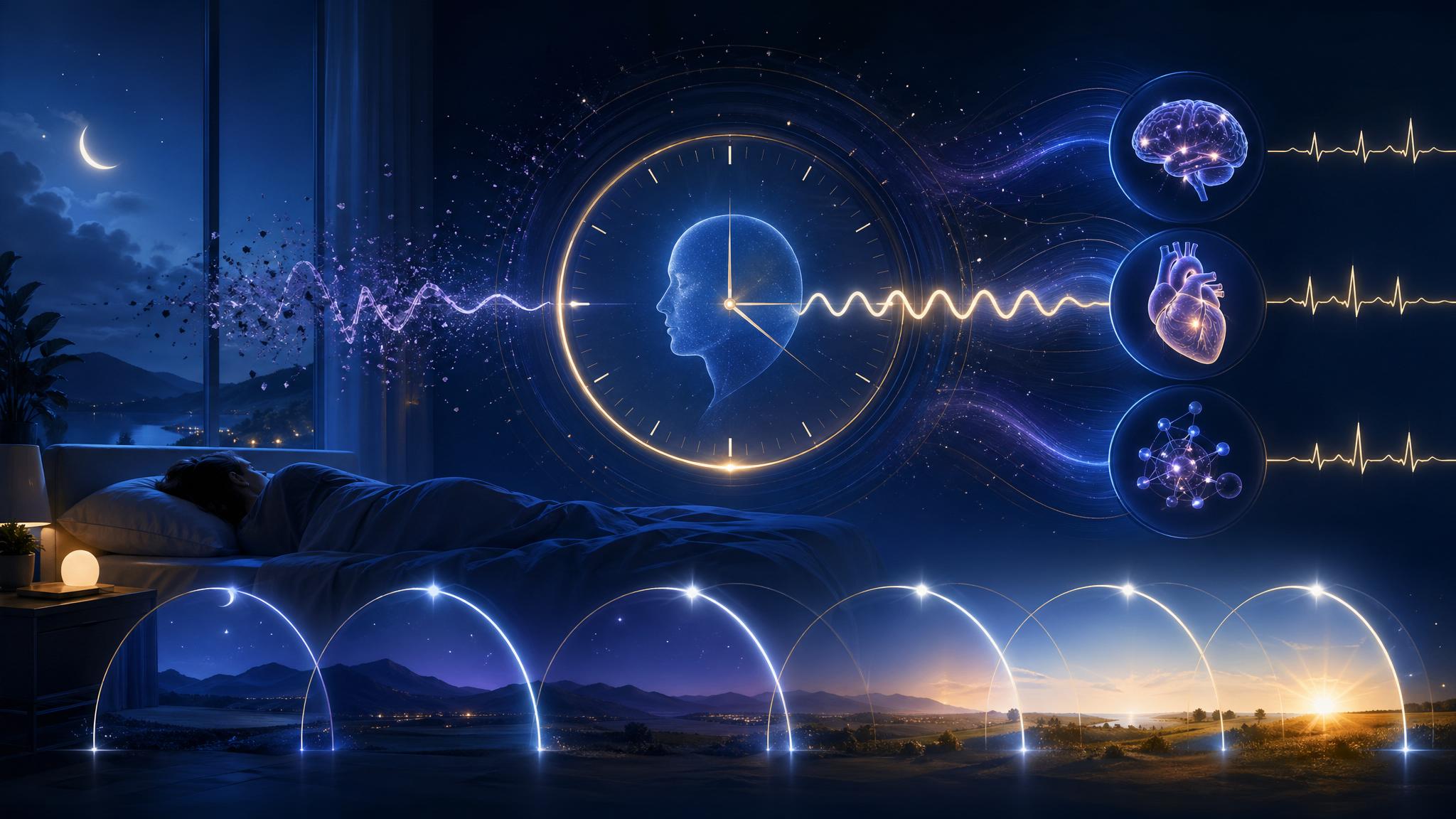
The Sleep Regularity Reset: Why a Consistent Bedtime Now Outranks a Long One for Longevity
For nearly a century, the public health story about sleep has hinged on a single number: hours. Seven to nine, the Centers for Disease Control reminds Americans. Eight, every mattress commercial promises. Six or fewer, every health columnist warns. The advice is so familiar it has hardened into common sense.
Presented By Our Partners



In late 2025, that common sense began to crack.
On October 28, 2025, the American Heart Association published a scientific statement in Circulation titled "Role of Circadian Health in Cardiometabolic Health and Disease Risk," led by Kristen Knutson, Dorothy Dixon, and Michael Grandner on behalf of the AHA’s Council on Lifestyle and Cardiometabolic Health. The statement did something the chronobiology field had been edging toward for years. It formally declared that the timing and consistency of sleep, not just the duration, sit inside the core machinery that decides who develops heart disease, type 2 diabetes, obesity, and hypertension, and who does not. In its key summary statements, the panel argued that sleep timing regularity is "as important as sleep duration," and that the broader circadian system, synchronized by light, food, exercise, and sleep timing, deserves recognition as a modifiable cardiometabolic risk factor in its own right.
For longevity researchers, this was not news. For the millions of people who have spent years optimizing wearable sleep scores, it should be. Because the practical message of the last five years of circadian research is this: a person who sleeps seven hours every night from 11 p.m. to 6 a.m. is probably healthier than a person who sleeps eight hours but moves their bedtime around by three or four hours from one night to the next. Sleep is not just a battery you recharge. It is a clock you keep.
This article is about that clock, the science that has elevated it, and the small set of practical choices that let you tune it without buying anything new.
The Sleep Regularity Index, in Plain English
The Sleep Regularity Index, or SRI, was formalized in 2017 by Andrew Phillips and colleagues at Brigham and Women’s Hospital. The metric is conceptually simple. Across seven consecutive days, the algorithm asks, for every minute of the 24 hour cycle, whether a person was asleep or awake at that minute on one day and at the same minute the day after. The percentage of matching states becomes the SRI, scaled from zero to one hundred. A score of one hundred means a person was asleep and awake at exactly the same minutes every day for a week. A score around zero means sleep and wake times were essentially random.
The number is intuitive in a way few sleep metrics are. A college student who pulls one late Saturday all-nighter and recovers on Sunday afternoon may average seven hours per night across the week and still have an SRI in the 50s. A retiree who is in bed at 10:15 every night and up at 6:30 every morning may sleep less in total but post an SRI above 85. The metric quietly captures something sleep duration cannot: whether the brain and body have any idea what time it is.
Over the last several years, sleep regularity has migrated from a niche chronobiology metric to a measurable predictor of disease and death. The reason it traveled so fast is the size and quality of the data behind it.
The UK Biobank Reckoning
The pivotal study arrived in early 2024 in the journal Sleep, with Daniel Windred, Angus Burns, Andrew Phillips, and Sean Cain among the lead authors. Their group, anchored at the Turner Institute for Brain and Mental Health at Monash University and collaborating with the Brigham’s Division of Sleep and Circadian Disorders, analyzed accelerometer data from more than 60,000 UK Biobank participants. The wearables collected over 10 million hours of movement, enough to derive an SRI for each participant. The researchers then tracked the cohort for an average of 7.8 years, recording 1,859 deaths.
The pattern that emerged was striking. Compared with the least regular sleepers, those in the top four SRI quintiles had a 20 to 48 percent lower risk of all cause mortality. Cancer mortality was 16 to 39 percent lower. Cardiometabolic mortality, the cluster that includes heart attack, stroke, and diabetes related death, was 22 to 57 percent lower. The effects survived statistical adjustment for sleep duration, lifestyle factors, and known cardiovascular risk markers. In direct head to head comparison, sleep regularity was a stronger predictor of all cause mortality than sleep duration.
A parallel UK Biobank analysis published in eLife by Lyle Crowley and colleagues replicated the finding using a different sample and a slightly different methodology. The consistency message held. Across both papers, an editorial in Sleep titled "Consistency is key" argued that the field should treat sleep regularity as the headline indicator of healthy sleep, with duration as a secondary axis.
These are observational results, and they cannot prove that regularizing sleep directly causes a longer life. What they do show, with unusual clarity for a sleep study, is that irregularity tracks a sicker trajectory in a very large, very well characterized cohort, after the most obvious confounders are stripped out. For a research field accustomed to small sample sizes and self reported diaries, the SRI papers were a turning point.
Why the AHA Took It Seriously
The October 2025 AHA scientific statement did not arrive in isolation. It synthesized roughly a decade of work showing that the circadian system shapes glucose tolerance, blood pressure, lipid metabolism, autonomic balance, and inflammation in a way that is at least as influential as diet or exercise composition alone. Among the threads it pulled together:
Frank Scheer’s lab at Brigham and Women’s used forced desynchrony protocols to show that when humans eat and sleep at biological night, insulin sensitivity collapses by 20 to 30 percent within days, independent of total caloric intake. The same misalignment raises postprandial glucose, blood pressure, and inflammatory markers.
Phyllis Zee’s group at Northwestern documented that late chronotype individuals, those whose natural sleep window drifts into the early morning, have a higher prevalence of metabolic syndrome and type 2 diabetes than morning types of the same age and BMI. Some of that risk is structural, but a meaningful portion appears to be downstream of behavioral misalignment, sleep timing that conflicts with the internal clock.
Marie Pierre St Onge at Columbia synthesized evidence on irregular sleep, social jet lag, and cardiovascular risk in a 2024 review, concluding that the day to day variability of sleep timing is now plausibly mechanistic rather than merely associative.
Featured Partner
Invest in the Infrastructure Behind Modern Medicine
As healthcare expands beyond hospital walls, the buildings and campuses supporting that shift are generating compelling returns for investors who move early. The Healthcare Real Estate Fund offers qualified investors direct access to a curated portfolio of medical office, outpatient, and specialty care facilities.
Learn More →
What the AHA statement adds is the official translational language. It identifies four behavioral inputs that synchronize or desynchronize the body’s clocks: light exposure, food intake, physical activity, and sleep timing. It frames sleep regularity as a modifiable factor and recommends that clinicians ask about sleep timing and consistency, not only sleep duration, when assessing cardiovascular risk. That kind of language is what shifts a topic from "interesting research" to "standard of care" over the next five to ten years.
The Biology Underneath
To see why a few hours of nightly variability could plausibly do so much damage, it helps to look one layer down at the molecular machinery.
The suprachiasmatic nucleus, a cluster of roughly 20,000 neurons in the hypothalamus, is the master pacemaker. It is set primarily by morning light striking the retina’s intrinsically photosensitive ganglion cells. Beyond the master clock, almost every organ in the body, the liver, pancreas, gut, kidneys, muscle, adipose tissue, runs its own peripheral oscillator. Hundreds of genes involved in metabolism are turned on and off in 24 hour cycles. Glucose transporters, lipid synthesizing enzymes, cortisol and melatonin rhythms, and even the immune system’s inflammatory output all rise and fall on this schedule.
When sleep timing drifts, the master clock and the peripheral clocks fall out of phase with each other. The liver expects food at one time, but the pancreas releases insulin at another. The gastrointestinal lining expects an overnight fast, but receives a midnight meal. The vasculature expects a nocturnal blood pressure dip, but stays in daytime mode. These mismatches are not subtle. In controlled laboratory studies of simulated shift work, healthy young adults develop prediabetic glucose curves within days. In epidemiology, decades of shift work raise cardiovascular and metabolic disease risk substantially. Sleep regularity is the dose response version of this story applied to ordinary lives.
This is why the SRI tracks mortality so robustly. It is not measuring whether someone slept well. It is measuring whether their body’s twenty plus interconnected clocks were given a stable signal to coordinate around.
The Wearable Question
A reasonable question for any reader who already wears a tracker is whether the Sleep Regularity Index appears on their dashboard. As of 2026, the answer is mixed.
Oura, Whoop, Garmin, Apple, and Fitbit all measure sleep onset and offset with reasonable accuracy in healthy adults, validated in part by recent comparison studies including a 2025 validation of nocturnal resting heart rate and heart rate variability in consumer wearables. The raw data needed to compute an SRI exists on these devices. Whether the device exposes a true SRI, a proxy like "sleep consistency" or "regularity score," or nothing at all depends on the manufacturer. Whoop and Oura both publish sleep consistency metrics that approximate the underlying concept, though they use different formulas and thresholds. Open source implementations of the SRI exist in Python and R, and a December 2025 statement in the journal Sleep, the Reporting Items for Regularity Indices, has begun to standardize how researchers compute and report these scores across studies.
For the practitioner or patient, the precise score matters less than the directional message. If a wearable shows that your sleep midpoint, the clock time that sits halfway between sleep onset and wake, is shifting by more than about one hour from one day to the next, your circadian system is being asked to renegotiate a non trivial part of its phase. A midpoint that holds within 30 minutes most nights of the week is, by current evidence, the goal.
What This Means For Your Practice
Most readers of this site are looking for the same thing: research grounded, fundamentals first guidance that can be tested in the next two weeks. With sleep regularity, the protocol is uncomplicated and free. The hard part is doing it.
Anchor wake time, not bedtime. The circadian system is reset most powerfully by morning light striking the retina. The simplest way to stabilize the entire 24 hour cycle is to choose a wake time you can hold seven days a week, with a tolerance of about 30 minutes. Bedtimes will move with sleep pressure, and that is acceptable. Wake times are the lever.
Get bright light in the eyes within the first 30 to 60 minutes of waking. Ten to twenty minutes of outdoor daylight, even on overcast days, delivers far more lux than indoor lighting. This is the single most underused circadian intervention in modern life. For those in dark northern winters or shift work, a 10,000 lux light box during the same window is a reasonable substitute.
Compress the eating window and stop eating late. Time restricted eating research from Satchin Panda at Salk and from Krista Varady at the University of Illinois Chicago supports a 10 to 12 hour daytime eating window. The mechanism overlaps directly with sleep regularity. The liver and pancreas are part of the same orchestra. A last meal three hours before bed is a useful default. A 9 p.m. snack moves the metabolic clock and slows the gastrointestinal night.
Dim and cool the evening environment. The two hours before bed are when the suprachiasmatic nucleus is most sensitive to phase delaying light. Overhead lights at full brightness, large bright screens at eye level, and warm interior temperatures all conspire to push sleep onset later. Lamps below eye level, warmer color temperatures, and a bedroom temperature in the mid 60s Fahrenheit reduce that pressure.
Plan, do not improvise, the late night. Most sleep irregularity is not caused by insomnia. It is caused by Friday and Saturday. Social jet lag, the term Till Roenneberg coined for the gap between weekday and weekend sleep midpoints, predicts cardiometabolic risk in its own right. A useful rule for adults aiming to protect circadian health is to keep weekend sleep midpoints within one hour of the weekday midpoint. Late dinners and one extra drink push the next morning’s wake into a different time zone. The compounding cost is real.
Treat travel and shift work as known disruptions and plan recovery. The body cannot fully prevent the phase shift of long distance flights or night shifts. It can recover from them more cleanly with deliberate morning light, scheduled meals, and a fixed wake time on the new schedule.
Track the right number. If your wearable surfaces a sleep consistency or regularity metric, watch it weekly rather than nightly. Aim to move the seven day average up by five to ten points over a month and then hold. The mortality data improvements appear at the population level when people move out of the bottom quintile of regularity, not when they reach a single perfect night.
A Final, Practical Reframe
The most important takeaway from the AHA statement and the UK Biobank cohort is not that sleep duration no longer matters. Adults still need a sufficient nightly amount to clear adenosine, consolidate memory, support immune function, and rest the cardiovascular system. The seven to nine hour window remains a real recommendation. The takeaway is that duration alone has been treated as if it were the whole story. It is not.
For at least a decade, the longevity movement has obsessed over what you do during the waking day, the exercise, the protein, the supplements, the cold plunges, the heat exposure, the mindfulness practice. Sleep regularity is a quieter intervention. It costs nothing, requires no device, and takes about three weeks of consistent practice to feel. It works because it gives every cell in the body a stable answer to the question every cell is asking, all the time: what time is it?
For the readership of this site, the bridge from cutting edge science to the four fundamentals could not be cleaner. Movement, breath, recovery, and nutrition all live inside a clock. Stabilize the clock, and the fundamentals each become more potent. The strength workout lands at a better tissue state. The mindfulness session benefits from a calmer baseline autonomic tone. The meals match the body’s metabolic readiness. The sleep itself, when the clock is stable, deepens.
The Sleep Regularity Index is, in the end, less a metric than a mirror. It reflects whether your life is being lived on its own schedule or on someone else’s. The research now suggests that very few interventions return as much to a person as steering that answer back toward consistent.
Sources and Further Reading
Knutson KL, Dixon DD, Grandner MA, et al. Role of Circadian Health in Cardiometabolic Health and Disease Risk: A Scientific Statement From the American Heart Association. Circulation, October 28, 2025.
Windred DP, Burns AC, Lane JM, et al. Sleep regularity is a stronger predictor of mortality risk than sleep duration: A prospective cohort study. Sleep, January 2024.
Lyle Crowley et al. Sleep regularity and mortality: a prospective analysis in the UK Biobank. eLife, 2023.
Phillips AJK, Clerx WM, O’Brien CS, et al. Irregular sleep wake patterns and academic performance in undergraduates. Scientific Reports, 2017. Original publication describing the Sleep Regularity Index.
Reporting Items for Regularity Indices (RIRI) statement. Sleep, December 2025.
Scheer FAJL, Hilton MF, Mantzoros CS, Shea SA. Adverse metabolic and cardiovascular consequences of circadian misalignment. Proceedings of the National Academy of Sciences, foundational work, and follow up Scheer lab studies through 2024.
St Onge MP. Sleep, circadian disruption, and cardiovascular disease risk. 2024 review summarizing the irregular sleep literature.


Similar Posts

KORR CardioCoach Review: Portable Clinical Grade VO2 Max Testing for Fitness Centers and Cardiac Rehab
The KORR CardioCoach brings direct VO2 max measurement out of the hospital laboratory and into fitness centers, coaching offices, and cardiac rehabilitation clinics. Presented By Our Partners There is an…

COROS VERTIX 2S: Ultra Long Battery Adventure Watch With Dual Frequency GPS and Offline Maps
COROS’s flagship expedition watch delivers up to 140 hours of GPS tracking, titanium and sapphire construction, and comprehensive training analytics at $699 with no subscription, redefining value in the premium…
23andMe Health + Ancestry: Consumer Genetics, BRCA Screening, and What Your DNA Actually Tells You
The most recognizable name in consumer genetics offers FDA-authorized health reports alongside ancestry data. But how much clinical value does a saliva test deliver, and where do its limitations begin?…
Bodimetrics Circul+ Ring: Continuous Overnight SpO2 Monitoring in a Smart Ring
A smart ring designed for continuous overnight blood oxygen monitoring, targeting the sleep apnea screening gap that fingertip oximeters cannot fill. Presented By Our Partners Obstructive sleep apnea affects an…

The First RAS Inhibitor to Beat Pancreatic Cancer: What Daraxonrasib’s Phase 3 Survival Data Means for Oncology
Revolution Medicines’ daraxonrasib achieved a median overall survival of 13.2 months versus 6.7 months for chemotherapy in previously treated metastatic pancreatic cancer, a 60 percent reduction in the risk of…
