
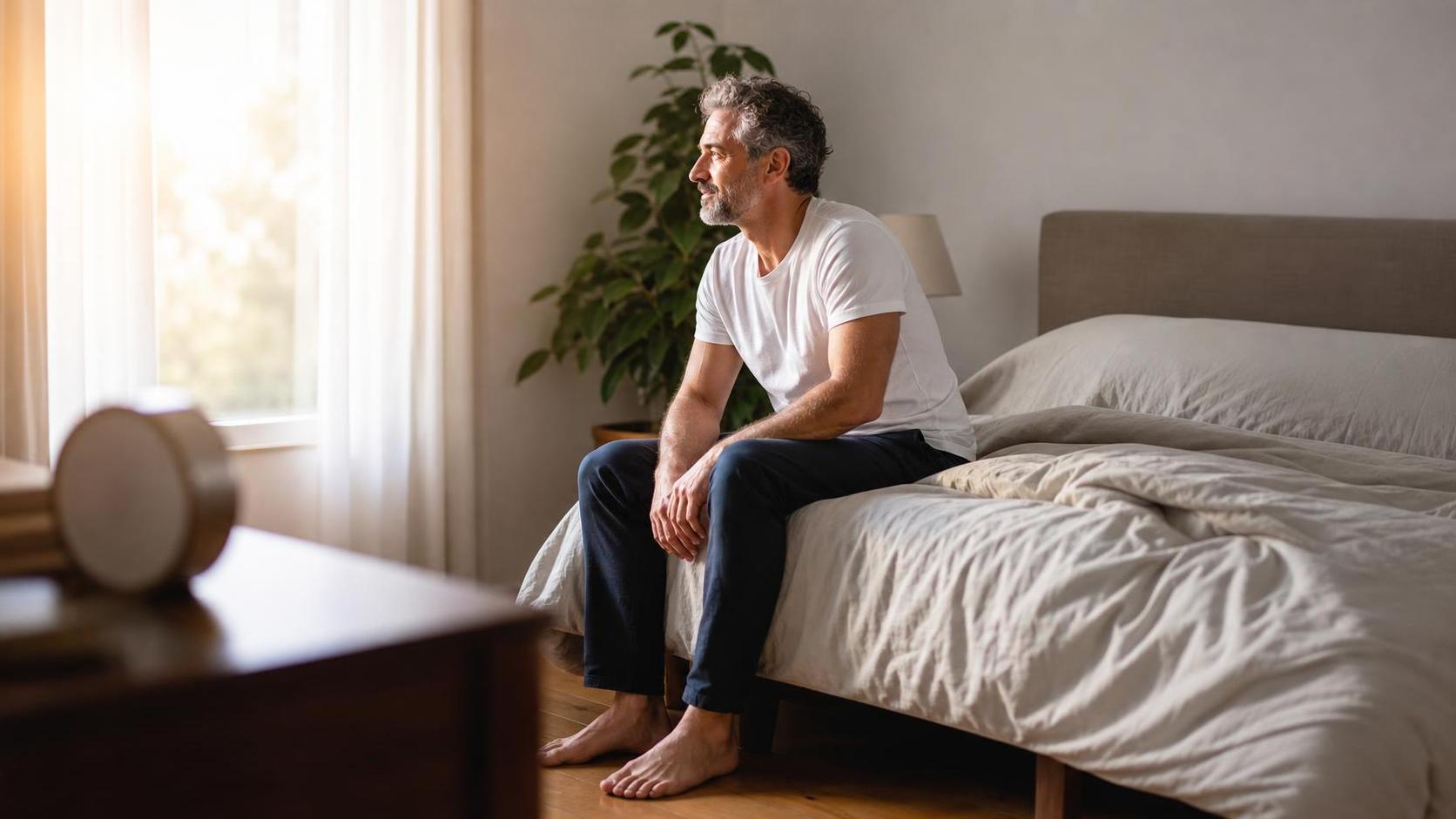
The Sleep Regularity Verdict: Why a Consistent Bedtime Now Outpredicts Sleep Duration for How Long You Live
For two decades, the public health message about sleep was almost entirely about quantity. Get your seven to nine hours. Track your total sleep time. Treat the number on your wearable like a daily report card. That message was not wrong, but a large body of research now suggests it was incomplete in a way that quietly mattered for millions of people. The newest and most rigorous data point to a different variable, one most of us never measured and almost no one optimized for: regularity. Not how long you sleep, but whether you sleep and wake at roughly the same time every day.
Presented By Our Partners



The most striking evidence comes from a 2024 analysis published in the journal Sleep, led by Daniel Windred and colleagues at the Flinders Health and Medical Research Institute. The team calculated a Sleep Regularity Index from more than 10 million hours of wrist accelerometer data collected from 60,977 UK Biobank participants, with an average age of nearly 63. The headline finding reframes the entire conversation. People in the most regular sleep group had a 20 to 48 percent lower risk of dying from any cause over the follow-up period compared with the least regular sleepers. They also had a 16 to 39 percent lower risk of cancer mortality and a 22 to 57 percent lower risk of cardiometabolic mortality. Most importantly, when the researchers tested regularity against duration head to head, sleep regularity was the stronger predictor of all-cause mortality.
That last detail is the part worth sitting with. Two people can both average a healthy seven and a half hours of sleep. One goes to bed at 11 and wakes at 6:30 almost every day. The other swings between a 9:30 lights-out on exhausted weeknights and a 2 a.m. bedtime on social weekends, sleeping in to compensate. Same average duration, very different biological signal. The data suggest the second person is carrying a meaningfully higher risk profile, and the difference is not exotic. It is just timing.
What Sleep Regularity Actually Measures
The Sleep Regularity Index, usually shortened to SRI, is a specific and elegant calculation. It estimates the probability that a person is in the same state, either asleep or awake, at any two time points exactly 24 hours apart, averaged across a week of monitoring. The score runs from 0 to 100. A score of 100 means perfectly regular: every day your sleep and wake periods line up exactly with the day before. A score near 0 means your sleep is essentially random from one day to the next.
This is different from older sleep hygiene advice in an important way. The SRI does not care whether you are a night owl or a morning lark. It does not reward an early bedtime over a late one. It rewards consistency. A person who reliably sleeps from 1 a.m. to 9 a.m. can score better than a person who nominally aims for an early bedtime but actually bounces around by several hours each night.
To make the numbers concrete, the Windred analysis found that participants in the top fifth for regularity kept their bedtimes and wake times within roughly a one-hour window day to day. Those in the bottom fifth varied by about three hours. That is the practical gap between a protective pattern and a risky one. It is not the difference between perfection and chaos. It is the difference between a one-hour spread and a three-hour spread, which is a target almost anyone can picture and work toward.
The Cardiovascular Signal
If the mortality data set the stage, the cardiovascular research explains a large part of why. A prospective study of 72,269 UK adults aged 40 to 79, also using wrist accelerometers, divided participants into three groups: irregular sleepers with an SRI below 71.6, moderately irregular sleepers between 71.6 and 87.3, and regular sleepers above 87.3. Both the irregular and the moderately irregular groups carried a higher risk of major adverse cardiovascular events than the regular group. The elevated risk showed up across the conditions that matter most, including heart failure, myocardial infarction, and stroke.
A related analysis published in the Journal of the American Heart Association examined sleep duration irregularity specifically, meaning night-to-night swings in how long people slept, and again found that greater irregularity tracked with higher incident cardiovascular disease. The pattern is consistent across studies and across different ways of slicing the data. Irregular sleep is not just a marker of a chaotic lifestyle that happens to correlate with poor health. It appears to be an independent stressor on the cardiovascular system.
The mechanism that ties this together is the circadian clock. Nearly every tissue in the body, including the heart, blood vessels, liver, and pancreas, runs on roughly 24-hour molecular rhythms that govern blood pressure, glucose handling, hormone release, and inflammation. These peripheral clocks take their cues largely from the timing of light, food, and sleep. When sleep timing shifts unpredictably, those internal rhythms fall out of alignment with one another, a state researchers call circadian misalignment. The body essentially experiences a small dose of jet lag several times a week, never fully settling into a stable rhythm. Over years, that low-grade desynchronization plausibly contributes to the elevated metabolic and cardiovascular risk the epidemiology keeps finding.
The Mental Health Dimension
The regularity story is not limited to the heart. A 2025 study published in Psychological Medicine, led by Dong-Run Li and colleagues at Shengjing Hospital of China Medical University, followed 79,666 UK Biobank participants who had no depression or anxiety at baseline and who wore accelerometers for a week. After adjusting for the usual confounders, regular sleepers had a 38 percent lower risk of developing depression and a 33 percent lower risk of developing anxiety compared with irregular sleepers. For each standard deviation increase in the regularity index, the risk of depression fell by about 14 percent and the risk of anxiety by about 12 percent.
What makes this finding especially useful is that the protective effect of regularity held up regardless of duration. In other words, consistently getting enough hours did not erase the mental health cost of an erratic schedule. Timing carried its own independent weight. For a generation increasingly attentive to mental wellness, this reframes sleep consistency from a productivity tweak into a genuine mood and resilience lever.
Featured Partner
Invest in the Infrastructure Behind Modern Medicine
As healthcare expands beyond hospital walls, the buildings and campuses supporting that shift are generating compelling returns for investors who move early. The Healthcare Real Estate Fund offers qualified investors direct access to a curated portfolio of medical office, outpatient, and specialty care facilities.
Learn More →
This convergence is why, in 2023, the National Sleep Foundation convened a multidisciplinary expert panel and issued a formal consensus statement in its journal Sleep Health titled "The importance of sleep regularity." The panel concluded that consistent sleep and wake times benefit mental and physical health as well as cognitive and academic performance, citing improvements across alertness, cardiovascular health, metabolic markers including fasting glucose and hemoglobin A1C, inflammation, and mood. When a national body issues a consensus guideline specifically about timing rather than duration, the field has clearly shifted.
What Your Wearable Score Really Means
If you own an Oura Ring, a Whoop band, an Apple Watch, or any of the growing roster of consumer sleep trackers, you are already sitting on the raw material these studies used. Most of these devices now surface some version of a sleep consistency or sleep regularity metric, and the science above is what gives that number its meaning. A high consistency score is not a vanity badge. It is a reasonable proxy for the same accelerometer-derived regularity that predicted lower mortality in tens of thousands of people.
A few cautions keep this honest. Consumer wearables estimate sleep stages imperfectly, and their proprietary scores are not identical to the research-grade Sleep Regularity Index. The most reliable signal your device gives you is also the simplest: the clock times you fell asleep and woke up. If you ignore the elaborate stage graphs and just watch whether your sleep and wake times are clustering inside a roughly one-hour band or scattering across three hours, you are reading the variable that the mortality data actually cared about. The tracker is most valuable not as a judge but as a mirror, showing you a pattern you would otherwise never notice.
The Catch-Up Sleep Question
One practical worry follows naturally from all of this. If regularity is king, does sleeping in on weekends undo the benefit? The honest answer is nuanced. Large catch-up sleep, the kind where you wake three or four hours later than usual on a Saturday, is exactly the irregularity these studies penalize, because it yanks your wake time out of its band and shifts your whole rhythm. At the same time, the National Sleep Foundation panel acknowledged that for people who genuinely cannot get enough sleep on work days, an extra one to two hours on non-work days can still be a net benefit. The takeaway is one of degree. A modest, bounded lie-in is tolerable. A weekly schedule that swings by several hours is the pattern worth fixing.
Bridging Science to the Four Fundamentals
The most actionable insight in this research is that sleep regularity is not a standalone discipline. It is woven into the other fundamentals of health, and each one can be used as a lever to stabilize it. The science gives you the why. The fundamentals give you the how.
Movement anchors your clock. Morning or daytime physical activity, especially when paired with outdoor light, is one of the strongest cues for a stable circadian rhythm. A short walk shortly after waking does double duty, delivering both light and movement at a consistent time and helping to lock your wake time in place.
Nutrition timing matters more than most people realize. The same circadian clocks that govern sleep also govern metabolism, and the timing of your last meal is a powerful signal. Eating late and at unpredictable hours sends a conflicting message to your peripheral clocks. Keeping your dinner window relatively consistent, and giving your body a few hours of fasting before bed, reinforces the same rhythm your sleep schedule is trying to build.
Breath is the fastest tool for falling asleep on time. The single biggest threat to a regular bedtime is lying awake unable to wind down, which tempts you to push lights-out later. Slow breathing at roughly six breaths per minute, or a few rounds of extended exhales, shifts the nervous system toward a parasympathetic state and shortens the runway to sleep, making your target bedtime realistic rather than aspirational.
Recovery is the point of all of it. Sleep regularity is, in the end, the foundation of recovery itself. A stable rhythm is what allows the deep and REM stages to do their restorative work night after night rather than being disrupted by a clock that keeps moving.
What This Means For Your Practice
The research converges on a message that is unusually clear and unusually achievable. You do not need to overhaul your life. You need to narrow your window. Here is how to put it into practice, starting tonight.
First, anchor your wake time before anything else. Pick a single wake time you can hit seven days a week, including weekends, and hold it within a one-hour band. Wake time is the most powerful lever because it sets the timing of your morning light exposure, which in turn stabilizes the entire downstream rhythm. If you change only one thing, change this.
Second, set a realistic bedtime window, not a bedtime. Aim for a 60-minute band rather than a single rigid minute. Knowing your target is "between 10:45 and 11:45" is more sustainable than "11:00 sharp" and still keeps you inside the protective range the data identified.
Third, get light and movement within an hour of waking. Step outside, or at least to a bright window, and move your body for even five to ten minutes. This is the strongest natural signal you can send your circadian clock, and it makes hitting your bedtime that night dramatically easier.
Fourth, close your kitchen at a consistent hour. Aim to finish eating two to three hours before your target bedtime, and keep that finish line roughly the same each night. Consistent meal timing reinforces the same rhythm your sleep schedule is building.
Fifth, build a five-minute wind-down using breath. When your bedtime window opens, do a few minutes of slow breathing to drop your arousal level. This is what turns a target bedtime into an actual one.
Sixth, cap your weekend catch-up at one to two hours. If you are sleep-deprived during the week, a modest lie-in is acceptable, but resist the multi-hour weekend reset that resets your entire clock and starts Monday in a hole.
Seventh, use your tracker as a mirror, not a scold. Watch one thing on your wearable, the spread between your earliest and latest sleep and wake times across the week. If that spread is shrinking toward an hour, you are doing the work that matters, regardless of what the composite score says.
The deeper shift here is conceptual. For years, better sleep felt like a resource problem, a matter of finding more hours in a crowded life. The regularity research reframes it as a rhythm problem, one that responds less to heroic effort and more to quiet consistency. You are not chasing a perfect night. You are building a stable pattern, and the body rewards the pattern. That is a far more forgiving and far more durable goal, and it is one you can begin tonight by deciding, simply, when you will wake up tomorrow.


Similar Posts
Suunto Vertical: Solar Charging Adventure Watch With Free Offline Maps and Dual Band GPS
Finland’s iconic outdoor watch brand delivers solar charging, dual band GPS, free offline topographic maps, and military grade durability in a package that spans $499 to $699 with no subscription…

The Youth Tax: Scientists Prove the Same Gene That Accelerates Growth Is Shortening Life
A landmark Nature Communications study from Hebrew University of Jerusalem delivers the first causal genetic proof that a single gene trades early-life advantages for accelerated aging and cancer, confirming a…

The Quiet Drug Discovery Revolution: How Protein Degraders Are Cracking the Undruggable Proteome in 2026
More than thirty targeted protein degraders are now in human trials, with the first Phase 3 readouts arriving in 2026. Inside the vepdegestrant breast cancer data, the BTK degrader race,…

Zio Patch by iRhythm: Gold-Standard 14-Day Continuous Ambulatory ECG Monitor
Atrial fibrillation is the most common cardiac arrhythmia, affecting an estimated 6 million Americans, but its intermittent nature means that traditional 24 to 48 hour Holter monitors miss the majority…
WHOOP 4.0: Subscription Based Strain and Recovery Coaching for Serious Athletes
A screen free wearable that trades smartwatch features for the deepest strain, recovery, and sleep coaching analytics in consumer health technology, built entirely on a subscription model. Presented By Our…
Natural Cycles: The Only FDA-Cleared Digital Contraceptive App
In 2018, the FDA did something it had never done before: it cleared a smartphone app as a method of contraception. The decision was controversial, the science behind it was…
