
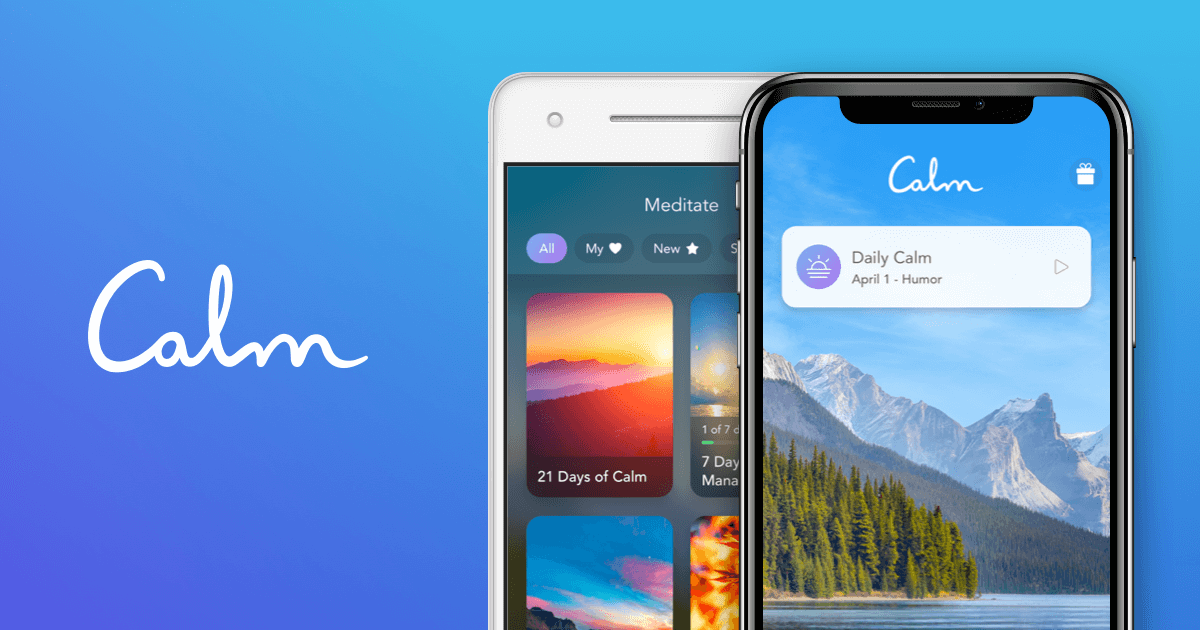
Calm App Review: Is Calm Worth It? Price, Evidence, Sleep Stories
One of the two most popular meditation apps promises to quiet a racing mind. The trials say it can, a little, for the people who keep opening it.
Presented By Our Partners


Ask the paying subscribers of the Calm app why they sleep badly and most of them give the same answer. In a 2020 survey of 9,868 subscribers who had used the app’s sleep features, 82 percent of those who named a cause blamed racing thoughts, ahead of stress or anxiety at 73 percent. Calm, the subscription meditation and sleep app made by San Francisco based Calm.com, Inc. and sold in 2026 as Calm Premium, was built for exactly that hour: the lights are off, the body is spent, and the mind keeps talking.
The trick at the center of the app is older than the smartphone. In 2002, Oxford psychologist Allison Harvey and Suzanna Payne gave 41 people with insomnia different instructions for a single night in bed. One group was coached to build and hold an interesting, detailed mental image. Compared with people who got no instructions, the imagery group fell asleep faster and had fewer and less distressing unwanted thoughts before sleep (Behaviour Research and Therapy, 2002). The explanation the researchers offered was almost mechanical: a vivid, specific scene occupies enough cognitive space that worry cannot climb back in.
A Calm Sleep Story is that experiment turned into a content library: a slow, low-stakes narrative, sometimes read by a celebrity such as Matthew McConaughey, designed to hold attention just firmly enough that everything else slips away. Around the stories sit guided meditations, breathing exercises, music and soundscapes. The question for this review is not whether Calm feels pleasant. Its subscribers say so in survey after survey. The question is whether it changes anything you could measure, and whether that is worth a subscription.
The short answer: The Calm app (Calm Premium, 2026) is a subscription meditation and sleep app from Calm.com, Inc. Randomized trials, most led by one research group tied to the company, show small to moderate drops in stress and bedtime mental arousal after about eight weeks of 10 minutes a day. Sleep Stories are popular but untested on their own. Calm is worth paying for only if you will use it most nights.
- Best for: people kept awake by racing thoughts, and beginners who want guided, low-effort stress relief.
- Not for: treating insomnia disorder, depression, or an anxiety disorder; anyone who wants measurable physiological feedback.
- Price (October 2026): free download and free trial; Calm Premium is a paid subscription with annual, family, and lifetime options. Calm has posted a pricing update and we could not verify the current list price, so check your app store before buying.
- Regulatory status: not FDA regulated (general wellness app).
- Evidence: Moderate for short-term stress and pre-sleep arousal; limited for long-term outcomes and for Sleep Stories specifically, and most trials have company ties.
What is the Calm app?
The Calm app is a subscription mindfulness and sleep app made by Calm.com, Inc. that delivers guided meditations, Sleep Stories, breathing exercises, music and soundscapes on iPhone, Android, and the web. It is a general wellness product rather than a medical treatment, and its full library sits behind a paid tier called Calm Premium.
The Daily Calm is a 10-minute guided meditation narrated by meditation teacher Tamara Levitt. Sleep Stories are long, gently paced narratives meant for the moment you lie down. Music and soundscapes run in the background for focus or sleep, and breathing exercises pace your inhale and exhale with an on-screen guide. In October 2019 the app added a mood check-in that lets users rate their mood with an emoji after a session, a small feature that a later analysis of 2,600 subscribers linked to slightly more meditation in the following week.
What people actually use is revealing. In the 2020 survey of sleep-feature users, about 90 percent reported sleep difficulties, 77 percent said they started using Calm mainly for sleep, and the most common time to open it was while lying down to sleep (79 percent). The app’s name puts sleep before meditation, and many of its customers treat it, first, as a sleep aid.
How does the Calm app work? The neuroscience of a quieting mind
Calm works on arousal. Insomnia and chronic stress share a nervous system stuck in the on position: racing thoughts, a tense body, a brain that keeps scanning for problems. Guided meditation trains attention away from that loop, Sleep Stories give it a harmless place to rest, and paced breathing nudges the heart toward its slower recovery rhythm.
Picture the problem first. It is 1 a.m., and you are exhausted. Sleep pressure has been building all day, yet your mind replays a conversation, drafts tomorrow’s email, and checks the clock. Sleep researchers call this hyperarousal, and it sits at the center of most modern theories of insomnia. A 2024 review in the Journal of Sleep Research describes insomnia disorder as affecting up to 10 percent of adults and frames it as persistent arousal at several levels at once: cognitive, emotional, cortical, and physiological. Sleep cannot be forced. It arrives when arousal falls far enough.
The wandering mind. Much of that bedtime chatter runs through the brain’s default mode network, a set of regions that switches on when we are not focused on a task and that has been tied to mind-wandering and self-referential thought. In a 2011 brain-imaging study in PNAS, the main hubs of this network, the medial prefrontal and posterior cingulate cortices, were relatively deactivated in experienced meditators across three styles of meditation, and those meditators showed stronger coupling between the posterior cingulate and regions involved in self-monitoring and cognitive control. The authors read this as a neural signature of less mind-wandering. The caveat: these were experienced practitioners compared with novices at one point in time, not new app users. The study shows where meditation can lead, not that ten minutes a day on a phone gets you there.
The hinge is bedtime arousal. The most interesting mechanistic finding about Calm comes from its own trials. In a 2021 analysis of 239 adults with elevated insomnia symptoms, published in General Hospital Psychiatry, people randomized to the app improved more on depression and anxiety than a waitlist group. When the researchers asked why, the answer was pre-sleep arousal. Changes in cognitive and somatic arousal at the four-week mark fully explained the effect on depression and partly explained the effect on anxiety; fatigue and daytime sleepiness did not. In plain terms, the app seemed to help mood mainly by quieting the mind and body at bedtime.
The breath as a lever. Your heart does not beat like a metronome. It speeds slightly as you inhale and slows as you exhale, a rhythm called respiratory sinus arrhythmia that reflects the braking influence of the vagus nerve. Slow, paced breathing amplifies that swing, which is why it shows up in nearly every stress-reduction tradition. When the technique is paired with real-time feedback on heart rate variability, the evidence is respectable: a 2017 meta-analysis in Psychological Medicine pooled 24 studies with 484 participants and found a large reduction in self-reported stress and anxiety compared with control conditions (Hedges’ g of 0.83). Calm’s breathing exercises borrow the pacing but not the feedback, and we found no trial testing them on their own. Plausible is not proven.
Does the Calm app work? What the research shows
In randomized trials, Calm reduces stress, bedtime arousal, and symptoms of depression and anxiety by small to moderate amounts over four to eight weeks of roughly 10 minutes a day, compared with doing nothing. Against active comparisons the picture is thinner, and nearly every trial comes from one research group with ties to the company.
The category first. Calm sits inside a well-studied class of products. A 2024 meta-analysis in Clinical Psychology Review pooled 45 randomized trials of mindfulness apps and found small, reliable effects compared with control groups: Hedges’ g of 0.24 for depression symptoms and 0.28 for anxiety symptoms. Translated into the number needed to treat, roughly one extra person improves on depression for every 14 who use an app instead of nothing, and one on anxiety for every 11. The effects held when the authors restricted the analysis to larger, lower-bias trials. Against active therapeutic comparisons, though, apps showed no significant advantage. That is the realistic ceiling for any meditation app, Calm included.
Stressed college students. In an early Calm-specific randomized trial, published in JMIR mHealth and uHealth in 2019, 88 undergraduates with elevated stress were asked to meditate with the app for at least 10 minutes a day for eight weeks or join a waitlist. The Calm group improved on perceived stress, mindfulness, and self-compassion, with effect sizes the authors described as moderate to large (0.59 to 1.24), and most of the gains persisted at a 12-week follow-up. Students averaged 38 minutes of meditation a week, about half the prescribed dose. Participants received free Calm memberships for the study.
Adults with sleep disturbance. The 2021 trial most relevant to the app’s core audience, published in PLOS One, randomized 263 adults with insomnia symptoms (an Insomnia Severity Index above 10) to eight weeks of Calm or a waitlist. Calm users had significantly less daytime fatigue and daytime sleepiness and lower cognitive and somatic pre-sleep arousal. Sleep quality itself was measured only in the Calm group, so the trial cannot say whether participants slept better than the controls. Participants were not blinded, outcomes were self-reported, and the paper notes that limited funding meant only the first 100 enrollees received cash incentives.
The workplace, at scale. The largest Calm trial enrolled 1,029 employees of a major U.S. consumer electronics retailer, randomized by work site to the app (585 people) or a waitlist (444), with an optional sleep coaching add-on for employees with insomnia symptoms (JMIR mHealth and uHealth, 2022). In the intention-to-treat analysis at eight weeks, the Calm sites improved on depression, anxiety, insomnia, daytime sleepiness, and self-reported medical visits. The headline productivity savings appeared only among the 192 people who completed every assessment, fewer than one in five enrollees, and vanished in the stricter analysis. Two of the four authors listed Calm.com, Inc. as their affiliation. The most-used content was music, at about 62 minutes a week, so which part of the app did the work is unclear.
An independent pilot. A team at Trent University in Canada, with no Calm affiliation listed, randomized 80 undergraduates to 30 days of the app’s sleep section or to everyday life without mindfulness apps (JMIR Formative Research, 2025). The Calm group improved on state anxiety, stress, and sleep quality on the Pittsburgh Sleep Quality Index. Only 54 percent met the prescribed minimum use across all four weeks, and the authors called for a larger trial.
Featured Partner
Invest in the Infrastructure Behind Modern Medicine
As healthcare expands beyond hospital walls, the buildings and campuses supporting that shift are generating compelling returns for investors who move early. The Healthcare Real Estate Fund offers qualified investors direct access to a curated portfolio of medical office, outpatient, and specialty care facilities.
Learn More →
The null result. When Calm was tested against an active control, the effect disappeared. In a 2022 feasibility trial of 83 middle-aged adults with elevated stress, four weeks of Calm produced no significant within-group or between-group improvements in stress or other psychological outcomes compared with listening to educational podcasts (JMIR Formative Research). Participants liked the app: 96 percent were satisfied. Liking an app and benefiting from it are different measurements.
The independent audit. In 2022, researchers at Seattle Children’s and the University of Pennsylvania systematically reviewed every randomized trial of Headspace and Calm published through May 2021 (JMIR Mental Health). They found 14 for Headspace and exactly one for Calm, which was not preregistered and reported no conflict of interest involving the company. (The college and sleep trials described above both predate that search, so at least one was missed and the count looks low, but the imbalance with Headspace was real.) Their verdict at the time: “there is an absence of randomized trials on Calm.” Several trials have appeared since, which is real progress. But most involve the same circle of researchers around Jennifer Huberty, who ran the early studies at Arizona State University and by 2022 listed Calm.com, Inc. as her affiliation. Company-linked research is normal in digital health and does not make the findings false. It does mean that independent replication, especially against active controls, is what to watch for.
Do Calm Sleep Stories actually help you sleep?
Possibly, for some people, but no trial has tested Sleep Stories by themselves. The evidence is indirect: an older experiment showing that engaging imagery speeds sleep onset, trials of the whole app in which Sleep Stories were one feature among many, and surveys of paying subscribers, who are not a neutral sample.
The surveys are enthusiastic. In a 2021 PLOS One survey of subscribers who had used a sleep feature in the past 90 days, most said Calm helped them fall asleep, stay asleep, and wake feeling rested, and every sleep component was associated with perceived better sleep. Parents were even warmer: in a separate survey, 97 percent of parents whose children used Sleep Stories said the stories helped their children sleep. But people who dislike an app tend to cancel it rather than answer its surveys, so these numbers describe satisfied customers, not effects.
One finding from that subscriber survey deserves more attention than it gets. Among subscribers with a mental health diagnosis, perceived improvement in anxiety and depression was associated with using Calm’s meditations, but not with Sleep Stories or music and soundscapes. The stories may help you drift off. The meditations appear to be where any mood benefit lives. That fits the mechanism: a story is a distraction you consume, while meditation is a skill you practice.
To test the effect on yourself, distrust your wearable’s verdict; our explainer on why the sleep score is not sleep explains why. A diary of how long you take to fall asleep, two weeks with Sleep Stories and two without, tells you more.
What the Calm app gets right
Calm aims at the right target, keeps people using it better than at least one rival, and tests its own design. Those strengths matter more than they sound, since an app that goes unopened cannot help anyone.
It targets the actual bottleneck. Racing thoughts were the top complaint among subscribers, and pre-sleep arousal turned out to be the pathway through which the app improved mood in its own trial. Aiming content at the minutes before sleep is not marketing. It is aimed at the mechanism.
People stick with it better than with at least one rival. In a 2019 feasibility study of 128 patients with myeloproliferative neoplasms, a group of chronic blood cancers, participants who used Calm averaged 71 minutes of meditation a week, compared with 31 minutes for those using the 10% Happier app, and 97 percent of Calm completers said they would recommend it (JMIR Formative Research). In meditation, dose is the whole game.
Its design gets tested. The mood check-in feature, analyzed by Arizona State University researchers across 2,600 first-time subscribers, was associated with 13 percent higher odds of meditating the following week (odds ratio 1.13). The effect was small and faded after a week, but it is the kind of iterative, data-driven design the category needs.
Where the Calm app falls short
Most subscribers stop using Calm long before any trial would predict a benefit, the evidence base is narrow and close to the company, and the app is not a treatment for insomnia disorder. Its biggest weakness is not the content. It is that the dose most people actually take is far smaller than the dose that was studied.
Most people quit. A 2022 study in the Journal of the American Medical Informatics Association followed 2,600 new annual subscribers who joined in 2018. By day 350, 58 percent had stopped using the app entirely. Those who persisted averaged just under four minutes of meditation a day, well below the 10 minutes the trials prescribed. Across 70 randomized trials of mindfulness apps, a 2023 meta-analysis in Behaviour Research and Therapy put the average dropout rate at about 25 percent, rising to 39 percent in larger studies. An annual subscription is a bet that you will be one of the minority who keep going.
Waitlist controls flatter the results. Nearly every positive Calm trial compared the app with nothing. The one trial that used an active comparison, educational podcasts, found no difference, and the 2024 meta-analysis of mindfulness apps found no advantage over active therapeutic comparisons. Some of what looks like an app effect is the effect of doing something deliberate for yourself every evening.
The samples are narrow. The 2020 subscriber survey was 85 percent female and 84 percent White, and several trials drew on college students. How well the results carry to older adults, men, and more diverse populations is an open question.
It is not a treatment for insomnia disorder. Cognitive behavioral therapy for insomnia (CBT-I) is the recommended first-line treatment, and it now comes in prescription digital form. In a 2025 randomized trial of 336 adults with diagnosed insomnia disorder, the fully automated program SleepioRx improved insomnia severity compared with online sleep hygiene education, with an effect size of 0.60 at 10 weeks that grew to 0.77 at 24 weeks (JMIR Mental Health). That trial was co-authored by employees of Big Health, which makes SleepioRx, but it tested people with a clinical diagnosis against an active control, which none of the Calm trials we found did. We found no trial comparing Calm head to head with CBT-I.
You get no feedback. Calm cannot tell you whether a session actually lowered your arousal. Headbands such as the Muse 2 EEG headband try to fill that gap, though a 2025 meta-analysis of 16 randomized trials of consumer neurofeedback during meditation, 11 of them using Muse, found only a small reduction in psychological distress (g of 0.16) and no evidence that the devices deepened mindfulness or changed the brain targets they claim to train (Journal of Medical Internet Research).
Calm vs Headspace vs Muse 2 vs SleepioRx: which should you choose?
Choose Calm if bedtime rumination is the problem and you want comfort with little effort. Choose Headspace if you want the app with more randomized trials. Choose a Muse headband if you want feedback, knowing the evidence for it is weak. Choose prescription digital CBT-I if you have insomnia disorder.
| Feature | Calm | Headspace | Muse 2 | SleepioRx |
|---|---|---|---|---|
| Format | Subscription app | Subscription app | EEG headband plus app | Prescription digital program |
| Core method | Meditation, Sleep Stories, music, breathing | Guided mindfulness meditation | Meditation with real-time EEG feedback | Automated cognitive behavioral therapy for insomnia |
| Randomized evidence | 1 RCT through May 2021 in an independent review; several since, mostly company-linked | 14 RCTs through May 2021 in the same review | Category meta-analysis of 16 RCTs: small distress benefit, no brain or mindfulness effect | RCT of 336 adults with insomnia disorder: effect size 0.60 at 10 weeks |
| Prescription needed | No | No | No | Yes |
| Physiological feedback | No | No | Yes (EEG) | No |
| Best for | Racing thoughts at bedtime; sleep-first users | Building a meditation habit with more trial support | People motivated by data and feedback | Diagnosed chronic insomnia |
Calm and Headspace are closer cousins than rivals, and our Headspace review covers its larger trial base in detail. The honest summary is that Headspace has more randomized evidence, while Calm has organized itself more completely around sleep. If your stress responds better to activation than to stillness, a breathwork-first approach like the Wim Hof Method app works on a different lever entirely. Browse every tool in this space in our mental health and stress reviews.
How much does Calm cost, and is it worth the price?
Calm is free to download, offers a free trial, and sells Calm Premium as a paid subscription with annual, family, and lifetime options. Calm’s help center carries a pricing update notice, and we could not independently verify the current list price as of October 2026, so check the App Store, Google Play, or calm.com before subscribing.
For a sense of scale, the 2021 PLOS One trial paper listed the annual plan at $59.99 at the time and contrasted it with a CBT-I app at about $300 a year. Prices have moved since, and Calm frequently discounts Premium; its own site has advertised offers such as 40 percent off. Before paying anything, check whether you already have access. Employers can provide Calm through Calm for Organizations, AARP lists Calm among its member health benefits, and Calm has run carrier promotions such as a T-Mobile Tuesdays partnership in July 2026.
Calm is a wellness subscription, not a prescribed treatment, so do not assume it qualifies for HSA or FSA reimbursement; ask your plan administrator. Do not expect health insurance to pay for it either.
Is it worth it? Do the math on your behavior, not the price. The trials that showed benefits asked for about 10 minutes a day for eight weeks. If the free trial has you reaching for the app most nights, an annual plan is good value. If you open it twice and forget it, the cheapest plan is the one you never buy.
Who should use Calm, and who should skip it?
Calm suits people whose sleep or stress problems are driven by a busy mind and who want a gentle, guided way to wind down. It is the wrong tool for clinical disorders that need treatment, and a poor fit for anyone who wants data or prefers silence.
Good candidates:
- People who lie awake replaying the day or planning tomorrow, the racing-thoughts pattern the app was built around.
- Meditation beginners who find silent practice too hard and want stories, music, or short guided sessions as an entry point.
- Busy people with everyday stress who will realistically commit to 10 minutes a day.
- Anyone who already has free access through an employer or membership benefit and wants to try a structured wind-down routine.
Better served by something else:
- Insomnia on at least three nights a week for at least three months: that is the threshold sleep researchers use for chronic insomnia (the definition used, for example, in a 2025 pilot study of bedtime app meditation in JMIR Formative Research), and CBT-I, in person or prescribed digitally, is the first-line treatment.
- Persistent low mood, panic, or anxiety that interferes with daily life: see a clinician. An app can complement care but should not replace it.
- Loud snoring, gasping, or waking unrefreshed despite enough hours in bed: possible sleep apnea needs a medical evaluation, not a bedtime story.
- Experienced meditators who prefer silence, and data-driven users who want feedback on whether a session worked.
If you need a sleep specialist, psychiatrist, or psychologist, the Healthcare Discovery doctor directory lists clinicians by state and specialty.
What this means for you
Sleep and stress are not soft topics. They run through the risk story of every one of the Four Villains of Health and Longevity. Persistent insomnia is a recognized risk factor for both physical and mental illness, especially depression and anxiety disorders, according to the 2024 Journal of Sleep Research review. Chronic stress and poor sleep are studied as contributors to the Silent Assassin, cardiovascular disease, and the Energy Arsonist, metabolic dysfunction, and sleep is increasingly understood as nightly maintenance for the brain, which puts it squarely in the fight against the Mind Thief, neurodegenerative disease.
Calm touches three of the Five Pillars: Sleep, Mindset, and Breath. Its real value is as a scaffold for a habit: making the last ten minutes of your day predictable and quiet, night after night, until your nervous system learns that lying down means slowing down.
So treat Calm as a tool, not a cure. Use the free trial deliberately, track one simple outcome such as how long it takes you to fall asleep, and favor the meditations over passive listening if mood is part of your goal. If your sleep problem is bigger than a busy mind, no narrator, however soothing, should stand between you and a proper evaluation. Rest is a biological necessity. The right tool is the one that actually gets you there.
Frequently asked questions
Is the Calm app worth it?
It is worth it if a busy mind at bedtime or everyday stress is your main problem and you will use it most days. Randomized trials show small to moderate reductions in stress and pre-sleep arousal after about eight weeks of 10 minutes a day. It is not a substitute for treating insomnia disorder, depression, or an anxiety disorder, and most new subscribers stop using it within a year, so try the free trial first.
How much does the Calm app cost?
Calm is free to download and offers a free trial, then sells Calm Premium as a paid subscription with annual, family, and lifetime options. Calm has posted a pricing update, and we could not verify the current list price as of October 2026, so check the App Store, Google Play, or calm.com. A 2021 trial paper listed the annual plan at $59.99 at that time, and Calm frequently runs discounts.
Calm vs Headspace: which is better?
Neither is clearly better for everyone. An independent 2022 review found 14 randomized trials of Headspace and only one of Calm published through May 2021, so Headspace has the deeper evidence base. Calm is organized around sleep, and in one survey 77 percent of paying subscribers who used its sleep features started for sleep. If racing thoughts at bedtime are your main problem, Calm is the natural fit; if trial evidence matters most to you, Headspace has the edge.
Do Calm Sleep Stories really work?
Sleep Stories have never been tested on their own in a randomized trial. The idea behind them has support: a 2002 Oxford experiment found that people with insomnia who focused on an engaging mental image fell asleep faster than people given no instructions. Calm subscribers say the stories help, but in one survey, perceived improvements in anxiety and depression were linked to the meditations, not to the stories or music.
Can the Calm app help with insomnia or anxiety?
It can ease symptoms, but it is not a treatment for insomnia disorder or an anxiety disorder. In a randomized trial of 263 adults with sleep disturbance, eight weeks of Calm reduced daytime fatigue, daytime sleepiness, and pre-sleep arousal compared with a waitlist. Cognitive behavioral therapy for insomnia remains the first-line treatment, and persistent anxiety or depression deserves an evaluation by a clinician.
Can I get Calm for free?
Calm is free to download and offers a free trial of Calm Premium. You may also already have Premium access without paying: employers can provide Calm through Calm for Organizations, AARP lists Calm among its member health benefits, and Calm has run carrier promotions such as a T-Mobile Tuesdays partnership in 2026. Check those routes before you buy a subscription, and cancel a trial you are not using.
Sources
- Huberty J, et al. Use of the consumer-based meditation app Calm for sleep disturbances: cross-sectional survey study. JMIR Formative Research, 2020. DOI
- Harvey AG, Payne S. The management of unwanted pre-sleep thoughts in insomnia: distraction with imagery versus general distraction. Behaviour Research and Therapy, 2002. DOI
- Riemann D, et al. Chronic insomnia, REM sleep instability and emotional dysregulation: a pathway to anxiety and depression? Journal of Sleep Research, 2024. DOI
- Brewer JA, et al. Meditation experience is associated with differences in default mode network activity and connectivity. PNAS, 2011. DOI
- Goessl VC, Curtiss JE, Hofmann SG. The effect of heart rate variability biofeedback training on stress and anxiety: a meta-analysis. Psychological Medicine, 2017. DOI
- Linardon J, et al. The efficacy of mindfulness apps on symptoms of depression and anxiety: an updated meta-analysis of randomized controlled trials. Clinical Psychology Review, 2024. DOI
- Huberty J, et al. Efficacy of the mindfulness meditation mobile app “Calm” to reduce stress among college students: randomized controlled trial. JMIR mHealth and uHealth, 2019. DOI
- Huberty JL, et al. Testing a mindfulness meditation mobile app for the treatment of sleep-related symptoms in adults with sleep disturbance: a randomized controlled trial. PLOS One, 2021. DOI
- Huberty J, et al. A mindfulness meditation mobile app improves depression and anxiety in adults with sleep disturbance: analysis from a randomized controlled trial. General Hospital Psychiatry, 2021. DOI
- Huberty JL, et al. Testing the pragmatic effectiveness of a consumer-based mindfulness mobile app in the workplace: randomized controlled trial. JMIR mHealth and uHealth, 2022. DOI
- Lew T, et al. Impacts of the mindfulness meditation mobile app Calm on undergraduate students’ sleep and emotional state: pilot randomized controlled trial. JMIR Formative Research, 2025. DOI
- Laird B, et al. A mobile app for stress management in middle-aged men and women (Calm): feasibility randomized controlled trial. JMIR Formative Research, 2022. DOI
- O’Daffer A, et al. Efficacy and conflicts of interest in randomized controlled trials evaluating Headspace and Calm apps: systematic review. JMIR Mental Health, 2022. DOI
- Huberty J, et al. Can a meditation app help my sleep? A cross-sectional survey of Calm users. PLOS One, 2021. DOI
- Puzia M, et al. Parents’ perceptions of their children’s engagement in a consumer-based meditation mobile app: cross-sectional survey study. JMIR Pediatrics and Parenting, 2020. DOI
- Huberty J, et al. Smartphone-based meditation for myeloproliferative neoplasm patients: feasibility study to inform future trials. JMIR Formative Research, 2019. DOI
- Huberty J, et al. Evaluation of mood check-in feature for participation in meditation mobile app users: retrospective longitudinal analysis. JMIR mHealth and uHealth, 2021. DOI
- Fowers R, et al. Using mobile meditation app data to predict future app engagement: an observational study. Journal of the American Medical Informatics Association, 2022. DOI
- Linardon J. Rates of attrition and engagement in randomized controlled trials of mindfulness apps: systematic review and meta-analysis. Behaviour Research and Therapy, 2023. DOI
- Treves I, et al. Consumer-grade neurofeedback with mindfulness meditation: meta-analysis. Journal of Medical Internet Research, 2025. DOI
- Prather AA, et al. The effectiveness of digital cognitive behavioral therapy to treat insomnia disorder in US adults: nationwide decentralized randomized controlled trial. JMIR Mental Health, 2025. DOI
- Ma Y, et al. Bedtime app-guided mindfulness meditation in patients with insomnia: mixed methods feasibility and acceptability pilot study. JMIR Formative Research, 2025. DOI
- Calm. Calm Premium pricing update and renewal check (support article). Calm Help Center
- Calm. Calm for Organizations plans. Calm Business
- AARP. Calm member benefit. AARP
Calm App at a glance
- Subscription
- $69.99 per year
- Form factor
- App-based (no hardware)
- FDA status
- Wellness device, no clearance
- HSA/FSA
- Not confirmed
Measures Breathing exercises, Meditation session tracking, Sleep stories, Stress management programs
Pricing verified October 20, 2026. Maintained in the Healthcare Discovery device database and updated automatically.


Similar Posts

Normatec 3 Legs: Sequential Pneumatic Compression for Athletic Recovery
The legs that carried you through today’s training need more than rest tonight. They need active circulation support to flush metabolic waste and accelerate tissue repair. Presented By Our Partners…
MIR Smart One Review: What It Measures and Who It Suits
The MIR Smart One is a pocket PEF and FEV1 meter for tracking diagnosed asthma or COPD. Useful for home trends, but its own evidence is thin and it cannot…

The OPTIMA Verdict: Two-Thirds of High-Risk Breast Cancer Patients Can Safely Skip Chemotherapy
A landmark phase 3 trial of 4,429 patients showed the Prosigna 50-gene genomic test can safely spare two-thirds of clinically high-risk breast cancer patients from chemotherapy, with equivalent five-year survival…

Senolytic CAR-T Cells: How Cancer Immunotherapy Is Being Reengineered to Clear Aging Cells
First-generation senolytics like dasatinib plus quercetin showed only subtle effects in human trials. A new generation of senolytic CAR-T cells borrows cancer immunotherapy and retrains it to hunt senescent cells….
Airthings Wave Plus: Radon and Indoor Air Quality Monitor for Long-Term Health
Radon is the second leading cause of lung cancer in the United States. It is colorless, odorless, and present in roughly one in fifteen American homes at levels the EPA…
